

Everything Fallout is exploding in popularity right now, riding a wave that began with the TV show and has swept across games, remasters, and subscription services — and that momentum is reshaping how fans and the industry think about the franchise.
The Fallout TV adaptation has become a rare cross‑audience phenomenon: a streaming series that appeals strongly to both long‑time gamers and mainstream viewers. Season 1 arrived to widespread attention, and Season 2 has been framed as a direct leap into New Vegas — a setting that has enormous resonance for fans of the games. Major outlets and streaming guides list Season 2’s New Vegas focus and its weekly rollout schedule, positioning the show as the central cultural driver of renewed interest in the franchise. At the same time, gaming outlets and publishers have reacted quickly. Coverage across gaming sites and storefront updates highlight renewed activity: enhanced editions, storefront promotions, and platform interoperability initiatives such as Xbox Play Anywhere are being leveraged to make older entries easier to play for a modern audience. This confluence of media attention and product updates is what’s turning a decade‑old IP into a cross‑platform momentum machine again.
However, the company also faces the optics of being seen as monetizing nostalgia. The community expects polished remasters and modern quality‑of‑life changes; falling short risks damaging goodwill that the TV series just rebuilt. Strategic patience is important: releasing rushed remasters to cash in on the show would be commercially risky in the medium term.
This moment is an opportunity for Microsoft, Bethesda, and partners to do right by players: turn the show’s mainstream momentum into sustainably improved access, quality, and long‑term community investment — and not just a string of holiday remasters.
The Fallout universe is once again at the center of a cultural conversation that spans TV, live games, and legacy catalog strategy. The next 12–36 months will reveal whether publishers translate this rare moment into lasting improvements for players — or simply ride the wave for a single season of gains. The prudent path is clear: invest in quality, protect the modding community, and use cross‑platform tools like Play Anywhere and Game Pass to lower the barrier for new fans while preserving what made Fallout special in the first place.
Source: Windows Central https://www.windowscentral.com/gaming/fallout-quiz-dec-2025/
 Background
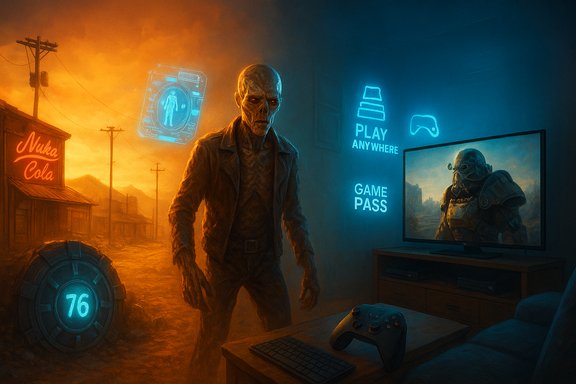
The Fallout TV adaptation has become a rare cross‑audience phenomenon: a streaming series that appeals strongly to both long‑time gamers and mainstream viewers. Season 1 arrived to widespread attention, and Season 2 has been framed as a direct leap into New Vegas — a setting that has enormous resonance for fans of the games. Major outlets and streaming guides list Season 2’s New Vegas focus and its weekly rollout schedule, positioning the show as the central cultural driver of renewed interest in the franchise. At the same time, gaming outlets and publishers have reacted quickly. Coverage across gaming sites and storefront updates highlight renewed activity: enhanced editions, storefront promotions, and platform interoperability initiatives such as Xbox Play Anywhere are being leveraged to make older entries easier to play for a modern audience. This confluence of media attention and product updates is what’s turning a decade‑old IP into a cross‑platform momentum machine again. What just happened: the short read
- The Fallout TV show’s new season is explicitly set in New Vegas, and its rollout is being staggered weekly with a December premiere window.
- News sites and platform stores report that Fallout titles — old and new — are being emphasized on Xbox storefronts and Game Pass promotions in tandem with the show’s release.
- Bethesda’s live game updates continue: Fallout 76 introduced a player‑ghoul option in recent seasonal content, and Fallout 4 has been reissued with Play Anywhere support, making cross‑platform play and progress far easier.
- Industry leaks and court documents that previously surfaced in litigation have re‑ignited conversation about potential remasters (Fallout 3) and remakes, which would attach directly to the series’ commercial resurgence. Treat those as rumor with strong provenance, not formal confirmation.
Overview: the Fallout show’s impact on the games ecosystem
TV-to-games feedback loop
The Fallout TV show has created a classic feedback loop: mainstream exposure drives discovery, which increases player numbers for legacy titles; higher active player counts then justify platform updates, remasters, and new revenue opportunities for the publisher. This loop matters for three reasons:- It broadens the audience beyond the core fanbase, pulling in viewers who never played the games but are now curious because the show is compelling.
- It rejuvenates older catalog titles, which become prime candidates for ports, remasters, and Play‑Anywhere/Smart Delivery treatments to reduce friction for new players.
- It aligns marketing windows: studios can time remasters, DLC drops, and seasonal content to the show’s release cadence to maximize attention and sales.
Streaming success and critical response
The show’s critical reception has been a core story driver. While early publicity noted extremely high early review aggregates (a common phenomenon when initial reviews are counted before broader critic submissions), the durable point is the series has achieved consistent positive recognition from both critics and viewers. Aggregate review pages show Season 1 maintaining a strong Tomatometer score, and media coverage continues to treat the adaptation as a high‑water mark for video‑game‑to‑TV adaptations. That perception matters for Xbox and Bethesda’s commercial calculus: positive reviews and strong viewership give the publisher license to re‑invest in older IP quickly.Platform moves: Xbox, Play Anywhere, and Game Pass
Fallout 4 and Xbox Play Anywhere
One of the most consequential technical moves during this wave was the formal Play Anywhere support for Fallout 4’s Anniversary/definitive editions. Making Fallout 4 an Xbox Play Anywhere title means a single purchase can be used on both Xbox and Windows Store/PC platforms, with shared saves and achievements — reducing friction for new viewers who want to try the game on a different platform than their friends. The Xbox product page and storefront metadata explicitly list Play Anywhere compatibility for Fallout 4’s Anniversary Edition. That’s a significant user‑experience improvement for cross‑platform continuity.- Benefits of Play Anywhere for Fallout 4:
- Shared purchases, saves, and achievements across Xbox and PC.
- Easier access for new viewers who own different platforms.
- Better cross‑device continuity when the show sends viewers to the games.
Fallout on Xbox Game Pass: what’s actually available
Statements in popular coverage have been sweeping — some headlines have claimed “every single Fallout game is available now on Xbox Game Pass.” While the franchise is heavily represented on Game Pass and Microsoft’s platforms have prioritized Bethesda titles since the acquisition, nuance matters: availability varies by region, edition, and the specific Game Pass tier. Some outlets have reported that a broad swath of Fallout entries (classics, modern releases, and spin‑offs) are accessible to subscribers, while others emphasize that not every piece of DLC or every legacy reissue is handled identically across tiers. Use the Game Pass app or the Xbox Store to confirm availability for specific titles in your account and region.- Practical takeaway: Game Pass is a major engine for discovery, but exact title availability should be checked in the official store UI before relying on it for a specific game.
Content updates in the live games
Fallout 76: playable ghouls and seasonal evolution
Bethesda’s live‑service title, Fallout 76, has been steadily reshaped by season systems and feature drops. Season 20 (branded around “ghoul” mechanics) introduced an official way for players to transform their characters into ghouls — a change that had long circulated as a community mod idea but was now implemented by the studio. The mechanics added new tradeoffs, perks, and progression hooks that meaningfully alter gameplay for players who choose the path. Industry coverage and patch notes document this as an intentional effort to keep Fallout 76 relevant with fresh role‑playing hooks while tying into the show’s broader popularity.- Why this matters: introducing novel role‑driven systems (a feral/ghoul meter, unique perks) signals Bethesda’s willingness to invest in transformational content, not just cosmetic seasonal drops.
Fallout Shelter and mobile
Fallout Shelter — the series’ mobile microcosm — has also seen periodic content renewals. While it’s not the headline grabber, the Shelter updates are commercially cheap ways to keep casual and mobile audiences engaged between major releases, and any uptick in show viewership filters down to greater install numbers and engagement. This matters for long‑tail monetization and brand visibility.Remasters, remakes, and the rumor mill: Fallout 3 and New Vegas
A major piece of the franchise puzzle is the future of the older, beloved entries: Fallout 3 and Fallout: New Vegas. Leak material originating from previously unredacted court documents — a set of internal schedules that surfaced during litigation — has long been cited as evidence that remasters or remakes were on internal roadmaps at Bethesda/ZeniMax. Recent industry coverage has re‑examined those documents in light of the show’s success, and gaming outlets have noted that Fallout 3 appeared on earlier internal lists as a candidate for remastering or rework. Those reports create a credible rumor trail: not a formal confirmation, but a signal that the IP is being actively considered for visual remastering or modernized reissues. Treat those reports as plausible but not final until Bethesda issues formal announcements.- What to watch for if remasters arrive:
- Will remasters be “graphical refreshes” (texture/lighting/upscales) or full mechanical remakes?
- Will Bethesda preserve modding and community tools, or will remasters lock down legacy mod ecosystems?
- Will remasters be timed to coincide with the show’s seasons for marketing synergy?
Critical analysis — strengths, strategy, and risks
Notable strengths
- Cross‑media synergy is working as advertised: the show is an effective discovery vehicle that reduces marketing friction for older titles.
- Platform moves like Play Anywhere and Game Pass make it easier for non‑gamers who watch the show to try the games with minimal friction.
- Continuous content updates in live games (Fallout 76’s ghoul path, Shelter content) show that Bethesda is not merely sitting on IP; it’s actively iterating to keep players engaged.
- Strategic timing: the industry is adeptly synchronizing content releases and storefront promotions with the show, which boosts sales and engagement metrics quickly.
Potential risks and downsides
- Over‑monetization risk: publishers may be tempted to monetize the resurgence aggressively (higher priced remasters, premium bundles, DLC gates) and risk alienating the fanbase. Gaming fans are sensitive to perceived price gouging around nostalgia IPs.
- Remake/remaster quality risk: recent high‑profile remasters show that simply “repainting” an old title can disappoint if technical issues and gameplay clunk remain unaddressed. Fans expect functional improvements — not just prettier textures.
- Concentration risk for Bethesda: if Microsoft and Bethesda redirect large development resources into cosmetic remasters and media tie‑ins, other new‑IP or innovate projects may be deferred. Public messaging that “most resources are headed to the wasteland” is strategic, but could be risky if it delays vital next‑gen projects or dilutes studio capacity across too many legacy revamps.
- Discovery friction despite availability: while Game Pass and Play Anywhere lower the barrier to try games, cross‑platform entanglements, DLC fragmentation, and region‑based availability still create friction for newcomers.
Business and community implications
For Xbox and Microsoft
Microsoft’s acquisition strategy (and the integration of Bethesda into the Game Pass ecosystem) gives Xbox a unique lever to extract long‑tail value from established franchises. Putting Fallout titles in front of millions through Game Pass, Play Anywhere treatment, and time‑aligned marketing generates low‑risk revenue via renewed interest and improved storefront performance metrics.However, the company also faces the optics of being seen as monetizing nostalgia. The community expects polished remasters and modern quality‑of‑life changes; falling short risks damaging goodwill that the TV series just rebuilt. Strategic patience is important: releasing rushed remasters to cash in on the show would be commercially risky in the medium term.
For players and modders
Players benefit immediately from Play Anywhere and increased platform support, but modding communities — the lifeblood of many Fallout titles — will watch closely. Preservation of modding ecosystems and modding tools should be a priority if remasters are released. Mod communities often act as co‑developers who extend the life of older games; alienating them would be shortsighted.What to expect next (practical timeline)
- Short term (weeks–3 months)
- Continued promotional pushes tied to Season 2; storefront discounts and Game Pass playlists will appear to funnel viewers into the games.
- Medium term (3–12 months)
- Additional platform optimizations and possibly more Play Anywhere conversions as Xbox prioritizes ease of cross‑platform play for high‑value legacy titles. Expect more technical reworks (Smart Delivery, performance patches) to reduce entry friction.
- Long term (12–36 months)
- Formal announcements (or releases) of remasters/remakes are plausible but not guaranteed. Court‑document leaks and internal roadmaps point to remaster plans, but implementation timelines can move — treat these as credible rumors rather than confirmed products.
Practical advice for Windows and Xbox users
- If you want to play Fallout 4 across PC and console, check the Xbox Store for the Anniversary Edition and verify Play Anywhere compatibility to avoid buying the same title twice.
- For Game Pass subscribers: check the Game Pass library on your device for title availability; regional differences can mean a game is included in some markets but not others.
- If you’re a modder or frequent mod user: keep an eye on how remasters handle the mod toolchain and file formats. Mod preservation is crucial for maintaining the longevity and community health of these games.
- For collectors and completionists: don’t assume remastered versions will be free or automatically include all historic DLC — historically, remasters sometimes ship as separate purchase items or premium bundles.
Final assessment: opportunity and caution
The Fallout media tidal wave is a clear win for the franchise: a well‑received TV show has created an uncommon alignment across audiences, storefronts, and publisher strategy. Platform moves like Play Anywhere for Fallout 4 and the Game Pass promotions make it easier than it has ever been for a curious viewer to become a player. Live‑service innovations (Fallout 76’s ghoul mechanics) demonstrate that Bethesda is prepared to respond with substantive content, not just cosmetic tie‑ins. At the same time, the landscape is full of choices that could erode goodwill rapidly. Remasters and monetization choices must be handled with care: the community is vigilant and knows what the originals did well. Strategic patience, transparent communication about how remasters will respect modders and quality‑of‑life improvements, and regionally consistent availability on services like Game Pass will be the difference between a franchised renaissance and a quick cash‑in that leaves a sour taste.This moment is an opportunity for Microsoft, Bethesda, and partners to do right by players: turn the show’s mainstream momentum into sustainably improved access, quality, and long‑term community investment — and not just a string of holiday remasters.
The Fallout universe is once again at the center of a cultural conversation that spans TV, live games, and legacy catalog strategy. The next 12–36 months will reveal whether publishers translate this rare moment into lasting improvements for players — or simply ride the wave for a single season of gains. The prudent path is clear: invest in quality, protect the modding community, and use cross‑platform tools like Play Anywhere and Game Pass to lower the barrier for new fans while preserving what made Fallout special in the first place.
Source: Windows Central https://www.windowscentral.com/gaming/fallout-quiz-dec-2025/
