

What if the AI tool that quietly rewires your daily work didn’t come from a headline-grabbing company but from a nimble startup building an all-in-one AI workspace? In late 2025 Genspark — a product of MainFunc Inc. — exploded onto the scene with a bold pitch: stop prompting chatbots and start telling AI to finish entire pieces of work for you. The result is a platform that assembles multi-model AI pipelines, no-code app builders, and outcome-first agents into one workspace designed to replace multi‑tool subscriptions and endless context switching. The claim is ambitious and, by many metrics, already disruptive: a rapid Series B, an enterprise product push, and a product suite that spans email, slides, spreadsheets, images, and phone calls. But the real question for Windows users and IT leaders is not hype — it’s whether this approach is practical, secure, and reliable enough for daily business use. This article unpacks what Genspark actually offers, verifies the major claims, evaluates the engineering and governance tradeoffs, and offers practical guidance for teams that want the productivity upside without unwelcome surprises.
Genspark (stylized by its operator MainFunc) launched an “AI Workspace” that positions itself as an outcome-first work platform: describe the deliverable, and the system orchestrates several specialized agents and models to produce it. The company publicly announced a $275 million Series B round in November 2025 at a reported $1.25 billion post‑money valuation, positioning Genspark as one of the faster-growing entrants in the agent and workspace category. The Series B announcement and product launch are documented on the company blog and in business press releases from November 20–24, 2025. The core architecture is what Genspark calls a Mixture‑of‑Agents or Super Agent: a control plane that routes tasks across a curated set of third‑party and in‑house models (the company says “30+ AI models”), plus a library of micro‑tools and connectors that let agents run workflows end‑to‑end — from scraping data to generating a hand‑off PowerPoint or launching a web app. That ambition underpins the product lineup: AI Inbox, AI Slides, AI Sheets 2.0, AI Designer, AI Developer (a no‑code builder), podcast/video automation, Call for Me (phone call automation), and enterprise features like data isolation and compliance targets. Two structural facts shape how Genspark behaves in practice and how organizations should assess it:
However, the platform shifts risk from “can the model answer this prompt?” to “can the platform deliver production‑grade artifacts that my legal/compliance teams can approve?” That transition elevates legal, procurement, and IT concerns. The right path is staged adoption:
Genspark’s arrival marks an important evolution in AI productivity tools: the move from assistance to autonomous output. That is powerful for Windows teams and knowledge workers who want to reclaim time from formatting, data wrangling and repetitive creation. At the same time, the platform’s complexity — a mixture of models, third‑party endpoints and agentic actions — means the enterprise must adopt a correspondingly mature procurement and governance posture. For teams that pilot responsibly, Genspark can reduce toolchain friction and deliver meaningful speedups; for those who skip the safeguards, the platform’s autonomy risks becoming an unexpected liability.
Source: Geeky Gadgets GenSpark AI Review : Faster Way to Build Apps, Sites, Slides, Sheets, Images & More
 Background / Overview
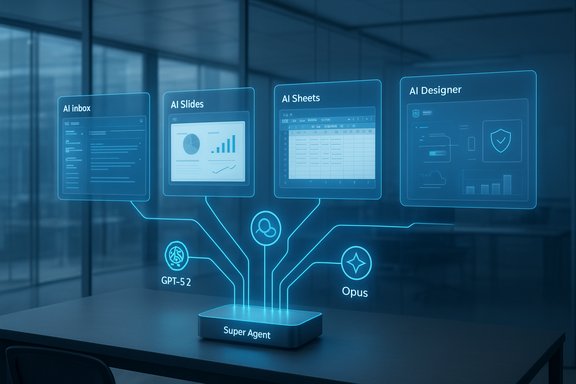
Genspark (stylized by its operator MainFunc) launched an “AI Workspace” that positions itself as an outcome-first work platform: describe the deliverable, and the system orchestrates several specialized agents and models to produce it. The company publicly announced a $275 million Series B round in November 2025 at a reported $1.25 billion post‑money valuation, positioning Genspark as one of the faster-growing entrants in the agent and workspace category. The Series B announcement and product launch are documented on the company blog and in business press releases from November 20–24, 2025. The core architecture is what Genspark calls a Mixture‑of‑Agents or Super Agent: a control plane that routes tasks across a curated set of third‑party and in‑house models (the company says “30+ AI models”), plus a library of micro‑tools and connectors that let agents run workflows end‑to‑end — from scraping data to generating a hand‑off PowerPoint or launching a web app. That ambition underpins the product lineup: AI Inbox, AI Slides, AI Sheets 2.0, AI Designer, AI Developer (a no‑code builder), podcast/video automation, Call for Me (phone call automation), and enterprise features like data isolation and compliance targets. Two structural facts shape how Genspark behaves in practice and how organizations should assess it:- It’s an orchestration/control plane rather than a single proprietary LLM — the platform selects and routes to multiple models (OpenAI GPT‑5.2, Anthropic Opus/Sonnet models, Google Gemini, and others) depending on task needs.
- Its stated aim is finished outputs (board‑ready slides, financial models, working web apps), not chat transcripts or prototype snippets — which changes the product’s success metrics from “chat accuracy” to “export fidelity,” “workflow correctness,” and “governance.”
What Genspark actually offers
Core product pillars
- AI Inbox — Email automation that summarizes threads, flags priority items, drafts replies, extracts action items and can feed context into other agents (e.g., “take the vendor emails and make a vendor comparison slide deck”). This is framed as a command center for work automation.
- AI Slides — Generate full presentations from a prompt or an uploaded brief; export fidelity is emphasized (PowerPoint/PPTX ready outputs). The product aims to produce slide decks with layouts, visual assets, and speaker notes suitable for boardroom use.
- AI Sheets 2.0 — A spreadsheet assistant that supports web scraping, database connections, SQL/Jupyter automation, formula generation and charting from plain‑English prompts, with .xlsx export. The idea is to reduce spreadsheet drudgery (data cleaning, pivoting, formula creation) through a natural‑language interface.
- AI Designer / Image + Media — Template‑driven graphic assets, thumbnail generators, and integrated image creation — intended for creators who need consistent brand assets without a design team. The platform also advertises podcast and video automation pipelines.
- AI Developer (No‑Code) — A no‑code, AI‑assisted app and website builder that promises to deliver working, deployable front‑to‑back applications from prompts and configuration rather than hand‑coding. This includes the ability to export or host simple web apps and prototypes created by agents.
- Call for Me / Phone Call Automation — Agents that can place calls to perform routine tasks like scheduling, reservations or simple information gathering using TTS/Realtime APIs and telephony connectors.
- Super Agent + Model Router — A central multi‑agent scheduler that “chooses the best model for the job” across proprietary and third‑party endpoints (the company says it coordinates dozens of models and dozens of micro‑tools). This routing is a key product differentiator: instead of a single model that tries to do everything, Genspark orchestrates a heterogeneous stack and returns finished artifacts.
Collaboration and enterprise features
- Realtime co‑editing in slides, sheets and design projects, with team permissions and audit logs.
- Enterprise posture: MainFunc advertises a Zero Training policy (no customer data used to train models), data isolation, and SOC/ISO compliance roadmaps — standard enterprise claims for buyers to verify in contract. The company also highlights Microsoft and cloud partnerships to ease integration into existing productivity ecosystems.
How the product maps to current model progress (GPT‑5.2, Opus 4.5, Gemini and friends)
One of the most consequential technical claims Genspark makes is its ability to route tasks to best‑for‑purpose models such as OpenAI’s GPT‑5.2, Anthropic’s Opus/Sonnet 4.5 tier, and Google’s Gemini family. These model families represent current leaderboards for productivity, coding and multimodal reasoning:- GPT‑5.2 (OpenAI) — Released in December 2025 as a GPT‑5 family upgrade, GPT‑5.2 is packaged into variants (Instant, Thinking, Pro) to trade off latency and reasoning depth; it improves long‑context handling, coding benchmarks, and tool use. Genspark lists GPT‑5.2 as a routed model for heavy reasoning, spreadsheets, and presentation preparation.
- Anthropic Opus / Sonnet 4.5 — Anthropic’s Opus/4.5 tier is positioned for agentic, software‑engineering and tool‑calling workflows; operator chatter and early adopters report strong code and agent performance (with community reports documenting operational wrinkles typical of new releases). Genspark’s multi‑model approach explicitly includes Anthropic models as alternatives for certain workloads.
- Google Gemini family — Gemini’s Flash/Pro variants are commonly used for multimodal visual/text tasks; customers and platforms patch Gemini into pipelines where web grounding and vision are important.
Strengths: Where Genspark genuinely advances productivity
- Outcome‑first UX reduces handoffs
Genspark’s “state the output, get the output” workflow reduces friction from prompt → edit → copy → paste cycles. For knowledge workers who spend time moving data between email, Excel, and slides, consolidating the loop can produce dramatic time savings on prototype tasks and first drafts. The company and early customers point to faster “first‑draft to final” times for routine deliverables. - Smart model routing
Rather than betting everything on one generalist LLM, Genspark uses a mixture‑of‑agents router to pick specialized models for sub‑tasks (reasoning, code, image generation). That improves output quality when the router gets it right and reduces the need for manual stitching. - Toolchain integration
Built‑in connectors (email, calendars, cloud storage, Slack/Teams) enable end‑to‑end automation. That matters to teams that need outputs pushed into corporate systems rather than just produced in a web editor. Official announcements advertise deep integrations and an enterprise pathway for managed deployments. - No‑code app building and export fidelity
The AI Developer/no‑code features lower the barrier to prototyping and can accelerate MVPs. If the platform truly exports clean, maintainable code or production‑ready artifacts, it shortens the iteration loop between product, design and engineering teams. This is one of the clearest differentiators for organizations wanting rapid internal tools. - A consolidated subscription
For many small teams, paying one vendor that bundles slide generation, spreadsheet automation and image creation may be cheaper and less frictional than subscribing to many specialist services — assuming feature parity and reliability hold.
Risks, gaps and red flags (what to validate before adoption)
No platform is all upside. Genspark’s promise creates several operational and governance risks that buyers must evaluate carefully.1. “Unlimited access to advanced models” — marketing vs reality
Genspark’s messaging emphasizes broad, unrestricted access to models like GPT‑5.2 and Anthropic’s Opus tiers. In reality, model access is subject to provider quotas, licensing terms, and cost. OpenAI, Anthropic, and Google set limits and pricing structures; enterprise integrations typically involve negotiated contracts, usage controls, and quotas. Treat “unlimited” as a marketing shorthand and require contractual clarity on quotas, throttling, and price‑exposure. Independent comparisons show that true unlimited access typically requires an enterprise plan at significant cost.2. Hallucination and fact accuracy for “finished” outputs
When an AI produces a slide deck or spreadsheet analysis that looks polished, it can still contain invented numbers, mis‑attributed citations, or incorrect reasoning. Because Genspark trades on finished artifacts, the human‑in‑the‑loop becomes a gatekeeper for accuracy-sensitive workflows like investor decks, compliance reports, and financial models. Insist on fact‑checking controls, provenance metadata, and an audit trail for all agent actions. These checks should be part of any production rollout.3. Data governance and export control
Genspark advertises enterprise data isolation and a Zero Training policy, but buyers must contractually verify the data handling details: retention windows, model training clauses, third‑party subprocessors, and breach notification procedures. SOC 2 or ISO claims are not the same as contractual non‑training guarantees. Ask for DPAs (Data Processing Agreements), evidence of contractual non‑training commitments, and third‑party audit reports before routing sensitive content.4. Platform lock‑in and export fidelity
If your team adopts Genspark to generate PowerPoint decks, spreadsheets and apps, confirm export fidelity and portability. Can slides be exported as native PowerPoint files that preserve layouts, fonts and charts? Can generated apps be exported as maintainable code or must they stay hosted? Platform lock‑in risk grows if exports are lossy or proprietary connectors are required for operation. Export fidelity is a crucial procurement checkpoint.5. Operational complexity and SLAs
Routing to many models and tools increases operational surface area. Model endpoints change, pricing updates occur, and individual subcomponents may degrade independently. Enterprise buyers need strong SLA guarantees, monitoring, telemetry, and incident response playbooks. Because Genspark depends on third‑party providers for the heaviest compute, buyers should require failover modes and clear escalation paths in their contracts.6. Automation that acts on the real world (phone calls)
Phone call automation (Call for Me) and any other agentic interactions that take real‑world actions create new legal and reputational risks: consent for recordings, disclosure rules, automated complaint handling, and potentially deceptive behavior if agents impersonate humans. Use strict policies and require human supervision for any calls that affect customers or legal obligations.Cross‑checked facts and verification summary
- Company and product launch: MainFunc (Genspark) announced the Genspark AI Workspace and a $275M Series B at a reported $1.25B valuation in November 2025; this is confirmed in the company blog and press releases.
- Product claims (AI Slides, AI Sheets 2.0, AI Inbox, Designer, Developer, Call for Me, Super Agent) appear in official documentation and press materials and are reflected in early third‑party reporting and PR syndication. These features are present in the product messaging and demos. Documentation claims should be tested in pilot projects to verify fidelity.
- Model integrations: Genspark publicly claims multi‑model orchestration including OpenAI (GPT‑5.2), Anthropic (Opus/Sonnet), and others. OpenAI’s GPT‑5.2 and Anthropic’s Opus/4.5 are real, recent model families with improved capabilities in multi‑step reasoning and coding; routing such models inside a platform is feasible but requires careful contract and quota management.
- Rapid growth metrics (ARR and user metrics) are reported by the company and in PR; some outlets repeat founder figures. These numbers are signals of traction, but vendor‑provided ARR and retention figures should be considered unaudited claims until substantiated in filings or independent audits. Treat early ARR claims as useful but verify in procurement.
Practical checklist: pilot plan for Windows teams and IT
- Define safe test cases (low‑risk, high‑value)
- Pick 2–3 workflows: a weekly investor update deck (slides), an internal sales workbook (sheets), and a templated marketing asset (designer). Keep customer‑sensitive content out of initial tests.
- Verify export fidelity
- Export to PowerPoint, .xlsx, and code or HTML for apps. Confirm that fonts, charts, formulas and formulas’ logic remain intact and editable in the native Windows apps (PowerPoint, Excel, Visual Studio/VS Code).
- Validate governance controls
- Request contractual commitments: non‑training clause, retention policy, subcontractor list, SOC 2/ISO evidence, and breach notification terms. Confirm where data is stored (region), encryption at rest/in transit, and enterprise key management options.
- Measure accuracy and verification overhead
- For each generated deliverable, track the time to a publishable artifact and the human correction overhead (fact checks, formatting fixes, legal review). If verification time exceeds savings, rework the workflow.
- Test model routing and reproducibility
- Generate identical artifacts multiple times; test deterministic behavior, and observe how model updates or provider outages change outputs. Ask the vendor for a change‑management policy for model upgrades.
- Plan for disaster recovery and incident response
- Define steps if the platform misbehaves (erroneous billing, data leak, compliance incident): who to contact, what logs are available, and how to quarantine agents.
- Govern the phone‑automation use
- If Call for Me is used, run it behind legal review: record consent scripts, agent disclosure language, and sample transcripts.
- Negotiate pricing guardrails
- Demand predictable quotas, price caps, or committed spend discounts for high‑volume model use; avoid open‑ended usage models without cost controls.
For Windows-centric workflows: practical integration notes
- PowerPoint and Excel fidelity matter. When using AI Slides and AI Sheets 2.0, the top user expectation is native compatibility with PowerPoint (.pptx) and Excel (.xlsx) so that Windows‑native review cycles can proceed without reformatting. Insist on hands‑on export tests during procurement.
- Microsoft Agent 365 and tenant governance. Genspark’s agents are being positioned to integrate into larger tenant control planes (for example, Microsoft’s agent control surfaces). If your organization runs Microsoft 365, evaluate how Genspark agents will be provisioned, assigned identities, and audited inside Entra/Purview/Defender surfaces. Integration can simplify governance but requires tenant administrators to approve third‑party agents and set least‑privilege scopes.
- On‑device vs cloud processing. Heavy multimodal tasks and model calls will run in the cloud. For customers with strict data residency requirements, get written assurances about data routing and regional hosting options. Consider hybrid patterns (on‑device processing for sensitive PII subsets) where applicable.
Final assessment: who should try Genspark — and how
Genspark is an aggressive, well‑funded entrant into the “AI workspace” category. Its combination of multi‑model routing, outcome‑first UX and no‑code builders is an attractive step beyond point tools. For creators, product managers and small teams that need rapid first‑draft outputs (slides, marketing assets, simple web prototypes), Genspark can significantly speed iteration and reduce busywork.However, the platform shifts risk from “can the model answer this prompt?” to “can the platform deliver production‑grade artifacts that my legal/compliance teams can approve?” That transition elevates legal, procurement, and IT concerns. The right path is staged adoption:
- Run clear, measurable pilots on low‑risk deliverables.
- Require contractual guarantees for data handling, export fidelity and usage caps.
- Maintain human verification for all external‑facing artifacts.
- Plan exit strategies in case export fidelity or costs become blockers.
Genspark’s arrival marks an important evolution in AI productivity tools: the move from assistance to autonomous output. That is powerful for Windows teams and knowledge workers who want to reclaim time from formatting, data wrangling and repetitive creation. At the same time, the platform’s complexity — a mixture of models, third‑party endpoints and agentic actions — means the enterprise must adopt a correspondingly mature procurement and governance posture. For teams that pilot responsibly, Genspark can reduce toolchain friction and deliver meaningful speedups; for those who skip the safeguards, the platform’s autonomy risks becoming an unexpected liability.
Source: Geeky Gadgets GenSpark AI Review : Faster Way to Build Apps, Sites, Slides, Sheets, Images & More
