

Getac announced on June 4, 2026, in Taipei that it is adding the ZX80W and ZX80W-EX to its 8-inch rugged tablet line, bringing Windows 11 IoT Enterprise LTSC, Qualcomm ARM silicon, fanless operation, and an explosion-safe option to field workers. The announcement is not just another rugged-device refresh. It is a small but revealing bet that Windows on Arm is ready to leave the conference-room demo circuit and survive in trucks, depots, substations, flight lines, and industrial zones. For Windows users, the story is less about an 8-inch screen than about Microsoft’s operating system inching into places where Android handhelds and older x86 tablets have long looked more natural.
Rugged tablets have always lived in a different universe from consumer tablets. They are not judged by how thin they look on a coffee shop table, but by whether they can keep working after a drop, a rainstorm, a freezing morning, a blast of dust, or a twelve-hour shift with no charger in sight. Getac’s ZX80W and ZX80W-EX are aimed squarely at that world.
The basic proposition is straightforward: an 8-inch fully rugged Windows tablet, light enough to carry all day, but still tied into the Windows software and management stack that enterprise IT already understands. The ZX80W weighs 590 grams, while the ZX80W-EX comes in at 780 grams because of its additional hazardous-environment protections. Both are positioned as compact field devices rather than laptop replacements.
That matters because the rugged market has often forced a compromise. If an organization wanted Windows compatibility, it typically accepted a larger, heavier, hotter, and more power-hungry device. If it wanted something closer to a handheld form factor with long battery life, Android often became the easier answer. Getac is trying to collapse that distinction.
The company’s choice of Windows 11 IoT Enterprise LTSC is not incidental. This is the version of Windows that makes sense for industrial fleets because it favors stability, long servicing horizons, and predictable behavior over consumer feature churn. For sysadmins, that is the part of the spec sheet that may matter more than the display resolution.
The ZX80W line uses Qualcomm’s QCS6490 platform, an eight-core ARM system-on-chip with Adreno graphics and a Hexagon processor for AI workloads. Getac lists 12GB of LPDDR5 memory and 256GB of UFS storage, which places the devices well above the bare-minimum configuration many industrial handhelds still tolerate. The goal is not workstation horsepower, but enough headroom for line-of-business apps, mapping, inspection forms, telemetry, video capture, barcode scanning options, and local inference tasks.
The fanless design is the tell. Fans are inconvenient in thin consumer devices; in rugged machines, they are liabilities. They draw in dust, complicate sealing, add moving parts, and become another point of failure in places where repair logistics are expensive. By leaning on ARM efficiency, Getac can make the thermal design part of the reliability story rather than a constraint to be hidden.
This is where the announcement intersects with a larger Windows trend. Microsoft and Qualcomm have spent years trying to make Windows on Arm feel less like a special case. Getac’s tablets suggest a different route to relevance: do not merely ask whether Arm Windows can mimic x86 laptops; ask where x86’s heat and power profile made Windows awkward in the first place.
Getac says the ZX80W and ZX80W-EX are MIL-STD-810H and IP67 certified, vibration resistant, and capable of surviving a 6-foot drop. The displays are 8-inch WUXGA panels with sunlight-readable technology and a quoted 1,000-nit brightness. Those specifications are not glamorous, but they are the language of workers who need to read a maintenance checklist at noon, not stream a movie indoors.
The operating temperature ranges also show the intended audience. The standard ZX80W is listed for -29°C to 63°C operation, while the ZX80W-EX is rated from -21°C to 55°C. Those figures are more meaningful than the usual “all-day productivity” phrase because field hardware often fails at the edges: the cold morning, the hot cab, the wet dock, the dusty yard.
The compact size may be equally important. An 8-inch rugged tablet can be mounted, carried, handed between workers, used in a vehicle cradle, or attached to workflows where a full-size laptop would be a nuisance. The market has not lacked rugged Windows devices; it has lacked enough small Windows devices that do not feel like they are fighting their own operating system.
Getac also lists intrinsically safe design changes, including thicker display glass, an enhanced back cover, a secure port cover for the main docking connector, and mylar seals on exposed screw covers. These are not features a general business buyer would notice. They are features designed to pass audits, satisfy safety officers, and reduce the number of exceptions IT has to explain.
This is where Windows compatibility becomes more than a convenience. Hazardous-environment industries often run legacy line-of-business applications, inspection systems, asset databases, and compliance tools that were built around Windows assumptions. Replacing the hardware is hard enough; rewriting the workflow around a different operating system can be harder.
The ZX80W-EX therefore points to the most interesting part of the launch. Getac is not merely saying that Windows on Arm can be efficient. It is saying that Windows on Arm can be packaged into regulated, safety-conscious environments where procurement cycles are conservative and failure modes are expensive.
The phrase AI-ready deserves some skepticism. A 12 or 13 TOPS-class NPU is useful for specific optimized inference tasks, but it is not a magic box that turns every field app into a local Copilot. Real deployments will depend on Qualcomm’s software stack, Windows on Arm compatibility, model optimization, and whether industrial software vendors actually target the hardware.
Still, the direction is credible. Field operations often have unreliable connectivity, limited bandwidth, and strict latency requirements. If a device can inspect imagery, classify assets, detect anomalies, process voice commands, or automate routine checks locally, it can reduce dependence on cloud round trips at exactly the moments when cloud access is least dependable.
The more important point is that AI at the edge changes the value of rugged devices. A tablet is no longer just a screen for forms and dispatch instructions. It becomes a sensor hub, a local decision point, and a managed endpoint that can participate in automation without sending every raw input back to a data center.
But the hardest question is also obvious: they run Windows on Arm. Compatibility has improved significantly, and Windows 11’s Arm story is stronger than it was in the Windows 10 era. Even so, industrial buyers do not get to assume every legacy driver, peripheral, scanner, VPN client, serial adapter, diagnostic utility, or custom executable will behave exactly as it does on x86.
That does not make the ZX80W a bad idea. It makes pilot testing non-negotiable. The most successful deployments will be the ones where IT validates not just the headline application, but the entire field workflow: docks, printers, barcode readers, authentication tools, offline sync, remote support, device imaging, VPN behavior, and update policy.
Windows 11 IoT Enterprise LTSC helps by reducing the churn that can turn device fleets into moving targets. But LTSC is not a substitute for application certification. In rugged computing, the pain rarely comes from the operating system alone; it comes from the one old utility that only one department uses and absolutely cannot lose.
A fanless ARM tablet with efficient memory and UFS storage should be easier to keep running than an older x86 design built around higher thermal envelopes. That is not a guarantee of real-world endurance, because screen brightness, wireless radios, GPS use, camera workloads, AI inference, and peripheral attachments can all reshape battery life. But the architectural bet is sensible.
The interesting part is how this changes procurement math. A device that costs more upfront can still win if it reduces spares, chargers, vehicle adapters, battery swaps, failures, and worker downtime. Rugged hardware buyers are used to thinking in total cost of ownership, not retail price.
That is why Getac’s “all-day” language should be read as an operations claim, not a consumer-style battery brag. If these tablets can reliably make it through long shifts in high-brightness outdoor use, the payoff is not that workers feel impressed. The payoff is that IT receives fewer tickets and supervisors build fewer workarounds around dead hardware.
This means the ZX80W is best understood as a workflow endpoint, not a tiny general-purpose PC. It is suited for focused tasks: inspection, inventory, dispatch, mapping, maintenance, logging, authentication, image capture, and operational dashboards. It is less suited to sprawling desktop software that assumes a keyboard, mouse, and a 24-inch monitor.
For developers and internal IT teams, the device is a reminder that Windows compatibility is not the same as Windows usability. A field app may technically run, yet still fail the worker if buttons are too small, offline states are unclear, or text entry takes too long. Rugged hardware cannot rescue bad interface design.
The upside is that Windows gives organizations a bridge. They can modernize field workflows without abandoning every existing tool at once. But the best deployments will treat the 8-inch form factor as a design constraint from the beginning, not as an afterthought after procurement has already signed the purchase order.
That is smart because rugged computing buyers are not usually chasing novelty. They want fewer broken devices, fewer compatibility surprises, fewer field failures, and fewer reasons to retrain an entire workforce. The ZX80W line fits into that procurement psychology by promising a familiar software base in a more practical physical package.
The launch also shows how Windows on Arm may gain ground in niches before it wins every mainstream argument. In consumer laptops, Arm has to compete with excellent x86 machines that already deliver strong battery life and performance. In rugged tablets, the trade-offs are sharper, and Arm’s efficiency can solve more visible problems.
That does not guarantee success. Getac will still need to prove availability, support, accessory depth, docking options, peripheral compatibility, and long-term servicing. But the product thesis is coherent in a way that many Windows on Arm pitches have not always been.
That testing should include the boring parts. Can the device enroll cleanly into the organization’s management platform? Do security agents support Arm properly? Does the VPN client behave? Are required Windows applications native, emulated, or blocked? Do barcode scanners, docks, vehicle mounts, and charging accessories work under real conditions?
The EX version adds another layer. Hazardous-location deployments require safety review, certification documentation, and operational controls that go beyond normal endpoint management. A device can be rugged and still be unsuitable for a particular classified zone if the paperwork, accessories, or use procedures do not align.
The July date also matters because field fleets are rarely swapped overnight. A rugged tablet launch is the beginning of a long sales and validation cycle. Getac has announced the hardware; now the burden shifts to pilots, integrators, software vendors, and IT teams to determine whether the Windows-on-Arm promise survives contact with the job site.
 Getac Shrinks the Windows Field Computer Without Shrinking the Ambition
Rugged tablets have always lived in a different universe from consumer tablets. They are not judged by how thin they look on a coffee shop table, but by whether they can keep working after a drop, a rainstorm, a freezing morning, a blast of dust, or a twelve-hour shift with no charger in sight. Getac’s ZX80W and ZX80W-EX are aimed squarely at that world.The basic proposition is straightforward: an 8-inch fully rugged Windows tablet, light enough to carry all day, but still tied into the Windows software and management stack that enterprise IT already understands. The ZX80W weighs 590 grams, while the ZX80W-EX comes in at 780 grams because of its additional hazardous-environment protections. Both are positioned as compact field devices rather than laptop replacements.
That matters because the rugged market has often forced a compromise. If an organization wanted Windows compatibility, it typically accepted a larger, heavier, hotter, and more power-hungry device. If it wanted something closer to a handheld form factor with long battery life, Android often became the easier answer. Getac is trying to collapse that distinction.
The company’s choice of Windows 11 IoT Enterprise LTSC is not incidental. This is the version of Windows that makes sense for industrial fleets because it favors stability, long servicing horizons, and predictable behavior over consumer feature churn. For sysadmins, that is the part of the spec sheet that may matter more than the display resolution.
Windows on Arm Moves From Lifestyle Pitch to Worksite Tool
For years, Windows on Arm has been sold with a familiar promise: thinner machines, longer battery life, instant-on behavior, and cellular-friendly mobility. That pitch made sense for premium laptops, but it always carried a whiff of consumer aspiration. The rugged field market is a harsher test because performance-per-watt is not a lifestyle perk; it is operational infrastructure.The ZX80W line uses Qualcomm’s QCS6490 platform, an eight-core ARM system-on-chip with Adreno graphics and a Hexagon processor for AI workloads. Getac lists 12GB of LPDDR5 memory and 256GB of UFS storage, which places the devices well above the bare-minimum configuration many industrial handhelds still tolerate. The goal is not workstation horsepower, but enough headroom for line-of-business apps, mapping, inspection forms, telemetry, video capture, barcode scanning options, and local inference tasks.
The fanless design is the tell. Fans are inconvenient in thin consumer devices; in rugged machines, they are liabilities. They draw in dust, complicate sealing, add moving parts, and become another point of failure in places where repair logistics are expensive. By leaning on ARM efficiency, Getac can make the thermal design part of the reliability story rather than a constraint to be hidden.
This is where the announcement intersects with a larger Windows trend. Microsoft and Qualcomm have spent years trying to make Windows on Arm feel less like a special case. Getac’s tablets suggest a different route to relevance: do not merely ask whether Arm Windows can mimic x86 laptops; ask where x86’s heat and power profile made Windows awkward in the first place.
The Rugged Tablet Market Has Been Waiting for a Better Compromise
The industrial tablet is a compromise machine by nature. It must be readable outdoors, usable with gloves or wet hands, manageable by IT, secure enough for enterprise networks, repairable through fleet logistics, and tough enough to absorb abuse that would end the life of a normal tablet. Every gram, port, seal, and chipset choice has consequences.Getac says the ZX80W and ZX80W-EX are MIL-STD-810H and IP67 certified, vibration resistant, and capable of surviving a 6-foot drop. The displays are 8-inch WUXGA panels with sunlight-readable technology and a quoted 1,000-nit brightness. Those specifications are not glamorous, but they are the language of workers who need to read a maintenance checklist at noon, not stream a movie indoors.
The operating temperature ranges also show the intended audience. The standard ZX80W is listed for -29°C to 63°C operation, while the ZX80W-EX is rated from -21°C to 55°C. Those figures are more meaningful than the usual “all-day productivity” phrase because field hardware often fails at the edges: the cold morning, the hot cab, the wet dock, the dusty yard.
The compact size may be equally important. An 8-inch rugged tablet can be mounted, carried, handed between workers, used in a vehicle cradle, or attached to workflows where a full-size laptop would be a nuisance. The market has not lacked rugged Windows devices; it has lacked enough small Windows devices that do not feel like they are fighting their own operating system.
The EX Model Is the Real Signal to Heavy Industry
The ZX80W-EX is not just a heavier version with a different badge. Its ATEX and IECEx Zone 2/22 certifications place it in a more specialized category: environments where explosive gas, vapor, mist, or dust may be present under abnormal conditions. That moves the product from general rugged computing into the territory of oil and gas, chemical processing, utilities, mining-adjacent workflows, and other industrial operations where ordinary electronics can become safety concerns.Getac also lists intrinsically safe design changes, including thicker display glass, an enhanced back cover, a secure port cover for the main docking connector, and mylar seals on exposed screw covers. These are not features a general business buyer would notice. They are features designed to pass audits, satisfy safety officers, and reduce the number of exceptions IT has to explain.
This is where Windows compatibility becomes more than a convenience. Hazardous-environment industries often run legacy line-of-business applications, inspection systems, asset databases, and compliance tools that were built around Windows assumptions. Replacing the hardware is hard enough; rewriting the workflow around a different operating system can be harder.
The ZX80W-EX therefore points to the most interesting part of the launch. Getac is not merely saying that Windows on Arm can be efficient. It is saying that Windows on Arm can be packaged into regulated, safety-conscious environments where procurement cycles are conservative and failure modes are expensive.
Edge AI Arrives Wearing a Hard Hat
Getac’s announcement leans into AI, as nearly every hardware announcement now must, but the rugged-device version of the AI pitch is more practical than the laptop-marketing version. The ZX80W and ZX80W-EX use Qualcomm’s Hexagon processor and 6th-generation Qualcomm AI Engine to support on-device analytics, recognition, and automation. Getac points to use cases such as UAV flight control, predictive asset management, and electronic logging devices.The phrase AI-ready deserves some skepticism. A 12 or 13 TOPS-class NPU is useful for specific optimized inference tasks, but it is not a magic box that turns every field app into a local Copilot. Real deployments will depend on Qualcomm’s software stack, Windows on Arm compatibility, model optimization, and whether industrial software vendors actually target the hardware.
Still, the direction is credible. Field operations often have unreliable connectivity, limited bandwidth, and strict latency requirements. If a device can inspect imagery, classify assets, detect anomalies, process voice commands, or automate routine checks locally, it can reduce dependence on cloud round trips at exactly the moments when cloud access is least dependable.
The more important point is that AI at the edge changes the value of rugged devices. A tablet is no longer just a screen for forms and dispatch instructions. It becomes a sensor hub, a local decision point, and a managed endpoint that can participate in automation without sending every raw input back to a data center.
Windows Compatibility Remains Both the Selling Point and the Caveat
The strongest argument for these devices is obvious: they run Windows. For organizations already built around Active Directory, Intune, Microsoft Defender, Windows-based apps, PowerShell automation, and familiar endpoint policies, the ZX80W line slots into an existing management culture. That reduces the organizational friction that often accompanies Android or custom embedded deployments.But the hardest question is also obvious: they run Windows on Arm. Compatibility has improved significantly, and Windows 11’s Arm story is stronger than it was in the Windows 10 era. Even so, industrial buyers do not get to assume every legacy driver, peripheral, scanner, VPN client, serial adapter, diagnostic utility, or custom executable will behave exactly as it does on x86.
That does not make the ZX80W a bad idea. It makes pilot testing non-negotiable. The most successful deployments will be the ones where IT validates not just the headline application, but the entire field workflow: docks, printers, barcode readers, authentication tools, offline sync, remote support, device imaging, VPN behavior, and update policy.
Windows 11 IoT Enterprise LTSC helps by reducing the churn that can turn device fleets into moving targets. But LTSC is not a substitute for application certification. In rugged computing, the pain rarely comes from the operating system alone; it comes from the one old utility that only one department uses and absolutely cannot lose.
The Battery-Life Story Is Really a Maintenance Story
Getac’s release emphasizes uninterrupted operation in the field, and that is where ARM architecture earns its keep. Battery life in rugged deployments is not just about worker convenience. It determines shift planning, vehicle charging needs, spare battery logistics, depot routines, downtime, and the hidden cost of keeping fleets alive.A fanless ARM tablet with efficient memory and UFS storage should be easier to keep running than an older x86 design built around higher thermal envelopes. That is not a guarantee of real-world endurance, because screen brightness, wireless radios, GPS use, camera workloads, AI inference, and peripheral attachments can all reshape battery life. But the architectural bet is sensible.
The interesting part is how this changes procurement math. A device that costs more upfront can still win if it reduces spares, chargers, vehicle adapters, battery swaps, failures, and worker downtime. Rugged hardware buyers are used to thinking in total cost of ownership, not retail price.
That is why Getac’s “all-day” language should be read as an operations claim, not a consumer-style battery brag. If these tablets can reliably make it through long shifts in high-brightness outdoor use, the payoff is not that workers feel impressed. The payoff is that IT receives fewer tickets and supervisors build fewer workarounds around dead hardware.
The Small Screen Forces Discipline
An 8-inch Windows tablet is not a natural canvas for every Windows application. That is both a limitation and a useful filter. Applications designed for desktop monitors can become awkward on compact touchscreens, especially when used with gloves, in vehicles, or under time pressure.This means the ZX80W is best understood as a workflow endpoint, not a tiny general-purpose PC. It is suited for focused tasks: inspection, inventory, dispatch, mapping, maintenance, logging, authentication, image capture, and operational dashboards. It is less suited to sprawling desktop software that assumes a keyboard, mouse, and a 24-inch monitor.
For developers and internal IT teams, the device is a reminder that Windows compatibility is not the same as Windows usability. A field app may technically run, yet still fail the worker if buttons are too small, offline states are unclear, or text entry takes too long. Rugged hardware cannot rescue bad interface design.
The upside is that Windows gives organizations a bridge. They can modernize field workflows without abandoning every existing tool at once. But the best deployments will treat the 8-inch form factor as a design constraint from the beginning, not as an afterthought after procurement has already signed the purchase order.
Getac Is Selling Continuity, Not Disruption
Getac’s framing is careful. The company is not presenting the ZX80W line as a consumer tablet killer, a Copilot PC, or a radical new computing category. It is selling continuity: Windows where Windows already matters, ruggedness where ruggedness already matters, and better efficiency where old Windows field devices have been weak.That is smart because rugged computing buyers are not usually chasing novelty. They want fewer broken devices, fewer compatibility surprises, fewer field failures, and fewer reasons to retrain an entire workforce. The ZX80W line fits into that procurement psychology by promising a familiar software base in a more practical physical package.
The launch also shows how Windows on Arm may gain ground in niches before it wins every mainstream argument. In consumer laptops, Arm has to compete with excellent x86 machines that already deliver strong battery life and performance. In rugged tablets, the trade-offs are sharper, and Arm’s efficiency can solve more visible problems.
That does not guarantee success. Getac will still need to prove availability, support, accessory depth, docking options, peripheral compatibility, and long-term servicing. But the product thesis is coherent in a way that many Windows on Arm pitches have not always been.
The Procurement Conversation Starts Before July
The ZX80W and ZX80W-EX are scheduled for availability in July 2026, which gives enterprise buyers a short runway to begin evaluation. For IT departments, the right response is not to ask whether Windows on Arm is “ready” in the abstract. The right response is to test whether this specific device is ready for this specific workflow.That testing should include the boring parts. Can the device enroll cleanly into the organization’s management platform? Do security agents support Arm properly? Does the VPN client behave? Are required Windows applications native, emulated, or blocked? Do barcode scanners, docks, vehicle mounts, and charging accessories work under real conditions?
The EX version adds another layer. Hazardous-location deployments require safety review, certification documentation, and operational controls that go beyond normal endpoint management. A device can be rugged and still be unsuitable for a particular classified zone if the paperwork, accessories, or use procedures do not align.
The July date also matters because field fleets are rarely swapped overnight. A rugged tablet launch is the beginning of a long sales and validation cycle. Getac has announced the hardware; now the burden shifts to pilots, integrators, software vendors, and IT teams to determine whether the Windows-on-Arm promise survives contact with the job site.
The ZX80W’s Bet Comes Down to Five Practical Tests
The launch is best read as a practical checkpoint for Windows on Arm in rugged computing. The hardware looks credible on paper, but this market rewards devices that disappear into the workflow rather than devices that win specification arguments.- The ZX80W and ZX80W-EX bring Windows 11 IoT Enterprise LTSC to an 8-inch rugged form factor built around Qualcomm’s QCS6490 ARM platform.
- The fanless design is more than a comfort feature because it supports sealing, durability, lower heat, and fewer moving parts in harsh environments.
- The ZX80W-EX’s ATEX and IECEx Zone 2/22 certifications make it the more specialized and strategically interesting model for hazardous industrial settings.
- The AI hardware is useful only if field applications are optimized for local inference and if organizations have real offline or low-latency workloads.
- The biggest deployment risk is not the tablet’s ruggedness, but the compatibility of legacy Windows applications, drivers, peripherals, and security tools on Arm.
- The July 2026 availability window should be treated as the start of pilot testing, not as a signal for blind fleet replacement.
References
- Primary source: The Manila Times
Published: 2026-06-04T02:10:27.254976
Loading…
www.manilatimes.net - Related coverage: getac.com
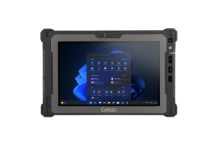
ZX80W
The ZX80W 8" fully rugged Windows tablet delivers AI-ready performance in a compact design, powered by Windows 11 IoT Enterprise LTSC, with extreme durability and a class-leading battery capacity for extended, reliable performance.www.getac.com - Related coverage: prnewswire.com

Getac's new 8-inch ZX80W and ZX80W-EX tablets blend Windows 11 functionality with energy-efficient fanless design, for all-day productivity in the field
Compact and lightweight form-factor meets powerful edge AI performance in Getac's versatile new offerings, built on ARM architecture News in brief: Getac is... www.prnewswire.com
- Related coverage: pv-magazine.es
Loading…
www.pv-magazine.es - Related coverage: briefglance.com
Loading…
briefglance.com