

Arrowhead Game Studios has quietly confirmed what many Helldivers 2 players have been dreaming about: the studio is building a prototype roguelite mode that, in the words of creative director Johan Pilestedt, “changes the game fundamentally.” The remark — dropped in response to a fan suggestion on social media — instantly reframes how we think about Helldivers 2’s future, turning speculation about endless waves and run-based progression into a concrete design thread the studio is actively exploring.
Helldivers 2 launched as a focused, high-intensity cooperative shooter on February 8, 2024 for PlayStation 5 and PC, and later expanded to Xbox Series X|S with a major platform release in August 2025. From day one the game sold and streamed in huge numbers; its core loop — drop in, complete objectives, manage resources and stratagems, survive hordes while avoiding friendly fire, then extract — has been the beating heart of the experience. Arrowhead’s live-service cadence has evolved since launch with major content updates (notably the Into the Unjust arc) and festival-sized Warbonds of new gear and cosmetics. These expansions demonstrate the team’s appetite for adding sandbox-y systems and fresh mission types, but until now the game’s fundamental session structure remained consistent: short-to-medium length, mission-driven deployments with heavy tactical pressure and shared lives. What changed this week is a single, offhand confirmation: Pilestedt wrote on X that Arrowhead “have a prototype of a rogue-lite mode” and that “it changes the game fundamentally.” That phrasing — the combination of prototype and fundamentally — is the buzziest part: this is not a skin-deep survival map or a rehashed Horde mode. Arrowhead appears to be experimenting with a structural shift in how Helldivers 2 can be played.
At the same time, Pilestedt is not a junior designer tossing out a wish — he’s Arrowhead’s creative lead and co-founder. His acknowledgement elevates the prototype above rumor: the studio has invested developer time and thought into a roguelite variant, and leadership has found something in that experiment that feels game-changing.
That said, the risks are real:
Source: Windows Central https://www.windowscentral.com/gami...at-changes-the-game-fundamentally-prototyped/
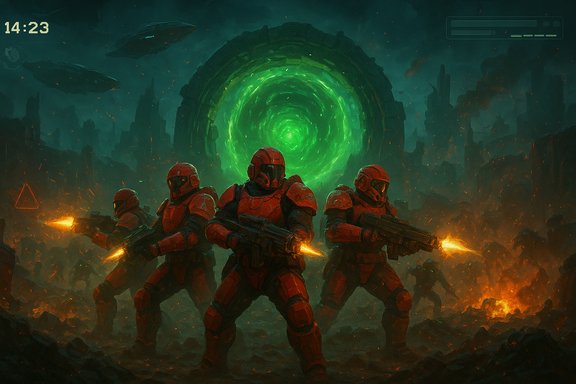 Background / Overview
Helldivers 2 launched as a focused, high-intensity cooperative shooter on February 8, 2024 for PlayStation 5 and PC, and later expanded to Xbox Series X|S with a major platform release in August 2025. From day one the game sold and streamed in huge numbers; its core loop — drop in, complete objectives, manage resources and stratagems, survive hordes while avoiding friendly fire, then extract — has been the beating heart of the experience. Arrowhead’s live-service cadence has evolved since launch with major content updates (notably the Into the Unjust arc) and festival-sized Warbonds of new gear and cosmetics. These expansions demonstrate the team’s appetite for adding sandbox-y systems and fresh mission types, but until now the game’s fundamental session structure remained consistent: short-to-medium length, mission-driven deployments with heavy tactical pressure and shared lives. What changed this week is a single, offhand confirmation: Pilestedt wrote on X that Arrowhead “have a prototype of a rogue-lite mode” and that “it changes the game fundamentally.” That phrasing — the combination of prototype and fundamentally — is the buzziest part: this is not a skin-deep survival map or a rehashed Horde mode. Arrowhead appears to be experimenting with a structural shift in how Helldivers 2 can be played. What the confirmation actually means
Prototype vs. promise
A single social-media reply is not a development roadmap. Arrowhead’s statement is explicit about the prototype stage: the mode exists internally as a concept or early build, not as a public feature with a release date. That matters. Many studios prototype multiple large ideas every year; only a subset survives the design, technical, and economic vetting required for full release.At the same time, Pilestedt is not a junior designer tossing out a wish — he’s Arrowhead’s creative lead and co-founder. His acknowledgement elevates the prototype above rumor: the studio has invested developer time and thought into a roguelite variant, and leadership has found something in that experiment that feels game-changing.
What “changes the game fundamentally” signals
When a developer says a mode “changes the game fundamentally,” they’re usually referring to alterations that touch the game’s loop, player incentives, and economies — not just a new map or enemy type. For Helldivers 2, that could mean:- replacing short, objective-based missions with run-based play where progression and death behave differently;
- persistent meta-progression across runs (unlock trees, permanent stratagems, or persistent loadout upgrades);
- altered lives/respawn models and economy rules where single-player deaths ripple through a run differently; or
- changing enemy density, scaling, and encounter pacing to support long-form endurance.
How a roguelite could fit into Helldivers 2: practical designs
Below are practical, developer-friendly ways a roguelite mode could be implemented while preserving what makes Helldivers 2 special.1) Run-based stratagem economy (short-to-medium runs)
- Players launch into a single map and attempt to complete sequential objectives that grow more difficult.
- Between waves or objectives, teams pick or draft temporary upgrades, stratagem augments, or map modifiers.
- Permanent unlocks are gated to meta-progression trees that reward repeated success but don’t trivialize core missions.
2) Progressive hazard + permanent meta
- Permadeath at the run level (not permanent account death) with a persistent progression track.
- Each failed run yields partial currency, unlockable perks, and “legacy” bonuses that slightly improve future runs.
- Randomized modifiers (afflictions or boons) keep runs unexpected, while the meta track retains long-term goals.
3) Endless survival with rotation & rearm
- A Firefight/Horde-like survival mode where waves escalate indefinitely and players rearm between waves.
- Optional “shops” or drop zones let teams buy one-use stratagems, tent upgrades, or defensive emplacements.
- Leaderboards, seasonal modifiers, and contract-style rewards provide repeatability.
Key design challenges Arrowhead must solve
Designing a roguelite for a co-op shooter built around friendly fire, powerful stratagems, and team lifepools is a non-trivial problem. Here are the primary hurdles and why they’re hard.Friendly fire complicates run-based permanence
Helldivers’ always-on friendly fire is a signature system — bullets, explosives, and even deployed turrets can kill allies. That tension is crucial to the game’s identity and is non-negotiable for the studio; Pilestedt and Arrowhead have repeatedly defended keeping it enabled as a core rule of the world. Any roguelite design that introduces persistent upgrades or permanent stat boosts has to consider how the presence of friendly fire increases the risk of jarring, run-ending team mistakes. Designers must balance power with fragility to avoid runs ending through accidental team kills rather than design-driven challenge.Network and persistence requirements
Run-based modes require different server behavior: persistent leaderboards, run continuation logic, and robust reconnection systems. Helldivers already experienced a very public stress test when the Xbox release sent player counts soaring and servers struggled under the load. That incident — where spikes pushed concurrent players into the hundreds of thousands and caused crashes or login issues — is a caution: building an always-on, long-run mode increases server complexity and variance in failure modes. The studio’s recent focus on stabilizing services is as much about enabling new modes as about player-facing polish.Balancing stratagems for longer sessions
Most Helldivers stratagems are designed for short missions. If runs extend into a roguelite loop, stratagem design must support repeated use without trivializing threat. That demands new classes of stratagems: persistent defenses, cooldown-scaling, or resource sinks that are meaningful across many encounters. The risk is meta-bloat — either the mode becomes trivial when combos emerge, or it becomes punishing when resources never catch up.Player expectation and matchmaking
Roguelite modes can be more solo-friendly than Helldivers’ default squad-first design. Designing matchmaking that respects player intent (quick-fire public runs vs. organized four-player pushes) is essential to avoid alienating the cooperative core or creating toxic public lobbies where experienced players dominate matchmaking.Lessons from other games: what to steal, what to avoid
Arrowhead’s experiment doesn’t happen in a vacuum. Several recent co-op and roguelite hybrids provide useful reference points.- Horde/Firefight modes (Gears of War, Halo): excellent at scaling waves, but often shallow in meta-progression. If Arrowhead goes this route, they must layer unique Helldivers systems (stratagem economy, map hazards) to avoid a generic feel.
- Run-based roguelites (Hades, Dead Cells): shine when runs have meaningful choice and meta-progression is rewarding. The trick is making each run feel both consequential and fair — randomness should create meaningful tactical pivots, not arbitrary failure.
- Co-op roguelites (Risk of Rain 2, Vampire Survivors derivatives): multiplayer runs complicate persistence and pacing. Reward-sharing and loot distribution require careful design to prevent griefing or unequal reward capture.
Monetization and live-service implications
Any new major mode prompts questions about how it will be monetized and how it plays with existing Warbonds and cosmetic economies.- If roguelite runs reward exclusive progression-only unlocks behind paywalls, community pushback would be swift. The game’s live-service model has so far centered on cosmetic Warbonds and optional bundles; preserving access parity for core progression will be crucial.
- Cosmetic rewards tied to run milestones (seasonal capes, skins for completing difficult run achievements) are a lower-friction route: they provide aspirational goals without gating core gameplay.
- Paid convenience (auto-retries, extra storage for meta items) is a tempting revenue stream but risks eroding the mode’s challenge legitimacy.
Community reaction and expectations
The Helldivers community is avid and vocal. The reaction to Pilestedt’s confirmation split along two familiar lines:- Optimists see a roguelite as the perfect complement to Helldivers’ moment-to-moment chaos: more replayability, new tactical decisions, and a fresh long-tail of goals.
- Skeptics caution that a misdesigned roguelite could undermine the game’s identity, overcomplicate matchmaking, or introduce monetization pressure.
Technical timeline realities: don’t expect it tomorrow
A few practical realities temper excitement:- Prototype -> polish -> release is a long road. Internal prototypes often help clarify art direction more than they guarantee release. Many prototypes are abandoned once technical debt, player testing, or business constraints bite.
- Server stability first. Arrowhead’s public communications and recent patches show a studio actively shoring up performance and services after the Xbox launch spike. A stable backend is a non-negotiable requirement before shipping persistent or run-based modes at scale.
- Community testing is essential. Co-op roguelites require careful telemetry and live testing to find progression pacing, balance, and edge-case failure modes — all things that demand time and iteration.
Concrete signs to watch for (what will reveal progress)
If you want to track whether this prototype is moving toward release, watch for these signals:- Playtests or closed betas announced by Arrowhead — the strongest sign a prototype is maturing.
- Telemetry-focused patch notes — if updates increase server monitoring, run-resume reliability, or introduce persistent storage mechanics, that’d be a technical breadcrumb.
- New stratagems or UI changes mentioning runs — UI hints (shops, reroll menus, legacy trees) often show up before modes ship.
- Official dev diaries or GDC-style postmortems — Arrowhead has used public channels before to discuss design rationale; an official write-up would be decisive.
Final analysis: big opportunity, big risks
A Helldivers 2 roguelite mode is a high-reward idea that plays to Arrowhead’s strengths: tactical combat, stratagem depth, and a memorable cooperative identity. If Arrowhead can marry run-level tension to a fair meta-progression system while preserving the game’s laws (notably friendly fire), it could become a long-term retention engine and a fresh way for players to experience the sandbox.That said, the risks are real:
- persistent progression + friendly fire = design friction that can produce frustration if not carefully tuned;
- server and persistence complexity raises the bar for a smooth launch after the studio’s experience with cross-platform spikes; and
- monetization choices will be scrutinized given the game’s high-profile status and strong community engagement.
Quick takeaways
- Arrowhead confirmed an internal prototype for a roguelite mode that it says “changes the game fundamentally.”
- Helldivers 2’s identity (friendly fire, stratagems, squad play) gives the studio unique design levers for a roguelite, but those same systems complicate persistence and balance.
- Technical readiness is a gating factor: recent Xbox platform growth crashed servers at peak, underscoring the need for robust backend work before shipping new persistent modes.
- Expect a long prototyping window, incremental signals (playtests, UI changes), and community scrutiny on monetization and fairness before a final release is realistic.
Source: Windows Central https://www.windowscentral.com/gami...at-changes-the-game-fundamentally-prototyped/
