

Highwire’s new AI Index arrives as a practical — and timely — attempt to measure how corporate brands are represented inside the major generative‑AI assistants that increasingly stand between customers and decisions.
Highwire, the San Francisco‑based communications agency, announced the Highwire AI Index on November 6, 2025 — a proprietary metric that the company says produces a continuously updated single score showing a brand’s visibility, reputation influence, and the web sources that model‑based assistants cite when answering questions about that brand. The product launch is billed as a response to the growing role of LLM‑driven assistants (ChatGPT, Gemini, Claude and similar platforms) in discovery and decision‑making, and as a tool for comms and marketing teams that want a repeatable way to benchmark presence across those environments. The announcement has already been picked up in trade outlets and aggregators as an example of the new vendor category now emerging around “Answer Engine Optimization” — tools and services explicitly designed to help brands appear in AI‑assistant answers rather than just in classic search engine results. Early coverage frames the Index as complementary to SEO tools, with a different emphasis: narrative influence, reputation and source pull‑through rather than keyword rankings alone.
Use the score for:
Conclusion
The Highwire AI Index is a practical, market‑timely response to the problem of brand visibility in AI‑driven discovery. For communications leaders charged with protecting reputation and shaping narrative, tools that surface where and how assistants reference their organization are valuable. The real test will be methodological transparency, the Index’s resilience to platform change and gaming, and whether organisations can convert visibility gains into measurable trust and business outcomes. Until vendors publish full reproducibility details and customers run independent holdouts, treat Index scores as an actionable early‑warning system — not a final verdict.
Source: The Manila Times Highwire Launches AI Index to Measure Brand Presence in Generative AI Platforms
 Background
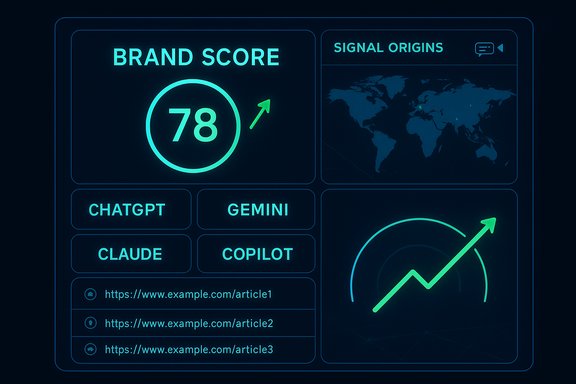
Highwire, the San Francisco‑based communications agency, announced the Highwire AI Index on November 6, 2025 — a proprietary metric that the company says produces a continuously updated single score showing a brand’s visibility, reputation influence, and the web sources that model‑based assistants cite when answering questions about that brand. The product launch is billed as a response to the growing role of LLM‑driven assistants (ChatGPT, Gemini, Claude and similar platforms) in discovery and decision‑making, and as a tool for comms and marketing teams that want a repeatable way to benchmark presence across those environments. The announcement has already been picked up in trade outlets and aggregators as an example of the new vendor category now emerging around “Answer Engine Optimization” — tools and services explicitly designed to help brands appear in AI‑assistant answers rather than just in classic search engine results. Early coverage frames the Index as complementary to SEO tools, with a different emphasis: narrative influence, reputation and source pull‑through rather than keyword rankings alone. Overview: what Highwire says the AI Index does
- Produces a single, continuously updated score for a brand based on thousands of AI‑assistant queries.
- Benchmarks visibility across multiple LLM platforms (called out by name: ChatGPT, Gemini, Claude, plus references to Google AI mode and Microsoft Copilot).
- Identifies the web pages and third‑party sources that contribute most to an assistant’s references about a brand.
- Provides exportable reports, trend data and dashboard integration for Highwire clients.
Why this matters now: the shift from search results to AI answers
Over the past two years assistant‑style interfaces have moved from novelty to primary discovery surface for large numbers of users. When an assistant synthesizes a response, the user can be satisfied without clicking through; that reduces downstream referral traffic and concentrates power in retrieval and summarization layers that are opaque to outsiders. For brands, the key questions are not just whether they rank on page one of search, but whether they are being cited — accurately and with correct provenance — by the assistants people use to make choices. Industry coverage notes that tools which measure visibility across generative AI engines are appearing because marketing teams increasingly need to track those surfaces, not just classic SERPs. The stakes are reputational. Several recent audits of widely used assistants show meaningful variation in factual accuracy and in the sources used, and they highlight the risk that unreliable or manipulated web content can influence model outputs. That environment makes it strategically important for communications leaders to understand where AI systems are finding their signals and how brands can either reinforce or repair those signals.How the AI Index likely works — and where assumptions matter
Highwire’s announcement provides a product‑level description but, as with most vendor releases, stops short of technical minutiae. Based on the claims in the release and common industry practice, the following is a plausible architecture for the Index:- Repeated, standardized prompts: the Index runs thousands of consistent queries against multiple assistant platforms to build a representative sample of how those systems answer brand queries.
- Prompt and context engineering: prompts are normalized to reduce variance introduced by phrasing, persona, or dialogue context.
- Source extraction: Indexing logic captures the sources an assistant cites (when citations are present) or infers the URLs/text snippets that seem to have informed an answer.
- Aggregation and scoring: those signals are aggregated into a single score using a proprietary weighting that likely balances frequency of citation, source authority, topical relevance and message pull‑through.
- Trend and competitive benchmarking: results are tracked over time and compared against competitor sets and topical themes.
Strengths: what the AI Index brings to comms and marketing teams
- A focused metric for a new channel. The Index responds to a measurable gap: traditional SEO metrics (rankings, clicks, impressions) do not map cleanly to assistant citations and narrative influence. A dedicated metric lets teams track a single axis of AI presence.
- Cross‑platform benchmarking. By querying multiple LLM providers, the Index reduces single‑platform blind spots and helps brands understand differences across assistant retrieval stacks.
- Operational clarity for reputation work. The tool’s emphasis on “sources that drive competitive references” is useful for PR teams that rely on third‑party credibility — it points to which earned placements or pages are actually being used by assistants, not just by humans.
- Productizable insight. Exportable reports and dashboard integration make it easier to fold assistant visibility into planning cycles and quarterly goals, rather than treating it as an ad‑hoc monitoring activity.
Risks, limitations and areas to audit aggressively
While the Index addresses an important need, several structural risks and methodological limitations require close scrutiny before teams treat scores as definitive.1) Model variability and product changes
Assistant behavior changes frequently — model updates, prompt‑tuning, or changes to retrieval layers can shift results overnight. A sample collected on Monday may look materially different on Wednesday if a vendor tweaks reward functions or update deployment. Any vendor producing an “Index” must disclose how it handles model versioning and signal discontinuities.2) Prompt and sampling bias
The choice of prompts, the topical scope, and the time windows sampled determine outcomes. Without full transparency in how queries are constructed and randomized, results can be gamed — inadvertently favoring certain content types or formats. Ask for the prompt bank and sampling cadence.3) Source attribution gaps
Some assistants provide explicit citations; others synthesize without showing sources. Where citations are absent, the Index must infer provenance through heuristics — an inherently fragile step that should be disclosed and audited.4) Measurement of influence vs. accuracy
A page that is often cited by assistants may be influential but not necessarily accurate or desirable for a brand. The Index can show where AI finds you, but not whether the assistant’s statements are correct or aligned with corporate messaging. Highwire’s comms framing is helpful, but marketing teams should pair the Index with accuracy audits.5) Gaming and manipulation risk
Bad actors intentionally structure low‑quality pages to be easily retrieved by assistants. Industry audits have shown coordinated content farms and “machine‑grooming” operations that can shift retrieval signals. Any visibility tool must account for such manipulation vectors and offer a way to distinguish legitimate authority from gaming.6) Platform transparency and legal constraints
Major platform providers control retrieval stacks and often do not disclose how sources are weighted. That lack of transparency reduces the ability to make guaranteed claims (for example, “we will get Brand X cited by ChatGPT”). Vendors should avoid promises that imply contractual control over third‑party platforms. Where these risks are unresolved or opaque in the vendor materials, they should be flagged as caveats in briefings and procurement documents.How to validate an AI‑visibility tool: a checklist for buyers
When evaluating the AI Index or comparable offerings, communications and marcom leaders should insist on the following evidence and contractual protections.- Reproducible sample logs: time‑stamped query logs and assistant responses for an agreed list of prompts and time windows.
- Model version tracking: record which model or product version was queried (e.g., “ChatGPT, GPT‑4o with web retrieval, v2025‑11‑01”) and how updates are handled.
- Prompt transparency: the bank of test prompts, including negative controls and localization variants.
- Source extraction methodology: clear description of how the tool attributes content to URLs when assistants do not provide explicit citations.
- Anti‑gaming detection: heuristics or signals that flag low‑quality, high‑volume content farms or coordinated campaigns.
- Independent audits: willingness to provide third‑party verification or to run customer‑owned holdouts for measurement validation.
- Data governance: how customer identifiers, brand queries, or any PII used in testing are stored, retained and protected.
Practical playbook for communications and marketing teams
Brands do not need bespoke tooling to start improving their odds of being represented well in assistant outputs. The following steps are pragmatic and can be implemented regardless of whether you use Highwire’s AI Index.- Short‑term (0–3 months)
- Audit and fix canonical metadata: authorship, schema.org structured data, canonical tags and consistent bylines help retrieval stacks attribute content correctly.
- Boost high‑quality third‑party placements: secure earned media on reputable publisher domains; those placements are frequently trusted by AI retrieval systems.
- Create concise machine‑friendly summaries: publish clear, factual summary pages (FAQ, executive summary, one‑page product facts) that are easily parsable.
- Mid‑term (3–9 months)
- Build repeatable monitoring: sample assistant outputs for core brand queries weekly and save logs for trend comparison.
- Run controlled experiments: publish a canonical “fact sheet” and compare citation frequency vs. existing long‑form pages.
- Strengthen signal hygiene: ensure backlinks, canonicalization and author metadata are consistent across major properties.
- Long‑term (9–18 months)
- Invest in provenance feeds: syndicate authoritative datasets or curated APIs (white‑label feeds, press kits) to trusted publishers and partners.
- Integrate AEO into comms playbooks: make AI‑visibility a measurable objective in PR and content planning, not an afterthought.
- Participate in standards work: engage with publisher consortia or platform APIs that aim to support provenance and compensation frameworks.
Regulatory, legal and ethical considerations
- Disclosure and endorsements: regulators increasingly scrutinize undisclosed sponsored content; if your paid placements feed assistant citations without clear disclosure, there may be compliance exposure.
- Copyright and model training: publishers and brands still face unresolved questions about how public content is used to train models; contractual safeguards and opt‑outs may matter in future negotiations.
- Consumer protection: incorrect assistant outputs in regulated domains (healthcare, finance) can cause material harm. Controls on model usage and human sign‑off remain essential.
How to interpret the AI Index score in practice
Think of the score as a diagnostic — not an absolute oracle. A rising Index score indicates increasing visibility or citation frequency across sampled assistants; a falling score indicates the opposite. But do not equate a high score with correctness or brand safety.Use the score for:
- Trend detection (is my AI visibility improving month‑over‑month?
- Competitive benchmarking (how do we stack up vs. peers in the same topical set?
- Prioritizing assets (which pages are driving citations and deserve optimization or syndication).
- A guarantee of sales lift without downstream attribution experiments.
- A legal or compliance signoff on accuracy in regulated statements.
- A substitute for human editorial control when publishing claims that may be used by assistants as authoritative outputs.
Verdict: useful, conditional, and in need of transparency
Highwire’s AI Index is a useful addition to the emerging toolkit for brands that face a world where AI assistants are primary discovery surfaces. It answers a real need for consistent measurement and benchmarking across multiple assistants, and it packages comms‑centric signals in a way that marketing and PR teams can act on. Independent trade coverage has treated the launch as a natural evolution in analytics for gen‑AI discovery channels. That said, the value of any single score depends entirely on the transparency and stability of the underlying methodology. Without clear disclosure about prompt design, sample sizes, model versioning and source‑attribution logic, buyers should treat Index outputs as directional intelligence — valuable for prioritising work and tracking relative change, but not as absolute truth. The industry context — where assistants vary, where retrieval stacks are updated frequently, and where hostile actors can game signals — makes independent reproducibility and audit trails essential.Final recommendations for WindowsForum readers and brand teams
- Treat the Highwire AI Index as one tool among many: combine Index signals with human‑led accuracy audits and traditional SEO/analytics.
- Demand transparency: require time‑stamped query logs, model identifiers, and prompt sets as part of any proof package.
- Prioritise authoritative placements and structured data: build assets designed for machine consumption while protecting editorial integrity.
- Run experiments: measure downstream click‑through, conversion and sentiment changes tied to improved AI visibility to build a networked ROI case.
- Prepare for volatility: include model‑update contingency plans in comms playbooks, and keep human‑in‑the‑loop review processes for high‑risk statements.
Conclusion
The Highwire AI Index is a practical, market‑timely response to the problem of brand visibility in AI‑driven discovery. For communications leaders charged with protecting reputation and shaping narrative, tools that surface where and how assistants reference their organization are valuable. The real test will be methodological transparency, the Index’s resilience to platform change and gaming, and whether organisations can convert visibility gains into measurable trust and business outcomes. Until vendors publish full reproducibility details and customers run independent holdouts, treat Index scores as an actionable early‑warning system — not a final verdict.
Source: The Manila Times Highwire Launches AI Index to Measure Brand Presence in Generative AI Platforms
