

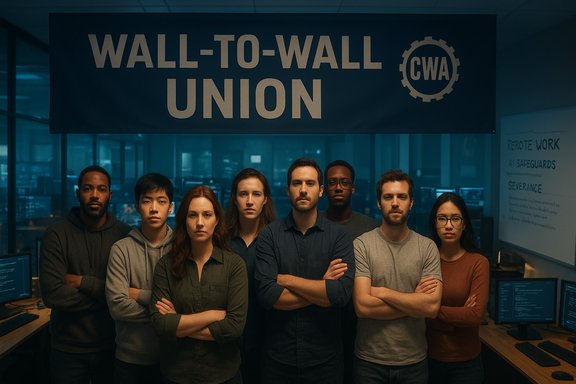
As id Software’s studio in Richardson, Texas, voted to form a wall-to-wall union this week, Microsoft faces a new chapter in corporate-labor relations that will reshape how its studios negotiate working conditions, remote work, AI protections, and job security across a sprawling portfolio of acquired teams. The 165 id Software employees who affirmed union representation under the Communications Workers of America (CWA) mark yet another high-profile organizing win inside Microsoft’s gaming division — one that arrives on the heels of widespread industry layoffs, multiple prior union victories at Microsoft-owned studios, and an explicit company policy of voluntary recognition when workers choose to organize.
The immediate months ahead will reveal whether Microsoft can convert voluntary recognition into a functional, collaborative model of industrial relations that preserves creative freedom while offering workers the compensation, safeguards, and stability they sought in forming a union. The id Software agreement will not only affect Doom’s next patch or DLC: it will be a data point in how modern tech giants manage creative labor during a technological and organizational transition that includes AI, remote work, and ongoing industry consolidation.
Source: Windows Central id Software, makers of DOOM, forms union — Microsoft faces new labor era
 Background
What happened, in brief
A strong majority of id Software staff indicated their desire to join CWA Local 6215, creating a bargaining unit that the union describes as “wall-to-wall” — covering developers, artists, programmers, and support roles across the studio. Microsoft has voluntarily recognized the result in line with the neutrality principles it signed with labor organizers after its large acquisitions, meaning a formal election was not required before recognition. CWA reports that 165 id Software workers will be members of the new unit.Why this matters now
id Software is an iconic studio — the maker of DOOM and Quake — and the timing is notable. Its recent release, DOOM: The Dark Ages, has both commercial and critical momentum, taking home the Innovation in Accessibility award at The Game Awards; yet the union drive highlights that positive product reception does not insulate studios from worker concerns about job security, remote-work policy, and the role of AI in creative workflows. The id Software vote is part of a larger wave of organizing across Microsoft-owned studios that has rapidly increased the number of union-represented game workers inside the company.Overview of the current union landscape at Microsoft-owned studios
A growing coalition of organized studios
Since Microsoft’s acquisitions and subsequent investments in gaming, the company’s studios have become a focal point for organized labor. Bethesda Game Studios organized a wall-to-wall unit in mid-2024 and ZeniMax Online Studios followed by forming its own union, with Microsoft recognizing both. The CWA and its CODE-CWA campaign have been the primary organizers for these units, and their roll-up now includes id Software’s 165 workers — bringing the total number of union-represented employees across Microsoft game studios into the low thousands, according to union tallies. Those figures are reported by the CWA and multiple industry outlets and reflect the cumulative organizing activity across Bethesda, ZeniMax, and various Blizzard and Activision units that joined the movement.Numbers and scale: how many developers?
The CWA has said there are nearly 4,000 union-represented workers at Microsoft after the latest additions, though independent tallies and reporting sometimes list slightly different totals depending on which units and geographies are included. The best available public figure from the union places the number in the range of several thousand employees across studios and roles — a significant scale for a single corporate owner within the games sector. This aggregation matters because it changes negotiating dynamics: Microsoft is no longer balancing isolated shop-level disputes but managing a multi-studio constellation of bargaining units with overlapping priorities and bargaining leverage.What “wall-to-wall” means — and why id Software’s vote is consequential
Definition and implications
A wall-to-wall union means the bargaining unit seeks to represent virtually all employees at the facility or company — not just a subset like QA testers or a single team. That broad coverage is designed to prevent management from creating divisions between represented and unrepresented workers and gives the union a stronger negotiating position when discussing studio-wide policies such as return-to-office (RTO) mandates, workplace AI use, job classifications, severance, and benefits. id Software’s unit is described as wall-to-wall, meaning negotiations will address many cross-cutting policies rather than narrow shop-floor issues.Why id Software specifically matters to Microsoft
id Software combines a storied brand with technical IP and engine expertise. Keeping that talent motivated and retained is strategically important for Microsoft’s content pipeline. The unionization therefore creates both a risk and an opportunity: a risk if contentious bargaining or rigid policies drive turnover; an opportunity if a negotiated contract improves stability, codifies sensible AI and remote-work rules, and becomes a template for other studios. The company’s response and approach to bargaining will be studied by union organizers and other studio teams across the industry.Key themes id Software organizers emphasized
- Remote work protections — organizers argue remote work is not a perk but a necessity for health, accessibility, and family balance. They want RTO policies to be bargained, not unilaterally imposed.
- AI safeguards — the studio’s staff listed protections against unchecked AI implementation as a priority, seeking contractual limits on how AI can replace or alter creative work.
- Job security and benefits — after waves of studio closures and layoffs, workers want explicit guarantees on severance, recall rights, and protections against outsourcing or sudden terminations.
Microsoft’s labor posture: neutrality, recognition, and the practical playbook
The neutrality agreement and voluntary recognition
Following the Activision Blizzard acquisition, Microsoft adopted a public posture that includes a labor neutrality agreement facilitating workers’ ability to organize without interference. In practice, this has meant Microsoft has frequently voluntarily recognized unions that present evidence of majority support, rather than insisting on protracted NLRB elections. id Software’s CWA unit was recognized under these circumstances. Voluntary recognition short-circuits contentious employer opposition and often speeds bargaining but also places a premium on how company leadership manages a new, long-term labor relationship.What voluntary recognition changes operationally
Voluntary recognition eliminates certain legal battles around representation but it also raises immediate management decisions: establishing bargaining schedules, deciding which issues to prioritize, and assigning legal and HR resources to support negotiation teams. Recognition commits Microsoft to the bargaining table but does not predetermine outcomes; concessions, timelines, and enforcement mechanisms still require negotiation. For a company that has consolidated dozens of studios, aligning corporate legal, HR, and product priorities across separate bargaining units will be a significant coordination challenge.The commercial context: games, awards, and morale
DOOM: The Dark Ages released earlier in 2025 and won the Innovation in Accessibility award at The Game Awards — proof that critical success can coincide with worker unrest. High-profile product wins increase public scrutiny of company behavior, giving workers more leverage and a media spotlight during bargaining. At the same time, successful launches raise corporate expectations for sequels, DLC, and sustained output, which can intensify pressure on studio workload and scheduling. How Microsoft and id Software balance those pressures while negotiating real protections will influence both studio productivity and employee morale.Potential benefits: stability, retention, and standardized protections
- Improved retention through clear benefits and job protections.
- Standardized remote-work policies that make geographic hiring and flexible schedules sustainable.
- Legally enforceable AI guardrails that protect creative labor and intellectual property rights.
- Predictable dispute-resolution processes (grievances, arbitration) that reduce ad-hoc terminations and litigation risk.
- Better-defined pathways for pay progression, role classifications, and severance — all of which reduce churn and hiring costs.
Real risks and trade-offs Microsoft must manage
1) Increased fixed costs and bargaining complexity
Collective bargaining tends to make compensation and benefits more standardized and thus more predictable — but also less flexible. Microsoft’s financing and portfolio decisions rely on balancing investment across multiple projects and studios; higher fixed labor costs reduce nimbleness when projects underperform. Additionally, when dozens of bargaining units with differing contract terms exist across the organization, the company faces administrative complexity and the risk of contract fragmentation.2) Slower product decisions and constrained resource shifts
Union contracts can include rules governing reassignments, layoffs, and job classifications, which can slow rapid reshuffling of resources. For studios managing live services or rapid pivots, these constraints may create friction, especially during difficult market conditions that require rapid restructuring. Microsoft will need to build more collaborative planning with unions to sustain healthy product pipelines while respecting bargaining outcomes.3) Precedent and cross-studio comparators
A strong contract at id Software could become a template for other studios seeking similar protections. That’s a double-edged sword: it may consolidate best practices industry-wide, but it may also escalate cost benchmarks that smaller studios or new ventures can’t match. As Microsoft handles more unionized units, it will increasingly face internal lobbying from unorganized teams seeking parity — a dynamic that can accelerate organizing momentum.4) Negotiation standoffs and public relations exposure
High-stakes bargaining sometimes leads to strikes, slowdowns, or public disputes. While Microsoft has often pursued voluntary recognition to minimize escalation, contentious bargaining or failure to reach agreements in a timely way could imperil release schedules and damage consumer perception. For brand-sensitive franchises like DOOM, repeated industrial strife would be an avoidable reputational risk.How bargaining might unfold: a practical roadmap
Opening phase: establishing scope and bargaining committees
- Management will identify which corporate units (HR, legal, product) will participate.
- The union will publish bargaining priorities and assemble its negotiating team from organized workers.
- Parties will agree on ground rules, schedules, and whether bargaining is single-studio or coordinated across Microsoft studios.
Middle phase: bargaining on priorities
Key topics likely to dominate include:- Remote work and hybrid models (clarifying expectations, equipment, travel compensation).
- AI usage policies (what constitutes acceptable assistance vs. replacement, IP ownership of AI-generated assets).
- Layoff/recall language and severance protections.
- Pay bands, promotions, and equity vesting considerations.
- Grievance and arbitration procedures.
Closing phase: ratification and implementation
Once a tentative agreement is reached, the union membership votes. Implementation requires updating HR systems, informing teams, and ensuring compliance across managers. Microsoft’s capacity to operationalize contract provisions quickly and transparently will be crucial to maintaining trust.The AI question: a focal point for contracts and policy
Artificial intelligence is singled out repeatedly in studio organizing drives as an existential and practical issue. Workers seek assurances that AI:- Will not be used to replace headcount in core creative roles without bargaining.
- Must have clear provenance requirements for training data to avoid IP and ethical controversies.
- Should be governed by explicit usage policies that protect authorship credit, compensation, and control over final creative decisions.
Industry ripple effects: what other studios and publishers will watch
- Organizing success at id Software bolsters momentum for union drives at independent and major publishers alike.
- If id Software negotiates durable AI and remote-work language, other studios may seek similar contract clauses as baseline protections.
- Investors and acquirers will pay closer attention to labor exposure when valuing studios, factoring in potential contractual obligations into long-term cost models.
- Talent mobility could shift: union contracts can make certain studios more attractive to candidates seeking stability, while others may tout flexibility and equity-based compensation to remain competitive.
Critical analysis: strengths, weaknesses, and likely outcomes
Notable strengths of the organizing push
- Collective leverage: Organizing multiple studios inside a single corporate owner builds negotiating heft and the potential for cross-unit support.
- Clear priorities: Workers have sharpened demands—remote-work rights, AI protections, and job security—that are easily translated into contractual language.
- Public sympathy: After years of layoffs and studio closures, public sentiment tilts toward workers, giving organizers an advantage in reputational bargaining.
Potential weaknesses and friction points
- Negotiation fragmentation: As contracts proliferate, maintaining consistent labor policy across the company will be administratively complex.
- Financial trade-offs: Expect pressure from corporate planning functions to keep labor costs aligned with revenue and investment strategies.
- Implementation risk: A strong contract is only as good as enforcement; weak grievance processes or under-resourced compliance can nullify negotiated protections.
Most likely outcomes in the near term
- id Software and Microsoft will engage in good-faith bargaining that yields a first contract in a predictable time window (months rather than years), given Microsoft’s recent record of voluntary recognition and previous contract negotiations at ZeniMax and Bethesda.
- Contract language will probably include hybrid-work provisions, explicit AI-use frameworks, and improved severance/recall protections. The exact economic terms (wages, bonuses, stock treatment) will be more varied and likely tailored to studio budget realities.
- Microsoft will invest in labor-relations infrastructure to manage multiple bargaining units, but the company will also seek to preserve managerial flexibility where possible — prompting careful, issue-by-issue negotiations.
Strategic recommendations for Microsoft and studio managers
- Treat bargaining as a strategic investment: prioritize retention and clarity over short-term cost savings that risk churn.
- Take a cross-functional approach to bargaining teams, including legal, product management, and studio leads to ensure agreements balance creativity and operational needs.
- Publish transparent AI usage frameworks that are legally enforceable and co-created with worker representatives to reduce mistrust and litigation risk.
- Use early wins (e.g., clear remote-work policy, improved severance terms) to stabilize morale and demonstrate the practical benefits of contractual discipline.
- Prepare contingency plans for phased implementation of costly provisions, aligning them with product cycles to minimize schedule disruptions.
What to watch next
- The contents of id Software’s initial bargaining proposals and Microsoft’s opening counter-proposals will signal where the company is willing to concede and where it will push back.
- Whether id Software’s contract includes enforceable AI guardrails; this will be among the most consequential clauses for creative industries broadly.
- How other unorganized studios under Microsoft respond: will they seek parity quickly, or will layered contract differences persist?
- Any strikes, slowdowns, or publicity escalations — though absent such disruptions, a negotiated settlement is the likeliest path forward.
Caveats and unverifiable claims
Public figures on aggregate union membership inside Microsoft vary slightly across reports. Union statements place the number of union-represented workers at Microsoft’s game studios in the low thousands and at times cite figures approaching nearly 4,000; independent media tallies sometimes report different totals depending on which units are counted and whether international members are included. Those numerical discrepancies should be treated as approximations until Microsoft or the CWA publish a definitive consolidated roster. Similarly, some public commentary around internal directives concerning AI usage at studios references managerial encouragement to explore AI tools, but firm, public documents specifying corporate mandates are limited; contract language will be the authoritative source once negotiated. These distinctions are noted to avoid overstating certainty where public data is aggregated from multiple union and reporting sources.Conclusion
id Software’s union vote is both symbolic and structural: symbolic because a heritage studio behind DOOM has joined the ranks of organized game developers, and structural because it deepens a pattern of multi-studio organizing inside Microsoft that will force new corporate practices around remote work, AI, and job security. For Microsoft, the choice is clear — treat bargaining as a design problem that requires cross-disciplinary solutions and treat the workforce as a strategic asset that benefits from predictable protections rather than an expense line to be minimized.The immediate months ahead will reveal whether Microsoft can convert voluntary recognition into a functional, collaborative model of industrial relations that preserves creative freedom while offering workers the compensation, safeguards, and stability they sought in forming a union. The id Software agreement will not only affect Doom’s next patch or DLC: it will be a data point in how modern tech giants manage creative labor during a technological and organizational transition that includes AI, remote work, and ongoing industry consolidation.
Source: Windows Central id Software, makers of DOOM, forms union — Microsoft faces new labor era
