

Microsoft is making a familiar but still consequential argument: for most Windows 11 users, the built-in security stack is enough. That message matters because it cuts against a long-standing assumption that “real” protection requires a paid third-party antivirus suite. It also arrives at a time when Windows 11’s own defenses have become more integrated, more cloud-aware, and more tightly tied to the operating system itself. Microsoft’s latest guidance frames Microsoft Defender Antivirus not as a fallback, but as the default answer for everyday protection.
For years, Windows security has been defined by a tension between convenience and control. Early versions of Windows were often criticized for being too open, too heavily targeted by malware, and too dependent on users making the right choices at the right time. That created a lucrative market for antivirus vendors, many of whom built their brands on the idea that Microsoft’s own tools were not enough. Over time, Microsoft responded by folding more protection into Windows itself, eventually turning Windows Security into a layered platform rather than a single anti-malware scanner.
The modern Windows 11 security story is not simply about antivirus signatures. Microsoft now emphasizes real-time protection, SmartScreen, ransomware defenses, and tighter integration between the operating system and security controls. The company’s current consumer-facing guidance says Windows 11 includes built-in antivirus software that is active by default, updated continuously, and designed to handle common threats without extra software. That is a very different posture from the era when Microsoft’s own defenses were treated as a minimum baseline rather than a serious recommendation.
This shift also reflects the broader security market. Third-party antivirus products have increasingly bundled identity monitoring, VPNs, parental controls, and subscription services, moving beyond pure malware detection. Microsoft is responding by arguing that many users do not need a heavier software stack just to stay safe. Its current messaging frames additional security tools as optional for special use cases, not mandatory for the average household or office PC.
At the enterprise level, Microsoft has long promoted the idea that software alone is not enough and that hardware, identity, cloud, and endpoint layers must work together. Consumer guidance now echoes that layered philosophy in a softer form. The company is effectively saying that if Windows 11 is configured correctly, updated regularly, and used sensibly, the built-in protections cover the most common risks for most people.
The important phrase here is most users. Microsoft is not targeting power users, security teams, or organizations with compliance obligations. It is speaking to people who browse, stream, shop, bank, and work from ordinary Windows PCs, where the main threats are malicious downloads, phishing sites, unsafe attachments, and opportunistic malware. In that context, the built-in stack is positioned as a strong default rather than a niche compromise.
That default-first philosophy is powerful because it reduces friction. A lot of consumer security fails not because the tools are weak, but because they are never configured, never updated, or never used. Microsoft is betting that a good built-in system, left on and kept current, will outperform a “better” paid tool that the user has disabled, ignored, or poorly set up. That is a defensible position even if it does not fit every threat model.
The practical implication is that antivirus should be thought of as one layer in a larger behavior-based system. If the user is clicking suspicious links, approving strange installers, or ignoring update prompts, even a strong security product will struggle. Microsoft’s message is as much about the human side of security as it is about the software side.
This matters because consumer antivirus is a mature market with familiar players and predictable upsell tactics. If Microsoft convinces users that the operating system already does enough, it weakens the value proposition of standalone antivirus packages. Those products still have business models, but the center of gravity shifts from core malware defense toward bundled extras such as identity monitoring, family safety, and premium support.
That evolution also reflects the way modern threats work. Malware is often distributed through phishing, malicious ads, compromised installers, or social engineering rather than obvious executable files alone. By folding browser warnings, download screening, and ransomware controls into the OS, Microsoft is aiming at the places where users actually get into trouble. That is a more realistic model than old-school antivirus theater.
For consumers, the upside is simplicity. For Microsoft, the upside is ecosystem control. If users accept that the OS itself is the security product, then Windows Security becomes not just a feature, but a platform lock-in mechanism of a very effective kind.
In practice, this means Windows 11 users are not relying on one scanner to do all the work. They are relying on a set of coordinated protections that collectively reduce the odds of infection. That layered approach is what makes Microsoft’s “enough for most users” claim plausible rather than merely promotional.
Equally important is the integration with Windows itself. Security tools that live inside the OS can benefit from telemetry, behavioral analysis, and platform hooks that third-party apps may not enjoy to the same extent. That does not make them perfect, but it does give them structural advantages in detection and response.
That is why the “enough protection” claim is conditional. It assumes a user who is reasonably cautious, keeps the PC patched, and does not repeatedly override warnings. In other words, Microsoft is not absolving users of responsibility; it is saying the built-in stack does a lot of the heavy lifting when users avoid obvious mistakes.
This does not mean third-party security is obsolete. It means the category has been forced to justify itself in more nuanced terms. Users who want extra features may still prefer a paid suite, but the basic “install this or you’re unsafe” message is much harder to defend in 2026 than it was a decade ago.
But the more those products expand into non-antivirus services, the more they risk becoming general-purpose safety bundles. That can be useful, yet it also dilutes the original promise of “better protection.” If Microsoft Defender is already good enough at the core job, vendors must win on extras rather than fundamentals.
For ordinary users, simplicity often wins. If the built-in security is quiet, automatic, and adequate, that may be more valuable than a richer feature list that requires more attention. This is where Microsoft has a strong messaging advantage: it can argue that fewer moving parts mean fewer chances for failure.
Consumers generally care about staying safe, minimizing hassle, and avoiding obvious scams. Enterprises care about compliance, visibility, centralized policy, incident response, and protecting data across thousands of endpoints. The built-in stack helps both groups, but the enterprise still needs more controls around identity, reporting, and orchestration.
That simplicity also matters for less technical family users. People who only want to browse safely and pay bills online should not need to become amateur security administrators. If Windows 11 can cover most common risks quietly, that is a genuine consumer win.
Even when Defender is the default endpoint protection agent, the enterprise still overlays it with policies, telemetry, and management tools. In other words, Microsoft’s consumer and business narratives are consistent but not identical. The consumer pitch is “enough for most”; the enterprise pitch is “necessary, but not sufficient.”
The bigger competitive story is that security is becoming a platform capability, not a standalone category. Windows 11 increasingly bundles the protections consumers expect most, which leaves rivals trying to convince users that their products are either more comfortable, more comprehensive, or better suited to special circumstances. That is a difficult sell when the default option is free and already installed.
For Microsoft, the economics are different. Security is part of product value, retention, and ecosystem trust, even if it does not appear as a separate line item in the same way. That gives Microsoft a structural edge in pricing because it can frame security as included rather than sold.
This also affects review culture and consumer advice. Writers and analysts increasingly have to separate genuine extra value from legacy assumptions about antivirus. That is healthy, but it can be painful for a market whose long-term messaging was built around necessity rather than preference.
The opportunity for Microsoft is bigger than security alone. By making Windows 11 the obvious default for protection, the company reinforces the broader message that the platform is simple, modern, and safe out of the box. That helps with consumer retention, enterprise credibility, and the perception that Windows is no longer the weak link it once was.
Another concern is that “most users” can be interpreted too broadly. People with higher-risk habits, shared devices, older hardware, or unusual software needs may still benefit from additional tools. The danger is not that Microsoft’s claim is wrong, but that it gets flattened into a one-size-fits-all rule.
The more interesting story may be the one around product design. Expect Microsoft to keep emphasizing safety as a default feature of Windows, while rivals lean harder into identity, family, and privacy services. That division of labor would leave the operating system to handle baseline defense and the market to compete on broader digital protection.
In the near term, users should expect the conversation to shift from “Do I need antivirus?” to “What kind of protection do I actually need?” That is a healthier debate, because it forces people to think about habits, risk level, and device usage rather than simply picking the loudest brand. Microsoft’s message is not the end of the antivirus story; it is the start of a more mature one.
Source: PCMag Australia Microsoft: Built-In Windows 11 Antivirus Is Enough Protection for Most Users
 Background
For years, Windows security has been defined by a tension between convenience and control. Early versions of Windows were often criticized for being too open, too heavily targeted by malware, and too dependent on users making the right choices at the right time. That created a lucrative market for antivirus vendors, many of whom built their brands on the idea that Microsoft’s own tools were not enough. Over time, Microsoft responded by folding more protection into Windows itself, eventually turning Windows Security into a layered platform rather than a single anti-malware scanner.The modern Windows 11 security story is not simply about antivirus signatures. Microsoft now emphasizes real-time protection, SmartScreen, ransomware defenses, and tighter integration between the operating system and security controls. The company’s current consumer-facing guidance says Windows 11 includes built-in antivirus software that is active by default, updated continuously, and designed to handle common threats without extra software. That is a very different posture from the era when Microsoft’s own defenses were treated as a minimum baseline rather than a serious recommendation.
This shift also reflects the broader security market. Third-party antivirus products have increasingly bundled identity monitoring, VPNs, parental controls, and subscription services, moving beyond pure malware detection. Microsoft is responding by arguing that many users do not need a heavier software stack just to stay safe. Its current messaging frames additional security tools as optional for special use cases, not mandatory for the average household or office PC.
At the enterprise level, Microsoft has long promoted the idea that software alone is not enough and that hardware, identity, cloud, and endpoint layers must work together. Consumer guidance now echoes that layered philosophy in a softer form. The company is effectively saying that if Windows 11 is configured correctly, updated regularly, and used sensibly, the built-in protections cover the most common risks for most people.
What Microsoft Is Actually Claiming
Microsoft’s position is more nuanced than the headline suggests. It is not claiming that every user can ignore all security risks or that no one should ever install additional software. Instead, the company says Microsoft Defender Antivirus and related Windows 11 protections are usually sufficient for everyday use when default protections remain enabled and users download software deliberately. That is a careful, practical distinction, and it matters because it focuses on behavior as much as software.The important phrase here is most users. Microsoft is not targeting power users, security teams, or organizations with compliance obligations. It is speaking to people who browse, stream, shop, bank, and work from ordinary Windows PCs, where the main threats are malicious downloads, phishing sites, unsafe attachments, and opportunistic malware. In that context, the built-in stack is positioned as a strong default rather than a niche compromise.
The default-protection argument
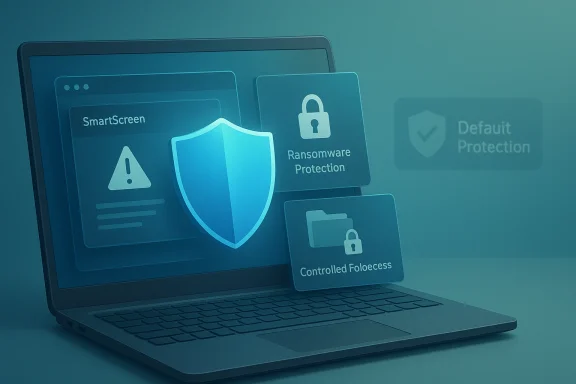
The core of the claim is that Windows 11 ships with protection turned on from the start. Microsoft’s guidance says Defender Antivirus is active by default, while SmartScreen and ransomware protections work alongside it. In practice, that means many users are already covered before they ever think about buying security software.That default-first philosophy is powerful because it reduces friction. A lot of consumer security fails not because the tools are weak, but because they are never configured, never updated, or never used. Microsoft is betting that a good built-in system, left on and kept current, will outperform a “better” paid tool that the user has disabled, ignored, or poorly set up. That is a defensible position even if it does not fit every threat model.
When the built-in stack is enough
Microsoft’s own wording suggests several conditions under which built-in protection is enough: Windows 11 running with default protections enabled, regular updates installed, and cautious software habits. That combination addresses the most common attack paths without adding the overhead and complexity of extra tools. It is also a sensible framework for less technical households that simply want to stay protected without managing another subscription.The practical implication is that antivirus should be thought of as one layer in a larger behavior-based system. If the user is clicking suspicious links, approving strange installers, or ignoring update prompts, even a strong security product will struggle. Microsoft’s message is as much about the human side of security as it is about the software side.
- Defender is active by default
- SmartScreen helps filter risky downloads and sites
- Ransomware features add a second layer
- Updates remain critical
- User behavior still matters more than brand names
Why This Matters Now
Microsoft is not making this argument in a vacuum. The company has been steadily reframing Windows 11 as its most secure consumer platform, and the timing of this message reinforces that pitch. A recent Microsoft Windows learning-center piece says the OS includes built-in antivirus software that is active by default, deeply integrated, and continuously updated, with many users not needing additional software. That is a clear effort to normalize Defender as the standard answer.This matters because consumer antivirus is a mature market with familiar players and predictable upsell tactics. If Microsoft convinces users that the operating system already does enough, it weakens the value proposition of standalone antivirus packages. Those products still have business models, but the center of gravity shifts from core malware defense toward bundled extras such as identity monitoring, family safety, and premium support.
The changing security baseline
The baseline for “good enough” security has changed. What once required separate software can now be handled natively by the platform, especially when cloud intelligence and OS-level controls are involved. Windows 11’s security pitch is increasingly about continuous protection rather than a once-a-day signature scan.That evolution also reflects the way modern threats work. Malware is often distributed through phishing, malicious ads, compromised installers, or social engineering rather than obvious executable files alone. By folding browser warnings, download screening, and ransomware controls into the OS, Microsoft is aiming at the places where users actually get into trouble. That is a more realistic model than old-school antivirus theater.
Consumer trust as a strategic asset
There is also a branding advantage here. Microsoft benefits when users trust Windows 11 to handle security without an additional vendor in the middle. That trust reduces churn, simplifies the support story, and positions Microsoft as the default steward of PC safety. It is a subtle but important piece of platform power.For consumers, the upside is simplicity. For Microsoft, the upside is ecosystem control. If users accept that the OS itself is the security product, then Windows Security becomes not just a feature, but a platform lock-in mechanism of a very effective kind.
- Security becomes part of the OS identity
- Third-party vendors lose some default relevance
- Support becomes easier to explain
- Users face fewer installation choices
- Built-in controls become the trust anchor
Defender in the Real World
The strength of Microsoft’s argument depends on how well the built-in stack performs in daily use. Microsoft says Defender is a next-generation protection solution with real-time, always-on capabilities, while SmartScreen helps warn about malicious downloads and sites. The company’s guidance also points to controlled folder access and other ransomware protections as meaningful extras for people who want more resilience.In practice, this means Windows 11 users are not relying on one scanner to do all the work. They are relying on a set of coordinated protections that collectively reduce the odds of infection. That layered approach is what makes Microsoft’s “enough for most users” claim plausible rather than merely promotional.
Real-time protection and layered defenses
The phrase real-time matters because it changes the timing of defense. Instead of reacting after a scheduled scan, Defender can intervene when a file is downloaded, opened, or executed. That is crucial against modern threats that move quickly and may never linger on disk long enough to be caught later.Equally important is the integration with Windows itself. Security tools that live inside the OS can benefit from telemetry, behavioral analysis, and platform hooks that third-party apps may not enjoy to the same extent. That does not make them perfect, but it does give them structural advantages in detection and response.
Where users still create risk
No antivirus can fully compensate for poor habits. Unsafe downloads, pirated software, fake updates, suspicious email attachments, and credential theft remain serious hazards even on a well-protected Windows 11 machine. Microsoft’s own guidance repeatedly emphasizes that deliberate downloads and regular updates are part of the security equation.That is why the “enough protection” claim is conditional. It assumes a user who is reasonably cautious, keeps the PC patched, and does not repeatedly override warnings. In other words, Microsoft is not absolving users of responsibility; it is saying the built-in stack does a lot of the heavy lifting when users avoid obvious mistakes.
- Real-time blocking matters more than periodic scans
- Platform integration improves visibility
- Behavior still determines the margin of safety
- Downloads remain a major attack vector
- Warnings only help if users heed them
The Third-Party Antivirus Problem
Microsoft’s message inevitably raises a hard question: if Windows 11’s built-in security is enough, what exactly are consumers buying when they subscribe to third-party antivirus? The answer is increasingly not “malware protection alone.” Instead, vendors now compete on bundle value, offering VPNs, identity tools, password managers, parental controls, and support services. That shift tells you something important about the market.This does not mean third-party security is obsolete. It means the category has been forced to justify itself in more nuanced terms. Users who want extra features may still prefer a paid suite, but the basic “install this or you’re unsafe” message is much harder to defend in 2026 than it was a decade ago.
What rivals still offer
Some rival products still deliver stronger dashboards, broader parental controls, or more aggressive identity protection. Others claim better phishing coverage or more user-friendly alerts. Those are not trivial differentiators, especially in families or small offices where convenience and centralization matter.But the more those products expand into non-antivirus services, the more they risk becoming general-purpose safety bundles. That can be useful, yet it also dilutes the original promise of “better protection.” If Microsoft Defender is already good enough at the core job, vendors must win on extras rather than fundamentals.
The performance and complexity trade-off
There is also a very practical issue: every additional security layer adds background processes, configuration overhead, and possible compatibility headaches. Microsoft’s own guidance notes that extra tools can increase complexity and activity, which is a subtle nod to the performance trade-off many users experience. Security software that slows the machine down can become self-defeating.For ordinary users, simplicity often wins. If the built-in security is quiet, automatic, and adequate, that may be more valuable than a richer feature list that requires more attention. This is where Microsoft has a strong messaging advantage: it can argue that fewer moving parts mean fewer chances for failure.
- Third-party AV is increasingly a bundle play
- Core malware protection is no longer the only selling point
- Complexity can undermine user adoption
- Performance matters on everyday PCs
- Extra features only help if users actually need them
Enterprise vs Consumer Reality
It is tempting to read Microsoft’s claim as universal, but enterprise security is a different universe. Microsoft has long said that software alone is not enough for organizations, and its commercial Windows security materials emphasize chip-to-cloud protection, management, and layered defenses. That separation is telling: what is acceptable for a family laptop is not necessarily acceptable for a managed fleet.Consumers generally care about staying safe, minimizing hassle, and avoiding obvious scams. Enterprises care about compliance, visibility, centralized policy, incident response, and protecting data across thousands of endpoints. The built-in stack helps both groups, but the enterprise still needs more controls around identity, reporting, and orchestration.
Consumer simplicity wins
For consumers, built-in protection is appealing because it reduces decision fatigue. There is no licensing matrix to manage, no separate installer to maintain, and no confusing overlap between security products. Microsoft’s current guidance speaks directly to that desire for a low-maintenance default.That simplicity also matters for less technical family users. People who only want to browse safely and pay bills online should not need to become amateur security administrators. If Windows 11 can cover most common risks quietly, that is a genuine consumer win.
Enterprise layers remain essential
Organizations, by contrast, need controls that go well beyond antivirus. Microsoft’s own commercial messaging highlights hardware-backed security, identity protection, endpoint management, and protection from chip to cloud. That reflects an understanding that enterprise threats are broader, more persistent, and more expensive than consumer malware incidents.Even when Defender is the default endpoint protection agent, the enterprise still overlays it with policies, telemetry, and management tools. In other words, Microsoft’s consumer and business narratives are consistent but not identical. The consumer pitch is “enough for most”; the enterprise pitch is “necessary, but not sufficient.”
- Consumers need simplicity
- Enterprises need governance
- Identity is central in business environments
- Centralized management changes the equation
- Hardware-backed protections matter more at scale
The Competitive Implications
Microsoft’s position puts pressure on the entire security software market. If the OS vendor convinces users that built-in protection is enough, then antivirus vendors must compete on premium features, not basic necessity. That is a major strategic shift because it changes how products are marketed, priced, and justified.The bigger competitive story is that security is becoming a platform capability, not a standalone category. Windows 11 increasingly bundles the protections consumers expect most, which leaves rivals trying to convince users that their products are either more comfortable, more comprehensive, or better suited to special circumstances. That is a difficult sell when the default option is free and already installed.
Pressure on subscription economics
Most antivirus vendors depend on recurring revenue. If the average user decides Defender is enough, renewal rates can take a hit or be preserved only through non-antivirus add-ons. That is why the industry has drifted toward identity theft monitoring and other services that feel more differentiated than malware scanning alone.For Microsoft, the economics are different. Security is part of product value, retention, and ecosystem trust, even if it does not appear as a separate line item in the same way. That gives Microsoft a structural edge in pricing because it can frame security as included rather than sold.
Why this is hard to reverse
Once users internalize the idea that built-in is enough, it becomes hard for rivals to reconstruct fear-based selling. A product can still be excellent, but it must prove a positive reason to exist beyond “you need this to be safe.” That is a much more demanding pitch.This also affects review culture and consumer advice. Writers and analysts increasingly have to separate genuine extra value from legacy assumptions about antivirus. That is healthy, but it can be painful for a market whose long-term messaging was built around necessity rather than preference.
- Core antivirus becomes commoditized
- Bundles matter more than scans
- Microsoft gains trust through default inclusion
- Rivals must sell value, not fear
- Pricing power shifts toward the platform owner
Strengths and Opportunities
Microsoft’s approach has several clear strengths. It lowers friction, reduces the need for users to shop around, and makes security part of the Windows experience rather than an extra chore. It also reflects how modern threats are actually encountered: through downloads, links, and social engineering, not just infected disks and obvious malware files. That makes the built-in approach feel current rather than outdated.The opportunity for Microsoft is bigger than security alone. By making Windows 11 the obvious default for protection, the company reinforces the broader message that the platform is simple, modern, and safe out of the box. That helps with consumer retention, enterprise credibility, and the perception that Windows is no longer the weak link it once was.
- Lower friction for everyday users
- No extra subscription required for baseline protection
- Integrated controls reduce confusion
- Security becomes more intuitive
- Windows 11’s value proposition gets stronger
- Family and casual users benefit most
- Support and setup are simpler
Risks and Concerns
The biggest risk is overconfidence. When a platform owner says built-in protection is enough, some users may hear that as a reason to stop thinking about security entirely. That would be a mistake, because no antivirus product can fully compensate for reckless browsing, poor update habits, or falling for phishing scams. Security still depends on behavior.Another concern is that “most users” can be interpreted too broadly. People with higher-risk habits, shared devices, older hardware, or unusual software needs may still benefit from additional tools. The danger is not that Microsoft’s claim is wrong, but that it gets flattened into a one-size-fits-all rule.
- Users may become complacent
- High-risk cases need more than defaults
- Feature bundles can create false confidence
- Compatibility issues can still appear
- Third-party tools may be misused or duplicated
- Poor update habits undermine all layers
- Marketing shorthand can oversimplify nuance
Looking Ahead
The next few years will likely determine whether Microsoft’s position becomes the new norm or remains a well-defended claim. If Defender continues to perform well in independent testing and Windows 11 keeps tightening its protections, the case for separate consumer antivirus will weaken further. If major new attack patterns emerge, however, users may again look for additional reassurance beyond the built-in stack.The more interesting story may be the one around product design. Expect Microsoft to keep emphasizing safety as a default feature of Windows, while rivals lean harder into identity, family, and privacy services. That division of labor would leave the operating system to handle baseline defense and the market to compete on broader digital protection.
In the near term, users should expect the conversation to shift from “Do I need antivirus?” to “What kind of protection do I actually need?” That is a healthier debate, because it forces people to think about habits, risk level, and device usage rather than simply picking the loudest brand. Microsoft’s message is not the end of the antivirus story; it is the start of a more mature one.
- Defender’s reputation will be tested by real-world threats
- Bundled security services will keep expanding
- Consumer antivirus will lean more on extras
- Windows 11’s default protections may become the baseline expectation
- User education will matter more than ever
Source: PCMag Australia Microsoft: Built-In Windows 11 Antivirus Is Enough Protection for Most Users
