

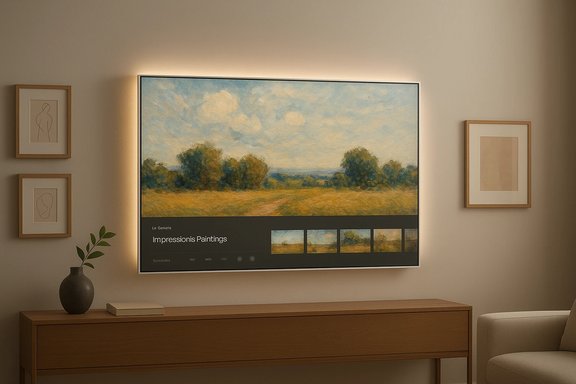
LG is taking aim at Samsung’s long-running lifestyle TV crown with the new Gallery TV, a Mini‑LED, 4K “art television” that LG will unveil at CES 2026 and which pairs a glare‑reducing matte canvas, magnetic snap‑on bezels and a curated art service called Gallery+ to turn a living‑room wall into a digital gallery. The set arrives in 55‑ and 65‑inch sizes, runs webOS and uses LG’s Alpha 7 AI processor to drive image tuning and picture optimization for both video playback and static artwork display.
Background / Overview
The idea of the TV-as-artwork has been mainstream since Samsung launched The Frame in 2017; over the years that category has grown into a small submarket that emphasizes a near‑flush wall mount, decorative bezels and software ecosystems for curated images. LG’s Gallery TV slots directly into that market with hardware and software designed expressly for art display: a specialized screen to cut reflections, a Gallery Mode tuned with input from museum curators, and a paid Gallery+ library with thousands of works to choose from. The feature set is explicitly meant to make the idle display behave less like a black mirror and more like a framed canvas. The timing matters. CES 2026 is the public stage for this move, a moment when manufacturers compete not only on raw picture specs but on lifestyle positioning and software services. LG’s entry completes a three‑way acceleration in the space: Samsung’s The Frame remains the category reference, and rivals such as TCL and Hisense have also started offering art‑focused TVs. LG’s pitch is that a combination of Mini‑LED hardware, AI processing and curator‑driven picture modes will differentiate its Gallery TV from incumbent alternatives.Design and hardware: what LG is shipping
Slim, flush mount with magnetic bezels
LG describes the Gallery TV as a thin, flush‑mount canvas designed to sit closely to the wall and blend into interior design. The set ships with at least one minimalist white bezel and will support optional magnetic frames in different materials and finishes to match home décor — an aesthetic and mechanical move that closely mirrors Samsung’s design language for The Frame. This approach is intended to reduce the visual footprint of the device when it’s functioning primarily as wall art.Sizes, chassis and audio
At launch the Gallery TV will be available in 55‑inch and 65‑inch models. LG’s press materials indicate a slim profile and an included mounting solution intended for low‑gap wall mounting. For audio, LG is bundling virtualized multi‑channel processing (marketed as AI Sound Pro or similar) so buyers can achieve acceptable ambient music playback for art displays without immediately needing a separate soundbar — a practical nod to the lifestyle buyer who values visual minimalism.Internals: Mini‑LED panel + Alpha 7 AI processor
Contrary to LG’s more common OLED‑led Gallery lineups, the Gallery TV adopts Mini‑LED backlighting and uses LG’s Alpha 7 AI processing to deliver 4K image quality and to power the Gallery Mode optimizations. The use of Mini‑LED is a deliberate engineering choice: it improves peak brightness and reduces the risk of image retention for prolonged static artwork displays compared to OLED, while still allowing fine local dimming control for contrast and highlight detail. LG’s release specifically cites an interior hardware and software stack meant to preserve texture in brushstrokes and to handle ambient light changes automatically.Display technology and image processing: the tradeoffs
Why Mini‑LED, not OLED?
LG’s choice to use Mini‑LED over OLED for an art TV is notable because LG is the world’s leading consumer OLED vendor. The reasons are practical: OLED excels at perfect blacks and infinite contrast, but extended display of static images risks differential pixel wear and image retention — a legitimate concern for an art display expected to show the same composition for long periods. Mini‑LED gives LG a route to high brightness (useful for rooms with ambient light), better protection against burn‑in, and precise local dimming when the backlight array is dense enough. That said, Mini‑LED implementations can still reveal haloing or blooming around small bright highlights depending on the number and density of local dimming zones and the quality of the dimming algorithm. Buyers should expect tradeoffs: higher brightness and burn‑in resistance vs. potential local dimming artifacts compared with OLED’s pixel‑level control.Gallery Mode and curator input
LG is marketing a specialized Gallery Mode that the company says was developed with museum curators to “optimize color and brightness to reproduce the visual texture of original masterpieces.” In plain terms that means the TV will apply picture processing tuned for still images — color calibration, tone mapping, sharpening tuned to preserve brushstroke texture — and ambient‑light compensation to keep the work looking natural throughout the day. LG’s press notes stress that the effect should be closer to a framed print under gallery lighting than a glaresome TV screen. While LG does not name specific museums or curators in its release, the collaboration signals an intent to prioritize color fidelity and texture over punchy consumer video presets.The Alpha 7 AI role
The Alpha 7 AI silicon is used to run the TV’s neural image processing pipeline: intelligent upscaling, texture preservation for artworks, and dynamic adjustments based on ambient sensor data. Expect the processor to perform real‑time scene detection and per‑scene optimization for video, while switching to a different tone and sharpness profile when Gallery Mode is active to hold color accuracy and avoid aggressive motion processing that could harm the still image appearance. Product previews suggest the processor is a generation‑appropriate unit tuned for webOS and LG’s multi‑AI approach.Gallery+: LG’s content strategy and subscription model
What’s included
LG’s Gallery+ is the content backbone for the Gallery TV. The service will provide access to a library of more than 4,500 curated artworks, ambient scenes, cinematic visuals and gaming imagery that users can display when the TV is not actively playing video. LG’s release highlights categories spanning classical paintings to modern multimedia pieces, plus rotating exhibitions and featured collections designed for the large screen. Users can also upload personal photos and use built‑in generative AI tools to create custom pieces, then pair images with background music. The Gallery+ ecosystem is intended to lock the hardware into an ongoing content experience that justifies the lifestyle premium.Free tier vs subscription and pricing signals
LG will offer a limited free tier with roughly a hundred or so works, while a paid Gallery+ subscription unlocks the full collection. Early reporting and previews have mentioned a subscription price of about $5 per month billed through webOS Pay, but that figure appears to come from early coverage and reporting rather than explicit pricing in LG’s headline press release; LG has not universally confirmed global pricing or regional tiers at the time of the announcement. Treat the $5/month figure as plausible but unconfirmed until LG posts final regional pricing and terms.Generative AI and user content
A modern art TV needs creative features, and LG is leaning into generative AI tools that let owners create unique artworks directly on the TV. That capability raises practical questions: where are the generative models executed (on‑device vs cloud), what metadata or user imagery is stored on LG servers, and what rights does LG claim over created content? LG’s PR highlights the feature but leaves implementation details light; buyers who plan to generate or upload sensitive images should look for explicit privacy terms and data handling explanations when the TV’s UI and support pages go live.Comparing the Gallery TV to Samsung’s The Frame
Feature parity and differences
Both LG’s Gallery TV and Samsung’s The Frame use decorative bezels, near‑flush mounting and art‑mode ecosystems. The key differences lie in the display technology and software ecosystem. Samsung’s The Frame historically uses QLED/QNED‑adjacent tech and a long‑running Art Store with its own licensing and curator relationships; Samsung has also iterated on anti‑reflection coatings and frame aesthetics across generations. LG is positioning the Gallery TV around Mini‑LED, the Alpha processor’s AI tuning, and the Gallery+ ecosystem with generative AI tools. In short: Samsung sells familiarity and ecosystem longevity; LG offers a different hardware approach and a new content platform.Practical considerations for buyers
- If maximum black level fidelity and cinema‑grade contrast are top priorities: OLED alternatives still hold an edge, but are less forgiving for static art because of long‑term image retention.
- If you want high brightness and better performance in lit rooms: Mini‑LED is an obvious plus.
- If you rely on a specific art store (e.g., Samsung’s Art Store) and the ecosystem matters more than hardware: The Frame’s longer market tenure could mean a broader selection of licensed prints and third‑party framing options.
- If subscription cost and long‑term service guarantees matter: check regional Gallery+ pricing, content licensing terms and LG’s update policy before committing.
Pricing, availability and the rumor track
LG’s official announcement sets the CES 2026 showcase date but does not lock in global launch windows or retail prices for all markets. Multiple outlets and secondary reporting have circulated a price rumor that pegs the 55‑inch Gallery TV around $1,499 and the 65‑inch near $1,999 — a competitive band that would place LG within reachable distance of premium framed TVs but still above mainstream general‑purpose 4K TVs. Importantly, these numbers have not been confirmed by LG and should be treated as preliminary pricing leaks rather than firm retail offers. LG’s public materials say the Gallery TV will be on display at CES and that global availability will follow, with exact timing and MSRPs to be announced later. From a market standpoint, those price points — if accurate — put LG into direct competition with higher‑trim versions of The Frame while undercutting some ultra‑premium décor solutions. Buyers with tight budgets will still find less expensive options from TCL, Hisense and other manufacturers that offer art modes at lower prices but usually with different hardware compromises.Risks, unknowns and practical caveats
Image artifacts and local dimming tradeoffs
Mini‑LED is not a panacea. If LG’s Gallery TV uses a smaller number of dimming zones or suboptimal dimming algorithms, viewers may notice blooming (halo artifacts) around small bright highlights on dark backgrounds — a known weakness of zone‑based backlights. That risk is especially relevant for art that contains small specular highlights or white pigments set against dark canvas regions. Expect independent reviews and lab measurements to focus on zone count, halo suppression and tone‑mapping fidelity once review units are available.Color accuracy, calibration and “museum‑grade” claims
LG’s statement about working with curators and optimizing Gallery Mode is promising, but such claims require verification with measurable metrics: Delta‑E, color‑space coverage, greyscale tracking and calibration presets. Marketing language like “museum‑grade” or curator collaboration should be interpreted as stylistic and procedural claims until third‑party measurements confirm low Delta‑E and accurate color temperature under Gallery Mode. Professional users who plan to use the set for image‑critical work should wait for lab results and possibly consider hardware that supports 3D LUTs and professional calibration workflows.Software longevity and subscription lock‑in
Gallery+ is attractive but it ties ongoing value to a cloud subscription. If LG changes pricing, discontinues the service, or limits features after purchase, owners may see the long‑term value of the Gallery TV decline. Buyers should examine the Gallery+ terms of service, regional pricing policy, and LG’s update/feature‑support commitments before factoring the subscription into the purchase decision. LG’s press statement promises multi‑device availability of Gallery+ across LG’s TV lineups, which is a favorable signal, but it does not guarantee perpetual pricing or content availability.Privacy and generative AI: data handling questions
The Gallery TV’s generative AI and photo‑upload features create potential privacy and copyright vectors. Important questions include: Where are images and prompts processed (local vs cloud), how long are generated images stored server‑side, what rights does LG claim over user creations, and how does Gallery+ handle artist licensing payments for uploaded or AI‑modified works? LG’s announcement is light on these legal and data management specifics; purchasers who plan to upload family photos or create sensitive artwork should insist on clear privacy documentation and controls when the product’s support pages and firmware updates arrive.Practical buying advice — what to test at CES or in‑store
- Check Gallery Mode vs standard picture modes with a colorimeter: measure Delta‑E, white point, and gamut coverage.
- Inspect static artwork for blooming and haloing under different brightness levels and room lighting conditions.
- Test magnetic bezels for fit, finish and accessory pricing — third‑party frame ecosystems are often an ongoing cost.
- Try the Gallery+ onboarding: verify the free tier, subscription UI in webOS Pay, and the generative AI workflow (speed, quality, and where processing occurs).
- Confirm software controls for privacy, data deletion and per‑user profiles if multiple household members will sign in.
Strategic implications for the TV market
LG’s Gallery TV signals an escalation in the lifestyle TV subsegment: competition is now about services and curated experiences as much as pixel counts. Samsung’s The Frame has long enjoyed brand recognition and a robust Art Store, which previously gave it a practical moat. LG’s entry — backed by a major content library and curator claims — could force more aggressive bundling, lower subscriptions or promotional art catalogs across vendors. The competition may also pressure price points down or prompt Samsung to add more advanced anti‑reflection coatings or larger sizes to differentiate. In short: consumers will benefit from increased choice but must navigate a more complex product map where hardware, software and recurring costs combine to determine long‑term value.Final verdict — where the Gallery TV fits and who should consider it
LG’s Gallery TV is a credible and strategically sensible entry into the framed‑TV category. Its strengths are a sensible hardware choice for static art (Mini‑LED), a curator‑driven Gallery Mode that prioritizes color and texture, and a content platform designed for discovery and creativity. For design‑minded buyers who want a dedicated canvas experience and who prefer bright, anti‑glare displays for sunlit rooms, the Gallery TV is an attractive option — especially if the rumored price points are broadly accurate.However, the product is not risk‑free: buyers should be clear that Mini‑LED introduces different artifacts than OLED, that Gallery+ is a subscription ecosystem with ongoing costs, and that LG’s generative AI and privacy mechanics require scrutiny. If you’re buying primarily for pure cinematic image quality in a dark room, an OLED alternative still merits consideration. If you want a framed art piece that’s forgiving in bright conditions and that avoids the long‑term burn‑in risk of OLED, LG’s Gallery TV is well‑positioned to be compelling.
LG will show the Gallery TV at CES 2026; attendees and early reviewers should focus on measured color accuracy, local dimming performance and the practical behavior of Gallery+ and generative features. Absent final pricing and hands‑on lab reviews, the smart move for buyers is to wait for independent measurements and firmware details before committing — but the Gallery TV has already widened the field and made the framed TV category a livelier and more competitive space heading into 2026.
Source: extremetech.com LG to Challenge Samsung Frame With New Gallery TV at CES 2026
