

Microsoft’s AI pivot is no longer a speculative footnote in its investor thesis — it’s the principal line item that will determine whether the company’s premium valuation is deserved or at risk of compression. The Seeking Alpha coverage that prompted this reality check argues exactly that: Microsoft has built a defensible, high‑scale path to enterprise AI monetization, but the payoff depends on a chain of operational deliverables — seat conversion, inference economics, capex utilization, and custom silicon timing — any of which could delay returns and keep multiples range‑bound. rview
Microsoft entered the generative AI era with three rare advantages: an installed base across productivity software, the distribution of Microsoft 365 and Windows, and deep cloud scale through Azure. Those assets let Microsoft bundle AI experiences (Copilot) directly into products where enterprise customers already pay recurring subscriptions. That integration is the core of the bullish thesis: turn embedded AI features into paid seats and high‑retention annuities.
But integration andy half the story. Delivering AI at enterprise scale is extremely capital‑intensive. Microsoft has publicly disclosed multibillion‑dollar capital commitments to expand GPU capacity and data centers to support model training, fine‑tuning, and inference workloads. Those investments create a timing problem: revenue from AI features must grow fast enough — and with favorable per‑unit economics — to absorb elevated capex and avoid durable margin pressure. The Seeking Alpha analysis frames that risk with a clear scenario structure: bull, base, and bear outcomes hinge on the same four execution levers.
The author’s practical suggestion is conservative: treat Microptimism* position, not a “buy at any price” story. For different investor profiles, the recommendations vary: long‑term core holding for diversified investors, tactical monitoring for traders, and ROI‑focused pilots for IT leaders evaluating Copilot adoption.
Mainstream coverage and earnings commentary confirm the magne linkage to capacity constraints: Microsoft has disclosed very large capex allocations to AI infrastructure, and investor reactions to spending cadence have been material to stock performance.
The most likely near‑term path aligns with the Seeking Alpha “base case”: AI revenue grows materially, but custom silicon ramps later than hoped and margins recover slowly as owned capacity replaces leased GPUs. In that scenario, Microsoft remains a high‑quality holding, but the stock’s multiple may remain range‑ting scoreboard shows consistent per‑unit improvement.
Bull and bear outcomes are simple to characterize:
Microsoft’s AI investments are a high‑stakesc bet. The company has the pieces — distribution, recurring revenue, and balance sheet — to win, but the win is not automatic. The Seeking Alpha reality check is timely: it reframes Microsoft’s story from inevitable victory to execution conditional. That nuance matters a great deal for investors who must decide whether to pay for the future today, or to wait until the scoreboard proves the thesis are materializing. (apnews.com
Source: Seeking Alpha Microsoft: The AI Reality Check Investors Can't Ignore (NASDAQ:MSFT)
Microsoft entered the generative AI era with three rare advantages: an installed base across productivity software, the distribution of Microsoft 365 and Windows, and deep cloud scale through Azure. Those assets let Microsoft bundle AI experiences (Copilot) directly into products where enterprise customers already pay recurring subscriptions. That integration is the core of the bullish thesis: turn embedded AI features into paid seats and high‑retention annuities.
But integration andy half the story. Delivering AI at enterprise scale is extremely capital‑intensive. Microsoft has publicly disclosed multibillion‑dollar capital commitments to expand GPU capacity and data centers to support model training, fine‑tuning, and inference workloads. Those investments create a timing problem: revenue from AI features must grow fast enough — and with favorable per‑unit economics — to absorb elevated capex and avoid durable margin pressure. The Seeking Alpha analysis frames that risk with a clear scenario structure: bull, base, and bear outcomes hinge on the same four execution levers.
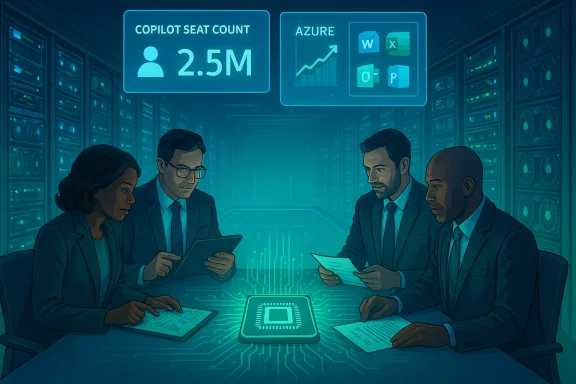 What the Seeking Alpha Piece Actmessage is balanced: Microsoft is one of the few realistic ways for investors to own enterprise AI exposure at scale, but the premium investors pay today is a bet on disciplined execution and improved unit economics over multiple quarters. Key, verifiable claims cited by the Seeking Alpha author include Microsoft’s reported quarterly revenue, Azure growth in recent quarters, an AI run‑rate figure (publicly discussed by company executives), and a large capex program tied to AI infrastructure. Those facts are corroborated by company releases and mainstream coverage, making the underlying data points credible even if the forward assumptions are execution‑sensitive.
The author’s practical suggestion is conservative: treat Microptimism* position, not a “buy at any price” story. For different investor profiles, the recommendations vary: long‑term core holding for diversified investors, tactical monitoring for traders, and ROI‑focused pilots for IT leaders evaluating Copilot adoption.The Strong Signals: What Microsoft Has Right
1. Distribution and Annureaches hundreds of millions of commercial and consumer seats through Office, Windows, Azure, and GitHub. Embedding AI into these touchpoints creates a structural advantage: a large portion of the monetization funnel is simply monetizing an existing user base rather than building distribution from scratch. That annuity‑style revenue model is materially different from one‑off AI product sales and supports a higher multiple if margins normalize.
2. Early Monetization Momentum (Copilot & Azure)
Copilot has moved from trial to commercial pricin major sell‑side estimates suggested early potential for multibillion‑dollar revenue streams from Microsoft 365 add‑ons in initial years. Analysts and outlets have repeatedly highlighted Copilot as a meaningful revenue lever if seat conversion and enterprise adoption accelerate. Early public commentary and internal signals — including large enterprise negotiations and volume deals — show the company is getting traction.3. Balance Sheet and Scale to Invest
Unlike smaller AI vendors, Microsoft can marshal tens of billions of capex and operate at generating free cash flow across diversified lines (productivity, cloud, gaming, professional networking). Scale lets Microsoft underwrite short‑term margin pressure to secure long‑term platform advantages while it builds owned infrastructure and software stacks to reduce per‑token cost over time. That optionality changes the risk profile compared with early‑stage AI firms.The Hard Problems: Where Execuhesis
Inference Economics and GPU Supply
The most important unit of analysis is the cost to serve AI queries. Inference remains compute‑intensive; until Microsoft materially improves per‑token economics (via efficiency software, custom accelerators, or lower GPU leasing costs), cloud gross margins face pressure. If third‑party suppliers (chip vendors) retain pricing power or capacity constraints persist, Azure gross margins may lag prior secular trends even while revenue grows. The Seeking Alpha piece explicitly highlights this supply‑and‑cost dependency as a primary fragility.Mainstream coverage and earnings commentary confirm the magne linkage to capacity constraints: Microsoft has disclosed very large capex allocations to AI infrastructure, and investor reactions to spending cadence have been material to stock performance.
Seat Conversion, Retention, and ARPU
Getting enterprises to pay for Copilot at scale is a conversion exercise. Early pricing ($30 per user per month for Microsoft 365 Copilot when introduced) created optimistic revenue math, but discounts, volume pricing, and integration complexity can meaningfully reduce average revenue per user (ARPU). The risk profile is simple: if enterprises delay or only partially convert to paid seats, the revenue runway stretches and capex remains high, compressing multiples. Analysts and independent commentators have noted both the upside potential and the danger of slower conversion.Timing of Custom Silicon and Owned Capacity
Microsoft has signaled investments in custom accelerators and owned GPU capacity to reduce dependence on leased third‑party GPUs. But hardware ramps take time: design, testing, fab cycles, procurement, and deployment. If owned silicon arrives later than expected, the company must continue leasing expensive GPUs to meet demand — and those expenses show up as elevated capex and/or lower gross margins. Tarios directly stress this timing risk across bull/base/bear outcomes.Regulatory & Competitive Risks
Microsoft’s close commercial relationship with OpenAI offered early advantage, but the AI ecosystem is fast evolving. Competitors such as Google Cloud, AWS, Anthropic, and other model providers are also investing in inference hosting and horizontal integrations. Pricing competition or regulatory actions (around bundling, data residency, or antitrust) could constrain Microsoft’s optionality. The Seeking Alpha analysis warns investors tevelopments and market structure shifts closely.How We Verify Key Claims Today (and What’s Confirmed)
When evaluating the Seeking Alpha assertions, it’s important to anchor the argument in verifiable, publicly available facts:- Microsoft’s large capex program tied to AI and data centers has been repeatedly reported and discussed by the company and independent outlets. Quarterly filings and executive commentary confirm multibillion dollar spending.
- Azure remains Microsoft’s principal growth engine with double‑digit growth in recent quarters; however, small misses versus consensus have been sufficient to pressure the multiple. Seeking A sensitivity of multiples to Azure cadence is supported by earnings‑period market moves.
- Copilot commercialization is real and priced; early sell‑side forecasts estimated meaningful revenue potential (multibillion range within a couple of years), though Microsoft has not publicly broken out Copilot revenue in its broader segments. Independent reporting and analyst estimates corroborate both potential and opacity.
Practical KPIs Investors Should Track (A Short Scoreboard)
The Seeking Alpha analysis gives investors a clear checklist of empitrics that will determine the thesis. Track these each quarter:- Azure revenue growtheration / deceleration.
- Cloud gross margin percentage and trend (impact of leased vs owned GPU capacity).
- Reported AI run‑rate or Copilot seat counts / ARPU disclosures (any breakdowns of M365 add‑on revenue).
- Capex cadence and cash paid for property, plant & equipment (PP&E), including discloleased capacity.
- Large commercial contract wins (>$100M) for Copilot or Azure AI inference services and changes in remaining performance obligations (RPO).
Risk Checklist for IT Leaders and Developers
For IT practitioners planning Copilot adoption, the analysis offers actionable guidance:- Treat Copilot adoption as a procurement and change‑t a simple toggle: model seat licensing, data residency and governance, and integration with line‑of‑business systems.
- Measure cost per inference and insist on observability for agentic features. Developers should prioritize efficient inference patternt models that keep sensitive workloads on‑prem while leveraging cloud for less sensitive tasks.
- Expect incremental product improvements in Windows and Office as, but plan for phased adoption and ROI pilots before broad seat conversion.
The Investment Takeaway — A Balanced Conclusion
Microsoft is plausibly the best large‑cap vehicle to own enterprise AI exposure because it bundles distribution, annuity economics, and balance sheet optionality. That combination is rare and defensible. However, investors are effectively paying a premium for execution across multiple levers — and the margin for slip is narrow.The most likely near‑term path aligns with the Seeking Alpha “base case”: AI revenue grows materially, but custom silicon ramps later than hoped and margins recover slowly as owned capacity replaces leased GPUs. In that scenario, Microsoft remains a high‑quality holding, but the stock’s multiple may remain range‑ting scoreboard shows consistent per‑unit improvement.
Bull and bear outcomes are simple to characterize:
- Bull: Copilot seat conversion accelerates, inference economics improve via owned accelerators and software routing, Azure AI becomes a durable consumption engine, and — leading to multiple expansion.
- Bear: Seat adoption disappoints, capex intensity persists, GPU leasing remains expensive, and regulatory/commercial shocks erode pricing power — leading to prolonged margin comprcontraction.
Final Practical Advice for WindowsForum Readers
- If you are a long‑term, diversified investor: Microsoft still fits as a core position but size allocations to reflect the premium you pay today and accept that payoffs may be measured in quarters to years. Monitor the fiveou are a growth‑seeking investor: Microsoft offers structural AI exposure but less asymmetric upside than smaller pure‑play AI companies. Consider a blended allocation that includes higher‑risk pure AI names if you seek outsized returns.
- If yr developer: Run controlled pilots that measure ROI, inference cost, and governance outcomes. Treat Copilot adoption as an organizational program with measurable KPIs.
- If you are a trader: Quarinate price action — watch Azure growth, cloud gross margins, capex cadence, and any disclosed Copilot adoption metrics closely.
Microsoft’s AI investments are a high‑stakesc bet. The company has the pieces — distribution, recurring revenue, and balance sheet — to win, but the win is not automatic. The Seeking Alpha reality check is timely: it reframes Microsoft’s story from inevitable victory to execution conditional. That nuance matters a great deal for investors who must decide whether to pay for the future today, or to wait until the scoreboard proves the thesis are materializing. (apnews.com
Source: Seeking Alpha Microsoft: The AI Reality Check Investors Can't Ignore (NASDAQ:MSFT)
