

That is a less glamorous thesis than “Microsoft owns the future because it backed OpenAI early.” It is also probably the only thesis left. The AI race has moved from chatbot novelty to agentic work, and Microsoft’s problem is no longer whether it can put a Copilot button everywhere. It is whether anyone believes Copilot is the place where serious work should actually happen.
 Microsoft’s AI Lead Became a Dependency Problem
For a while, Microsoft looked almost unfairly well positioned. Its 2019 investment in OpenAI gave it early access to the models that made ChatGPT possible, and Azure became the default infrastructure story behind the generative AI boom. When Microsoft bolted OpenAI-powered features onto Bing, GitHub, Windows, Microsoft 365, and Dynamics, it seemed to be executing the classic Redmond platform play: absorb the new technology, distribute it through the installed base, and let competitors chase the channel.
That worked until the market realized that “having OpenAI” and “owning AI” were not the same thing. OpenAI became too important, too ambitious, and too commercially independent to remain merely Microsoft’s model supplier. The same partnership that put Microsoft ahead also made it vulnerable to another company’s roadmap, governance drama, compute appetite, enterprise sales motion, and negotiating leverage.
The Sam Altman firing saga in November 2023 exposed the fragility in public. Microsoft did not lose access to OpenAI’s technology, and Nadella handled the crisis with the kind of executive calm that became part of his post-Ballmer legend. But the lesson was obvious: if the board of a partner company can throw your AI strategy into a weekend panic, you do not have an AI strategy so much as a hostage situation with cloud credits.
That is why Microsoft’s recent pivot matters. The company is not abandoning OpenAI; it is trying to make OpenAI one supplier among several. That sounds like procurement hygiene, but strategically it is a demotion. Microsoft’s future Copilot cannot be “ChatGPT inside Office” if ChatGPT itself is a rival enterprise platform.
Copilot’s Branding Problem Was Really a Product Problem
Microsoft’s Copilot sprawl was always confusing. There was Windows Copilot, Microsoft 365 Copilot, GitHub Copilot, Security Copilot, Copilot Studio, consumer Copilot, Bing Chat before that, and a growing sense that every Microsoft product had acquired an AI sidecar with the same name and different capabilities. A brand meant to simplify the AI story became a fog machine.
But the naming confusion was only the surface symptom. The deeper problem was that Copilot often felt like an interface layer for demos rather than a trusted worker for daily use. It could summarize, draft, search, and suggest, but too often it stopped short of the thing businesses actually wanted: accountable execution inside messy, permissioned, audited workflows.
That is why enterprise adoption has been slower than Microsoft wanted, even with the enormous distribution advantage of Microsoft 365. A $30-per-user-per-month assistant has to be more than pleasant. It has to save time reliably enough that CIOs can defend the invoice, security teams can tolerate the access, and employees can form habits around it.
The consumer story has been weaker still. Copilot never became the default AI companion for the public in the way ChatGPT did. Google’s Gemini had Android, Search, and YouTube gravity. Anthropic built prestige around Claude’s writing, coding, and reasoning strengths. Microsoft had Windows, Edge, Bing, and Office — assets any startup would envy — yet Copilot still struggled to feel culturally inevitable.
The Agent Shift Turned Assistants Into Infrastructure
The real rupture came when the industry’s center of gravity moved from chatbots to agents. A chatbot answers. An agent acts. That difference sounds incremental until it collides with enterprise software, where the whole business model rests on humans clicking through applications, moving data, approving changes, and turning intent into workflow.
This is why tools such as Claude Code and the broader class of computer-using agents matter so much. They suggest a future in which the user does not merely ask software for help; the user delegates a job and expects the system to navigate applications, write code, produce documents, update records, and monitor outcomes. That is a different threat from a better search box or a smarter autocomplete.
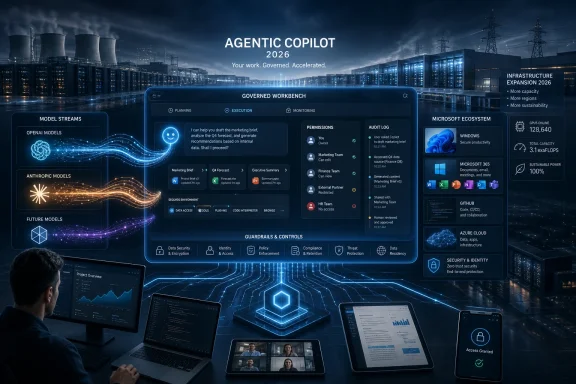
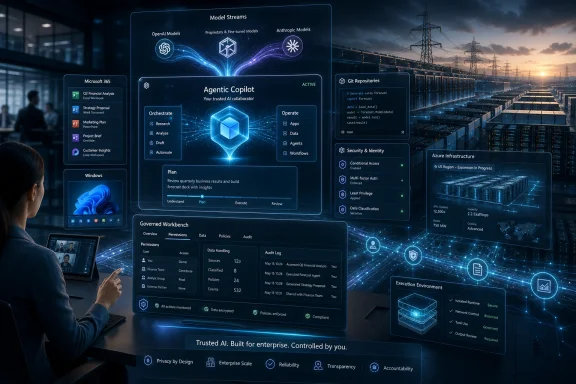
For Microsoft, the agent shift cuts both ways. It threatens the traditional seat-based SaaS model because autonomous agents may reduce the need for some human-facing software interaction. But it also plays directly into Microsoft’s strengths, because agents need identity, permissions, data access, audit logs, application context, compliance controls, device management, and secure execution environments.
That is the core of Microsoft’s comeback argument. Models may become more interchangeable, but the systems that let models safely do useful work will not. In that world, Copilot is not the model. Copilot is the governed workbench where models become employees, interns, scripts, analysts, and automators under enterprise control.
Nadella Is Acting Like the Platform Shift Is Personal
The Fortune account of Nadella joining AI product sprints and showing engineers his own prototype is striking not because CEOs never code, but because Microsoft CEOs do not normally need to. A company of Microsoft’s scale is supposed to run through operating mechanisms, executive reviews, sales incentives, and product groups. When the CEO is “vibe coding” a prototype for agent coordination, it suggests urgency bordering on alarm.
Nadella has earned credibility precisely because he already navigated one platform shift. He turned Microsoft from a Windows-first empire into a cloud-first subscription machine, restored developer goodwill, and made Azure the company’s growth engine. The AI era, however, is less forgiving than the cloud transition because the speed is different. Cloud rewarded infrastructure patience. AI punishes product hesitation.
His decision to step back from some commercial duties and focus more directly on AI research, product innovation, and infrastructure is therefore not a ceremonial rearrangement. It is a signal that Microsoft’s existing machinery was not moving fast enough. In a calmer era, Redmond could let product groups iterate toward coherence. In the agent era, coherence has to arrive before user habits harden elsewhere.
That explains the Copilot reorganization. Bringing consumer and enterprise Copilot work closer together, putting product experience under sharper leadership, and recasting Mustafa Suleyman’s work around frontier model development all point to a company trying to reduce the internal drag that made Copilot feel fragmented. Microsoft does not just need better AI. It needs fewer internal seams for users to trip over.
The OpenAI Reset Gives Microsoft Room to Breathe
The revised Microsoft-OpenAI relationship is one of the most important turns in this story. Microsoft keeps a major economic interest in OpenAI, but the old exclusivity logic has weakened. OpenAI can pursue broader infrastructure and commercial arrangements, while Microsoft can bring more outside models into its own products and cloud.
That is not a breakup. It is a normalization. OpenAI is no longer the magical engine inside Microsoft’s AI machine; it is a powerful partner, investment, supplier, and competitor. Microsoft’s job is to make that less dangerous than it sounds.
Adding Anthropic’s Claude models to Azure and Copilot is the clearest expression of the new posture. Enterprises increasingly want model choice because different models perform differently across coding, writing, reasoning, document handling, visual tasks, and regulated workflows. A Microsoft that insists on one model family risks looking doctrinaire. A Microsoft that brokers the best models through Azure looks like an enterprise platform again.
There is a margin problem here, and Microsoft knows it. If Copilot uses third-party models heavily, Microsoft has to pay for tokens it does not produce. That pushes the company toward hybrid pricing: seat licenses for predictable budgeting, plus usage-based charges when agents consume serious compute. The old SaaS model priced access. The AI model increasingly prices work.
Microsoft’s Best Argument Is Boring, Which Is Why It Might Work
The case for Microsoft in AI is not that Copilot will always be the most delightful assistant. It is that large organizations rarely buy delight in isolation. They buy integration, identity, compliance, procurement simplicity, support contracts, data boundaries, admin controls, security posture, and the confidence that a vendor will still exist in 10 years.
That is boring. It is also Microsoft’s home turf. The company owns the productivity suite, the collaboration layer, the developer platform, the cloud foundation, the endpoint management story, the directory, and a large part of enterprise security operations. If AI agents are going to touch sensitive data and take consequential actions, the plumbing matters as much as the personality.
This is where the “good enough plus bundled” critique becomes a strength. Microsoft does not necessarily need Copilot to beat ChatGPT, Claude, and Gemini in every benchmark or every vibe test. It needs Copilot to be good enough, safe enough, integrated enough, and financially convenient enough that enterprises choose it as the default operating layer for AI work.
That has been Microsoft’s playbook for decades. Windows was not always the most elegant operating system. Office was not always the most innovative productivity suite. Teams was not loved into dominance. Microsoft wins when the total package becomes easier to adopt than the alternatives are to assemble.
The Startups Are Learning Microsoft’s Trick
The danger is that OpenAI and Anthropic understand the same logic. They are not content to sell raw intelligence through APIs forever. They are building enterprise features, managed agents, workflow layers, connectors, administration tools, and collaboration surfaces. In other words, the AI-native companies are trying to become boring in exactly the way Microsoft is good at being boring.
That changes the competitive map. If OpenAI owns the user relationship, the agent layer, the model, and enough enterprise connective tissue, Microsoft becomes infrastructure and legacy distribution. If Anthropic becomes the preferred agent platform for high-value knowledge work, Microsoft risks being the place where the documents happen to live rather than the place where work is orchestrated.
Still, building enterprise software is harder than announcing enterprise software. The graveyard of “Microsoft killers” is full of companies that underestimated procurement, compliance, admin tooling, migration, channel relationships, and the sheer inertia of corporate IT. Startups can move faster, but large customers do not move only toward speed. They move toward systems that reduce career risk.
The question, then, is not whether OpenAI or Anthropic can build Microsoft-like features. They can. The question is whether they can build enough of them, fast enough, while also funding frontier model development, serving consumers, selling to developers, satisfying regulators, and competing with Google, Meta, xAI, Amazon, and each other. Microsoft’s sprawl is a weakness until it becomes a moat.
The Capex Bill Is the Price of Staying Relevant
None of this works without compute. Microsoft’s AI ambitions now depend on an infrastructure buildout so large that it has become one of the central financial questions around the company. Data centers, power, GPUs, custom silicon, networking, cooling, and long-term energy commitments are no longer back-office concerns. They are the balance sheet expression of AI strategy.
Microsoft’s recent capacity constraints showed what happens when demand outruns infrastructure. If Azure cannot supply enough AI compute, Microsoft cannot fully recognize revenue, cannot satisfy model partners, cannot support Copilot growth, and cannot credibly present itself as the enterprise AI platform. In cloud, underbuilding is not prudence if it hands momentum to rivals.
But overbuilding is dangerous too. AI infrastructure is expensive, fast-depreciating, and dependent on assumptions about demand, model efficiency, pricing, and enterprise adoption that remain unsettled. If agents become dramatically more efficient, if customers resist usage pricing, or if the AI revenue curve disappoints, today’s strategic buildout could become tomorrow’s margin problem.
That is why investor patience matters. Wall Street has tolerated enormous hyperscaler spending because the AI growth story remains powerful. But patience is conditional. Microsoft is being allowed to spend like a company defending the future because investors still believe it can turn compute into durable platform revenue.
Windows Users Are Watching the Enterprise Battle Arrive on the Desktop
For WindowsForum readers, the Copilot story is not just an enterprise software drama. It is also the story of what Windows becomes when AI moves from sidebar to system behavior. Microsoft has already experimented with Copilot placement, recall-like memory concepts, local AI features, cloud-assisted workflows, and deeper links between Windows, Edge, Microsoft 365, and the account layer.
That creates a familiar tension. Enthusiasts want powerful automation, local control, and useful system intelligence. Security-minded users want transparency, revocability, and limits. IT admins want policy knobs, auditability, tenant boundaries, and deployment control. Microsoft wants Copilot to feel ambient enough to change habits without feeling invasive enough to trigger backlash.
The agent era raises the stakes. A passive assistant that summarizes a document is one kind of risk. An always-on agent that can browse, buy, schedule, message, alter files, run code, or touch business systems is another. The more useful Copilot becomes, the more dangerous a compromised, misconfigured, or over-permissioned Copilot becomes.
That is why Microsoft’s OpenClaw-like ambitions are so revealing. The company sees the same thing developers see: persistent agents are exciting because they promise to collapse tedious work into delegated intent. But Microsoft also sees what enterprises see: a consumer-grade always-on agent with broad access can look less like productivity software and more like a policy violation with a friendly avatar.
The Copilot Comeback Depends on Trust More Than Benchmarks
Benchmarks will still matter, especially for developers and AI power users. If Copilot feels obviously worse than Claude, Gemini, or ChatGPT at coding, reasoning, document handling, or agentic execution, users will route around it. Microsoft cannot hide weak model performance behind admin consoles forever.
But trust will matter more. Enterprise AI is not merely a contest of who writes the best paragraph or solves the hardest puzzle. It is a contest over who gets permission to act inside the company. That permission will be granted slowly, unevenly, and with far more scrutiny than the first wave of chatbot adoption.
Microsoft’s advantage is that it already holds many of those permissions. Its disadvantage is that users have learned to be wary when Redmond turns a product strategy into a default setting. Copilot’s path back to relevance will require Microsoft to show restraint as well as ambition: clear controls, understandable data boundaries, honest failure modes, and admin-first deployment choices.
If Microsoft gets that balance right, Copilot could become less like Clippy’s overqualified descendant and more like the command layer for modern work. If it gets it wrong, Copilot will remain what skeptics already suspect it is: an expensive button attached to products people were already using.
Redmond’s AI Race Is Now a Race Against Its Own Habits
The concrete story here is less about whether Microsoft “lost” AI than about whether it can stop behaving like a company that assumes distribution will solve product-market fit. Copilot’s future depends on execution in places where Microsoft has historically been both formidable and frustrating: naming, packaging, defaults, developer experience, admin controls, and the long grind of making complex systems feel inevitable.
The near-term scorecard is relatively clear.
- Microsoft has shifted from an OpenAI-first AI strategy toward a model-agnostic platform strategy built around Azure, Copilot, and enterprise control.
- Copilot’s biggest challenge is not visibility, because Microsoft can put it everywhere, but repeat usage that justifies its cost.
- Anthropic’s rise forced Microsoft to admit that OpenAI exclusivity was no longer enough for enterprise AI customers.
- Agentic AI makes Microsoft’s productivity empire more vulnerable, but it also makes Microsoft’s identity, security, data, and workflow infrastructure more valuable.
- The company’s data-center spending is no longer just cloud expansion; it is the cost of remaining a first-tier AI platform.
- Windows and Microsoft 365 users should expect Copilot to become more agentic, more deeply integrated, and more heavily governed at the same time.
The irony is that Microsoft may not need to win the AI race in the way the phrase is usually used. It does not need the most beloved chatbot, the flashiest demo, or the top model on every leaderboard. It needs to make Copilot the safest and most convenient place for AI to do real work across the Microsoft estate. That is a narrower ambition than owning the future, but it is also a more Microsoft-shaped one — and if the agent era turns intelligence into infrastructure, it may be enough to put Redmond back on course.