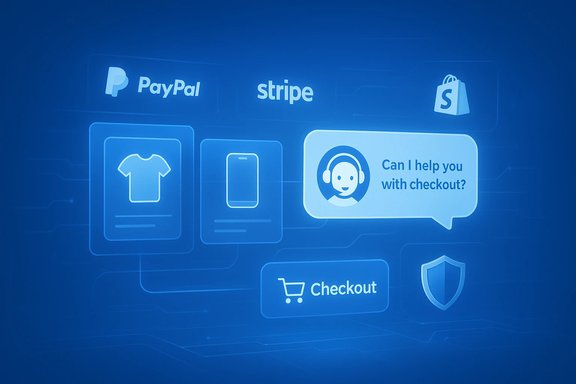
Microsoft’s move to make Copilot a native checkout surface — with PayPal supplying catalog sync, branded in-chat checkout, guest payments and card acceptance — marks a decisive shift: conversational assistants are no longer limited to recommendations, they are becoming transactional endpoints where discovery and payment happen in the same conversation.
Background / Overview
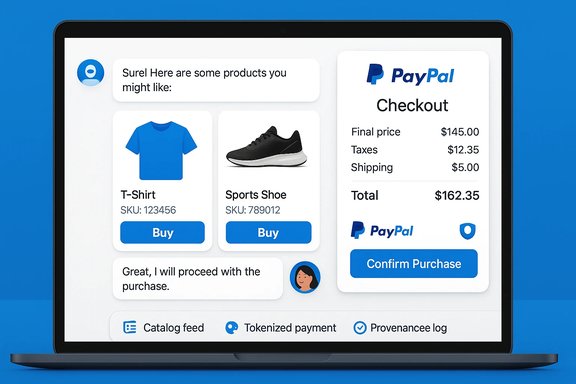
Microsoft’s Copilot Checkout initiative folds discovery, product exploration and payment into a single conversational flow. The experience presents curated product cards inside a Copilot conversation, offers a “Details” drilldown, and opens a compact, branded checkout inside the chat when the user selects “Buy.” Payment and settlement are handled by established payment providers — PayPal, Stripe and Shopify’s checkout — while merchants remain the merchant of record for fulfillment, returns and customer service.PayPal’s announced role centers on making merchant catalogs discoverable to Copilot via a new store sync capability and on providing the payment rails and buyer protections that high-volume commerce needs. The vendor narrative emphasizes lower friction at the moment of intent and higher conversion rates in early vendor-supplied figures, positioning PayPal as a central “trust and plumbing” partner for agentic commerce.
The practical contours of this launch matter for three groups at once: merchants (who must prepare catalogs and operations), platforms/payments providers (who must provide secure delegated checkouts and SLAs), and consumers (who gain convenience but also face new disclosure and dispute dynamics).
What Copilot Checkout actually does — the anatomy of in-chat commerce
Copilot Checkout packages three technical layers into an in-conversation shopping experience:- Canonical product catalogs: machine-readable feeds that include SKU, GTIN, inventory, images, pricing and shipping metadata. Merchants can supply feeds directly or use partner tools such as PayPal’s store sync or Shopify’s Agentic Storefronts. Canonical data prevents hallucinations and enables provenance tracking for disputes.
- Conversational orchestration: Copilot interprets intent, asks clarifying follow-ups (size, color, budget) and surfaces curated product cards with UX affordances for details and purchase. The runtime logs provenance to support audit trails and dispute resolution.
- Delegated, tokenized checkout: When a user confirms a purchase, Copilot invokes a short-lived token or delegated session from the merchant’s payment partner (PayPal, Stripe, Shopify). This tokenized model minimizes the assistant’s exposure to raw payment data while enabling a seamless in-chat settlement flow.
Why PayPal’s expanded role matters to investors
PayPal’s strategic objective with store sync and agentic commerce services is to convert its payment platform into the interoperable payments layer across multiple AI surfaces. If Copilot, ChatGPT and other assistants become durable channels for commerce, PayPal stands to gain:- Increased payment volume from assistant-originated flows as in-chat purchases scale.
- Greater wallet usage and stickiness when consumers prefer buyer-protected options inside assistant checkouts.
- A one‑to‑many integration advantage: merchants integrate once with PayPal’s agentic tooling and become discoverable across multiple AI assistants, reducing merchant engineering friction.
Strengths that appeal to investors
- Distribution and scale: Microsoft can surface Copilot across many surfaces (Copilot.com, sidebars, devices), quickly putting PayPal-backed checkout in front of users.
- Established trust primitives: PayPal's buyer/seller protection and dispute mechanisms are a credible safety net compared with nascent, assistant-native payment options.
- Network effects for merchants: The one‑to‑many store sync model reduces per-partner integration cost and could accelerate merchant enrollment if enrollment mechanics are transparent.
Risks investors must weigh
- Vendor-sourced metrics: Conversion uplifts cited at launch are vendor-provided and may not generalize across categories; independent A/B tests should be demanded before extrapolating revenue forecasts.
- Operational fragility: Agentic commerce amplifies the cost of inaccurate listings. Stale inventory or misaligned metadata will lead to disputes and returns that compress merchant economics and damage consumer trust.
- Regulatory and liability exposure: Rapid in-chat purchases raise questions about disclosure, pricing errors, tax calculation, cross-border rules and where liability sits between platform, PSP and merchant. Increased regulatory scrutiny could lead to compliance costs or constrained rollouts.
Merchant and platform readiness — what must be solved for success
Merchants face a practical checklist before turning Copilot into a reliable channel:- Validate catalog fidelity: map SKUs to GTINs, ensure accurate pricing and images, and keep inventory lifecycles synchronized. Poor feed hygiene is the single biggest operational risk.
- Pilot with limited SKUs: expose a curated set of items first to validate conversion uplift, return rates and dispute mechanics before broad enrollment.
- Test delegated checkout flows: coordinate with PSPs (PayPal, Stripe) to exercise Shared Payment Tokens, short‑lived sessions and fraud scenarios.
- Negotiate clear SLAs and dispute frameworks: establish contractual rules for refund timing, chargebacks and mediation to reduce downstream litigation risk.
- Instrument provenance: log mappings between conversational recommendations and canonical SKUs for auditability and quick dispute resolution.
Security and privacy risks — beyond payment tokenization
Putting transactions inside a conversation shifts the threat model in important ways. Two security categories deserve particular attention:- Consent-phishing and agent-supplied token abuse: Research and incident analyses show that attacker techniques can weaponize trusted agent hosting and OAuth consent flows, enabling token theft and account compromise if users or admins grant high-risk consents without adequate governance. The rise of consent-lure tactics targeting Copilot Studio demonstrates how attacker creativity can exploit conveniences in agent platforms to exfiltrate bearer tokens. Organizations must lock down who can authorize agents and instrument monitoring for abnormal token usage.
- Data provenance and auditability: In-chat checkouts depend on canonical product metadata. Without robust provenance logs, disputes about price, delivery or misrepresentation become costly. Provenance aids both fraud detection and regulatory defense; platforms must ensure traceability from recommendation to transaction.
Consumer protections and UX clarity — where details matter
For in-chat commerce to earn consumer trust, the user experience must make three things explicit at checkout:- Who is the merchant of record (and where to contact for returns).
- Final price, including taxes and shipping, clearly displayed before payment authorization.
- The payment protection model in effect (e.g., PayPal buyer protection eligibility).
Regulatory and competition implications
Agentic commerce changes market dynamics for marketplaces, payment providers and platforms:- Marketplaces: Assistants that surface third‑party sellers for direct purchase may redirect commerce away from incumbent marketplaces and compress their control over the buyer relationship. This creates competitive tensions and possible regulatory scrutiny around fairness and marketplace rules.
- Payments: PayPal and Stripe become central intermediaries because they enable tokenized delegated payments and fraud telemetry, giving them leverage over standards and potentially the power to shape commercial terms for agents.
- Regulators: Disclosure, advertising and consumer protection agencies will watch how assistants present offers, handle price errors, and resolve disputes. Platforms must be prepared for inquiries about enrollments, automatic merchant opt-ins and fee transparency.
Cross-cutting examples and early signals
Early merchant lists and partner disclosures provide useful signals but not definitive proof of long-term economics. Vendor materials and independent reporting indicate participation from retailers and marketplaces such as Urban Outfitters, Anthropologie, Ashley Furniture and listings from Etsy sellers at launch — useful headline proofs-of-concept but not a guarantee of broad adoption or uniform economics. PayPal and Microsoft’s descriptions of automatic Shopify enrolment after an opt-out window are notable but deserve scrutiny and independent verification to confirm merchant consent mechanics and timing.Investors and merchants should therefore treat early lists as proof of concept rather than proof of scale. Measured pilots and transparent attribution reporting will be the most reliable early signals of durable economic impact.
Practical guidance for stakeholders
For merchants- Prioritize catalog hygiene and test a small SKU portfolio first.
- Run delegated checkout and chargeback simulations with your PSP.
- Demand clear contract terms for dispute allocation and settlement windows.
- Instrument attribution to measure Copilot-originated volume separately.
- Publish clear tokenization and delegation specs (ACP / Shared Payment Tokens).
- Offer operation-level SLAs for fraud handling, dispute resolution and settlement timing.
- Provide merchant opt-in/opt-out controls with transparent communication.
- Treat vendor uplift claims as provisional until verified by independent tests.
- Watch KPIs: Copilot-originated GMV, return rates, chargeback frequency and merchant adoption rate.
- Monitor regulatory developments and any changes to enrollment mechanics that affect merchant economics.
- Confirm merchant identity and final price before purchase.
- Prefer buyer-protected payment methods in early stages.
- Keep order confirmations and fulfillment links; escalate disputes through the merchant and the payment provider if needed.
Strengths, weaknesses and final assessment
Strengths- Convenience at the point of intent: collapsing discovery and checkout into a single flow reduces friction and can materially increase conversion for simple purchases.
- Partnered architecture: we’re seeing a pragmatic split of responsibilities: Microsoft for discovery and orchestration; PayPal, Stripe and Shopify for payment, tokenization and settlement. This reduces engineering burden on merchants and concentrates high-risk operations with specialist PSPs.
- Operational and legal complexity: disputes over pricing, inventory accuracy and fulfillment could become the dominant cost if provenance and SLAs are not ironed out.
- Vendor-supplied metrics: optimism in vendor materials must be validated by neutral, controlled experiments across merchant cohorts.
- Security/consent risks: agent-hosted demos and consent flows can be weaponized to steal tokens or escalate access without strong governance. This requires both vendor hardening and tenant-level controls.
Copilot Checkout — and PayPal’s central plumbing role — is a consequential step toward mainstream agentic commerce. The technical building blocks are in place and the partner set provides immediate practical reach. Yet the initiative’s long-term success hinges on operational excellence: clean catalog feeds, robust fraud telemetry, transparent SLAs and clear consumer protections. If those are solved, Copilot Checkout could become a durable channel that meaningfully increases PayPal transaction volumes and shifts where purchases happen online. If not, the early convenience gains will be offset by disputes, chargebacks and regulatory headaches.
Checklist — What to watch next (90–180 days)
- Independent conversion metrics from third‑party merchants and neutral audits of vendor uplift claims.
- Evidence of clean merchant onboarding: percent of merchants with canonical feeds and low dispute incidence.
- PSP/Platform SLAs and contractual clarifications around liability for mispriced/misdescribed items.
- Security hardening from Microsoft and tenant-level consent governance to blunt consent-phishing/CoPhish-style attacks.
- Regulatory guidance or inquiries regarding disclosures, opt-in mechanics and cross-border compliance.
The shift from “recommendation” to “execution” is the defining commerce story of this phase of the AI era. PayPal’s pivot to agentic plumbing positions it squarely in the center of that shift, but the path from prototype to durable channel is defined as much by contractual clarity, catalog hygiene and fight-tested fraud controls as it is by product design. Investors, merchants and security teams should all treat Copilot Checkout as a material new channel — one worth piloting carefully, instrumenting thoroughly, and monitoring closely.
Source: simplywall.st https://simplywall.st/stocks/us/div...iety-and-support-sustainable-digital-growth/]