

Microsoft opened Copilot Health in preview on May 29, 2026, for U.S. adults with Microsoft 365 Personal, Family, or Premium subscriptions, giving them a dedicated Copilot space to connect health records, Apple Health data, medical questions, and care-navigation searches online. The move is not just another chatbot feature bolted onto Microsoft’s AI brand. It is Microsoft’s latest attempt to turn Copilot from a general-purpose assistant into a trusted broker for the most sensitive data most people own. That ambition is enormous, useful, and unsettling in almost equal measure.
The difference in 2026 is not that people suddenly enjoy managing medical data. The difference is that generative AI gives Microsoft a reason to ask for that data again. HealthVault was mostly a cabinet; Copilot Health wants to be an interpreter, organizer, coach, appointment prep tool, and health-search front end.
That distinction matters. A folder full of lab PDFs is boring until a model can summarize trends, compare numbers over time, and tell a user what to ask a physician. Microsoft is betting that the missing piece in consumer health records was never storage. It was comprehension.
The company’s timing is also telling. AI assistants are moving from novelty into infrastructure, and health is one of the few domains where a truly useful assistant could feel indispensable. If Copilot can help users understand blood work, wearable sleep data, and fragmented hospital records before a doctor visit, Microsoft earns a place in a daily routine that is far stickier than drafting emails.
But the boundary will be blurry in practice. A user who uploads records, links wearable data, and asks why a number is rising is not looking for a Wikipedia-style overview. They are looking for a meaningful answer about themselves.
That is the product’s real appeal. Microsoft says Copilot Health can build a health profile, connect wearable and health-record sources, provide personalized insights, surface information from trusted health organizations, and help users find local providers by specialty, language, gender, insurance, and location. The preview starts with Apple Health support and records from more than 50,000 U.S. provider organizations, with Microsoft promising more sources over time.
This is not merely “answer all your health questions,” as the consumer-tech headline version has it. It is an attempt to combine three previously separate behaviors: searching symptoms, collecting records, and preparing for care. That combination is why the product deserves attention from Windows users and IT pros, even if it arrives through the consumer Copilot web experience rather than Windows Update.
Medical data is famously scattered. One provider has blood work, another has imaging, a pharmacy has medication history, a wearable has heart-rate and sleep patterns, and the patient has a half-remembered timeline of symptoms. In theory, modern health data standards and patient portals were supposed to make this manageable. In practice, many people still arrive at appointments with screenshots, printouts, and guesses.
Microsoft’s value proposition is that Copilot Health can sit above those silos. The company wants users to connect records and wellness data so the assistant can reason across them. That is the difference between asking “what does high LDL mean?” and asking “what should I understand about my cholesterol trend given my recent labs, age, and health goals?”
For consumers, that could be genuinely helpful. For Microsoft, it creates a new class of personal context that is more intimate than email, more persistent than search history, and more valuable than a fitness dashboard. The assistant that understands your health history may become the assistant you hesitate to leave.
That is the strategic heart of the announcement. Copilot Health is not just a health feature; it is a trust feature. Microsoft is asking users to believe that Copilot can be a safe custodian for data that could affect employment, insurance, relationships, finances, and personal dignity if mishandled.
Those are not trivial claims. They show Microsoft understands that “trust us” is not enough in health AI. The company also points to ISO/IEC 42001 certification for AI management, which is exactly the kind of governance language enterprise readers expect to see around high-risk AI systems.
Still, consumer trust is not earned through certification alone. Microsoft has spent the past few years pushing Copilot into Windows, Edge, Office, search, and the taskbar, sometimes faster than users wanted. That history cuts both ways: it gives Microsoft massive distribution, but it also makes some users suspicious that every new Copilot feature is another data gravity well.
Health data raises the stakes. A bad restaurant recommendation is annoying. A misleading interpretation of symptoms is dangerous. A vague privacy policy around cholesterol results or mental-health conversations would be unacceptable.
The preview’s separation from work accounts is a smart line. Copilot Health is for eligible personal Microsoft 365 subscribers, not Microsoft 365 business tenants. That avoids an immediate collision with employer-managed identity, workplace compliance, and corporate data-retention policies. It also makes clear that this is a consumer health product riding on Microsoft’s subscription base, not an enterprise clinical workflow tool.
Today, the preview is a web destination. Tomorrow, it is not hard to imagine health context appearing in Copilot mobile experiences, appointment preparation workflows, Edge searches, calendar prompts, or Windows notification surfaces. Microsoft may not announce those integrations now, but the direction of Copilot as a platform makes them plausible.
That is where enthusiasts and administrators should pay attention. Microsoft’s consumer AI strategy increasingly depends on context: what you are doing, what you have stored, what you have asked before, and what services you have connected. Copilot Health adds a new category of context that should remain walled off with unusual rigor.
For WindowsForum readers, the issue is not whether Copilot Health will appear as a Start menu tile next week. It is whether Microsoft can build high-trust AI experiences without repeating the pattern of broad rollout first and nuanced controls later. Health is the wrong place to discover that defaults were too generous.
The problem is that traditional health search often makes users more anxious. Search engines return pages, not judgment. Forums return anecdotes, not triage. Medical sites return accurate general information that may or may not apply to the person reading it.
AI promises to make that experience conversational. It can ask follow-up questions, explain jargon, and help a user distinguish between “monitor this” and “seek care.” In the best case, Copilot Health could turn a frightened midnight search into a better prepared morning appointment.
But that same conversational confidence is risky. Large language models can sound calm while being wrong. They can overfit to user-provided details, understate uncertainty, or fail to appreciate rare but serious edge cases. Health AI must be designed to escalate, defer, and admit ambiguity more often than ordinary productivity AI.
Microsoft’s messaging acknowledges this with guardrails and professional-advice disclaimers. The real test will be behavioral: whether Copilot Health consistently pushes users toward appropriate care when symptoms warrant it, and whether it avoids turning every benign data fluctuation into an emergency.
The best version of this product helps users become better historians of their own health. A patient who can clearly explain when symptoms began, what changed, what medications they take, and what the trend lines show is easier to help. A patient who arrives convinced that an AI has already solved the case is harder.
Microsoft appears to understand that the product must support navigation rather than replace clinicians. Care navigation is part of the preview, and the company’s language repeatedly frames Copilot Health as guidance. Still, consumer AI products tend to be judged by how useful they feel, not by how carefully their disclaimers are written.
That puts Microsoft in a difficult position. If Copilot Health is too timid, users will ignore it. If it is too assertive, physicians and regulators will scrutinize it. The product has to be useful enough to matter and cautious enough not to become a shadow medical authority.
Copilot Health is not being presented as a free public-health utility. It is a subscription-enhancing feature for Microsoft’s paying consumer base. In that sense, it resembles Microsoft’s broader strategy: make Microsoft 365 feel less like Office licensing and more like a bundle of personal productivity, storage, security, and AI services.
That could work. Health assistance has obvious perceived value, especially for families managing chronic conditions, caregivers juggling appointments, or users trying to make sense of lab results. If Copilot Health becomes genuinely helpful, it may reduce churn more effectively than another template pack or cloud-storage perk.
But subscription gating also complicates Microsoft’s equity narrative. The company says people lack access to trusted health guidance when it matters most. Yet the preview starts with paying Microsoft 365 subscribers in the United States. That is understandable for testing, but it underscores a familiar pattern in consumer AI: the users most able to pay get early access to tools that may eventually be framed as democratizing access.
Health is one of the richest battlegrounds because it combines high user need, fragmented data, expensive professional systems, and enormous regulatory sensitivity. The winner is not simply the company with the smartest model. It is the company that can combine data access, clinical credibility, privacy controls, distribution, and user trust.
Microsoft has assets here. It has Azure, Microsoft Cloud for Healthcare, Nuance, Dragon Copilot for clinicians, Microsoft 365 distribution, identity infrastructure, and years of enterprise security positioning. Copilot Health brings the consumer side into that orbit.
The risk is that the brand “Copilot” now stretches across everything from coding to Windows settings to workplace documents to medical guidance. A mistake in one domain can pollute trust in another. If Microsoft wants Copilot Health to be treated as a serious health experience, it may need more separation, not less, from the everyday assistant that helps rewrite emails.
Copilot Health appears designed to stay on the safer side of that line. It explains, summarizes, contextualizes, and navigates. It tells users it is not a substitute for medical advice. It is framed as a preview whose features and usage limits may change.
But as AI systems become more personalized, the old distinction between information and advice becomes harder to maintain. If a tool analyzes your records, considers your wearable data, asks follow-up questions, and recommends what to do next, many users will experience that as medical advice even if the product page says otherwise.
Regulators may eventually focus less on what vendors call these systems and more on what users reasonably believe they do. That is particularly important if AI health assistants begin influencing decisions about whether to seek urgent care, change behavior, request tests, or select providers.
For now, Microsoft’s preview status gives it room to learn. But “preview” is not a shield against harm. If the product is available to real users with real medical concerns, Microsoft has to treat safety as a production requirement from day one.
Those statements answer the first wave of concerns. They do not answer every practical question users will have.
How easy is it to see exactly what data has been imported? How clear are the deletion controls? What happens when a provider connection is revoked? Are summaries retained separately from source data? How are safety reviews conducted without exposing sensitive content more widely than users expect? What logs exist, and for how long?
These details matter because privacy failures often happen in the seams between policy and interface. A user may technically have control but fail to understand what has been connected. A deletion option may remove source data but leave derived insights. A “separate” experience may still rely on shared account infrastructure that confuses ordinary users.
Microsoft has enough experience with identity, compliance, and security to design this well. The question is whether it will make the controls legible to consumers rather than merely defensible to auditors.
That is not science fiction. It is administrative relief. American healthcare often requires patients to act as project managers for their own care, carrying information across portals, specialists, insurers, and pharmacies. A tool that helps organize that mess could improve outcomes without ever pretending to diagnose anything.
This is where Microsoft should lean hardest. A good appointment-prep assistant can be transparent, cautious, and practical. It can say, “Here are the numbers that changed,” “Here are symptoms you mentioned,” and “Here are questions to ask your clinician.” That is valuable and less risky than presenting a confident theory of disease.
It also fits Microsoft’s strengths. The company knows workflows. It knows documents, summaries, calendars, reminders, and identity. Copilot Health’s most credible future may look less like an AI doctor and more like a brutally competent medical admin assistant working for the patient.
That creates an interesting symmetry. On one end, Microsoft helps clinicians document encounters and navigate records. On the other, it helps consumers understand their own health data and prepare for care. If those worlds eventually meet, Microsoft could become a major intermediary in how medical information is summarized, exchanged, and acted upon.
That possibility is powerful, but it should make everyone cautious. Intermediaries shape attention. They decide what gets surfaced, what gets summarized, what gets treated as important, and what gets buried. In medicine, those choices are not neutral.
The company’s challenge is to prove that Copilot Health can make users more informed without making them more dependent. The best patient technology increases agency. The worst creates a new gatekeeper between people and their own bodies.
Microsoft Is Reopening a Door It Once Closed
Copilot Health lands with a strange sense of déjà vu. Microsoft has been here before: consumer health records, personal data vaults, partnerships with care providers, and the promise that software can make the medical system less opaque. HealthVault, Microsoft’s earlier personal health record platform, was discontinued years ago after never becoming the consumer default its backers imagined.The difference in 2026 is not that people suddenly enjoy managing medical data. The difference is that generative AI gives Microsoft a reason to ask for that data again. HealthVault was mostly a cabinet; Copilot Health wants to be an interpreter, organizer, coach, appointment prep tool, and health-search front end.
That distinction matters. A folder full of lab PDFs is boring until a model can summarize trends, compare numbers over time, and tell a user what to ask a physician. Microsoft is betting that the missing piece in consumer health records was never storage. It was comprehension.
The company’s timing is also telling. AI assistants are moving from novelty into infrastructure, and health is one of the few domains where a truly useful assistant could feel indispensable. If Copilot can help users understand blood work, wearable sleep data, and fragmented hospital records before a doctor visit, Microsoft earns a place in a daily routine that is far stickier than drafting emails.
The Pitch Is Clarity, Not Diagnosis
Microsoft is careful to say Copilot Health is not a doctor. That caveat is legally necessary, ethically important, and commercially convenient. The product is positioned as guidance, not diagnosis; context, not treatment; navigation, not medical authority.But the boundary will be blurry in practice. A user who uploads records, links wearable data, and asks why a number is rising is not looking for a Wikipedia-style overview. They are looking for a meaningful answer about themselves.
That is the product’s real appeal. Microsoft says Copilot Health can build a health profile, connect wearable and health-record sources, provide personalized insights, surface information from trusted health organizations, and help users find local providers by specialty, language, gender, insurance, and location. The preview starts with Apple Health support and records from more than 50,000 U.S. provider organizations, with Microsoft promising more sources over time.
This is not merely “answer all your health questions,” as the consumer-tech headline version has it. It is an attempt to combine three previously separate behaviors: searching symptoms, collecting records, and preparing for care. That combination is why the product deserves attention from Windows users and IT pros, even if it arrives through the consumer Copilot web experience rather than Windows Update.
The Records Are the Product
The most important part of Copilot Health is not the chat window. It is the ingestion layer.Medical data is famously scattered. One provider has blood work, another has imaging, a pharmacy has medication history, a wearable has heart-rate and sleep patterns, and the patient has a half-remembered timeline of symptoms. In theory, modern health data standards and patient portals were supposed to make this manageable. In practice, many people still arrive at appointments with screenshots, printouts, and guesses.
Microsoft’s value proposition is that Copilot Health can sit above those silos. The company wants users to connect records and wellness data so the assistant can reason across them. That is the difference between asking “what does high LDL mean?” and asking “what should I understand about my cholesterol trend given my recent labs, age, and health goals?”
For consumers, that could be genuinely helpful. For Microsoft, it creates a new class of personal context that is more intimate than email, more persistent than search history, and more valuable than a fitness dashboard. The assistant that understands your health history may become the assistant you hesitate to leave.
That is the strategic heart of the announcement. Copilot Health is not just a health feature; it is a trust feature. Microsoft is asking users to believe that Copilot can be a safe custodian for data that could affect employment, insurance, relationships, finances, and personal dignity if mishandled.
Security Promises Meet the Reality of Consumer Trust
Microsoft says Copilot Health conversations are separate from general Copilot chats, encrypted at rest and in transit, and not used to train AI. Users can manage, delete, or disconnect health data sources. The company also says the service was developed with internal clinical teams, informed by an external panel of more than 250 physicians across more than 24 countries, and governed under its responsible AI principles.Those are not trivial claims. They show Microsoft understands that “trust us” is not enough in health AI. The company also points to ISO/IEC 42001 certification for AI management, which is exactly the kind of governance language enterprise readers expect to see around high-risk AI systems.
Still, consumer trust is not earned through certification alone. Microsoft has spent the past few years pushing Copilot into Windows, Edge, Office, search, and the taskbar, sometimes faster than users wanted. That history cuts both ways: it gives Microsoft massive distribution, but it also makes some users suspicious that every new Copilot feature is another data gravity well.
Health data raises the stakes. A bad restaurant recommendation is annoying. A misleading interpretation of symptoms is dangerous. A vague privacy policy around cholesterol results or mental-health conversations would be unacceptable.
The preview’s separation from work accounts is a smart line. Copilot Health is for eligible personal Microsoft 365 subscribers, not Microsoft 365 business tenants. That avoids an immediate collision with employer-managed identity, workplace compliance, and corporate data-retention policies. It also makes clear that this is a consumer health product riding on Microsoft’s subscription base, not an enterprise clinical workflow tool.
The Windows Angle Is Bigger Than an App Icon
Copilot Health is launching on the web, but Windows users should still see the broader platform story. Microsoft has been steadily turning Copilot into the connective tissue across its consumer software stack. Health is one of the few domains where that connective tissue could become personal enough to change how users think about the Microsoft account itself.Today, the preview is a web destination. Tomorrow, it is not hard to imagine health context appearing in Copilot mobile experiences, appointment preparation workflows, Edge searches, calendar prompts, or Windows notification surfaces. Microsoft may not announce those integrations now, but the direction of Copilot as a platform makes them plausible.
That is where enthusiasts and administrators should pay attention. Microsoft’s consumer AI strategy increasingly depends on context: what you are doing, what you have stored, what you have asked before, and what services you have connected. Copilot Health adds a new category of context that should remain walled off with unusual rigor.
For WindowsForum readers, the issue is not whether Copilot Health will appear as a Start menu tile next week. It is whether Microsoft can build high-trust AI experiences without repeating the pattern of broad rollout first and nuanced controls later. Health is the wrong place to discover that defaults were too generous.
Microsoft Is Chasing the Midnight Search
One of the more revealing claims around Microsoft’s health push is that people are already asking Copilot huge numbers of health-related questions. That should surprise no one. The internet has been the first stop for symptom anxiety for decades, from WebMD spirals to Reddit threads to late-night search queries typed in panic.The problem is that traditional health search often makes users more anxious. Search engines return pages, not judgment. Forums return anecdotes, not triage. Medical sites return accurate general information that may or may not apply to the person reading it.
AI promises to make that experience conversational. It can ask follow-up questions, explain jargon, and help a user distinguish between “monitor this” and “seek care.” In the best case, Copilot Health could turn a frightened midnight search into a better prepared morning appointment.
But that same conversational confidence is risky. Large language models can sound calm while being wrong. They can overfit to user-provided details, understate uncertainty, or fail to appreciate rare but serious edge cases. Health AI must be designed to escalate, defer, and admit ambiguity more often than ordinary productivity AI.
Microsoft’s messaging acknowledges this with guardrails and professional-advice disclaimers. The real test will be behavioral: whether Copilot Health consistently pushes users toward appropriate care when symptoms warrant it, and whether it avoids turning every benign data fluctuation into an emergency.
The Doctor Is Still in the Loop, Whether the Product Likes It or Not
Copilot Health could change the clinical encounter before it changes medicine. Patients may arrive with AI-generated summaries, lists of questions, interpretations of labs, and suggested specialists. Some clinicians will welcome that. Others will see another source of misinformation to unwind in a 15-minute visit.The best version of this product helps users become better historians of their own health. A patient who can clearly explain when symptoms began, what changed, what medications they take, and what the trend lines show is easier to help. A patient who arrives convinced that an AI has already solved the case is harder.
Microsoft appears to understand that the product must support navigation rather than replace clinicians. Care navigation is part of the preview, and the company’s language repeatedly frames Copilot Health as guidance. Still, consumer AI products tend to be judged by how useful they feel, not by how carefully their disclaimers are written.
That puts Microsoft in a difficult position. If Copilot Health is too timid, users will ignore it. If it is too assertive, physicians and regulators will scrutinize it. The product has to be useful enough to matter and cautious enough not to become a shadow medical authority.
The Business Model Hides in the Subscription Gate
The preview is limited to U.S. users aged 18 and over with Microsoft 365 Personal, Family, or Premium subscriptions. That is a practical rollout constraint, but it is also a signal about Microsoft’s consumer AI economics.Copilot Health is not being presented as a free public-health utility. It is a subscription-enhancing feature for Microsoft’s paying consumer base. In that sense, it resembles Microsoft’s broader strategy: make Microsoft 365 feel less like Office licensing and more like a bundle of personal productivity, storage, security, and AI services.
That could work. Health assistance has obvious perceived value, especially for families managing chronic conditions, caregivers juggling appointments, or users trying to make sense of lab results. If Copilot Health becomes genuinely helpful, it may reduce churn more effectively than another template pack or cloud-storage perk.
But subscription gating also complicates Microsoft’s equity narrative. The company says people lack access to trusted health guidance when it matters most. Yet the preview starts with paying Microsoft 365 subscribers in the United States. That is understandable for testing, but it underscores a familiar pattern in consumer AI: the users most able to pay get early access to tools that may eventually be framed as democratizing access.
Health AI Is Becoming the New Platform War
Microsoft is not moving in a vacuum. OpenAI, Amazon, Google, Apple, and a long list of health-tech startups all see the same opening. The next major consumer platform may not be a device or operating system; it may be the trusted assistant that understands a person’s life well enough to mediate services around it.Health is one of the richest battlegrounds because it combines high user need, fragmented data, expensive professional systems, and enormous regulatory sensitivity. The winner is not simply the company with the smartest model. It is the company that can combine data access, clinical credibility, privacy controls, distribution, and user trust.
Microsoft has assets here. It has Azure, Microsoft Cloud for Healthcare, Nuance, Dragon Copilot for clinicians, Microsoft 365 distribution, identity infrastructure, and years of enterprise security positioning. Copilot Health brings the consumer side into that orbit.
The risk is that the brand “Copilot” now stretches across everything from coding to Windows settings to workplace documents to medical guidance. A mistake in one domain can pollute trust in another. If Microsoft wants Copilot Health to be treated as a serious health experience, it may need more separation, not less, from the everyday assistant that helps rewrite emails.
Regulators Will Care About the Gap Between Advice and Action
Microsoft’s careful language around diagnosis and treatment is not just legal housekeeping. It reflects the unresolved regulatory reality of consumer health AI. Products that provide general wellness guidance occupy a different space from software that diagnoses disease or recommends treatment.Copilot Health appears designed to stay on the safer side of that line. It explains, summarizes, contextualizes, and navigates. It tells users it is not a substitute for medical advice. It is framed as a preview whose features and usage limits may change.
But as AI systems become more personalized, the old distinction between information and advice becomes harder to maintain. If a tool analyzes your records, considers your wearable data, asks follow-up questions, and recommends what to do next, many users will experience that as medical advice even if the product page says otherwise.
Regulators may eventually focus less on what vendors call these systems and more on what users reasonably believe they do. That is particularly important if AI health assistants begin influencing decisions about whether to seek urgent care, change behavior, request tests, or select providers.
For now, Microsoft’s preview status gives it room to learn. But “preview” is not a shield against harm. If the product is available to real users with real medical concerns, Microsoft has to treat safety as a production requirement from day one.
The Privacy Story Must Survive Contact With Real Users
Microsoft’s privacy promises are central to Copilot Health’s credibility. The company says health conversations are not shared with the rest of Copilot and are not used for AI training. It says users can delete or disconnect data. It says the experience is built as a dedicated secure space.Those statements answer the first wave of concerns. They do not answer every practical question users will have.
How easy is it to see exactly what data has been imported? How clear are the deletion controls? What happens when a provider connection is revoked? Are summaries retained separately from source data? How are safety reviews conducted without exposing sensitive content more widely than users expect? What logs exist, and for how long?
These details matter because privacy failures often happen in the seams between policy and interface. A user may technically have control but fail to understand what has been connected. A deletion option may remove source data but leave derived insights. A “separate” experience may still rely on shared account infrastructure that confuses ordinary users.
Microsoft has enough experience with identity, compliance, and security to design this well. The question is whether it will make the controls legible to consumers rather than merely defensible to auditors.
The Most Useful Feature May Be Appointment Preparation
The least flashy use case may be the most important one. Copilot Health could help users prepare for appointments by summarizing records, identifying trends, and turning vague concerns into clear questions.That is not science fiction. It is administrative relief. American healthcare often requires patients to act as project managers for their own care, carrying information across portals, specialists, insurers, and pharmacies. A tool that helps organize that mess could improve outcomes without ever pretending to diagnose anything.
This is where Microsoft should lean hardest. A good appointment-prep assistant can be transparent, cautious, and practical. It can say, “Here are the numbers that changed,” “Here are symptoms you mentioned,” and “Here are questions to ask your clinician.” That is valuable and less risky than presenting a confident theory of disease.
It also fits Microsoft’s strengths. The company knows workflows. It knows documents, summaries, calendars, reminders, and identity. Copilot Health’s most credible future may look less like an AI doctor and more like a brutally competent medical admin assistant working for the patient.
Microsoft’s Health Ambition Now Has a Consumer Front Door
The Copilot Health preview makes one thing clear: Microsoft does not want its healthcare AI strategy confined to hospitals and clinicians. Dragon Copilot and enterprise healthcare tools address the professional side. Copilot Health addresses the patient side.That creates an interesting symmetry. On one end, Microsoft helps clinicians document encounters and navigate records. On the other, it helps consumers understand their own health data and prepare for care. If those worlds eventually meet, Microsoft could become a major intermediary in how medical information is summarized, exchanged, and acted upon.
That possibility is powerful, but it should make everyone cautious. Intermediaries shape attention. They decide what gets surfaced, what gets summarized, what gets treated as important, and what gets buried. In medicine, those choices are not neutral.
The company’s challenge is to prove that Copilot Health can make users more informed without making them more dependent. The best patient technology increases agency. The worst creates a new gatekeeper between people and their own bodies.
The Preview That Windows Users Should Watch Closely
Copilot Health is early, limited, and wrapped in the careful language of a preview, but its implications are larger than its launch footprint. It shows where Microsoft thinks consumer AI is headed: toward assistants that know enough personal context to become hard to replace.- Copilot Health is available in preview for eligible U.S. adults with Microsoft 365 Personal, Family, or Premium subscriptions.
- The service can connect health records from many U.S. provider organizations and begins wearable integration with Apple Health.
- Microsoft says Copilot Health data is kept separate from general Copilot chats, encrypted, and not used to train AI.
- The product is positioned as guidance and care navigation, not diagnosis, treatment, or a replacement for medical professionals.
- The most practical near-term value may be helping users understand records, track trends, and prepare better questions for appointments.
- The biggest long-term concern is whether Microsoft can maintain consumer trust while expanding Copilot into increasingly sensitive parts of personal life.
References
- Primary source: Let's Data Science
Published: Fri, 29 May 2026 21:16:59 GMT
Loading…
letsdatascience.com - Independent coverage: Digital Trends
Published: Fri, 29 May 2026 21:16:59 GMT
Loading…
www.digitaltrends.com - Related coverage: windowscentral.com
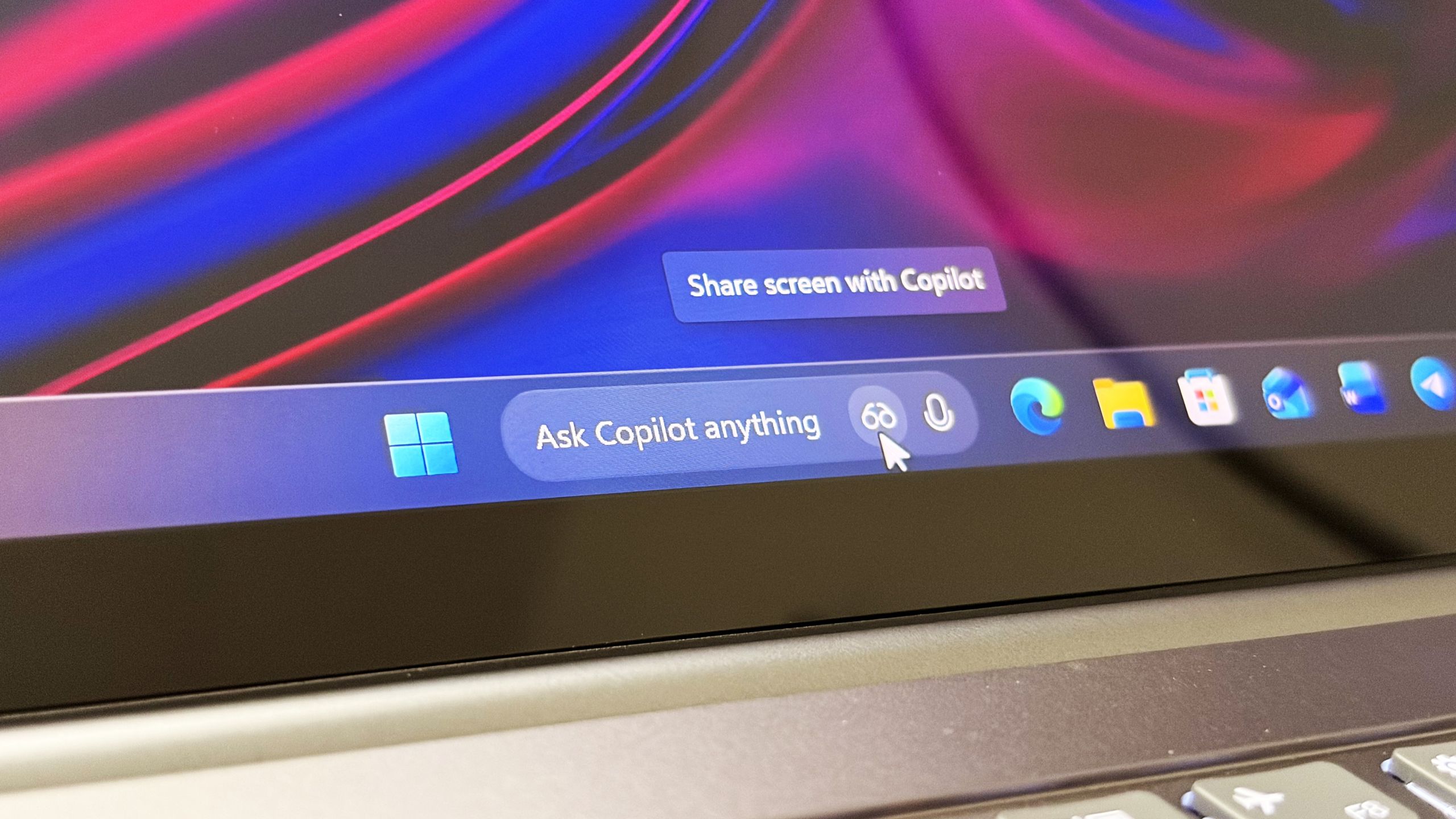
Microsoft confirms Ask Copilot is still coming to Windows 11's Taskbar this summer
First announced last year, a new document has confirmed that Microsoft's upcoming "Ask Copilot" feature for Windows 11's Taskbar is arriving mid-2026. www.windowscentral.com
- Official source: microsoft.com
Loading…
www.microsoft.com - Related coverage: techtarget.com

Microsoft joins the AI chatbot market with Copilot Health | TechTarget
Microsoft is framing Copilot Health as a complement to patient–provider relationships, but the company's own data suggest it's filling in where care access falters.www.techtarget.com
- Related coverage: agent-wars.com
Microsoft Launches Copilot Health, Backed by Diagnostic AI That Outscored Physicians on Complex Cases
Microsoft opened a U.S. waitlist on March 12 for Copilot Health, a secure space inside its Copilot platform that aggregates data from 50-plus wearables, health records from more than 50,000 hospitals via HealthEx, and lab results from Function Health. The product is built on MAI-DxO, a... agent-wars.com
- Related coverage: healthcare.digital
Loading…
www.healthcare.digital - Related coverage: axios.com

Microsoft enters one of AI's fastest-growing arenas — health care
Microsoft bets that its health care track record will help it beat OpenAI.www.axios.com
- Related coverage: pcworld.com
Loading…
www.pcworld.com - Related coverage: gadgets360.com
Loading…
www.gadgets360.com - Related coverage: techradar.com
Loading…
www.techradar.com - Related coverage: tomsguide.com
Loading…
www.tomsguide.com - Official source: download.microsoft.com
Loading…
download.microsoft.com