

Microsoft is reportedly winding down most internal use of Anthropic’s Claude Code in its Experiences + Devices division by June 30, 2026, moving many engineers working on Windows, Microsoft 365, Teams, Outlook, and Surface toward GitHub Copilot CLI instead. The official story is standardization: Microsoft wants its own developers using the same agentic command-line tool it is selling to customers. The unofficial story is more revealing: Claude Code became too useful, too expensive, and too awkward for a company trying to make Copilot the default interface for AI-assisted software work.
The most uncomfortable part of this story is not that Microsoft is steering employees toward a Microsoft-owned product. That is what platform companies do. The uncomfortable part is that the tool being displaced appears to have won real enthusiasm inside one of Microsoft’s most important engineering groups.
Claude Code did not become a symbolic rival because it was a chatbot with a nicer tone. It became a rival because coding agents have moved from autocomplete into something closer to junior engineering labor: reading repositories, proposing changes, running commands, writing tests, and iterating across a terminal session. For developers, the tool that saves the most time tends to win first and ask procurement questions later.
That is why the reported migration matters for WindowsForum readers. Experiences + Devices is not a random internal business unit; it is the home of products that define Microsoft’s consumer and enterprise surface area. If engineers in that division gravitated toward Claude Code, that says something about where agentic coding tools have been strongest in day-to-day software work.
Microsoft’s decision, then, is not a repudiation of AI coding. It is the opposite. It is a sign that AI coding has become important enough that Microsoft can no longer treat tool choice as a loose experiment.
For Microsoft, that makes Copilot CLI more than another internal utility. It is a product bet. If the company expects enterprises to standardize on Copilot across IDEs, GitHub, Microsoft 365, and the command line, it cannot have thousands of its own engineers quietly preferring a third-party tool in the trenches.
There is also a classic dogfooding argument. Microsoft has long used internal adoption as a way to harden products before customers encounter them at scale. Windows Insider builds, Microsoft 365 deployments, Azure services, and internal security tooling have all been shaped by the company’s willingness to make employees live with unfinished or fast-evolving Microsoft software.
But dogfooding becomes politically sharper when the alternative is better liked. Asking engineers to use Copilot CLI is not simply about testing bugs; it is about concentrating feedback, telemetry, workflow design, and institutional habit around Microsoft’s own agent. In platform terms, the company wants the learning loop inside its walls to strengthen Copilot, not Anthropic.
That usage pattern is powerful, but it is also computationally hungry. A developer who uses an AI agent as an always-on coding partner can generate far more model traffic than an office worker asking for a meeting summary. Multiply that by thousands of engineers and the procurement spreadsheet starts to look less like a productivity experiment and more like a cloud infrastructure line item.
This is where Microsoft’s incentives diverge from those of an ordinary enterprise. If a typical company pays Anthropic for Claude Code, the cost is a vendor expense. If Microsoft routes more of that work through Copilot CLI, it keeps more control over model routing, product economics, identity integration, and usage management. Even when Copilot uses non-Microsoft models under the hood, Microsoft owns the commercial wrapper and the administrative surface.
The reported June 30 deadline is also hard to ignore. That date lines up with the end of Microsoft’s fiscal year, which makes the move look less like a purely technical transition and more like the kind of budget reset large companies impose when an experiment becomes a habit.
That matters because the command line is where serious software work often becomes real. IDE integrations are useful, but terminals touch build systems, test runners, package managers, deployment scripts, logs, and repository operations. An agent that lives there can potentially move across the whole development loop.
Microsoft wants Copilot CLI to be the agentic front door for that loop. It can tie into GitHub issues, pull requests, repository context, enterprise authentication, policy controls, and eventually more Microsoft security and compliance machinery. For IT leaders, that packaged governance is the sales pitch: fewer unsanctioned tools, fewer mystery data paths, and one familiar administrative plane.
For developers, the pitch is less abstract. A coding agent must be fast, competent, predictable, and easy to interrupt. If Copilot CLI can match Claude Code’s practical strengths while fitting better into Microsoft’s ecosystem, the switch will be tolerated. If it cannot, the migration will feel like a procurement department overruling engineering judgment.
That distinction is crucial. Microsoft’s problem is not necessarily Claude the model. The problem is Claude Code the product experience. Anthropic’s coding tool sits between the developer and the workflow, which means it owns attention, habits, and a growing share of engineering trust.
In the AI platform war, that layer is valuable. Model access can become interchangeable; workflow ownership is stickier. If a developer starts every hard refactor or debugging session with Claude Code, Anthropic becomes part of the developer’s muscle memory.
Microsoft does not want to be a reseller of someone else’s developer relationship. It wants Copilot to be the place where models compete, tasks are delegated, and enterprise controls are enforced. That is a much stronger position than merely allowing employees to expense whatever agent they like best.
If Copilot CLI becomes the standard tool for engineers building Windows, Microsoft 365, Teams, Outlook, and Surface software, it will shape how Microsoft’s own code gets written, tested, reviewed, and maintained. That does not mean Copilot will secretly author Windows. It does mean the tooling assumptions of Microsoft’s engineering culture are shifting toward agentic workflows.
That has practical consequences. Bug fixes may be generated with more AI assistance. Test generation may become more automated. Code reviews may include more machine-generated summaries and suggested changes. Internal documentation, build scripts, and migration work may increasingly be delegated to agents.
The optimistic version is faster maintenance and less engineering time wasted on repetitive glue work. The pessimistic version is a new class of errors produced by tools that are persuasive, fast, and occasionally wrong in ways humans miss because the output looks professional.
Microsoft is now experiencing that cycle inside its own engineering ranks. The irony is delicious, but the lesson is serious. The AI tool that employees choose is not always the tool the company can afford, audit, or strategically endorse.
For enterprises standardized on Microsoft 365, GitHub Enterprise, Entra ID, Defender, and Azure, Copilot CLI offers an appealing control story. Admins can imagine a future where AI coding agents are governed like other enterprise software: identity-bound, logged, policy-aware, and integrated with existing repositories and security workflows.
But the developer experience still has to be good. Enterprise IT can mandate a tool, but it cannot manufacture enthusiasm. If sanctioned AI coding agents lag behind the tools developers believe are best, organizations will see workarounds, personal accounts, and quiet fragmentation.
Claude Code’s rise showed that Anthropic understood something important about developer trust. Engineers do not merely want a model that can answer coding questions. They want a tool that can sit inside the workflow and handle ambiguity without turning every task into a prompt-engineering exercise.
Microsoft has advantages Anthropic cannot easily copy. It owns GitHub. It owns Visual Studio and Visual Studio Code’s broader ecosystem influence. It owns Windows, Azure, Entra ID, and a vast enterprise sales channel. It can bundle, integrate, discount, govern, and promote Copilot at a scale few rivals can match.
But Anthropic’s advantage has been product credibility among developers who judge tools by whether they help with real code. That is why Microsoft’s move should be read as a compliment as much as a clampdown. You do not force a migration away from a tool that nobody cares about.
A unified internal toolchain can make security review simpler. It can centralize logs, standardize identity, restrict data flows, and align with internal compliance requirements. For a company whose products are constant targets for attackers, that is not bureaucratic paranoia.
Still, security alone does not fully explain the timing or the target. Microsoft is not retreating from AI coding agents; it is moving engineers to its own. That suggests the company’s concern is less “AI agents are unsafe” and more “AI agents are too important to leave outside our product and control plane.”
That difference matters. The future Microsoft is building is not one where developers use less AI. It is one where they use AI through Microsoft’s chosen channels.
The danger is that a mandate can also mask weak adoption signals. If usage rises because access to a rival was removed, Microsoft must be careful not to mistake compliance for love. Developers forced into a tool will use it, but they will also compare every rough edge against the product they lost.
That comparison will be especially unforgiving because AI coding agents operate in a high-trust zone. A bad meeting summary is annoying. A bad code change can waste hours, introduce bugs, or create security issues. The tool has to earn confidence repeatedly.
Microsoft’s challenge, then, is not merely to migrate seats. It is to make Copilot CLI good enough that engineers stop treating Claude Code as the forbidden better option.
If the transition goes smoothly, Microsoft gets a powerful talking point. It can tell enterprise customers that its own Windows and Microsoft 365 engineers use Copilot CLI for serious work. That kind of internal validation is valuable in a market crowded with demos and inflated AI productivity claims.
If the transition is rocky, the story becomes more complicated. Developers may comply officially while continuing to prefer other tools for certain tasks. Teams may discover that Claude Code handled specific workflows better. Copilot CLI may improve rapidly under pressure, but the short-term friction could be real.
Either way, Microsoft has made the strategic choice visible. It is telling employees, customers, competitors, and partners that the coding-agent layer is too important to outsource casually.
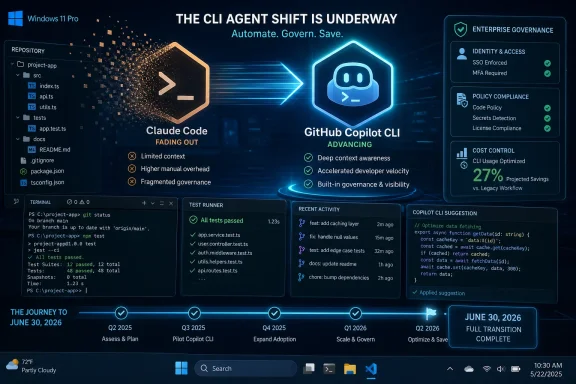 Microsoft’s Claude Problem Is That Claude Worked
The most uncomfortable part of this story is not that Microsoft is steering employees toward a Microsoft-owned product. That is what platform companies do. The uncomfortable part is that the tool being displaced appears to have won real enthusiasm inside one of Microsoft’s most important engineering groups.Claude Code did not become a symbolic rival because it was a chatbot with a nicer tone. It became a rival because coding agents have moved from autocomplete into something closer to junior engineering labor: reading repositories, proposing changes, running commands, writing tests, and iterating across a terminal session. For developers, the tool that saves the most time tends to win first and ask procurement questions later.
That is why the reported migration matters for WindowsForum readers. Experiences + Devices is not a random internal business unit; it is the home of products that define Microsoft’s consumer and enterprise surface area. If engineers in that division gravitated toward Claude Code, that says something about where agentic coding tools have been strongest in day-to-day software work.
Microsoft’s decision, then, is not a repudiation of AI coding. It is the opposite. It is a sign that AI coding has become important enough that Microsoft can no longer treat tool choice as a loose experiment.
The Official Explanation Is Governance, Consistency, and Dogfooding
The public-facing logic is straightforward: Microsoft wants its engineers to consolidate around GitHub Copilot CLI, the terminal-native extension of the Copilot product line. GitHub Copilot CLI reached general availability earlier in 2026 and is designed to put an agent directly in the developer’s command line, where it can plan, edit, run commands, and interact with repositories.For Microsoft, that makes Copilot CLI more than another internal utility. It is a product bet. If the company expects enterprises to standardize on Copilot across IDEs, GitHub, Microsoft 365, and the command line, it cannot have thousands of its own engineers quietly preferring a third-party tool in the trenches.
There is also a classic dogfooding argument. Microsoft has long used internal adoption as a way to harden products before customers encounter them at scale. Windows Insider builds, Microsoft 365 deployments, Azure services, and internal security tooling have all been shaped by the company’s willingness to make employees live with unfinished or fast-evolving Microsoft software.
But dogfooding becomes politically sharper when the alternative is better liked. Asking engineers to use Copilot CLI is not simply about testing bugs; it is about concentrating feedback, telemetry, workflow design, and institutional habit around Microsoft’s own agent. In platform terms, the company wants the learning loop inside its walls to strengthen Copilot, not Anthropic.
The Unofficial Explanation Is the Bill
The less glamorous reason is cost. Agentic coding tools can burn through tokens at a pace that makes ordinary chatbot subscriptions look quaint. A coding agent does not merely answer a question; it may inspect files, summarize code paths, generate patches, run tests, examine failures, revise its plan, and repeat that loop many times.That usage pattern is powerful, but it is also computationally hungry. A developer who uses an AI agent as an always-on coding partner can generate far more model traffic than an office worker asking for a meeting summary. Multiply that by thousands of engineers and the procurement spreadsheet starts to look less like a productivity experiment and more like a cloud infrastructure line item.
This is where Microsoft’s incentives diverge from those of an ordinary enterprise. If a typical company pays Anthropic for Claude Code, the cost is a vendor expense. If Microsoft routes more of that work through Copilot CLI, it keeps more control over model routing, product economics, identity integration, and usage management. Even when Copilot uses non-Microsoft models under the hood, Microsoft owns the commercial wrapper and the administrative surface.
The reported June 30 deadline is also hard to ignore. That date lines up with the end of Microsoft’s fiscal year, which makes the move look less like a purely technical transition and more like the kind of budget reset large companies impose when an experiment becomes a habit.
Copilot CLI Is Not Just a Replacement, It Is a Territory Claim
GitHub Copilot began as a code-completion product. Copilot CLI belongs to a different category. It is Microsoft’s attempt to make the terminal itself an AI workspace, not merely a place where developers type commands after receiving advice from a chatbot.That matters because the command line is where serious software work often becomes real. IDE integrations are useful, but terminals touch build systems, test runners, package managers, deployment scripts, logs, and repository operations. An agent that lives there can potentially move across the whole development loop.
Microsoft wants Copilot CLI to be the agentic front door for that loop. It can tie into GitHub issues, pull requests, repository context, enterprise authentication, policy controls, and eventually more Microsoft security and compliance machinery. For IT leaders, that packaged governance is the sales pitch: fewer unsanctioned tools, fewer mystery data paths, and one familiar administrative plane.
For developers, the pitch is less abstract. A coding agent must be fast, competent, predictable, and easy to interrupt. If Copilot CLI can match Claude Code’s practical strengths while fitting better into Microsoft’s ecosystem, the switch will be tolerated. If it cannot, the migration will feel like a procurement department overruling engineering judgment.
Anthropic Is Still a Partner, Which Makes the Move More Complicated
This is not a clean Microsoft-versus-Anthropic breakup. Microsoft has continued to make Anthropic models available through parts of its AI ecosystem, and GitHub Copilot itself has increasingly been positioned as a multi-model product rather than a pure OpenAI delivery channel. In other words, Microsoft can reduce direct use of Claude Code while still offering Claude-family models inside Microsoft-controlled products.That distinction is crucial. Microsoft’s problem is not necessarily Claude the model. The problem is Claude Code the product experience. Anthropic’s coding tool sits between the developer and the workflow, which means it owns attention, habits, and a growing share of engineering trust.
In the AI platform war, that layer is valuable. Model access can become interchangeable; workflow ownership is stickier. If a developer starts every hard refactor or debugging session with Claude Code, Anthropic becomes part of the developer’s muscle memory.
Microsoft does not want to be a reseller of someone else’s developer relationship. It wants Copilot to be the place where models compete, tasks are delegated, and enterprise controls are enforced. That is a much stronger position than merely allowing employees to expense whatever agent they like best.
The Windows Angle Is Bigger Than Internal Tooling
For Windows users, the story may sound distant: an internal Microsoft developer tool migration, inside a large engineering division, affecting employees most people will never meet. But the downstream effects could land in the products WindowsForum readers use and administer every day.If Copilot CLI becomes the standard tool for engineers building Windows, Microsoft 365, Teams, Outlook, and Surface software, it will shape how Microsoft’s own code gets written, tested, reviewed, and maintained. That does not mean Copilot will secretly author Windows. It does mean the tooling assumptions of Microsoft’s engineering culture are shifting toward agentic workflows.
That has practical consequences. Bug fixes may be generated with more AI assistance. Test generation may become more automated. Code reviews may include more machine-generated summaries and suggested changes. Internal documentation, build scripts, and migration work may increasingly be delegated to agents.
The optimistic version is faster maintenance and less engineering time wasted on repetitive glue work. The pessimistic version is a new class of errors produced by tools that are persuasive, fast, and occasionally wrong in ways humans miss because the output looks professional.
Enterprise IT Will Recognize the Pattern
Many IT departments have already lived through a smaller version of this drama. Employees discover a useful AI tool before procurement has approved it. Usage spreads through informal channels. Productivity improves, costs rise, data governance gets murky, and leadership eventually forces the organization back toward sanctioned platforms.Microsoft is now experiencing that cycle inside its own engineering ranks. The irony is delicious, but the lesson is serious. The AI tool that employees choose is not always the tool the company can afford, audit, or strategically endorse.
For enterprises standardized on Microsoft 365, GitHub Enterprise, Entra ID, Defender, and Azure, Copilot CLI offers an appealing control story. Admins can imagine a future where AI coding agents are governed like other enterprise software: identity-bound, logged, policy-aware, and integrated with existing repositories and security workflows.
But the developer experience still has to be good. Enterprise IT can mandate a tool, but it cannot manufacture enthusiasm. If sanctioned AI coding agents lag behind the tools developers believe are best, organizations will see workarounds, personal accounts, and quiet fragmentation.
The Real Contest Is Over the Default Developer Habit
The AI coding market is often described as a benchmark race, but benchmarks are only part of the story. The deeper contest is over defaults. Which agent does a developer invoke without thinking? Which one gets trusted with a messy branch? Which one is allowed to run tests, edit files, and propose a pull request?Claude Code’s rise showed that Anthropic understood something important about developer trust. Engineers do not merely want a model that can answer coding questions. They want a tool that can sit inside the workflow and handle ambiguity without turning every task into a prompt-engineering exercise.
Microsoft has advantages Anthropic cannot easily copy. It owns GitHub. It owns Visual Studio and Visual Studio Code’s broader ecosystem influence. It owns Windows, Azure, Entra ID, and a vast enterprise sales channel. It can bundle, integrate, discount, govern, and promote Copilot at a scale few rivals can match.
But Anthropic’s advantage has been product credibility among developers who judge tools by whether they help with real code. That is why Microsoft’s move should be read as a compliment as much as a clampdown. You do not force a migration away from a tool that nobody cares about.
The Security Argument Is Real, but It Is Not the Whole Story
There are legitimate reasons for a company like Microsoft to reduce reliance on a third-party coding agent. Source code, logs, prompts, test outputs, architectural notes, and internal documentation can all flow through these systems. Even with enterprise contracts and safeguards, the risk profile is not trivial.A unified internal toolchain can make security review simpler. It can centralize logs, standardize identity, restrict data flows, and align with internal compliance requirements. For a company whose products are constant targets for attackers, that is not bureaucratic paranoia.
Still, security alone does not fully explain the timing or the target. Microsoft is not retreating from AI coding agents; it is moving engineers to its own. That suggests the company’s concern is less “AI agents are unsafe” and more “AI agents are too important to leave outside our product and control plane.”
That difference matters. The future Microsoft is building is not one where developers use less AI. It is one where they use AI through Microsoft’s chosen channels.
The Risk Is That Mandates Can Hide Product Gaps
Internal standardization can sharpen a product. If thousands of Microsoft engineers use Copilot CLI every day, bugs will surface, missing features will become obvious, and the product team will get pressure from some of the most demanding users imaginable. That is the best-case outcome.The danger is that a mandate can also mask weak adoption signals. If usage rises because access to a rival was removed, Microsoft must be careful not to mistake compliance for love. Developers forced into a tool will use it, but they will also compare every rough edge against the product they lost.
That comparison will be especially unforgiving because AI coding agents operate in a high-trust zone. A bad meeting summary is annoying. A bad code change can waste hours, introduce bugs, or create security issues. The tool has to earn confidence repeatedly.
Microsoft’s challenge, then, is not merely to migrate seats. It is to make Copilot CLI good enough that engineers stop treating Claude Code as the forbidden better option.
The June Deadline Turns a Tool Choice Into a Platform Signal
The concrete timeline gives this story its edge. A move by the end of June 2026 is not an abstract strategic preference; it is a near-term operational shift for engineers working on some of Microsoft’s most visible products. That makes the decision a live test of Copilot CLI’s readiness inside Microsoft itself.If the transition goes smoothly, Microsoft gets a powerful talking point. It can tell enterprise customers that its own Windows and Microsoft 365 engineers use Copilot CLI for serious work. That kind of internal validation is valuable in a market crowded with demos and inflated AI productivity claims.
If the transition is rocky, the story becomes more complicated. Developers may comply officially while continuing to prefer other tools for certain tasks. Teams may discover that Claude Code handled specific workflows better. Copilot CLI may improve rapidly under pressure, but the short-term friction could be real.
Either way, Microsoft has made the strategic choice visible. It is telling employees, customers, competitors, and partners that the coding-agent layer is too important to outsource casually.
What Microsoft’s Claude Retreat Actually Tells Windows Shops
For IT pros and Windows-focused organizations, the most useful reading is not “Claude lost” or “Copilot won.” The better reading is that AI coding agents have crossed the line from optional experimentation into managed infrastructure. Microsoft is treating them like a platform dependency, not a novelty.- Microsoft is reportedly moving many Experiences + Devices engineers away from Claude Code and toward GitHub Copilot CLI by June 30, 2026.
- The official rationale is standardization around Microsoft’s own agentic developer workflow, especially as Copilot CLI becomes a commercial product Microsoft wants customers to trust.
- The unofficial rationale is likely a mix of cost control, fiscal-year discipline, internal product politics, and concern that Anthropic’s tool was becoming too central to Microsoft engineering habits.
- Anthropic is not being pushed out of Microsoft’s AI ecosystem entirely; the sharper issue is whether developers access Claude through Anthropic’s product or through Microsoft-controlled surfaces.
- Enterprise IT should treat this as a preview of its own AI governance fights, where developer preference, cost, security, and platform strategy collide.
- The success of the move will depend less on policy than on whether Copilot CLI can match the practical usefulness that made Claude Code popular in the first place.
References
- Primary source: Times Now
Published: 2026-06-02T08:41:07.148092
Loading…
www.timesnownews.com - Related coverage: techradar.com
Loading…
www.techradar.com - Related coverage: winbuzzer.com

Microsoft Shifts Engineers from Claude Code to GitHub Copilot CLI
Microsoft is moving Experiences + Devices engineers from Claude Code to GitHub Copilot CLI by June 30, while keeping its broader Anthropic ties intact. winbuzzer.com
- Related coverage: epcgroup.net
Loading…
www.epcgroup.net - Related coverage: aiinsiders.net
Loading…
aiinsiders.net - Related coverage: techcrunch.com
Loading…
techcrunch.com
- Related coverage: quasa.io
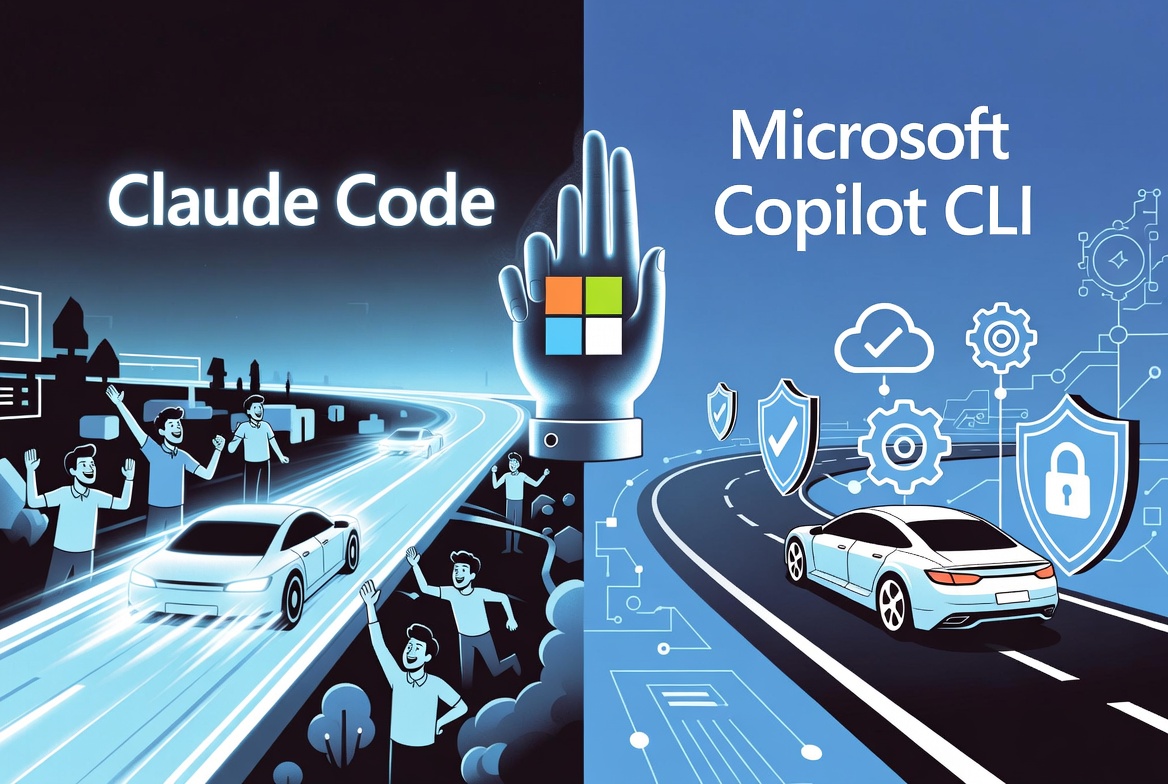
Microsoft Is Pulling Claude Code from Its Core Product Teams and Forcing a Switch to GitHub Copilot CLI
June 30, 2026 (the end of Microsoft’s current fiscal year). Developers have been told to transition to GitHub Copilot CLI in the coming weeks.quasa.io
- Related coverage: byteiota.com

Microsoft Claude Code Killed: Copilot CLI by June 2026
Microsoft is canceling Claude Code at Windows and Teams by June 30, forcing Copilot CLI instead. Token costs and platform strategy explain the real reason why. byteiota.com
- Related coverage: tipranks.com
Loading…
www.tipranks.com - Related coverage: forbes.com

Microsoft Ends Claude Code Licenses As It Pushes Copilot CLI
Microsoft moves away from Claude Code with in-house coding model. It is betting the model was never what decided the winner. www.forbes.com
- Related coverage: letsdatascience.com

Microsoft cancels Claude Code licenses, shifts developers to Copilot CLI
According to The Verge, Microsoft has begun canceling thousands of employee **Claude Code** licenses and is encouraging developers to transition to `GitHub Copilot CLI`. The Verge reports the company's Experiences + Devices team, which covers Windows, Microsoft 365, Outlook, Teams, and Surface... letsdatascience.com
- Related coverage: wwwatch.dev

Microsoft Drops Claude Code, Pushes Thousands of Devs to Copilot CLI
Microsoft is canceling Claude Code licenses for its internal developers and redirecting them to GitHub Copilot CLI instead. The move signals how quickly enterprise AI tooling decisions can shift beneath teams building on third-party coding agents. www.wwwatch.dev
- Related coverage: startupfortune.com

Microsoft is steering its developers from Claude Code to Copilot CLI - Startup Fortune
Microsoft is preparing to wind down most internal Claude Code licenses in its Experiences and Devices group and move thousands of developers to GitHub startupfortune.com
- Related coverage: windowscentral.com

Microsoft is ditching Claude Code for Copilot CLI — but its own devs aren’t happy
Microsoft cancels Claude Code licenses in favor of GitHub Copilot CLI. Financial motives could be in play. www.windowscentral.com
- Related coverage: tomsguide.com
Loading…
www.tomsguide.com - Related coverage: tomshardware.com
Loading…
www.tomshardware.com - Related coverage: time.com
Loading…
time.com - Official source: anthropic.com
Loading…
www.anthropic.com - Related coverage: press.spglobal.com
Loading…
press.spglobal.com - Related coverage: news.cognizant.com
Loading…
news.cognizant.com