

Microsoft’s decision to fold OpenAI’s Sora 2 into its consumer and productivity surfaces marks a step-change in how everyday users — not just media studios — will be able to create short, cinematic video with synchronized audio using only natural-language prompts.
Microsoft has been quietly and quickly wiring advanced generative models into Bing and Microsoft 365 for more than a year; the latest move brings OpenAI’s Sora 2 — a second‑generation text‑to‑video model with built‑in audio and stronger physics — into two visible places: the free Bing Video Creator experience inside the Bing mobile app, and Microsoft’s Copilot Create workflow inside Microsoft 365 for commercial/Frontier users. This expansion follows earlier integrations of Sora and other models across Azure and Microsoft’s product portfolio, and it accelerates a larger push to bake AI creative tools directly into the places employees and consumers already work and browse.
Sora 2 is not a minor model update; OpenAI describes it as producing videos with improved physical plausibility, sharper realism, and synchronized audio — a capability that turns short, generative clips into finished micro‑productions instead of raw visual experiments. Microsoft’s availability choices are consequential: by offering Sora‑powered generation inside Bing for free on mobile and by embedding Sora 2 as part of Copilot Create and other enterprise surfaces, the company is lowering the barrier to entry for AI video creation while simultaneously opening new product and governance challenges.
Notable product details reported in public coverage and platform notes include:
Microsoft’s broader Azure strategy — offering Sora via Azure AI Foundry and related cloud tooling — means developers and ISVs can build custom video experiences on top of the same model family. Earlier Microsoft announcements signaled Sora availability on Azure AI Foundry, positioning the company to monetize and scale Sora capabilities for business customers.
Recommended next steps:
Sora 2’s arrival inside Bing and Microsoft 365 is a watershed: it turns what used to be a high‑friction studio task into a native feature of search and productivity. That democratization of creative power is exciting — and it’s also a moment that demands deliberate policies, good tooling, and continual vigilance to balance creativity with safety, legal risk, and brand integrity. The tools are here; now the responsibility to use them wisely rests with platforms, enterprises, and creators alike.
Source: Windows Report https://windowsreport.com/microsoft-upgrades-bing-video-creator-with-openais-sora-2-ai-video-model/
 Background / Overview
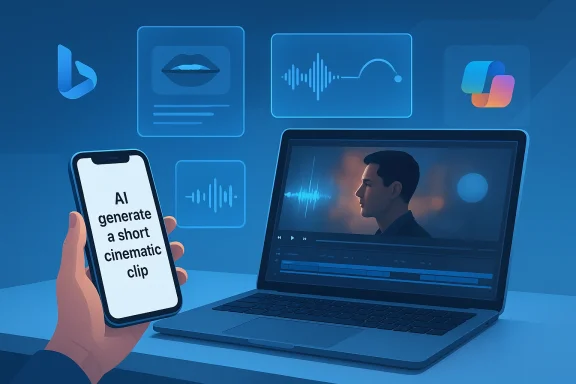
Microsoft has been quietly and quickly wiring advanced generative models into Bing and Microsoft 365 for more than a year; the latest move brings OpenAI’s Sora 2 — a second‑generation text‑to‑video model with built‑in audio and stronger physics — into two visible places: the free Bing Video Creator experience inside the Bing mobile app, and Microsoft’s Copilot Create workflow inside Microsoft 365 for commercial/Frontier users. This expansion follows earlier integrations of Sora and other models across Azure and Microsoft’s product portfolio, and it accelerates a larger push to bake AI creative tools directly into the places employees and consumers already work and browse.Sora 2 is not a minor model update; OpenAI describes it as producing videos with improved physical plausibility, sharper realism, and synchronized audio — a capability that turns short, generative clips into finished micro‑productions instead of raw visual experiments. Microsoft’s availability choices are consequential: by offering Sora‑powered generation inside Bing for free on mobile and by embedding Sora 2 as part of Copilot Create and other enterprise surfaces, the company is lowering the barrier to entry for AI video creation while simultaneously opening new product and governance challenges.
What is Sora 2 — a technical snapshot
Key capabilities
- Synchronized audio and lip‑sync: Sora 2 generates not just visuals but frame‑aligned audio — dialogue, ambient sound, and effects — that are intended to match mouth movements and on‑screen events. This integration of audio into the generation pipeline is the headline feature that differentiates Sora 2 from many earlier text‑to‑video models.
- Improved physics and temporal consistency: OpenAI reports better object interactions and temporal coherence, so actions behave more plausibly across frames (bounces, falls, collisions). That reduces the characteristic “floating” or “teleporting” artifacts that earlier models produced.
- Steerability and stylistic control: The model supports richer prompt controls for style, camera framing, and mood, and OpenAI supplies templates and prompts to coax different genres (explainer, cinematic, cartoon).
- Cameos and likeness features: Sora 2 introduced a consented cameo system that lets a user place an identifiable likeness into generated clips after consented upload or authorized training, a mechanism intended to give people control over how their face is used. This is accompanied by content‑safety measures at the model and platform layers.
Limits and practical constraints
- Clip length and resolution: Current deployments favor short clips — typically under 15–25 seconds depending on plan and surface — with HD output suitable for social clips and short ads, not long‑form films. OpenAI and platform partners have prioritized quality and synchronization over long duration.
- Guardrails and rate limits: API and product access include rate limits, watermarks, and metadata flags (C2PA) intended to mark content as AI‑generated. Enterprise integrations often layer additional guardrails for brand assets and governance.
How Microsoft has integrated Sora 2
Bing Video Creator (mobile-first, free tier)
Microsoft has added Sora (and subsequent Sora 2 capabilities in later rollouts) to the Bing Video Creator experience in the Bing mobile app on iOS and Android. The integration gives users the ability to type or speak prompts and receive shors without requiring dedicated video editing software. The move follows earlier launches of Sora in Bing and represents one of the first high‑scale consumer surfaces to offer OpenAI’s next‑generation video model for free access.Notable product details reported in public coverage and platform notes include:
- A free allocation for signed‑in Microsoft account holders to create a limited set of clips each month on mobile, with higher throughput gated behind subscriptions or enterprise plans. Tech reporting from the rollout noted specific free clip allowances for users in initial releases.
- A mobile‑first UX optimized for vertical, short‑form clips suitable for social sharing. Microsoft’s UI emphasizes quick iteration: prompt → generate → refine.
Microsoft 365 Copilot and Copilot Create (ers)
Beyond Bing, Microsoft has announced availability of Sora 2 inside Microsoft 365 Copilot’s Create experience for commercial and Frontier program customers. This product integration puts short AI‑generated video creation directly into workflows for marketing, training, and internal communications: users can turn a slide deck, a document, or a simple brief into short video assets, with options to include brand kits, voiceover styles, and closed captions. The Copilot integration is explicitly intended for enterprise scenarios where governance, minimal editing, and brand consistency matter.Microsoft’s broader Azure strategy — offering Sora via Azure AI Foundry and related cloud tooling — means developers and ISVs can build custom video experiences on top of the same model family. Earlier Microsoft announcements signaled Sora availability on Azure AI Foundry, positioning the company to monetize and scale Sora capabilities for business customers.
Why this matters: product and market implications
1) Democratizing (and commoditizing) short‑form production
Sora 2 materially lowers the technical and cost barrier to producing short, polished video. That reduces the friction for individuals, small teams, and non‑creative departments to produce marketing clips, explainers, and social content in minutes. For creators, it’s another fast iteration tool; for enterprises, it fast‑tracks content funnels that once required agencies. TechCrunch and other outlets flagged how offering Sora in Bing for free represents a move to capture creator mindshare and usage at scale.2) Intensified competition in video‑AI
The AI video battleground is already crowded: Google’s Veo family, Runway, Meta’s research outputs, and multiple startup offerings compete on fidelity, duration, and cost. Sora 2’s synchronized audio and Microsoft’s distribution power via Bing, Edge, and Microsoft 365 create a credible attack on both consumer and enterprise fronts. Coverage across outlets and industry commentary has noted the significance of combining a top‑tier video model with a mass distribution channel.3) New product flows and attention economics
Embedding video generation into search and productivity apps changes user behavior. Instead of leaving Bing to edit in third‑party tools, users can generate and post natively or export assets into brand workflows. That increases time‑on‑platform and creates new paths for engagement, discovery, and potentially advertising or commerce tie‑ins. Internal Microsoft forum threads and TechCommunity posts emphasize how Copilot’s “Create” workflows aim to convert ideation to publishable content in fewer steps.Safety, copyright, and governance — the tradeoffs
Built‑in provenance: C2PA and watermarks
OpenAI and partners have emphasized provenance: Sora‑generated outputs are tagged with metadata and watermarking to indicate synthetic origin, following industry standards (C2PA). Microsoft’s enterprise surfaces add corporate brand overlays and governance hooks. These mechanisms are critical for platform transparency but are not a panacea — metadata can be stripped and watermarks cropped.Copyright and content policy pushback
Sora’s early releases and their rapid public uptake also triggered immediate, public disputes about what the model can reproduce. Within days of Sora 2’s debut, outlets reported OpenAI revising policy language and content filters after problematic outputs raised copyright and likeness concerns. The practical reality is that high‑fidelity generative models increase the risk that copyrighted characters, brand assets, and celebrity likenesses can be reproduced — intentionally or inadvertently — which fuels legal and reputational risk for platforms that host or distribute such content.Deepfakes, misinformation, and child safety
Sora 2’s realism and audio sync heighten deepfake risks: synchronized speech, accurate lip movement, and plausible physics make fabricated events substantially harder to detect. OpenAI’s system card lists mitigations (content filters, detection tools, extra protections for minors), but policy labs and journalists flag that detection and labeling are arms races — as generation improves, detection must improve faster, or platforms face escals managed deployments (Copilot Create, enterprise controls) aim to reduce misuse by design, but the consumer Bing surface opens a broad attack surface that will require continuous monitoring.Technical and operational costs: who pays for the compute?
High‑quality video generation with synchronized audio and physics is computationally expensive. Early adopters and reporting suggest Microsoft is subsidizing consumer access to some extent — providing a free tier in Bing to seed usage while reserving higher throughput and longer clips for paid users or enterprise accounts. This implies a commercial model where Microsoft either pays for model calls through its OpenAI partnership or routes enterprise/scale use through Azure billing. The balance of subsidized free access and monetized enterprise workflows mirrors earlier strategies for image‑and‑chat products, and it shapes how sustainable mass usage will be.What this means for enterprises, IT teams, and content professionals
Benefits
- Faster asset creation: Marketing and learning teams can prototype shoriners without external vendors. Copilot Create’s brand‑kit and watermark controls make it easier to produce on‑brand material quickly.
- Integrated workflows: Embedding generation inside Microsoft 365 reduces fragmentation: slides → script → video in one session. This can improve turnaround time on campaigns and lower production costs.
- Experimentation and internal comms: Internal training and HR communications can leverage short, tailored clips with voiceover and captions for faster comprehension and engagement.
Risks and recommended governance steps
- Define acceptable use: Put clear policies in place that restrict production of impersonations, copyrighted‑party likenesses without consent.
- Use watermarking and metadata enforcement: Enforce automatic watermarking/C2PA metadata for all externally shared content and preserve provenance in archives.
- Centralize approvals for brand assets: Require marketing sign‑off for any clip that uses brand marks or product imagery to prevent accidental IP exposure.
- Train detection and monitoring teams: Equip security and communications teams with tools and training to spot misuse and respond quickly to takedown/reporting workflows.
- Audit vendor and licensing terms: If Microsoft or OpenAI supplies brand kit integration, verify licensing, data retention, and indemnity terms before rolling out public campaigns.
Real‑world examples and early adoption patterns
Early usage patterns show three primary behaviors:- Creators using Bing Video Creator for quick social thumbnails and short clips, benefiting from the mobile UX and free allocations. Tech reporting at launch highlighted heavy adoption by hobby creators and marketers looking to produce low‑cost social assets.
- Enterprise teams piloting Copilot Create for internal training clips and product explainers, prioritizing brand safety and reuse of existing corporate assets. Windows Central and Microsoft community notes show Copilot’s Create workflows being trialed by organizations in marketing and comms.
- Developers and ISVs experimenting on Azure AI Foundry to build custom video workflows, such as ad personalization or automated product highlight reels, where the enterprise controls and scale advantages of Azure are critical. Forum threads and Azure announcements emphasize developer interest in embedding Sora APIs in business apps.
Cross‑reference: what multiple sources agree on (and where they differ)
- Agreement: Sora 2 brings synchronized audio to text‑to‑video generation, and Microsoft has integrated Sora‑powered generation into Bing and Microsoft 365 surfaces. This is stated by OpenAI, Microsoft’s TechCommunity posts, and independent reporting from major tech press.
- Agreement: Outputs are short, polished clips (not long‑form video) with watermarks or metadata indicating synthetic origin; platforms are adding enterprise guardrails for brand/content. OpenAI’s system card and Microsoft product notes concur.
- Divergence/uncertainty: Pricing and long‑term access models differ by outlet and product surface. Early reportage noted free clip allocations in Bing, while Copilot Create is tied to Microsoft 365 Frontier/commercial plans; the exact thresholds, quotas, and commercial terms continue to evolve and vary by market and date. Readers should check their tenant, Microsoft account entitlements, or developer plans for precise limits.
- Unverified or changing claims: Model performance claims (for etes, maximum resolution, or per‑clip inference latency) are often generalized in press coverage and can change as OpenAI tweaks service SLAs and Microsoft tunes its integrations. Technical system cards and API docs provide the most reliable, but still time‑sensitive, specifications. Flag such claims as potentially fluid.
Practical tips: how to get useful results from Sora 2 in Bing or Copilot
- Start with a clear, short prompt: state subject, action, style, and mood (e.g., “A 10‑second cinematic product reveal: slow dolly, warm lighting, female narrator with calm British voice, soft piano underscore.”). Short, structured prompts reduce ambiguity.
- Use brand kit features in Copilot: upload logos and brand palettes to keep outputs on‑brand; require central approval before public posting.
- Iterate quickly: generate multiple variations and keep the best takes; many users report better results with small prompt tweaks that add camera or lighting directives.
- Preserve provenance: always export with C2PA metadata enabled and maintain a local archive of original prompts and any consent documentation for cameos.
- Respect limits: track clip counts and quotas on Bing, and consider enterprise plans if you need higher throughput or longer durations.
The regulatory and reputational horizon
Policy makers and courts are already focusing on synthetic media issues: copyright, deepfake statutes, disclosure obligations, and platform liability. As Microsoft scales a Sora 2‑enabled Bing and deepens Copilot integrations, the company will face scrutiny similar to earlier content moderation debates, now complicated by hyperreal video and audio. OpenAI’s system card and early press both acknowledge these risks and lay out mitigation efforts, but the underlying legal regimes are still catching up. Organizations adopting these tools should prepare compliance playbooks, transparent disclosure policies, and incidenn.openai.com](https://cdn.openai.com/pdf/50d5973c...f069/sora_2_system_card.pdf?utm_source=openai))Strengths, limitations, and critical takeaways
Strengths
- Accessibility: Sora 2 in Bing dramatically expands access to high‑quality, synchronized audio/video generation for casual and professional users alike.
- Integration: Microsoft’s approach — embedding the tech where people search and where organizations create — reduces friction and can unlock high ROI for marketing and communications teams.
- Technical leap: Sora 2’s audio sync and improved physics represent a real capability jump in generative media, moving outputs from “toy” demos toward usable short‑form content.
Limitations and risks
- Short duration and artifact classes: Current models favor short clips; artifacts still occur (text legibility, complex multi‑scene continuity), and outputs require human review.
- Governance gaps: Watermarks and metadata help, but they can be stripped — and mass distribution of hyperreal content raises reputational and legal risks if policies and enforcement lag.
- Monetization and sustainability: Free access at scale is expensive; sustainable product economics will push more users into paid tiers, potentially fragmenting the user base across surfaces and terms.
Final assessment and recommended next steps for Windows/IT communities
Microsoft’s Sora 2 integrations are a significant and largely positive advancement for creative productivity: they provide speed and quality that were previously costly or time‑consuming. For Windows administrators, IT leaders, and creators, the sensible path forward is proactive governance combined with pragmatic experimentation.Recommended next steps:
- Pilot Sora‑enabled workflows in a controlled environment (marketing, internal comms) and document results and risks. Use Copilot Create’s brand features for the pilot.
- Draft short‑form policy and approval workflows that cover likeness consent, copyrighted material, and public sharing, and ensure watermarking/C2PA metadata policies are enforced by default.
- Educate end users on limitations and safe prompts; provide a quick reference on what’s allowed and what needs legal or brand review.
- Monitor the product and legal landscape: model access, clip quotas, and regulatory guidance are evolving quickly; assign an owner to track changes and vendor terms.
- If your organization plans to scale usage, evaluate the Azure AI Foundry route for predictable costs, enterprise SLAs, and integration with existing compliance tooling.
Sora 2’s arrival inside Bing and Microsoft 365 is a watershed: it turns what used to be a high‑friction studio task into a native feature of search and productivity. That democratization of creative power is exciting — and it’s also a moment that demands deliberate policies, good tooling, and continual vigilance to balance creativity with safety, legal risk, and brand integrity. The tools are here; now the responsibility to use them wisely rests with platforms, enterprises, and creators alike.
Source: Windows Report https://windowsreport.com/microsoft-upgrades-bing-video-creator-with-openais-sora-2-ai-video-model/
