

Microsoft is reportedly using an internal Windows initiative called K2 in April 2026 to raise Windows 11’s quality bar, reduce bloat, and make PC gaming performance more competitive with SteamOS on handheld and low-end gaming hardware. That is not an admission of defeat, but it is something more interesting: an admission that Windows’ old gaming advantages are no longer enough. The problem is not that Windows stopped running games. The problem is that Windows increasingly feels like the least game-like part of a gaming PC.
The strange thing about the current Windows gaming panic is that Microsoft is panicking from a position of overwhelming strength. Steam’s March 2026 Hardware Survey put Windows at roughly 92 percent of Steam users, with Linux crossing 5 percent and macOS trailing behind. In any normal market, that would look like dominance bordering on inevitability.
But PC gaming is not a normal market. It is a culture built around tinkering, frame-time graphs, input latency, driver updates, Discord complaints, and the belief that a machine should feel like it belongs to the person who built or bought it. A 92 percent share does not protect Microsoft if the most vocal, most technically confident slice of that audience starts treating Windows as the thing to work around.
That is why the reported K2 initiative matters. It suggests Microsoft understands that the Windows problem is no longer just a bug backlog or a bad Settings page. It is a trust problem, and gaming is where that trust problem becomes visible fastest.
Gamers notice when an update steals focus. They notice when a background service wakes up during a match. They notice when a handheld feels like a laptop awkwardly pretending to be a console. Windows can still be the default gaming platform and, at the same time, feel like the platform least designed for the moment PC gaming is entering.
That exposed the weakness in Microsoft’s traditional pitch. For decades, Windows won gaming because it had the games, the drivers, the middleware, the anti-cheat support, the modding ecosystem, and the hardware vendor relationships. That is still mostly true. But handheld PCs shifted the user’s first impression from “Can it run my library?” to “Can I use this thing comfortably from the couch?”
On that question, Windows has often looked clumsy. The desktop is still there. Pop-ups still happen. Login flows, launchers, overlays, update prompts, and system dialogs all carry the muscle memory of a keyboard-and-mouse PC. On a 7-inch or 8-inch handheld, those compromises stop being charmingly flexible and start being hostile.
SteamOS, Bazzite, and other Linux-based gaming environments do not need universal compatibility to embarrass Windows. They only need to feel lighter, quieter, and more coherent on the hardware where Windows is most visibly overbuilt. That is a much narrower battle, but it is the battle Microsoft can least afford to dismiss.
That sounds bureaucratic, which is probably why it matters. Windows 11’s rough edges have not come from a shortage of ideas. If anything, the operating system has suffered from too many ideas arriving too quickly, often layered on top of older ideas that were never fully retired.
Microsoft has spent the past several years trying to make Windows a cloud client, an AI surface, an enterprise security platform, a gaming hub, a developer workstation, an ad channel, a subscription front end, and a traditional desktop OS all at once. Each individual initiative can be defended in isolation. Together, they create the feeling that Windows is no longer a product with a center of gravity.
For gamers, that sprawl becomes bloat. For sysadmins, it becomes risk. For enthusiasts, it becomes evidence that Microsoft is optimizing Windows for Microsoft’s strategy rather than the user’s machine. K2, if real and sustained, is Microsoft’s chance to say that fewer, better-integrated changes are preferable to a constant drizzle of half-digested features.
The company ultimately delayed broad availability and reworked the feature’s security and privacy posture. But the deeper damage was reputational. Recall became shorthand for a company so eager to ship an AI-era Windows feature that it underestimated how users would react to the idea of their operating system keeping a searchable visual memory of their activity.
That matters for gaming even though Recall was not a gaming feature. The same culture that produced Recall is the culture gamers fear when they see Windows changing underneath them. It is the culture of “ship the strategic feature, patch the trust deficit later.”
K2 appears to be aimed at reversing that instinct. The test will be whether Microsoft can resist the gravitational pull of its own platform ambitions. A better gaming Windows cannot simply be Windows plus more Xbox branding plus more Copilot integration. It has to be Windows with more restraint.
This is why the Xbox full-screen experience and the newer Xbox mode are important but insufficient. A console-like shell can reduce friction, but it cannot fully disguise the fact that standard Windows is still underneath. If the user has to fight the desktop, manage updates, close unexpected windows, or navigate tiny controls, the illusion breaks.
Microsoft seems to understand this more clearly now than it did when the first wave of Windows handhelds arrived. The company has been moving toward controller-first interfaces, boot-to-gaming experiences, and broader full-screen support across Windows 11 PCs. Those are not cosmetic changes; they are acknowledgments that the desktop cannot be the default answer for every gaming device.
Still, the danger is that Microsoft treats the shell as the solution. SteamOS feels good not merely because it has a big-picture interface, but because the whole stack is oriented around the gaming session. Suspend and resume, updates, performance profiles, controller input, storefront navigation, and library management all feel like parts of one machine. Windows has the pieces, but too often they feel like departments.
But compatibility is no longer the entire argument. When two handhelds use comparable AMD silicon and one feels smoother, lasts longer, or wastes fewer resources at idle, users notice. When a Linux-based device punches above its weight because the operating environment is thinner, the old Windows advantage starts to look conditional.
This is especially important at the low end. A high-end desktop can brute-force its way through Windows overhead. A handheld cannot. A budget gaming laptop cannot always hide inefficient services, background tasks, or memory pressure. The less headroom a machine has, the more the operating system becomes part of the performance story.
That is why reports that Microsoft is looking at SteamOS as a performance benchmark are significant. It means the comparison has shifted from feature parity to experiential parity. Microsoft is not merely competing with Linux compatibility anymore. It is competing with the feeling that Linux-based gaming devices are more purpose-built.
Gaming benefits enormously from that breadth. It is why Windows remains the default target for developers and hardware makers. It is why obscure controllers, racing wheels, capture cards, RGB tools, mod managers, and ancient games often still have a path to working.
But breadth has a cost. A device like the Steam Deck can make more opinionated choices because it does not have to be the universal Windows PC. Microsoft has to support the corporate laptop, the school lab, the CAD workstation, the streamer rig, the kiosk, the home theater PC, and the handheld all with one platform.
That does not excuse bad experiences, but it explains why fixing Windows gaming is harder than adding a “game mode.” Microsoft has to learn where to be opinionated without breaking the ecosystem that made Windows indispensable. That is the central tension K2 will have to navigate.
For gamers, interruptions are particularly unforgivable. A restart at the wrong time is not a theoretical inconvenience. It can mean a ruined download, a missed match, a corrupted recording, or an evening lost to troubleshooting. Even when Windows behaves correctly, users have been trained to expect that it might not.
Microsoft has improved many parts of the update process over the years, but perception lags reality. The company’s problem is not only that some updates are bad. It is that users increasingly assume Windows updates are something being done to them rather than for them.
A slower, higher-quality cadence would not make Windows exciting, but it could make Windows less resented. That may be the most valuable gaming feature Microsoft can ship: fewer moments where the operating system reminds you that it has its own agenda.
But AI is also where Microsoft has burned trust fastest. Gamers are not inherently anti-AI; they are anti-overhead, anti-surveillance, anti-bloat, and anti-mystery. If an AI feature consumes resources, changes defaults, complicates privacy, or appears without a clear user benefit, it will be treated as another intrusion.
That makes gaming a useful discipline for Microsoft’s broader AI ambitions. A gaming PC is an unforgiving test bed because every background process has to justify itself. If Copilot-era Windows can learn to be quiet, optional, and performance-aware for gamers, those lessons would help the rest of the OS.
The opposite is also true. If Microsoft treats gaming PCs as another surface for engagement metrics and AI feature distribution, it will push enthusiasts further toward alternatives. Linux does not need to become easy for everyone. It only needs Microsoft to keep making Windows feel less like home.
A bloated OS image affects boot times, memory use, battery life, and support tickets. A confusing update cadence complicates change management. Features that arrive before admins understand their security posture create governance headaches. A trust deficit among power users becomes shadow IT, registry hacks, unsupported debloating tools, and delayed patch adoption.
Windows gaming complaints are unusually loud, but they are not uniquely emotional. They are often early warnings from users who notice performance regressions, UI friction, and unwanted background behavior before the broader market does. The gamer with a handheld and the admin managing a fleet of laptops are both asking the same basic question: why is the operating system doing so much when I need it to get out of the way?
That is why K2’s reported focus on quality, performance, and bloat reduction matters beyond gaming. If Microsoft gets this right, the benefits will not stop at the Xbox app or handheld PCs. A more disciplined Windows would be better for everyone who has to live with Windows, which is still most of the PC world.
The right way to read it is as a warning about direction. Linux gaming is no longer a punchline. SteamOS is no longer an experiment trapped in Valve’s 2010s living-room ambitions. Bazzite and similar projects have made the idea of a console-like PC gaming Linux feel practical to users who would never have compiled a driver or edited a config file.
That changes Microsoft’s competitive environment. Windows is still the standard, but it is no longer the only credible answer. The more users see SteamOS devices performing well on similar hardware, the more Windows has to justify its overhead.
This is a subtle but profound shift. Microsoft does not have to fear a mass exodus tomorrow. It has to fear a future in which the best PC gaming experiences are increasingly designed around minimizing Windows rather than celebrating it.
But branding is not architecture. If the underlying OS remains heavy, chatty, unpredictable, or awkward under controller input, users will blame Windows no matter what logo appears at boot. The Xbox name raises expectations; it does not lower them.
This is where Microsoft’s gaming strategy becomes complicated. Xbox is now a service, a console brand, a PC app, a cloud platform, a publishing empire, and a hardware partner story. Windows is the foundation for much of that strategy, yet it often feels like the least loved part of it.
K2 could be the connective tissue if Microsoft lets it. A gaming-first Windows experience should not be a decorative mode bolted onto the desktop. It should be a set of system behaviors that understand when the PC is being used as a gaming appliance and when it is being used as a general-purpose computer.
Windows 11 often feels more polished than older versions, yet less personal. It is more secure, more modern, and better suited to contemporary hardware, but also more insistent. Recommended content, account nudges, Edge prompts, AI surfaces, app promotions, and shifting settings all contribute to the sense that the OS is negotiating with the user.
For gaming, that is deadly. A gaming PC is one of the last mainstream computers people still buy for pleasure and performance rather than obligation. Users want it to feel theirs. When Windows behaves like a corporate platform strategy wearing a consumer skin, it breaks that emotional contract.
Microsoft does not need to return to Windows 7. It needs to recover the feeling that Windows is an enabling layer rather than an attention-seeking product in its own right. That is a harder task than changing a Start menu, but it is the task in front of K2.
That will be difficult for Microsoft because the company’s incentives reward visible launches. AI features, Xbox modes, Copilot integrations, and new apps are easier to market than lower idle memory use or cleaner update discipline. But the latter may matter more.
Performance work is cumulative. Trust is cumulative. So is resentment. Windows 11’s gaming reputation did not sour because of one single mistake; it soured because many small frictions added up until users started believing the OS was the bottleneck.
If K2 is real reform rather than a temporary branding exercise, Microsoft will have to make peace with shipping improvements users feel more than they notice. That is not glamorous work. It is operating-system work.
Source: IGN Southeast Asia Even Microsoft Seems to Know Gaming on Windows 11 Isn't Great These Days
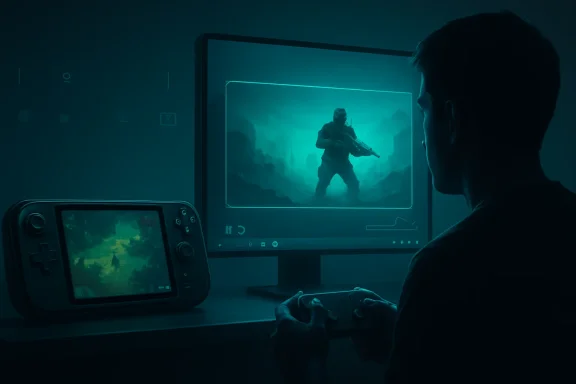 Windows Still Owns PC Gaming, but Ownership Is Not Love
The strange thing about the current Windows gaming panic is that Microsoft is panicking from a position of overwhelming strength. Steam’s March 2026 Hardware Survey put Windows at roughly 92 percent of Steam users, with Linux crossing 5 percent and macOS trailing behind. In any normal market, that would look like dominance bordering on inevitability.But PC gaming is not a normal market. It is a culture built around tinkering, frame-time graphs, input latency, driver updates, Discord complaints, and the belief that a machine should feel like it belongs to the person who built or bought it. A 92 percent share does not protect Microsoft if the most vocal, most technically confident slice of that audience starts treating Windows as the thing to work around.
That is why the reported K2 initiative matters. It suggests Microsoft understands that the Windows problem is no longer just a bug backlog or a bad Settings page. It is a trust problem, and gaming is where that trust problem becomes visible fastest.
Gamers notice when an update steals focus. They notice when a background service wakes up during a match. They notice when a handheld feels like a laptop awkwardly pretending to be a console. Windows can still be the default gaming platform and, at the same time, feel like the platform least designed for the moment PC gaming is entering.
The Steam Deck Changed the Argument Without Winning the Market
Valve did not need SteamOS to beat Windows in market share to change the conversation. It only needed SteamOS to prove that a gaming PC could boot into an environment that felt intentional. The Steam Deck’s most important contribution was not Proton, impressive though that compatibility layer has become; it was the idea that PC gaming could be made console-simple without becoming console-closed.That exposed the weakness in Microsoft’s traditional pitch. For decades, Windows won gaming because it had the games, the drivers, the middleware, the anti-cheat support, the modding ecosystem, and the hardware vendor relationships. That is still mostly true. But handheld PCs shifted the user’s first impression from “Can it run my library?” to “Can I use this thing comfortably from the couch?”
On that question, Windows has often looked clumsy. The desktop is still there. Pop-ups still happen. Login flows, launchers, overlays, update prompts, and system dialogs all carry the muscle memory of a keyboard-and-mouse PC. On a 7-inch or 8-inch handheld, those compromises stop being charmingly flexible and start being hostile.
SteamOS, Bazzite, and other Linux-based gaming environments do not need universal compatibility to embarrass Windows. They only need to feel lighter, quieter, and more coherent on the hardware where Windows is most visibly overbuilt. That is a much narrower battle, but it is the battle Microsoft can least afford to dismiss.
K2 Sounds Like a Process Story Because Windows Has a Process Problem
The most revealing part of the K2 reporting is that it is not described as a new edition of Windows. It is not Windows 12, not a gaming SKU, not a neon-green “Xbox OS” download for handhelds. It is reportedly a change in how Microsoft decides what gets into Windows and when.That sounds bureaucratic, which is probably why it matters. Windows 11’s rough edges have not come from a shortage of ideas. If anything, the operating system has suffered from too many ideas arriving too quickly, often layered on top of older ideas that were never fully retired.
Microsoft has spent the past several years trying to make Windows a cloud client, an AI surface, an enterprise security platform, a gaming hub, a developer workstation, an ad channel, a subscription front end, and a traditional desktop OS all at once. Each individual initiative can be defended in isolation. Together, they create the feeling that Windows is no longer a product with a center of gravity.
For gamers, that sprawl becomes bloat. For sysadmins, it becomes risk. For enthusiasts, it becomes evidence that Microsoft is optimizing Windows for Microsoft’s strategy rather than the user’s machine. K2, if real and sustained, is Microsoft’s chance to say that fewer, better-integrated changes are preferable to a constant drizzle of half-digested features.
Recall Was the Warning Flare Microsoft Could Not Ignore
No recent Windows feature better illustrates the danger of speed over trust than Recall. Microsoft unveiled the Copilot+ PC feature in 2024 as a way to search through past activity by saving snapshots of what users had seen and done on their PCs. The backlash was immediate, predictable, and deservedly severe.The company ultimately delayed broad availability and reworked the feature’s security and privacy posture. But the deeper damage was reputational. Recall became shorthand for a company so eager to ship an AI-era Windows feature that it underestimated how users would react to the idea of their operating system keeping a searchable visual memory of their activity.
That matters for gaming even though Recall was not a gaming feature. The same culture that produced Recall is the culture gamers fear when they see Windows changing underneath them. It is the culture of “ship the strategic feature, patch the trust deficit later.”
K2 appears to be aimed at reversing that instinct. The test will be whether Microsoft can resist the gravitational pull of its own platform ambitions. A better gaming Windows cannot simply be Windows plus more Xbox branding plus more Copilot integration. It has to be Windows with more restraint.
Handheld PCs Made Windows’ Desktop Assumptions Impossible to Hide
The rise of handheld gaming PCs has been brutal for Windows because it removes the OS from its natural habitat. On a desktop tower connected to a monitor, Windows’ complexity can be managed. On a laptop, it is expected. On a handheld, it feels absurd.This is why the Xbox full-screen experience and the newer Xbox mode are important but insufficient. A console-like shell can reduce friction, but it cannot fully disguise the fact that standard Windows is still underneath. If the user has to fight the desktop, manage updates, close unexpected windows, or navigate tiny controls, the illusion breaks.
Microsoft seems to understand this more clearly now than it did when the first wave of Windows handhelds arrived. The company has been moving toward controller-first interfaces, boot-to-gaming experiences, and broader full-screen support across Windows 11 PCs. Those are not cosmetic changes; they are acknowledgments that the desktop cannot be the default answer for every gaming device.
Still, the danger is that Microsoft treats the shell as the solution. SteamOS feels good not merely because it has a big-picture interface, but because the whole stack is oriented around the gaming session. Suspend and resume, updates, performance profiles, controller input, storefront navigation, and library management all feel like parts of one machine. Windows has the pieces, but too often they feel like departments.
Performance Is the New Compatibility
For years, Microsoft could answer almost every gaming criticism with one sentence: Windows runs the games. That remains powerful. Plenty of multiplayer titles, anti-cheat systems, launchers, mod tools, and niche peripherals still make Windows the safest choice for a broad library.But compatibility is no longer the entire argument. When two handhelds use comparable AMD silicon and one feels smoother, lasts longer, or wastes fewer resources at idle, users notice. When a Linux-based device punches above its weight because the operating environment is thinner, the old Windows advantage starts to look conditional.
This is especially important at the low end. A high-end desktop can brute-force its way through Windows overhead. A handheld cannot. A budget gaming laptop cannot always hide inefficient services, background tasks, or memory pressure. The less headroom a machine has, the more the operating system becomes part of the performance story.
That is why reports that Microsoft is looking at SteamOS as a performance benchmark are significant. It means the comparison has shifted from feature parity to experiential parity. Microsoft is not merely competing with Linux compatibility anymore. It is competing with the feeling that Linux-based gaming devices are more purpose-built.
The Windows Advantage Has Become a Windows Burden
Windows’ greatest strength is that it supports almost everything. That is also why it is so hard to make Windows feel elegant. Every legacy API, enterprise management hook, driver model, security feature, accessibility layer, input method, and OEM customization exists because some customer somewhere needs it.Gaming benefits enormously from that breadth. It is why Windows remains the default target for developers and hardware makers. It is why obscure controllers, racing wheels, capture cards, RGB tools, mod managers, and ancient games often still have a path to working.
But breadth has a cost. A device like the Steam Deck can make more opinionated choices because it does not have to be the universal Windows PC. Microsoft has to support the corporate laptop, the school lab, the CAD workstation, the streamer rig, the kiosk, the home theater PC, and the handheld all with one platform.
That does not excuse bad experiences, but it explains why fixing Windows gaming is harder than adding a “game mode.” Microsoft has to learn where to be opinionated without breaking the ecosystem that made Windows indispensable. That is the central tension K2 will have to navigate.
The Update Cadence Became Part of the User Experience
Windows updates used to be background maintenance. Now they are part of the brand. Every forced reboot joke, every broken driver, every unexpected feature, every changed default app behavior, and every Start menu experiment contributes to how users feel about the OS.For gamers, interruptions are particularly unforgivable. A restart at the wrong time is not a theoretical inconvenience. It can mean a ruined download, a missed match, a corrupted recording, or an evening lost to troubleshooting. Even when Windows behaves correctly, users have been trained to expect that it might not.
Microsoft has improved many parts of the update process over the years, but perception lags reality. The company’s problem is not only that some updates are bad. It is that users increasingly assume Windows updates are something being done to them rather than for them.
A slower, higher-quality cadence would not make Windows exciting, but it could make Windows less resented. That may be the most valuable gaming feature Microsoft can ship: fewer moments where the operating system reminds you that it has its own agenda.
AI Cannot Be the Thing That Saves Gaming Windows
Microsoft’s AI push is not going away, and some AI features could genuinely matter for games. Upscaling, frame generation, local search, accessibility tools, capture workflows, and creator features all have obvious potential. Auto Super Resolution is a good example of the kind of system-level feature that could help if it arrives carefully and works predictably.But AI is also where Microsoft has burned trust fastest. Gamers are not inherently anti-AI; they are anti-overhead, anti-surveillance, anti-bloat, and anti-mystery. If an AI feature consumes resources, changes defaults, complicates privacy, or appears without a clear user benefit, it will be treated as another intrusion.
That makes gaming a useful discipline for Microsoft’s broader AI ambitions. A gaming PC is an unforgiving test bed because every background process has to justify itself. If Copilot-era Windows can learn to be quiet, optional, and performance-aware for gamers, those lessons would help the rest of the OS.
The opposite is also true. If Microsoft treats gaming PCs as another surface for engagement metrics and AI feature distribution, it will push enthusiasts further toward alternatives. Linux does not need to become easy for everyone. It only needs Microsoft to keep making Windows feel less like home.
Enterprise IT Should Care About the Gaming Complaints
It is tempting to treat this as a consumer squabble: gamers complaining about handhelds, overlays, and frame rates. Enterprise IT should resist that temptation. The same problems that irritate gamers often show up in more expensive ways inside organizations.A bloated OS image affects boot times, memory use, battery life, and support tickets. A confusing update cadence complicates change management. Features that arrive before admins understand their security posture create governance headaches. A trust deficit among power users becomes shadow IT, registry hacks, unsupported debloating tools, and delayed patch adoption.
Windows gaming complaints are unusually loud, but they are not uniquely emotional. They are often early warnings from users who notice performance regressions, UI friction, and unwanted background behavior before the broader market does. The gamer with a handheld and the admin managing a fleet of laptops are both asking the same basic question: why is the operating system doing so much when I need it to get out of the way?
That is why K2’s reported focus on quality, performance, and bloat reduction matters beyond gaming. If Microsoft gets this right, the benefits will not stop at the Xbox app or handheld PCs. A more disciplined Windows would be better for everyone who has to live with Windows, which is still most of the PC world.
Microsoft Does Not Need to Beat SteamOS; It Needs to Stop Losing Comparisons
The wrong way to read Linux’s Steam growth is as an imminent platform war. Windows is not about to be displaced as the primary PC gaming OS. The inertia is too large, the compatibility moat too deep, and the developer ecosystem too entrenched.The right way to read it is as a warning about direction. Linux gaming is no longer a punchline. SteamOS is no longer an experiment trapped in Valve’s 2010s living-room ambitions. Bazzite and similar projects have made the idea of a console-like PC gaming Linux feel practical to users who would never have compiled a driver or edited a config file.
That changes Microsoft’s competitive environment. Windows is still the standard, but it is no longer the only credible answer. The more users see SteamOS devices performing well on similar hardware, the more Windows has to justify its overhead.
This is a subtle but profound shift. Microsoft does not have to fear a mass exodus tomorrow. It has to fear a future in which the best PC gaming experiences are increasingly designed around minimizing Windows rather than celebrating it.
The Xbox Brand Can Help Only If Windows Does the Hard Work
The Xbox layer gives Microsoft a strong gaming identity, but it cannot paper over Windows’ structural problems. A full-screen Xbox interface can make a handheld feel less like a shrunken laptop. Game Pass can make the library feel generous. Cloud saves, controller integration, and social features can make the experience feel more console-like.But branding is not architecture. If the underlying OS remains heavy, chatty, unpredictable, or awkward under controller input, users will blame Windows no matter what logo appears at boot. The Xbox name raises expectations; it does not lower them.
This is where Microsoft’s gaming strategy becomes complicated. Xbox is now a service, a console brand, a PC app, a cloud platform, a publishing empire, and a hardware partner story. Windows is the foundation for much of that strategy, yet it often feels like the least loved part of it.
K2 could be the connective tissue if Microsoft lets it. A gaming-first Windows experience should not be a decorative mode bolted onto the desktop. It should be a set of system behaviors that understand when the PC is being used as a gaming appliance and when it is being used as a general-purpose computer.
The Real Competition Is Against Windows’ Own Past
Part of Microsoft’s challenge is nostalgia. Many enthusiasts remember earlier Windows eras through the lens of control: the machine felt local, tweakable, and less mediated by cloud services. That memory is selective, but it is powerful.Windows 11 often feels more polished than older versions, yet less personal. It is more secure, more modern, and better suited to contemporary hardware, but also more insistent. Recommended content, account nudges, Edge prompts, AI surfaces, app promotions, and shifting settings all contribute to the sense that the OS is negotiating with the user.
For gaming, that is deadly. A gaming PC is one of the last mainstream computers people still buy for pleasure and performance rather than obligation. Users want it to feel theirs. When Windows behaves like a corporate platform strategy wearing a consumer skin, it breaks that emotional contract.
Microsoft does not need to return to Windows 7. It needs to recover the feeling that Windows is an enabling layer rather than an attention-seeking product in its own right. That is a harder task than changing a Start menu, but it is the task in front of K2.
The K2 Test Will Be Measured in Silence
The best version of K2 will be boring in public. Fewer rushed features. Fewer messy rollouts. Fewer inexplicable background behaviors. Fewer moments where users open Task Manager and wonder why their operating system seems to be auditioning for a second job.That will be difficult for Microsoft because the company’s incentives reward visible launches. AI features, Xbox modes, Copilot integrations, and new apps are easier to market than lower idle memory use or cleaner update discipline. But the latter may matter more.
Performance work is cumulative. Trust is cumulative. So is resentment. Windows 11’s gaming reputation did not sour because of one single mistake; it soured because many small frictions added up until users started believing the OS was the bottleneck.
If K2 is real reform rather than a temporary branding exercise, Microsoft will have to make peace with shipping improvements users feel more than they notice. That is not glamorous work. It is operating-system work.
The Numbers Still Favor Microsoft, but the Vibes No Longer Do
The concrete story is simple, even if the platform politics are not.- Windows remains overwhelmingly dominant on Steam, but Linux’s rise above 5 percent shows that gaming alternatives are now visible rather than theoretical.
- SteamOS has changed expectations by proving that a PC gaming device can feel coherent, lightweight, and controller-first without abandoning the PC library entirely.
- Microsoft’s reported K2 initiative appears aimed at improving Windows quality, reducing bloat, and slowing the rush of features that have damaged user trust.
- Recall became a symbol of Microsoft’s recent tendency to prioritize strategic feature launches before fully earning user confidence.
- Xbox mode and full-screen experiences are useful steps, but they will not solve Windows gaming unless the underlying OS becomes quieter, leaner, and more predictable.
- The biggest opportunity for Microsoft is not defeating Linux outright, but making Windows stop feeling like the compromise on devices built primarily for play.
Source: IGN Southeast Asia Even Microsoft Seems to Know Gaming on Windows 11 Isn't Great These Days
