Microsoft has awarded Logicalis global Frontier Partner status and a Microsoft Copilot specialisation on July 1, 2026, recognising the service provider’s Microsoft cloud, AI, security, data, and Copilot deployment capabilities for enterprise customers. The announcement is less interesting as a trophy than as a signal: Microsoft’s AI partner economy is being pushed from reseller theatre toward implementation accountability. For Windows shops, Microsoft 365 administrators, and security teams, the message is blunt. Copilot is no longer being sold as a clever add-on; it is being packaged as an operating model that requires governance, identity hygiene, data controls, and measurable business outcomes.
For years, partner designations have been the wallpaper of enterprise technology. Every integrator has a stack of badges, every vendor has a tiering system, and every customer has learned to squint at the difference between “certified,” “specialised,” “advanced,” and “preferred.” The risk with Microsoft’s Frontier Partner label is that it becomes one more logo on one more landing page.
But the timing makes this designation more consequential than the usual partner-program churn. Microsoft is trying to turn Copilot from a seat-based productivity pitch into a broader enterprise AI platform, and that means the company needs partners that can do far more than provision licences. It needs firms that can walk into a messy tenant, audit permissions, align Purview policies, harden identity, explain adoption risk to a board, and still get users to open Word, Teams, Outlook, and Copilot Studio without triggering a revolt.
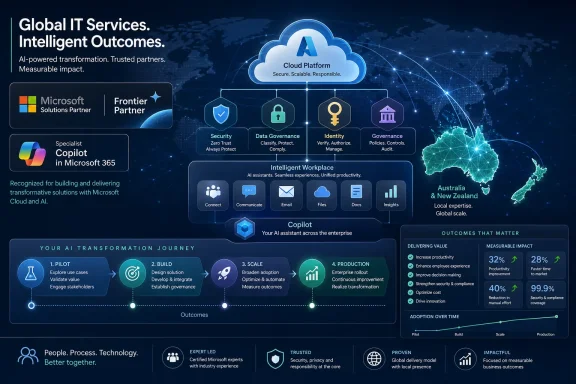
That is the commercial logic behind Logicalis’ recognition. Frontier Partner status is intended for organisations that can deliver AI transformation at enterprise scale using Microsoft’s cloud and AI stack. The Copilot specialisation narrows that further, pointing specifically at readiness assessment, secure deployment, adoption support, and extension through Copilot Studio and agents.
The important part is not that Logicalis has been declared good at Microsoft. It is that Microsoft is now formalising the distinction between partners that sell AI and partners that can operationalise it. In 2026, that distinction matters more than ever.
The reason is simple. Copilot is only as safe, useful, and coherent as the Microsoft 365 environment beneath it. If SharePoint is a dumping ground, Teams channels are over-permissioned, OneDrive folders are unmanaged, and retention labels exist only in policy decks, Copilot does not magically fix the estate. It exposes it.
That exposure can be productive. A well-run Copilot readiness programme often forces an organisation to confront stale permissions, unmanaged sensitive data, orphaned groups, weak lifecycle management, and the uncomfortable fact that “least privilege” has too often meant “we will clean it up later.” AI becomes the excuse to do the hygiene work IT has been requesting for a decade.
It can also be dangerous. A deployment that treats Copilot as another app rollout risks giving users faster access to information they technically had permission to see but were never expected to find. That is not a Copilot defect in the narrow sense. It is a governance defect made visible by a better retrieval interface.
Logicalis’ pitch is built around that shift. The company says Frontier Partner status recognises its ability to help customers adopt AI securely, responsibly, and at scale. Its Copilot specialisation is meant to show that it can assess readiness, secure deployments, guide adoption, and extend Microsoft 365 Copilot through Copilot Studio and agents.
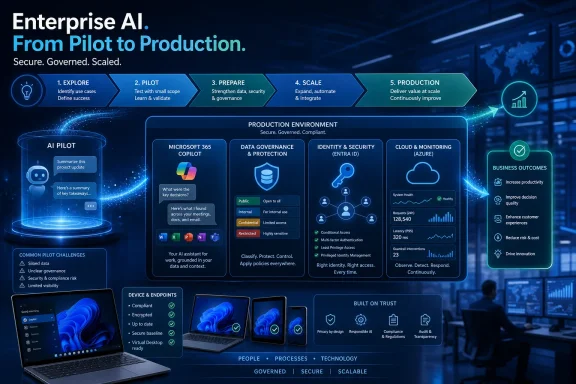
That combination is notable because it connects three layers that are often sold separately. There is the Microsoft 365 layer, where Copilot meets user workflows. There is the security and compliance layer, where identity, data loss prevention, labelling, audit, and device management determine the blast radius. And there is the extension layer, where organisations build agents and workflows that connect Copilot to business processes rather than leaving it as a smarter search box.
The market is now crowded with firms promising AI transformation. The more useful test is whether they can explain why a Copilot rollout might fail before the first licence is assigned. Logicalis’ Microsoft credentials do not prove every engagement will succeed, but they suggest Microsoft wants the company positioned in that more operationally serious category.
That is why specialisations matter more in the Copilot era than they did in the old licence-resale era. A partner claiming Copilot competence now needs to demonstrate more than enthusiasm. Microsoft’s own Copilot specialisation criteria point to customer references, skilling, active usage growth, and experience with Microsoft 365 Copilot, Copilot Chat, Copilot Studio, and agents.
This is a shift from partner marketing toward partner filtering. Microsoft is trying to answer a question customers are already asking: among the thousands of firms that say they can help with AI, which ones have actually moved users, secured tenants, and delivered repeatable outcomes? The answer will never be perfectly captured by a badge, but the direction is clear.
Frontier Partner status fits the same pattern at a broader level. It is meant to identify partners capable of AI-led transformation across Microsoft Cloud, not merely partners that can configure one workload. That serves Microsoft’s strategic interest because Copilot adoption tends to pull in Entra, Purview, Defender, Intune, Azure, Fabric, Power Platform, and consulting services around business process redesign.
That is the real significance of Logicalis’ spread of Microsoft credentials. The company says it holds twelve Microsoft advanced specialisations and Azure Expert Managed Services Provider status, alongside its new Frontier Partner recognition and Copilot specialisation. Those details matter because Copilot projects rarely stay inside one tidy product boundary.
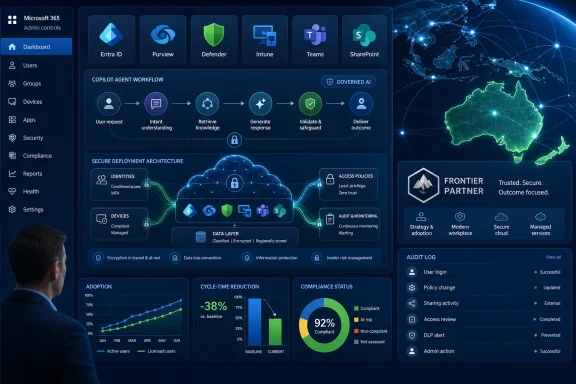
A customer may begin with Microsoft 365 Copilot and quickly discover that the readiness work depends on Entra ID, Purview, Defender, Intune, SharePoint governance, and Power Platform controls. A separate customer may start with Azure AI and end up needing data modernisation, network architecture, compliance review, and managed services. The “AI project” becomes a Microsoft estate project.
This is precisely where Microsoft wants the market to go. Copilot is not only a product; it is an accelerant for Microsoft Cloud consumption. Every successful deployment increases the value of the surrounding stack, and every governance concern becomes a reason to adopt more of Microsoft’s security and compliance tooling.
This tension is not irrational conservatism from IT. It reflects the collision between executive pressure and operational reality. Business units see Copilot demos and imagine immediate productivity gains. Security teams see the same demos and think about overshared files, regulated data, prompt leakage, auditability, and whether anyone has mapped where AI-generated outputs are stored.
The result is a two-speed enterprise. Strategy decks say “AI-first.” Change advisory boards say “not until we understand the data path.” The winning partners in this market will not be the ones that mock caution. They will be the ones that translate caution into a deployment sequence.
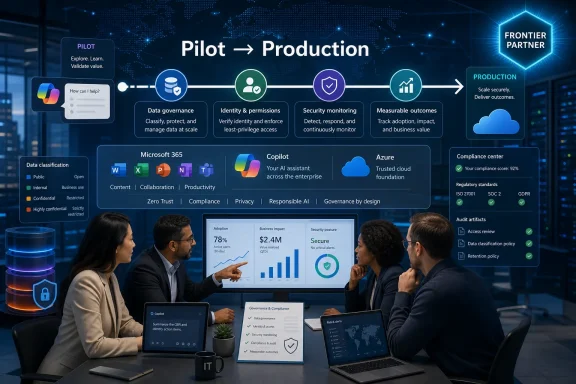
That is why governance has become the centre of gravity. Organisations do not merely need help turning on Copilot. They need help deciding where Copilot should appear first, which users should be included, what data should be excluded, what success metrics should count, and how to prevent a pilot from becoming either a security incident or a forgotten experiment.
A chatbot that summarises a meeting is one thing. An agent that can interact with business systems, trigger workflows, create records, route approvals, or pull together operational context is another. The more useful the agent becomes, the more it resembles a semi-automated employee with delegated access and uncertain failure modes.
This is where Windows and Microsoft 365 administrators should pay attention. Agentic workflows will require identity boundaries, connector governance, logging, approval controls, and lifecycle management. They will also require business owners to define what the agent is allowed to do, not merely what it is technically capable of doing.
Partners such as Logicalis are being positioned to help customers cross that line. The old adoption problem was persuading users to try a tool. The new adoption problem is deciding which parts of a business process should be entrusted to software that can reason probabilistically, act through connectors, and produce plausible output even when the underlying process is poorly defined.
Copilot security depends on the state of the customer environment. Identity configuration, device compliance, information protection, audit settings, retention policies, guest access, third-party integrations, and administrative roles all shape the real-world risk profile. If those foundations are weak, AI adoption becomes a stress test.
This is why Microsoft’s partner filter is becoming more valuable. A competent Copilot partner should be able to tell a customer “not yet” or “not there first.” It should be able to identify where sensitive data is overexposed, where business units lack ownership of shared repositories, and where adoption should wait for cleanup.
That advice may slow revenue in the short term, but it is exactly what enterprise buyers need. The worst Copilot deployment is not the one that starts slowly. It is the one that starts fast, generates a scary discovery, loses executive trust, and poisons the next two years of AI adoption.
The productivity story around Copilot is appealing but difficult to prove. Time saved in meetings, faster document drafting, improved search, and better email triage are real benefits for many users, but they are unevenly distributed and hard to translate into financial outcomes. A user who saves 30 minutes does not automatically create 30 minutes of enterprise value.
The more convincing case comes when Copilot and agents are tied to specific workflows. Sales proposal creation, service ticket summarisation, policy lookup, finance close support, onboarding, incident response, contract review, and knowledge management are more measurable than generic “productivity.” They also require more integration, more governance, and more change management.
That is the business opening for Logicalis. If it can help customers move from broad Copilot enthusiasm to targeted, measured use cases, the partner designation becomes more than a badge. It becomes a commercial promise that Logicalis can connect Microsoft’s AI platform to work that executives already understand.
This is not merely a skills issue. It is an accountability issue. When Copilot surfaces a sensitive file, business leaders may ask why the AI found it. The better question may be why the file was broadly accessible in the first place. But in the moment, the technical team will still be expected to explain what happened.
That means IT needs a seat at the AI strategy table before licences are purchased. Copilot adoption cannot be treated as a business-led experiment that IT secures after the fact. The sequencing should run through data readiness, security posture, user segmentation, training, support model design, and success metrics.
A partner can help, but it cannot outsource ownership. Logicalis can bring frameworks, skills, and Microsoft-aligned practice depth. The customer still needs internal decision-makers who understand which data matters, which processes are worth automating, and which risks are unacceptable.
Partner specialisations are one way to manage both risks. By directing customers toward partners with recognised capabilities, Microsoft can improve deployment quality while shifting some implementation burden into the ecosystem. That is how enterprise software has worked for decades, but AI makes the feedback loop faster and less forgiving.
A botched ERP rollout can take years to become infamous. A botched AI rollout can produce an executive panic in a week if the wrong information appears in the wrong context. Microsoft therefore needs a partner ecosystem that can slow customers down just enough to keep them moving.
Logicalis benefits from that need. The company’s announcement places it inside Microsoft’s preferred narrative for the next phase of enterprise AI: human-led, AI-first, governed, secure, and outcomes-driven. The phrasing is polished, but the underlying problem is real.
That proof will not come from counting licences. It will come from active usage, process improvements, reduced cycle times, better service quality, faster knowledge retrieval, fewer manual handoffs, and evidence that security posture did not deteriorate. In other words, the market will start measuring operations rather than announcements.
This is where Frontier Partner status could become meaningful if Microsoft enforces the standard. A useful partner designation should help customers distinguish between a firm that can run a workshop and a firm that can run a programme. The former produces enthusiasm. The latter produces adoption, controls, and a supportable operating model.
Logicalis is now publicly in the second category, at least by Microsoft’s measure. The test will come not in the announcement but in the customer work that follows: whether deployments produce durable value, whether agents escape pilot purgatory, and whether governance keeps pace with ambition.
That middle layer is where projects either become platforms or become abandoned experiments. It includes tenant cleanup, user enablement, security architecture, change management, workflow selection, agent governance, and measurement. It is not glamorous, but it is where Copilot succeeds or fails.
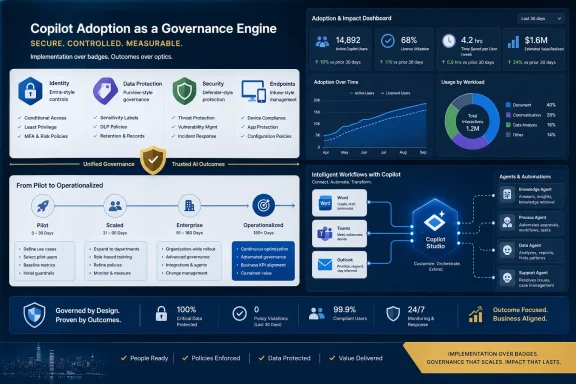 Microsoft’s AI Partner Race Has Moved Beyond Badges
For years, partner designations have been the wallpaper of enterprise technology. Every integrator has a stack of badges, every vendor has a tiering system, and every customer has learned to squint at the difference between “certified,” “specialised,” “advanced,” and “preferred.” The risk with Microsoft’s Frontier Partner label is that it becomes one more logo on one more landing page.But the timing makes this designation more consequential than the usual partner-program churn. Microsoft is trying to turn Copilot from a seat-based productivity pitch into a broader enterprise AI platform, and that means the company needs partners that can do far more than provision licences. It needs firms that can walk into a messy tenant, audit permissions, align Purview policies, harden identity, explain adoption risk to a board, and still get users to open Word, Teams, Outlook, and Copilot Studio without triggering a revolt.
That is the commercial logic behind Logicalis’ recognition. Frontier Partner status is intended for organisations that can deliver AI transformation at enterprise scale using Microsoft’s cloud and AI stack. The Copilot specialisation narrows that further, pointing specifically at readiness assessment, secure deployment, adoption support, and extension through Copilot Studio and agents.
The important part is not that Logicalis has been declared good at Microsoft. It is that Microsoft is now formalising the distinction between partners that sell AI and partners that can operationalise it. In 2026, that distinction matters more than ever.
Copilot Has Become a Governance Project Wearing a Productivity Costume
Microsoft 365 Copilot entered the market with the grammar of personal productivity: summarise meetings, draft emails, search documents, prepare presentations, compress busywork. That is still the front door through which most users encounter it. But inside a large organisation, Copilot quickly stops being a productivity tool and becomes an information architecture audit.The reason is simple. Copilot is only as safe, useful, and coherent as the Microsoft 365 environment beneath it. If SharePoint is a dumping ground, Teams channels are over-permissioned, OneDrive folders are unmanaged, and retention labels exist only in policy decks, Copilot does not magically fix the estate. It exposes it.
That exposure can be productive. A well-run Copilot readiness programme often forces an organisation to confront stale permissions, unmanaged sensitive data, orphaned groups, weak lifecycle management, and the uncomfortable fact that “least privilege” has too often meant “we will clean it up later.” AI becomes the excuse to do the hygiene work IT has been requesting for a decade.
It can also be dangerous. A deployment that treats Copilot as another app rollout risks giving users faster access to information they technically had permission to see but were never expected to find. That is not a Copilot defect in the narrow sense. It is a governance defect made visible by a better retrieval interface.
Logicalis Is Selling the Boring Part of AI — Which Is the Part Enterprises Actually Need
The Logicalis announcement leans hard on secure, governed, measurable AI adoption. That language may sound like vendor-safe boilerplate, but it points to the part of the market where the real money and risk now sit. Enterprises are no longer asking whether generative AI can produce a useful paragraph. They are asking whether it can survive procurement, security review, regulatory scrutiny, and a CFO who wants proof that the pilot did not become an expensive internal demo.Logicalis’ pitch is built around that shift. The company says Frontier Partner status recognises its ability to help customers adopt AI securely, responsibly, and at scale. Its Copilot specialisation is meant to show that it can assess readiness, secure deployments, guide adoption, and extend Microsoft 365 Copilot through Copilot Studio and agents.
That combination is notable because it connects three layers that are often sold separately. There is the Microsoft 365 layer, where Copilot meets user workflows. There is the security and compliance layer, where identity, data loss prevention, labelling, audit, and device management determine the blast radius. And there is the extension layer, where organisations build agents and workflows that connect Copilot to business processes rather than leaving it as a smarter search box.
The market is now crowded with firms promising AI transformation. The more useful test is whether they can explain why a Copilot rollout might fail before the first licence is assigned. Logicalis’ Microsoft credentials do not prove every engagement will succeed, but they suggest Microsoft wants the company positioned in that more operationally serious category.
The Partner Programme Is Becoming Microsoft’s AI Control Plane
Microsoft cannot personally handhold every Copilot deployment. Its customer base is too large, its products are too sprawling, and enterprise environments are too idiosyncratic. The partner ecosystem is therefore not just a sales channel; it is the mechanism by which Microsoft tries to make its AI ambitions executable.That is why specialisations matter more in the Copilot era than they did in the old licence-resale era. A partner claiming Copilot competence now needs to demonstrate more than enthusiasm. Microsoft’s own Copilot specialisation criteria point to customer references, skilling, active usage growth, and experience with Microsoft 365 Copilot, Copilot Chat, Copilot Studio, and agents.
This is a shift from partner marketing toward partner filtering. Microsoft is trying to answer a question customers are already asking: among the thousands of firms that say they can help with AI, which ones have actually moved users, secured tenants, and delivered repeatable outcomes? The answer will never be perfectly captured by a badge, but the direction is clear.
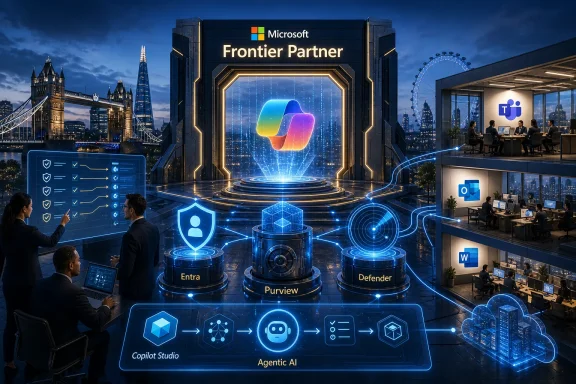
Frontier Partner status fits the same pattern at a broader level. It is meant to identify partners capable of AI-led transformation across Microsoft Cloud, not merely partners that can configure one workload. That serves Microsoft’s strategic interest because Copilot adoption tends to pull in Entra, Purview, Defender, Intune, Azure, Fabric, Power Platform, and consulting services around business process redesign.
The AI Stack Is Now the Microsoft Stack
For WindowsForum readers, the phrase “Microsoft AI” can sound abstract until it lands in the admin centre. Then it becomes very concrete. Copilot adoption touches licences, conditional access, sensitivity labels, endpoint posture, audit logs, Teams governance, Exchange retention, SharePoint permissions, and user training.That is the real significance of Logicalis’ spread of Microsoft credentials. The company says it holds twelve Microsoft advanced specialisations and Azure Expert Managed Services Provider status, alongside its new Frontier Partner recognition and Copilot specialisation. Those details matter because Copilot projects rarely stay inside one tidy product boundary.
A customer may begin with Microsoft 365 Copilot and quickly discover that the readiness work depends on Entra ID, Purview, Defender, Intune, SharePoint governance, and Power Platform controls. A separate customer may start with Azure AI and end up needing data modernisation, network architecture, compliance review, and managed services. The “AI project” becomes a Microsoft estate project.
This is precisely where Microsoft wants the market to go. Copilot is not only a product; it is an accelerant for Microsoft Cloud consumption. Every successful deployment increases the value of the surrounding stack, and every governance concern becomes a reason to adopt more of Microsoft’s security and compliance tooling.
Customers Are Excited, But the Brake Lights Are On
Logicalis’ own framing includes a useful tension. Its 2026 Global Chief Information Officer Report says 94 percent of organisations have increased their appetite for AI, while more than half believe adoption is already moving too fast. That is the enterprise AI market in one sentence: the board wants acceleration, and the people responsible for keeping the lights on want guardrails.This tension is not irrational conservatism from IT. It reflects the collision between executive pressure and operational reality. Business units see Copilot demos and imagine immediate productivity gains. Security teams see the same demos and think about overshared files, regulated data, prompt leakage, auditability, and whether anyone has mapped where AI-generated outputs are stored.
The result is a two-speed enterprise. Strategy decks say “AI-first.” Change advisory boards say “not until we understand the data path.” The winning partners in this market will not be the ones that mock caution. They will be the ones that translate caution into a deployment sequence.
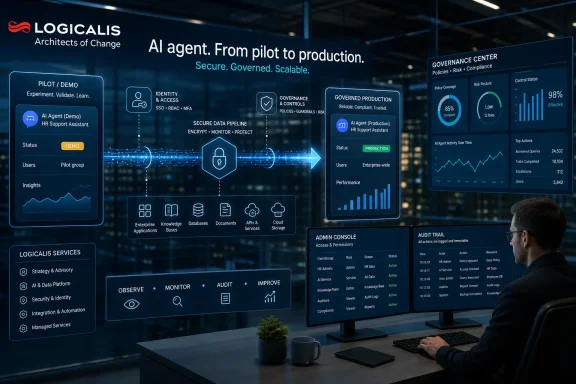
That is why governance has become the centre of gravity. Organisations do not merely need help turning on Copilot. They need help deciding where Copilot should appear first, which users should be included, what data should be excluded, what success metrics should count, and how to prevent a pilot from becoming either a security incident or a forgotten experiment.
Agents Raise the Stakes Because They Move From Answers to Actions
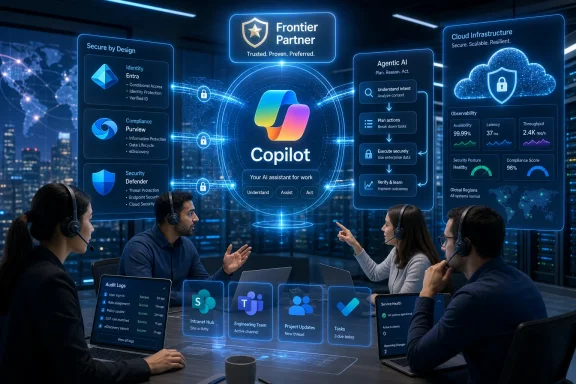
The Copilot specialisation’s emphasis on Copilot Studio and agents is more than a footnote. It marks the move from AI that helps users produce or retrieve information to AI that can participate in workflows. That change is powerful, and it is also where many enterprises will discover that their governance models were built for yesterday’s software.A chatbot that summarises a meeting is one thing. An agent that can interact with business systems, trigger workflows, create records, route approvals, or pull together operational context is another. The more useful the agent becomes, the more it resembles a semi-automated employee with delegated access and uncertain failure modes.
This is where Windows and Microsoft 365 administrators should pay attention. Agentic workflows will require identity boundaries, connector governance, logging, approval controls, and lifecycle management. They will also require business owners to define what the agent is allowed to do, not merely what it is technically capable of doing.
Partners such as Logicalis are being positioned to help customers cross that line. The old adoption problem was persuading users to try a tool. The new adoption problem is deciding which parts of a business process should be entrusted to software that can reason probabilistically, act through connectors, and produce plausible output even when the underlying process is poorly defined.
The Security Conversation Is Finally Catching Up With the Sales Pitch
The first wave of generative AI marketing often treated security as a reassurance slide. Enterprise buyers were told that data stayed protected, tenants remained bounded, and Microsoft’s compliance story applied. Those claims matter, but they were never sufficient. Security is not a mood; it is an implementation discipline.Copilot security depends on the state of the customer environment. Identity configuration, device compliance, information protection, audit settings, retention policies, guest access, third-party integrations, and administrative roles all shape the real-world risk profile. If those foundations are weak, AI adoption becomes a stress test.
This is why Microsoft’s partner filter is becoming more valuable. A competent Copilot partner should be able to tell a customer “not yet” or “not there first.” It should be able to identify where sensitive data is overexposed, where business units lack ownership of shared repositories, and where adoption should wait for cleanup.
That advice may slow revenue in the short term, but it is exactly what enterprise buyers need. The worst Copilot deployment is not the one that starts slowly. It is the one that starts fast, generates a scary discovery, loses executive trust, and poisons the next two years of AI adoption.
Measurable Outcomes Are the Escape Hatch From AI Theatre
Bob Bailkoski, Logicalis’ global CEO, framed the announcement around turning AI ambition into secure, measurable business impact. That phrase matters because “AI ambition” has become abundant and cheap. Measurable business impact remains scarce.The productivity story around Copilot is appealing but difficult to prove. Time saved in meetings, faster document drafting, improved search, and better email triage are real benefits for many users, but they are unevenly distributed and hard to translate into financial outcomes. A user who saves 30 minutes does not automatically create 30 minutes of enterprise value.
The more convincing case comes when Copilot and agents are tied to specific workflows. Sales proposal creation, service ticket summarisation, policy lookup, finance close support, onboarding, incident response, contract review, and knowledge management are more measurable than generic “productivity.” They also require more integration, more governance, and more change management.
That is the business opening for Logicalis. If it can help customers move from broad Copilot enthusiasm to targeted, measured use cases, the partner designation becomes more than a badge. It becomes a commercial promise that Logicalis can connect Microsoft’s AI platform to work that executives already understand.
The Windows Admin’s Job Keeps Expanding Up the Stack
There is an uncomfortable truth beneath the Copilot boom: many of the practical burdens will land on teams that were already stretched. Microsoft 365 administrators, endpoint managers, identity engineers, security analysts, and collaboration platform owners are now being asked to support AI transformation while still doing the unglamorous work of patching, access reviews, device compliance, incident response, and user support.This is not merely a skills issue. It is an accountability issue. When Copilot surfaces a sensitive file, business leaders may ask why the AI found it. The better question may be why the file was broadly accessible in the first place. But in the moment, the technical team will still be expected to explain what happened.
That means IT needs a seat at the AI strategy table before licences are purchased. Copilot adoption cannot be treated as a business-led experiment that IT secures after the fact. The sequencing should run through data readiness, security posture, user segmentation, training, support model design, and success metrics.
A partner can help, but it cannot outsource ownership. Logicalis can bring frameworks, skills, and Microsoft-aligned practice depth. The customer still needs internal decision-makers who understand which data matters, which processes are worth automating, and which risks are unacceptable.
Microsoft Is Also Managing Its Own Risk
Microsoft’s push into Frontier Partner status is not altruistic. The company has a platform to scale, a partner channel to motivate, and a generational AI investment to monetise. If customers buy Copilot and fail to adopt it, Microsoft has a retention problem. If customers adopt it recklessly and blame the product for exposing poor governance, Microsoft has a trust problem.Partner specialisations are one way to manage both risks. By directing customers toward partners with recognised capabilities, Microsoft can improve deployment quality while shifting some implementation burden into the ecosystem. That is how enterprise software has worked for decades, but AI makes the feedback loop faster and less forgiving.
A botched ERP rollout can take years to become infamous. A botched AI rollout can produce an executive panic in a week if the wrong information appears in the wrong context. Microsoft therefore needs a partner ecosystem that can slow customers down just enough to keep them moving.
Logicalis benefits from that need. The company’s announcement places it inside Microsoft’s preferred narrative for the next phase of enterprise AI: human-led, AI-first, governed, secure, and outcomes-driven. The phrasing is polished, but the underlying problem is real.
The Market Will Separate Integrators From AI Operators
The next phase of Copilot adoption will be less forgiving than the first. Early adopters could justify experimentation because the technology was new, the competitive pressure was high, and executives wanted exposure. The next wave will demand proof.That proof will not come from counting licences. It will come from active usage, process improvements, reduced cycle times, better service quality, faster knowledge retrieval, fewer manual handoffs, and evidence that security posture did not deteriorate. In other words, the market will start measuring operations rather than announcements.
This is where Frontier Partner status could become meaningful if Microsoft enforces the standard. A useful partner designation should help customers distinguish between a firm that can run a workshop and a firm that can run a programme. The former produces enthusiasm. The latter produces adoption, controls, and a supportable operating model.
Logicalis is now publicly in the second category, at least by Microsoft’s measure. The test will come not in the announcement but in the customer work that follows: whether deployments produce durable value, whether agents escape pilot purgatory, and whether governance keeps pace with ambition.
The Practical Reading for Microsoft Shops Is Written Between the Lines
Logicalis’ recognition is a partner story, but the implications are broader for any organisation planning a Copilot rollout. The announcement shows where Microsoft believes the enterprise AI bottleneck now sits: not in model availability, not in Office integration, and not in board-level excitement, but in the difficult middle layer between aspiration and controlled execution.That middle layer is where projects either become platforms or become abandoned experiments. It includes tenant cleanup, user enablement, security architecture, change management, workflow selection, agent governance, and measurement. It is not glamorous, but it is where Copilot succeeds or fails.
- Microsoft’s Frontier Partner status is best read as a signal that enterprise AI delivery now requires cross-stack capability, not just licensing knowledge.
- Logicalis’ Copilot specialisation matters because Copilot deployments increasingly depend on readiness, security, adoption, and extensibility rather than simple enablement.
- Organisations should treat Copilot as a governance and data-readiness project before they treat it as a productivity rollout.
- Agents built through Copilot Studio will raise the operational stakes because they connect AI assistance to business processes and delegated actions.
- The strongest business cases will come from targeted workflows with measurable outcomes, not from broad claims about generic time savings.
- IT teams should insist on being involved before purchase decisions are finalised, because the risks and responsibilities will land on them after rollout.
References
- Primary source: Technology Record
Published: 2026-07-01T11:57:13.592597
Microsoft awards Frontier Partner status and Copilot...
Global technology service provider Logicalis has been awarded Microsoft Frontier Partner status, alongside its Microsoft Copilot specialisation,...www.technologyrecord.com
- Official source: partner.microsoft.com
Microsoft Copilot Specialization
The Microsoft Copilot specialization will help partners showcase their experience and capabilities with Microsoft 365 Copilot, including Copilot for Microsoft 365, Copilot Chat and Copilot Studio and agents.partner.microsoft.com
- Related coverage: logicalis.com
What is Microsoft Frontier Partner status?
Discover how Logicalis’ global Microsoft Frontier Partner recognition empowers you to accelerate scalable, enterprise-wide AI transformation with proven results. www.logicalis.com
- Related coverage: us.logicalis.com
Microsoft
As a Microsoft Global Partner, we harness our expertise to deliver local solutions to help our customers succeed in the digital-first world. www.us.logicalis.com
- Related coverage: uki.logicalis.com
Microsoft
 www.uki.logicalis.com
- Official source: news.microsoft.com

- Official source: blogs.microsoft.com
Accelerating Frontier Transformation with Microsoft partners - The Official Microsoft Blog
AI has moved quickly from experimentation to production. Customers want measurable business outcomes, along with security, governance and responsible AI built in from day one. Microsoft partners are a meaningful differentiator to deliver these objectives. They turn ideas into deployable...blogs.microsoft.com - Related coverage: trustedtechteam.com
TrustedTech Earns Microsoft's Copilot Specialization
TrustedTech earns Microsoft's Copilot Specialization, validating its delivery capability across Microsoft 365 Copilot, Copilot Studio, and agentic AI implementations. www.trustedtechteam.com
- Related coverage: softwareone.com
- Related coverage: logicalis-hub.com
- Official source: about.ads.microsoft.com
Microsoft-Advertising-Partner-Awards-Category-Descriptions-2026
PDF documentabout.ads.microsoft.com