

Microsoft is reshaping Copilot again, and this time the message is bigger than an internal reorg: Copilot remains the public face of Microsoft’s AI strategy, while Mustafa Suleyman is being pulled closer to the company’s newer “superintelligence” push. The split is strategic, not cosmetic. Microsoft has been separating product execution from frontier-model work for months, and the latest move appears designed to let Copilot mature as a platform while a more specialized team chases the next generation of in-house AI systems e matters
Microsoft has spent the past two years turning Copilot from a feature into an ecosystem. What began as an assistant embedded in Microsoft 365 has expanded into Windows, Bing, Edge, enterprise tools, and newer agentic experiences, with Microsoft increasingly framing Copilot as an operating layer for work rather than a simple chat box
That evolution has created a familiar birdmap becomes, the harder it is to keep product, platform, governance, and model research moving at the same speed. Microsoft’s answer is to split responsibilities more cleanly. In the latest reshuffle, Copilot leadership is being reorganized under a tighter product umbrella, while Suleyman’s attention is being redirected toward custom model development and a more explicit frontier-AI agenda
The broader context is important. Microsoft is not retreating from Copilot; it is do wn on Copilot as a commercial and consumer product while simultaneously signaling that it wants more of the underlying AI stack in-house. That dual track suggests Microsoft sees long-term value in owning both the user experience and the model roadmap
At a high level, Microsoft is doing three things at once:
The new structure suggests Microsoft wants Copilot engineering to focus on shipping, while superintelligence work becomes a more concentrated research and model-development effort. That division is likely meant to reduce friction. If product leaders spenn Copilot risks losing execution speed; if model teams get buried in product demands, the frontier work suffers. Microsoft appears to be trying to avoid both outcomes
Microsoft has been pushing Copilot deeper into enterprise workflows through tools such as Copilot Studio and Agent 365, while also broadening model choice in some Copilot experiences. That matters because it shows a shift away from a single-purpose assistant toward a more programmable platform. In practical terms, Microsoft is no longer s;frastructure for work**
But there is a tension here. The more Microsoft leans intoevites scrutiny over safety, governance, and whether the company is trying to market speculative research as a near-term product story. The phrase may help the company distinguish its effort from the more chaotic edges of the AI race, but it also raises expectations that Microsoft will need to manage carefully
There is also a practical danger in trying to advance both consumer Copilot and frontier model research at once. If the product sidqthe research side becomes too ambitious, the organization can drift into moonshot territory without delivering visible improvements to users. Either outcome would undermine confidence in the strategy
That nuance matters. Microsoft can diversify without severing ties, and in fact that may be the ec optionality from building more internally, but it still benefits from keeping major partnerships alive. In a fast-moving AI market, redundancy is not a weakness; it is insurance
That split could prove powerful. If Microsoft executes well, it will have a recognizable AI brand for the mass market and a serious research path for the future. It would also give the company more control over quality, pricing, and product timing, which are all cruciares can become strategic liabilities overnight
At the same time, expect the superintelligence work to stay somewhat separate, at least publicly. That separation allows Microsoft to push a confident product story today while preserving room for research breakthroughs tomorrow. It is a classic Microsoft move: ship now, architect for latlot reshuffle is not just a change in reporting lines. It is a statement about where the company believes the AI race is heading: toward a world where the winning platform is the one that can combine polished user experiences, enterprise-grade governance, and serious in-house frontier research. Copilot remains the interface; superintelligence is becoming Tmportant takeaway for Windows and Microsoft watchers. The company is no longer treating AI as a single feature to be added across products. It is reorganizing around AI as the product, the platform, and the long-term research ambition all at once. If Microsoft can keep that balance, Copilot could become one of the most consequential names in the compa end up looking like ambition outrunning execution
Source: Neowin Microsoft reshuffles Copilot leadership as it doubles down on its superintelligence mission
Microsoft has spent the past two years turning Copilot from a feature into an ecosystem. What began as an assistant embedded in Microsoft 365 has expanded into Windows, Bing, Edge, enterprise tools, and newer agentic experiences, with Microsoft increasingly framing Copilot as an operating layer for work rather than a simple chat box
That evolution has created a familiar birdmap becomes, the harder it is to keep product, platform, governance, and model research moving at the same speed. Microsoft’s answer is to split responsibilities more cleanly. In the latest reshuffle, Copilot leadership is being reorganized under a tighter product umbrella, while Suleyman’s attention is being redirected toward custom model development and a more explicit frontier-AI agenda
The broader context is important. Microsoft is not retreating from Copilot; it is do wn on Copilot as a commercial and consumer product while simultaneously signaling that it wants more of the underlying AI stack in-house. That dual track suggests Microsoft sees long-term value in owning both the user experience and the model roadmap
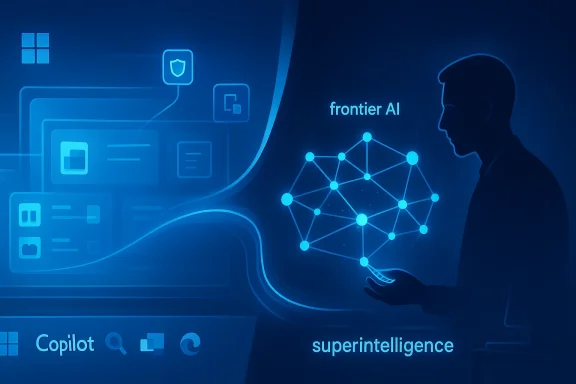 The reorg in plain English
At a high level, Microsoft is doing three things at once:- **Consolidating Copilot product leasness is easier to direct and ship.
- Narrowing Mustafa Suleyman’s focus so he can concentrate on model-building and what Microsoft is now openly treating as a superintelligence-style effort.
- Keeping Copilot visible and moving so customers continue to see a consistent product story across Windows, Microsoft 365, and consumer AI surfaces
A signal, not just an org-chart tweak
It would be easy to dismiss the leadership shuffle as bureaucratic housekeeping, but the timing argues otherwise. Microsoft has been moving quickly to define a post-chatinance, and multi-step workflows matter more than simple prompt-and-response interactionsThe new structure suggests Microsoft wants Copilot engineering to focus on shipping, while superintelligence work becomes a more concentrated research and model-development effort. That division is likely meant to reduce friction. If product leaders spenn Copilot risks losing execution speed; if model teams get buried in product demands, the frontier work suffers. Microsoft appears to be trying to avoid both outcomes
Copilot is becoming Microsoft’s AI control plane
One of the clearest themes emerging from Microsoft’s recent Copilot moves is that the company no longer wants Copilot to behave like a standalone assistant. It wants it to function more like a control plane for AI work, with tools for noss the Microsoft stackMicrosoft has been pushing Copilot deeper into enterprise workflows through tools such as Copilot Studio and Agent 365, while also broadening model choice in some Copilot experiences. That matters because it shows a shift away from a single-purpose assistant toward a more programmable platform. In practical terms, Microsoft is no longer s;frastructure for work**
Why that matters for Windows users
For Windows enthusiasts, the organizational reshuffle has implications beyond boardroom politics. Microsoft’s AI direction affects everything from search and productivity to how aggressively Copilot surfaces in the operating system. When the company centralizes Copilot leadership, it can move faster on UI changes, system integration, and platoWindows is likely to remain a test bed for Microsoft’s broader AI ambitions. Even when the company talks about superintelligence, the consumer reality still runs through familiar surfaces: the taskbar, search, Office apps, Edge, and Microsoft 365. In that sense, Copilot is becoming the brand through which Microsoft introduces nearly all of its AI product workThe superintelligence pivot: ambition meets buries enormous weight, and Microsoft is clearly using it deliberately. The company’s recent internal messaging and public reporting point to a dedicated effort inside Microsoft AI that aims to build more advanced, in-house systems under Suleyman’s leadership
This is a notable shift in tone. Microsoft has long emphasized responsible AI, partnerships, and pragmatic deploymentnaggressive frontier posture, one that moves the company closer to the symbolic race now defined by OpenAI, Anthropic, Google, Meta, and other major labs. Microsoft is not just talking about copilots for productivity anymore; it is talking about the next generation of intelligence systems themselves“Humanist” framing is doing a lot of work
TMmessaging framed the effort around “humanist” principles: advanced systems that remain controllable, auditable, and aligned with people rather than substituting for them. That language matters because it positions Microsoft’s superintelligence effort as both ambitious and restrained, which is exactly the balance the company needs if it wants enterprise buyers and regulators to keep trusting the brandBut there is a tension here. The more Microsoft leans intoevites scrutiny over safety, governance, and whether the company is trying to market speculative research as a near-term product story. The phrase may help the company distinguish its effort from the more chaotic edges of the AI race, but it also raises expectations that Microsoft will need to manage carefully
A more mature Copilot strategy is emerging
Microsoft’s latest moves suggest a strategy that is finally becoming coherent. Instead of treating Copilot as one monolithic assistplitting the work into layers:- Product experiences for consumers and enterprises.
- Agent platforms for automation and orchestration.
- Governance tooling for compliance and oversight.
- Model development for long-term technical independence
The business upside
There are real advantages to this approach:- Clearer leadership can speed up product shipping.
- Dedicated model teams can move faster on frontier research.
- Copilot branding gives Microsoft a single recognizable identity across products.
- **Entlmore credible for large customers.
- More in-house AI could reduce strategic dependence on external partners over time
The risks: fragmentation, hype, and user fatigue
For all the strategic logic, the Copilot reshuffle is not risk-free. Microsoft has a history of overextending AI branding, and the more it spreads Copilot across the product stack, the greater the chance of confusing users or diluting the value propositionThere is also a practical danger in trying to advance both consumer Copilot and frontier model research at once. If the product sidqthe research side becomes too ambitious, the organization can drift into moonshot territory without delivering visible improvements to users. Either outcome would undermine confidence in the strategy
The OpenAI question is still unresolved
Another unresolved issue is how far Microsoft reyership reshuffle and in-house model focus suggest greater independence, but the company is still deeply tied to external model ecosystems and partnerships. That makes this less of a breakup and more of a recalibrationThat nuance matters. Microsoft can diversify without severing ties, and in fact that may be the ec optionality from building more internally, but it still benefits from keeping major partnerships alive. In a fast-moving AI market, redundancy is not a weakness; it is insurance
What this means for Microsoft’s AI future
The leadership changes around Copilot are best understood as part of a larger effort to make Microsoft’s AI business more legible and more defeccing layer, while the superintelligence effort becomes the technical engine behind itThat split could prove powerful. If Microsoft executes well, it will have a recognizable AI brand for the mass market and a serious research path for the future. It would also give the company more control over quality, pricing, and product timing, which are all cruciares can become strategic liabilities overnight
The most likely near-term outcome
In the near term, expect more Copilot surface-area growth, not less. Microsoft is still investing heavily in Copilot experiences across Microsoft 365, Windows, and adjacent services, and the company’s recent moves suggest it wants thos entic, and more enterprise-readyAt the same time, expect the superintelligence work to stay somewhat separate, at least publicly. That separation allows Microsoft to push a confident product story today while preserving room for research breakthroughs tomorrow. It is a classic Microsoft move: ship now, architect for latlot reshuffle is not just a change in reporting lines. It is a statement about where the company believes the AI race is heading: toward a world where the winning platform is the one that can combine polished user experiences, enterprise-grade governance, and serious in-house frontier research. Copilot remains the interface; superintelligence is becoming Tmportant takeaway for Windows and Microsoft watchers. The company is no longer treating AI as a single feature to be added across products. It is reorganizing around AI as the product, the platform, and the long-term research ambition all at once. If Microsoft can keep that balance, Copilot could become one of the most consequential names in the compa end up looking like ambition outrunning execution
Source: Neowin Microsoft reshuffles Copilot leadership as it doubles down on its superintelligence mission
