

Rajesh Jha’s decision to step away from a full‑time executive role at Microsoft after more than three decades has kicked off a significant reshuffle at the top of the company’s productivity and Windows organizations — one that accelerates an already AI‑centred reorganization while leaving employees and customers alike with as many questions as answers about the company’s near‑term direction and headcount posture. much of the past three years Microsoft has been actively remaking itself around cloud infrastructure and generative‑AI capabilities. The company’s public strategy — from Azure datacenter scale to Microsoft 365 Copilot and the notion of an “agentic” OS — has driven repeated internal reorganizations designed to put AI and agent‑style automation at the centre of product roadmaps. Those movements already touched Office, LinkedIn and Windows in 2024–2025; Rajesh Jha’s new transition out of a full‑time EVP slot for Experiences & Devices now provides the company another lever to accelerate that shift.
Jha has been a fixture at Microsoft for more than 35 years and has overseen multiple pillars of the company: Windows, Microsoft 365, Surface and collaborative apps among them. The internal announcement accompanying his retirement states he will move into an “advisory role” on July 1, with an organizational cascade to be finalized between now and the end of June — a practore public changes are imminent.
Jha’s own public comments — urging teams to “keep the intensity” on Copilot and related agent work — make clear that the reorg is less about reversing strategy than about concentrating the people and processes who will deliver it. That intensification aligns leadership structures directly with product outcomes: fewer handoffs, clearer decision ownership, and executive sponsors nearer to Nadella’s office.
Two practical consequences flow from that context:
But the reorg also amplifies three long‑running tensions inside the company:
Microsoft is intentionally compressing the decision chain as it races to make AI the connective tissue of Windows and Office. That is a defensible strategy given the market, but success will hinge on execution discipline: keeping product quality high, protecting enterprise governance, and demonstrating that organizational flattening produces measurable improvements for customers — not just headline speed.
In short: this is less an end than a deliberate next phase in Microsoft’s long transformation. The company has signalled its intent; the coming quarter will decide whether the organizational changes actually deliver the coherent, secure and customer‑focused AI experiences Microsoft promises — or whether the cost of speed will be paid in stability, trust and product quality.
Source: theregister.com Org changes at Microsoft as Rajesh Jha prepares to retire
Jha has been a fixture at Microsoft for more than 35 years and has overseen multiple pillars of the company: Windows, Microsoft 365, Surface and collaborative apps among them. The internal announcement accompanying his retirement states he will move into an “advisory role” on July 1, with an organizational cascade to be finalized between now and the end of June — a practore public changes are imminent.
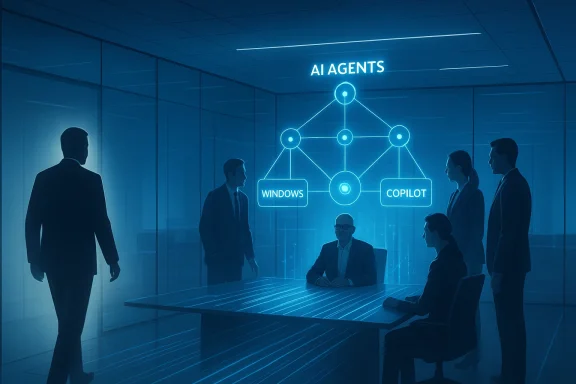 The personnel moves and the immediate org map
What was announced (high‑level)
According to the internal circulation that surfaced in tech press and community channels, Jha’s departure is accompanied by a redistribution of responsibilities at the EVP level. Key changes reported or described internally include:- A move that places several high‑profile product leaders into new reporting and operating relationships, and a flattening of the org to speed AI execution.
- The promotion of Jeff Teper — long‑time Microsoft 365 executive and a central figure behind SharePoint and TeamsPresident, responsible for Microsoft 365 Collaborative Apps and Platforms, per the announcement tied to Jha’s transition.
- A restructuring that will place several leaders closer to CEO Satya Nadella’s direct oversight, with reports indicating that Perry Clarke, Charles Lamanna, Pavan Davuluri and LinkedIn’s Ryan Roslansky will be positioned as EVPs who report into Nadella during this transition. That re‑reporompany’s stated intent to align decision ownership and operating rhythms for “agentic” product work.
Who’s who in the shuffle (short profiles)
- Rajesh Jha — EVP, Experiences & Devices. A Microsoft mainstay who has held responsibility for Windows, Microsoft 365 and devices. He will transition to an advisory role on July 1 after more than 35 years at th Teper** — Promoted to EVP for Microsoft 365 Collaborative Apps and Platforms. Teper has long been associated with SharePoint, Teams and the Microsoft collaboration stack; the promotion formalizes his role as a senior steward of collaborative experiences.
- Ryan Roslansky — LinkedIn CEO who has been given additional responsibility for Office apps and Microsoft 365 Copilot initiatives in prior reorganizations; he is reported to be among the executives whose scope of influence will be clarified in the new structure.
- Charles Lamanna — Has run Business & Industry Copilot work and related AI seats; his reporting line has shifted in previous memos and is named among the leaders central to the new operating model. ([theinformation.com](Microsoft Reshuffles Leadership to Focus on AI Agents Pavan Davuluri — A senior Windows product leader who has overseen platform and client consolidations in recent internal reorganizations and is noted among the EVP‑level leaders repositioned to drive Windows’ agentic ambitions.
- Perry Clarke — Long‑time Microsoft executive associated with platform and productivity efforts; listed among leaders whose reporting and decision ownership are being realig to note that some specifics — for example the exact titles and formal reporting relationships for every named executive through the end of the calendar quarter — were still being finalized in the internal memo and public reporting at the time this story broke. The company’s stated timeline runs to the end of June, with an intention to be “fully aligned and ready to run at the start of FY27.”
Why this matters: strategy, AI, and the “agentic OS”
Microsoft’s AI centrism isn’t new — it’s accelerating
Microsoft has been pivoting product and go‑to‑market efforts around generative AI and the concept of AI assistants (Copilot) for the past two years. That strategic priority has created cross‑org imperatives: tighter integration of LinkedIn signals into productivity workflows, embedding Copilot across Microsoft 365 apps, and a push to make Windows an AI‑first, multimodal platform — sometimes described internally as an “agentic OS.” The reorg centered on Jha’s role is a practical step to consolidate product authority and speed decisions for those initiatives.Jha’s own public comments — urging teams to “keep the intensity” on Copilot and related agent work — make clear that the reorg is less about reversing strategy than about concentrating the people and processes who will deliver it. That intensification aligns leadership structures directly with product outcomes: fewer handoffs, clearer decision ownership, and executive sponsors nearer to Nadella’s office.
Windows, Office and Copilot — a single product gravity well
Bringing the developers and product leads for Windows, Office and Copilot into a smaller set of operating relationships allows Microsoft to treat these assets not as distinct silos but as a single platform stack: an OS that surfaces agentic interactions, a productivity fabric (Microsoft 365) that supplies context and content, and AI models that provide intent‑based automation inside both. For customers this could yield more seamless cross‑product scenarios; for Microsoft it reduces coordination costs on big launches and model integrations.The business and product implications
Potential near‑term benefits
- Faster feature integration: Closer reporting lines between Copilot owners and Windows/Product teams should reduce the time it takes to surface Copilot experiences inside Windows and Office workflows.
- Coherent messaging and pricing moves: Microsoft has already linked Copilot integrations to pricing and SKU changes (for example, Microsofied to wider AI bundles). A tighter org could smooth commercial execution.
- Clearer responsibility for enterprise governance: Centralizing leadership can make it easier to align security and compliance controls across Microsoft 36ows — a real customer pain point as Copilot expands.
Areas where customers could feel negative effects
- Product churn and change fatigue: Rapid structural changes frequently produce follow‑on product reorganizations and roadmap churn. IT teams already report frequent breaking changes in admin workflows; more high‑level movement risks new disruption.
- Feature prioritization skew: When leadership is reorganized around a strategic priority like Copilot, features that don’t directly accelerate that priority (for example, some basic admin functionality or device‑specific improvements) may get deprioritized. That creates long tail pain for administrators and customers with niche needs.
Talent, morale and the elephant in the room: layoffs and staff churn
No reorg at Microsoft in the post‑2023 era can be assessed without acknowledging the company’s large rounds of job cuts in 2025. CEO Satya Nadella publicly acknowledged that the recent job eliminations had been “weighing heavily” on him; reporting across ms rounds that exceeded 15,000 roles in 2025, with Microsoft describing headcount as roughly flat as it rehires for new priorities even while eliminating incumbents. That reality shapes how employees will read the Jha transition and any “cascade” of org changes between now and July.Two practical consequences flow from that context:
- Anxious employees will test messaging: Staff will closely watch whether the new design preserves roles and career paths or is a cover for additional headcount reductions. The memo’s phrasing — “minimize changes and not lose the great momentum we have” — is meant to soothe, but is unlikely alone to ease anxiety.
- Recruiting vs. retrenchment tradeoffs: The company’s ambition to recruit AI talent at scale — and to pay handsomely for it — means difficult choices about where existing product expertise sits relative to newly hired model and platform specialists. That calculus has already been visible across Bio 2026.
Critical analysis — strengths, risks, and unanswered questions
Strengths of Microsoft’s approach
- Execution focus: Concentrating decision‑rights and removing extra layers of coordination will, in theory, speed product decisions. In a world where integrating large models into real workflows requires deep cross‑team engineering, that can be a competitive advantage.
- Product leverage: Microsoft’s assets — Windows, Office, Azure infrastructure, LinkedIn signals — are unusually complementary. Aligning leadership to exploit those synergies is the right move if the organization can deliver integrated experiences without fracturing product quality.
- Clarity of strategic priority: The company is doubling down on AI as the central lever for growth. That clarity helps internal allocation of capital and external investor expectations about where Microsoft is headed.
Material risks and drawbacks
- Cultural mismatch and identity risk in gaming and creative products: The recent replacement of long‑tenured gaming leadership (Phil Spencer’s retirement and the exit of Xbox president Sarah Bond) with an AI‑centred leadership profile has already triggered concerns among some creators and communities. The risk is that an AI‑first executive lens may not map well to creative, content‑heavy businesses that require long‑term commitment to studios and franchises. The Jha transition comes on the heels of those changes and will be read in that broader context.
- Over‑optimization for agents at the expense of product quality: Building agentic features requires vast compute and iteration cycles; an excessive rush to push agent experiences broadly can create poor UX and security exposures if governance and quality engineering don’t keep pace. Microsoft has announced quality and security leadership moves before; their efficacy will be tested by any acceleration.
- Employee morale and institutional memory erosion: The departure (or role change) of senior, long‑tenured leaders like Jha and the spectre of prior layoffs may hollow out domain expertise. Replacing long‑memory product leaders with newer AI hires risks losing product context thrise customers.
Claims that need cautious framing
- Several publicly shared summaries indicate that Perry Clarke, Charles Lamanna, Pavan Davuluri and Ryan Roslansky will be EVPs reporting to Satya Nadella during the transition. While that reporting‑line intent is present in internal memos and repeated in reporting, some specifics (titles, span of control, and whether all four will be promoted to the formal rank of EVP) were still being finalized in Microsoft’s internal cascade and have not been universally reflected in a single, definitive public org chart at the time of writing. Readers should treat the named relationships as reported intentions that are subject to final confirmation when Microsoft publishes its official org chart.
- The exact scope of Jeff Teper’s EVP portfolio — while described as Microsoft 365 Collaborative Apps and Platforms in the internal messaging — also mandates public confirmation once HR filings or a Microsoft press release formalize his new title and responsibilities. The promotion has been announced internally but awaits full external detail.
What this means for enterprise customers and IT leaders
- Expect an acceleration of Copilot rollouts and agent‑mode features across Microsoft 365 and Windows; this could require IT teams to re‑examine governance, data residency, and compliance settings sooner than planned. Administrators should inventory where Cores touch sensitive data and prepare to update policies and deployment plans.
- Procurement and license conversacomplex. Price changes tied to expanded AI capability — such as Microsoft’s decision to adjust Microsoft 365 commercial pricing linked to AI features — mean customers must map new SKUs to expected value and ROI. Expect Microsoft reps to push packaged Copilot bundles; expect enterprise procurement to negotiate usage metrics and cost controls.
Timeline and what to watch next
- Now–end of June: Microsoft will finalize the “cascade” — operating rhythms, decision ownership, and the future org structure — per the internal note. Watch for follow‑up memos or a blog post from Microsoft that details new org charts and EVP titles.
- July 1: Rajesh Jha’s advisory role is slated to begin. Expect leadership handovers, immediate reassignments, and potential public communications about the new EVP configuration.
- FY27 start: The company has stated its intent to be “fully aligned and ready to run at the start of FY27.” How that alignment translates into product roadmaps and release calendars — especially for Copilot and Windows agent features — will be the clearest sign of whether the reorg yields faster delivery or only internal churn.
Final assessment
Microsoft’s move to reposition leadership around Rajesh Jha’s transition is coherent with a larger strategic thesis: compress organizational distance between the teams that build AI models, the teams that build productivity experiences, and the platform that surfaces those experiences (Windows). If executed cleanly, this can reduce friction and produce faster, more integrated features that leverage Microsoft’s broad asset base.But the reorg also amplifies three long‑running tensions inside the company:
- the tradeoff between speed and product quality when shipping agentic features at scale;
- the cultural risk of shifting creative or platform businesses under leaders recruited for AI execution; and
- the employee and customer trust cost that follows repeated layoffs and frequent structural change.
Microsoft is intentionally compressing the decision chain as it races to make AI the connective tissue of Windows and Office. That is a defensible strategy given the market, but success will hinge on execution discipline: keeping product quality high, protecting enterprise governance, and demonstrating that organizational flattening produces measurable improvements for customers — not just headline speed.
In short: this is less an end than a deliberate next phase in Microsoft’s long transformation. The company has signalled its intent; the coming quarter will decide whether the organizational changes actually deliver the coherent, secure and customer‑focused AI experiences Microsoft promises — or whether the cost of speed will be paid in stability, trust and product quality.
Source: theregister.com Org changes at Microsoft as Rajesh Jha prepares to retire
