Microsoft is reshaping its Copilot strategy again, and this time the move is bigger than a simple reorg. In a leadership update shared internally and published by Microsoft on March 17, 2026, Satya Nadella and Mustafa Suleyman described a unified Copilot organization, a sharper split between product experience and model development, and a renewed push toward what Microsoft is calling a superintelligence-driven future.
Microsoft has spent the last two years steadily rebuilding its AI stack around Copilot, model access, and agentic workflows. The company’s January 2025 CoreAI announcement framed the broader shift: Microsoft said it was entering a new AI platform era in which agentic applications would require memory, entitlements, action space, new UI patterns, orchestration layers, and observability tooling. That earlier move created CoreAI – Platform and Tools to bring together critical engineering teams across the company. (blogs.microsoft.com)
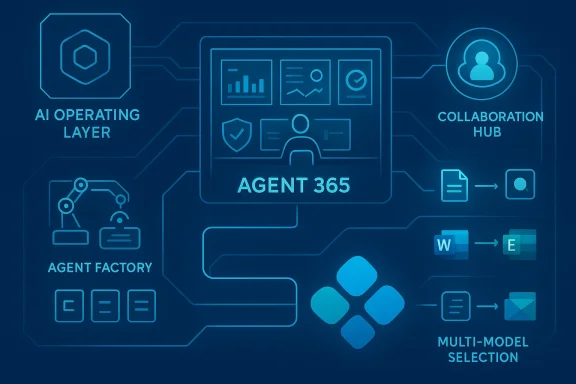
By March 2026, the company’s messaging had become much more concrete. Microsoft’s March 9 Frontier Suite announcement positioned Copilot, Work IQ, Agent 365, and model diversity as the center of its enterprise AI story, while also stressing governance and security as core product features rather than add-ons. It also claimed strong commercial momentum for Copilot, including paid seat growth, daily active usage gains, and rising large-scale deployments. (blogs.microsoft.com)
The leadership update on March 17 reads like the organizational equivalent of that product strategy: unify the work, tighten the architecture, and assign clear ownership to the parts of the stack that matter most. (blogs.microsoft.com)
That is a subtle but important shift. Rather than treating consumer and commercial Copilot as separate worlds, Microsoft is now explicitly collapsing them into one structure. The company says that structure better matches how the product actually works in the real world, where agents, apps, and workflows are becoming more connected and more autonomous.
The new setup also reflects a belief that AI experiences are evolving from answering questions and suggesting code to executing multi-step tasks with user control points. Microsoft’s internal language is revealing here: the company is no longer selling Copilot as a chatbot with productivity features bolted on, but as an orchestration layer for work itself.
This appointment signals that Microsoft wants a single, user-facing Copilot vision instead of parallel consumer and enterprise product motions. That kind of consolidation often matters more than it first appears: when product teams split too early, the result is duplication, inconsistent UX, and slower shipping. Microsoft is betting that one leader with broad product authority can reduce that friction.
The language around “superintelligence” is notable. Microsoft is no longer talking only about incremental Copilot improvements or enterprise feature expansion. It is explicitly framing model development as a strategic, multi-year foundation for the whole company. That is a bold posture, but it also raises the stakes: if the model layer underperforms, every product stacked above it feels the impact.
That combination matters because it ties together the product surface area users see every day with the infrastructure and governance layer underneath. In practical terms, Microsoft appears to be recognizing that Copilot cannot succeed if the app layer and platform layer drift apart. Enterprise customers want those layers aligned, and Microsoft’s own Frontier Suite messaging has repeatedly stressed integration, control, and observability. (blogs.microsoft.com)
That framing makes this leadership update feel like a necessary follow-through. If Copilot is now a system, it needs a system-level org chart.
That is a classic platform-company move: keep the model team close enough to the product to learn from usage, but separate enough to protect long-term research and model quality. Microsoft has been trying to do this across its AI stack for some time, and the January 2025 CoreAI move was an early sign of that thinking. (blogs.microsoft.com)
That convergence is strategically sensible. AI assistants are increasingly personal and professional at the same time, and Microsoft wants to own both contexts. The challenge is that consumer polish and enterprise rigor often pull in different directions. Unifying them could create efficiency and consistency, but it could also create tension if the needs of one side dominate the other.
The March 9 Frontier Suite post said Copilot Cowork is in research preview and is designed for long-running, multi-step work that unfolds over time. It also positioned Agent 365 as the control plane for AI agents, designed to help IT and security teams observe, govern, manage, and secure those agents across the organization. (blogs.microsoft.com)
That matters because the Copilot leadership update is really about operationalizing those product ideas. If agents are going to become ubiquitous, Microsoft needs both a robust model roadmap and a coherent product organization to ship them responsibly.
The leadership update reinforces that direction. By making the Copilot org architecture mirror the product architecture, Microsoft is effectively saying that enterprise trust is not a separate concern from product design. It is part of the same stack.
For customers, this could translate into:
The leadership update supports that story by giving the organization structure to match the product pitch. If Microsoft can actually deliver a simpler operational model for customers, the company could win more enterprise deals and reduce friction in deployment. (blogs.microsoft.com)
If the model team can ship advances that clearly improve task completion, enterprise efficiency, and cost of goods sold, then Microsoft gets both technical and commercial leverage. Suleyman’s note specifically mentions product impact, COGS reduction, enterprise tuning, and research breakthroughs as key success measures.
Microsoft may well be trying to solve coordination problems, but it could unintentionally create new ones if accountability becomes too concentrated or if cross-team dependencies become harder to manage.
That is especially true now that Microsoft has publicly tied the future of Copilot to a frontier-model strategy. The company is not merely promising incremental improvements; it is suggesting that its whole AI stack will be defined by this next phase of model development.
That is a smart insight. It is also a demanding one. Integration is hard, and the companies that win it tend to be the ones willing to do the unglamorous work of aligning teams, architectures, and incentives over long periods of time.
It is an ambitious move, and one that fits neatly with Microsoft’s recent Frontier Suite and CoreAI strategy. If it works, Microsoft could deliver a more coherent Copilot platform, stronger enterprise trust, and a better bridge between frontier models and everyday productivity. If it fails, the company risks making a sprawling AI portfolio even harder to coordinate. For now, Microsoft is making its bet plainly: Copilot is no longer just a product family. It is the company’s operating thesis for the AI era. (blogs.microsoft.com)
Source: The Official Microsoft Blog Announcing Copilot leadership update - The Official Microsoft Blog
 Background: why this matters now
Microsoft has spent the last two years steadily rebuilding its AI stack around Copilot, model access, and agentic workflows. The company’s January 2025 CoreAI announcement framed the broader shift: Microsoft said it was entering a new AI platform era in which agentic applications would require memory, entitlements, action space, new UI patterns, orchestration layers, and observability tooling. That earlier move created CoreAI – Platform and Tools to bring together critical engineering teams across the company. (blogs.microsoft.com)By March 2026, the company’s messaging had become much more concrete. Microsoft’s March 9 Frontier Suite announcement positioned Copilot, Work IQ, Agent 365, and model diversity as the center of its enterprise AI story, while also stressing governance and security as core product features rather than add-ons. It also claimed strong commercial momentum for Copilot, including paid seat growth, daily active usage gains, and rising large-scale deployments. (blogs.microsoft.com)
The leadership update on March 17 reads like the organizational equivalent of that product strategy: unify the work, tighten the architecture, and assign clear ownership to the parts of the stack that matter most. (blogs.microsoft.com)
What Microsoft is changing
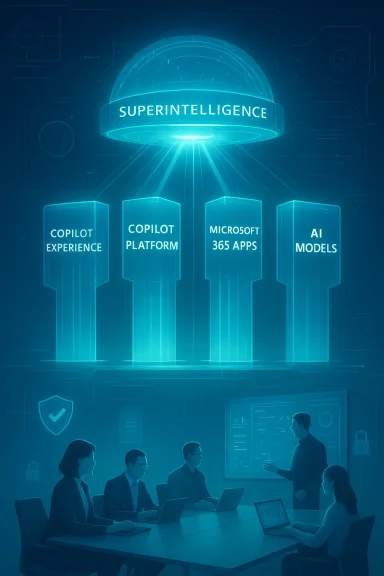
At the heart of the update is a reorganization of Microsoft’s Copilot efforts into a single unified system spanning four pillars: Copilot experience, Copilot platform, Microsoft 365 apps, and AI models. Nadella said the goal is to move from “a collection of great products” to an integrated system that is “simpler and more powerful” for customers.That is a subtle but important shift. Rather than treating consumer and commercial Copilot as separate worlds, Microsoft is now explicitly collapsing them into one structure. The company says that structure better matches how the product actually works in the real world, where agents, apps, and workflows are becoming more connected and more autonomous.
The new setup also reflects a belief that AI experiences are evolving from answering questions and suggesting code to executing multi-step tasks with user control points. Microsoft’s internal language is revealing here: the company is no longer selling Copilot as a chatbot with productivity features bolted on, but as an orchestration layer for work itself.
New leadership structure for Copilot
Jacob Andreou takes the lead on Copilot experience
Microsoft said Jacob Andreou will lead the Copilot experience across consumer and commercial, including design, product, growth, and engineering, as EVP, Copilot, reporting to Nadella. The company highlighted his prior role as CVP of Product and Growth at Microsoft AI, along with his earlier executive experience at Snap.This appointment signals that Microsoft wants a single, user-facing Copilot vision instead of parallel consumer and enterprise product motions. That kind of consolidation often matters more than it first appears: when product teams split too early, the result is duplication, inconsistent UX, and slower shipping. Microsoft is betting that one leader with broad product authority can reduce that friction.
Mustafa Suleyman stays focused on models and superintelligence
Suleyman’s role is being sharpened rather than diminished. Microsoft said he will continue to lead the company’s high-ambition superintelligence work, reporting directly to Nadella. In his own memo, Suleyman said the reorganization is intended to let him focus all of his energy on building frontier-scale models over the next five years.The language around “superintelligence” is notable. Microsoft is no longer talking only about incremental Copilot improvements or enterprise feature expansion. It is explicitly framing model development as a strategic, multi-year foundation for the whole company. That is a bold posture, but it also raises the stakes: if the model layer underperforms, every product stacked above it feels the impact.
M365 apps and the Copilot platform get their own leaders
Microsoft also said Ryan Roslansky, Perry Clarke, and Charles Lamanna will lead Microsoft 365 apps and the Copilot platform. In Suleyman’s note, the company also formed a Copilot Leadership Team including Suleyman, Andreou, Lamanna, Clarke, and Roslansky.That combination matters because it ties together the product surface area users see every day with the infrastructure and governance layer underneath. In practical terms, Microsoft appears to be recognizing that Copilot cannot succeed if the app layer and platform layer drift apart. Enterprise customers want those layers aligned, and Microsoft’s own Frontier Suite messaging has repeatedly stressed integration, control, and observability. (blogs.microsoft.com)
The strategic logic behind the reorg
Microsoft’s restructuring is not just about reporting lines. It reflects a deeper conviction about how AI products should be built in the agent era.1. Copilot is becoming a system, not a feature
The company’s new language suggests that Copilot is no longer a single assistant or a branded overlay. It is becoming an operating system for productivity, where the model, the workflow, the apps, and the governance tooling all need to work in concert. Microsoft’s March 9 Frontier Suite launch already described Copilot as powered by Work IQ and integrated with the apps and security stack customers already rely on. (blogs.microsoft.com)That framing makes this leadership update feel like a necessary follow-through. If Copilot is now a system, it needs a system-level org chart.
2. Microsoft wants a tighter loop between models and products
Suleyman’s memo makes clear that Microsoft thinks the model layer and product layer must be mutually reinforcing. He said the company is creating the new structure so he can focus on superintelligence while still staying closely involved in product operations and strategy, and he emphasized that the Copilot Leadership Team will unify brand strategy, product roadmap, models, and infrastructure.That is a classic platform-company move: keep the model team close enough to the product to learn from usage, but separate enough to protect long-term research and model quality. Microsoft has been trying to do this across its AI stack for some time, and the January 2025 CoreAI move was an early sign of that thinking. (blogs.microsoft.com)
3. Microsoft is formalizing the consumer-commercial convergence
Microsoft’s memo repeatedly stresses that consumer and commercial Copilot should be brought together. Nadella said the company is unifying the Copilot system across those segments, while Suleyman said “every user – whether at home or at work – will be able to enjoy the full benefit of what we are all building.”That convergence is strategically sensible. AI assistants are increasingly personal and professional at the same time, and Microsoft wants to own both contexts. The challenge is that consumer polish and enterprise rigor often pull in different directions. Unifying them could create efficiency and consistency, but it could also create tension if the needs of one side dominate the other.
How this fits with Microsoft’s broader AI roadmap
The update is easier to understand when viewed against Microsoft’s recent AI announcements.Copilot Tasks, Copilot Cowork, and Agent 365 set the stage
Nadella explicitly referenced recent announcements such as Copilot Tasks, Copilot Cowork, agentic capabilities in Office, and Agent 365. Those products show Microsoft moving from simple copilots toward longer-running workflows and governed agent ecosystems.The March 9 Frontier Suite post said Copilot Cowork is in research preview and is designed for long-running, multi-step work that unfolds over time. It also positioned Agent 365 as the control plane for AI agents, designed to help IT and security teams observe, govern, manage, and secure those agents across the organization. (blogs.microsoft.com)
That matters because the Copilot leadership update is really about operationalizing those product ideas. If agents are going to become ubiquitous, Microsoft needs both a robust model roadmap and a coherent product organization to ship them responsibly.
Work IQ and enterprise trust are now central
Microsoft’s March 9 post described Work IQ as the intelligence layer that helps Copilot and agents understand how people work, who they work with, and what content they collaborate on. The company also tied the Frontier Suite to a stronger enterprise security and management stack, including Entra, Defender, Intune, and Purview capabilities. (blogs.microsoft.com)The leadership update reinforces that direction. By making the Copilot org architecture mirror the product architecture, Microsoft is effectively saying that enterprise trust is not a separate concern from product design. It is part of the same stack.
What this means for customers
More coherent products, at least in theory
The clearest upside of the reorg is coherence. A single Copilot organization should make it easier for Microsoft to coordinate experiences across Microsoft 365 apps, consumer Copilot surfaces, the platform layer, and model work. That may reduce confusing feature gaps and make updates more consistent across the ecosystem.For customers, this could translate into:
- more consistent Copilot behavior across home and workplace scenarios
- tighter integration between agents and Microsoft 365 apps
- faster rollout of features that rely on both product and model work
- clearer governance paths for IT administrators and security teams
A stronger enterprise story
Microsoft is also sharpening its enterprise pitch. The Frontier Suite announcement emphasized that organizations need intelligence and trust together, and that they do not want a patchwork of tools stitched together. Microsoft 365 E7, Agent 365, and Copilot are being positioned as one more integrated offering. (blogs.microsoft.com)The leadership update supports that story by giving the organization structure to match the product pitch. If Microsoft can actually deliver a simpler operational model for customers, the company could win more enterprise deals and reduce friction in deployment. (blogs.microsoft.com)
Better alignment between model improvements and product shipping
Microsoft is betting that model breakthroughs and product usability can reinforce each other more effectively if they are governed more deliberately. That is especially important for agentic AI, where the quality of the model directly affects reliability, autonomy, and user trust.If the model team can ship advances that clearly improve task completion, enterprise efficiency, and cost of goods sold, then Microsoft gets both technical and commercial leverage. Suleyman’s note specifically mentions product impact, COGS reduction, enterprise tuning, and research breakthroughs as key success measures.
The risks Microsoft is taking
Centralization can improve speed, but it can also create bottlenecks
Any reorg that concentrates a major platform around a smaller number of leaders risks slowing down decision-making if those leaders become choke points. Copilot now touches consumer software, Microsoft 365, enterprise security, platform tooling, and model science. That is a lot of surface area for one leadership structure to coordinate.Microsoft may well be trying to solve coordination problems, but it could unintentionally create new ones if accountability becomes too concentrated or if cross-team dependencies become harder to manage.
The superintelligence framing raises expectations
Microsoft’s use of “superintelligence” is ambitious, but it also invites scrutiny. Customers will judge the company not on rhetoric but on whether the tools are reliable, secure, cost-effective, and useful in day-to-day work. The stronger the language, the less tolerance there will be for mediocre execution.That is especially true now that Microsoft has publicly tied the future of Copilot to a frontier-model strategy. The company is not merely promising incremental improvements; it is suggesting that its whole AI stack will be defined by this next phase of model development.
Consumer and commercial unification could be hard to balance
There is a natural logic to unifying the two worlds, but consumer and enterprise needs are not always identical. Consumers want ease, personality, and immediacy. Enterprises want control, auditability, stability, and policy enforcement. Microsoft is trying to serve both without fragmenting the brand. That is an appealing strategy, but it will be difficult to execute cleanly over time.The bigger industry signal
Microsoft’s move is more than an internal management story. It is another sign that the AI industry is entering a phase where the winning companies will be the ones that can connect models, products, governance, and workflow orchestration in a single operating model.The post-chatbot era is arriving
The March 17 memo is a snapshot of a broader transition. AI products are no longer being judged only by how well they answer prompts. They are increasingly judged by how well they execute tasks, integrate across software, and fit into enterprise controls. Microsoft’s language around multi-step work, agentic experiences, and governance shows that the company sees this shift as permanent.Microsoft is betting on integration as the competitive moat
The biggest theme across all the recent Microsoft AI announcements is integration. Work IQ, Agent 365, Copilot Cowork, the Frontier Suite, and now the leadership update all point to the same thesis: the moat is no longer just model quality, but the whole system surrounding the model. (blogs.microsoft.com)That is a smart insight. It is also a demanding one. Integration is hard, and the companies that win it tend to be the ones willing to do the unglamorous work of aligning teams, architectures, and incentives over long periods of time.
Bottom line
Microsoft’s Copilot leadership update is a clear signal that the company is entering a new phase of AI execution. The shift unifies consumer and commercial Copilot, assigns clear leadership to the experience and model layers, and aligns the org structure with the architecture Microsoft now wants customers to see.It is an ambitious move, and one that fits neatly with Microsoft’s recent Frontier Suite and CoreAI strategy. If it works, Microsoft could deliver a more coherent Copilot platform, stronger enterprise trust, and a better bridge between frontier models and everyday productivity. If it fails, the company risks making a sprawling AI portfolio even harder to coordinate. For now, Microsoft is making its bet plainly: Copilot is no longer just a product family. It is the company’s operating thesis for the AI era. (blogs.microsoft.com)
Source: The Official Microsoft Blog Announcing Copilot leadership update - The Official Microsoft Blog