

Microsoft’s AI strategy has quietly pivoted from being almost wholly dependent on OpenAI to building a self-sufficient stack — and the company’s AI chief, Mustafa Suleyman, has now openly framed that pivot as a long-term plan to develop Microsoft’s own frontier-grade foundation models and reduce reliance on external providers.
Microsoft’s public AI story has been dominated for years by its partnership with OpenAI: deep investments, product integrations (Bing Chat, GitHub Copilot, Microsoft 365 Copilot), and privileged access to OpenAI’s models. That relationship has produced headline-grabbing results and serious business risk mitigation for OpenAI — but it has also tied Microsoft to a third party for the very foundation of much of its AI-enabled product portfolio. Recent reporting and company comments indicate Microsoft is intentionally unwinding some of that dependency while maintaining commercial ties where it serves both parties.
The shift is not abrupt so much as strategic: Microsoft retains meaningful equity and contractual rights tied to OpenAI’s technology, but now openly plans to complement — and in some cases replace — those external models with internally developed systems and a multi-supplier approach across Anthropic, Mistral, and other partners. That repositioning aims to deliver lower cost-per-inference, more predictable performance at scale, and greater product-level control.
Why that matters:
Important clarifications:
Key technical points Microsoft emphasized publicly:
Caveats and unverifiable claims:
However, Microsoft’s success will depend on:
This is strategic, expensive, and fraught with technical and policy risk. It is also exactly the kind of structural bet that defines winners in platform-driven markets. Microsoft is not abandoning OpenAI so much as rebalancing its bets: preserving the partnership where valuable, while building its own runway to control and scale AI services across the enterprise. That blend of competition and cooperation will be the defining rhythm of the AI industry for the next several years.
Source: Windows Central https://www.windowscentral.com/arti...tgpt-firm-continues-to-beg-big-tech-for-cash/
 Background
Microsoft’s public AI story has been dominated for years by its partnership with OpenAI: deep investments, product integrations (Bing Chat, GitHub Copilot, Microsoft 365 Copilot), and privileged access to OpenAI’s models. That relationship has produced headline-grabbing results and serious business risk mitigation for OpenAI — but it has also tied Microsoft to a third party for the very foundation of much of its AI-enabled product portfolio. Recent reporting and company comments indicate Microsoft is intentionally unwinding some of that dependency while maintaining commercial ties where it serves both parties.The shift is not abrupt so much as strategic: Microsoft retains meaningful equity and contractual rights tied to OpenAI’s technology, but now openly plans to complement — and in some cases replace — those external models with internally developed systems and a multi-supplier approach across Anthropic, Mistral, and other partners. That repositioning aims to deliver lower cost-per-inference, more predictable performance at scale, and greater product-level control.
What Suleyman actually said — and why it matters
Mustafa Suleyman told the Financial Times that Microsoft must “develop our own foundation models” and build “gigawatt-scale compute” coupled with world-class training teams — language that signals an explicit push toward parity with the leading “frontier” models in both capability and infrastructure. He also indicated Microsoft expects to ship the first of these frontier-grade models “some time” in 2026.Why that matters:
- Product continuity and control. Microsoft powers Copilot integrations used by enterprises worldwide; owning the underlying models reduces operational single points of failure.
- Cost and performance optimization. Large external models are expensive per API call and can present latency or scale issues; in-house models tailored for Microsoft workloads can be cheaper and faster.
- Strategic independence. Owning the models gives Microsoft negotiating flexibility with partners, customers, and regulators as the AI battleground shifts toward cloud and compute dominance.
The contractual and financial context
In late 2025 Microsoft and OpenAI restructured parts of their relationship; public reporting indicates Microsoft now holds roughly a 27% stake in the reformed for-profit entity and has extended IP and model-hosting rights through 2032 under the new terms. Those contractual arrangements preserve Microsoft’s ability to use OpenAI technology while also giving OpenAI greater flexibility to operate with other cloud providers. The new reality: Microsoft remains a privileged partner but no longer the exclusive on-ramp for every part of OpenAI’s product pipeline.Important clarifications:
- The headline numbers (stake percentages, valuations, contract durations) have been widely reported across business outlets and company statements; however, exact financial mechanics and non-public side letters remain subject to interpretation and regulatory review. Treat precise dollar figures and valuation back-of-envelope totals as company-reported and media-compiled estimates rather than immutable accounting facts.
What Microsoft is building: models, compute, and architecture
Microsoft is not describing a lightweight “fork” of existing models; the company has publicly discussed plans to scale to gigawatt compute footprints and to train frontier-grade models — the sort of investment traditionally associated with hyperscale labs. Internally, Microsoft has already built prototype systems and smaller-scale models (examples include the MAI-1 preview trained on a 15,000 H100 GPU cluster) and is reportedly planning clusters several times larger for production frontier training. Those details indicate serious capital commitment to both hardware and software stacks.Key technical points Microsoft emphasized publicly:
- Build large-scale clusters for model training and continual pretraining/fine-tuning.
- Focus on specialized models that can be optimized for productivity workflows (Microsoft 365), developer tools (GitHub Copilot), and regulated verticals (healthcare).
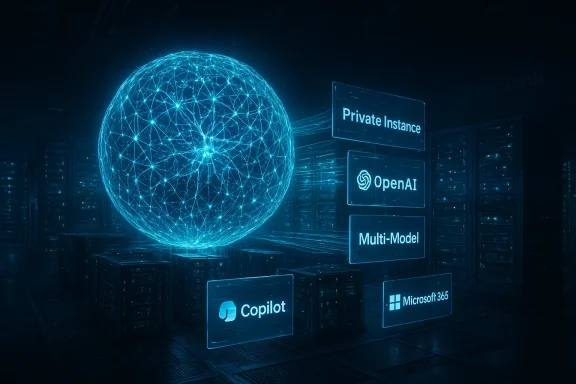
- Maintain a multi-model architecture inside products — mixing Microsoft-built models with third-party models like Anthropic and others where they provide the best performance for a task.
Short-term impact on Microsoft products (what users will likely see)
- Improved latency and lower operational cost for enterprise Copilot workloads as Microsoft routes selected workloads to optimized in-house models.
- Greater feature differentiation across Microsoft 365 tiers — enterprise customers could receive higher-quality, private-instance models with stronger enterprise data controls.
- A multi-model product architecture where a single Copilot might select between in-house models, Anthropic/Claude, or OpenAI models depending on the task, privacy posture, and cost profile.
Strengths of Microsoft’s move
- Scale and capital: Microsoft can amortize the enormous cost of training and maintaining frontier models across Azure, Surface/consumer products, and enterprise contracts. That macroeconomic advantage is real and durable.
- Product integration expertise: Microsoft owns the application stack (Windows, Office, Teams) and can tune models tightly to product behaviors — a practical advantage that pure-play model vendors lack.
- Cloud and customer lock-in: Microsoft can offer enterprises private Azure-hosted model instances, stronger compliance tools, and integrated billing — a compelling enterprise story.
- Diversified supplier strategy: By engaging with Anthropic and others, Microsoft hedges performance risk and avoids locking itself into one vendor-specific failure mode.
Risks, unknowns, and areas that deserve scrutiny
- Capability parity versus risk: Building “frontier” models is not merely an engineering lift; it’s also an R&D race in safety, alignment, and emergent-behavior mitigation. Matching the raw capability of the best models is one hurdle — matching the safety engineering and interpretability work is another. Microsoft will need to scale both simultaneously.
- Talent and retention: Recruiting and retaining top model-builders has become competitive and expensive. Departures from leading labs have produced public warnings and cautionary op-eds about capabilities; these dynamics add talent risk to any in-house program.
- Cost overruns and investor patience: Building gigawatt-scale compute and supporting operations runs up enormous capital expenses. Microsoft’s CFO discipline and long-term portfolio flexibility help, but investors have already shown sensitivity to AI capex. Execution delays or inability to show ROI from proprietary models could depress market sentiment.
- Regulatory and antitrust attention: A major cloud provider host-training frontier models raises regulatory scrutiny — both around market power and how model outputs are governed. Multi-jurisdictional oversight, data localization rules, and export-control regimes will shape how Microsoft can deploy certain models globally.
- Dependence on hardware supply chains: GPU and interconnect availability remain volatile; the ability to scale training clusters is contingent on chip supply and datacenter power delivery. Microsoft will be competing with cloud rivals and large AI firms for the same scarce hardware.
The OpenAI fallout story: realities vs. rhetoric
Narratives of a dramatic “dumping” of OpenAI simplify a more complex reality. Microsoft appears to be pursuing both a path of independence and a continued partnership where it makes strategic sense. The partnership rewrite (equity, IP, hosting rights) left Microsoft with long-term access to OpenAI technology while freeing OpenAI to seek other compute partners — a structural shift that reduces Microsoft’s exclusivity while preserving commercial links. In short: Microsoft is preparing to compete and cooperate simultaneously.Caveats and unverifiable claims:
- Some media narratives allege extreme debt or “trillion-dollar compute obligations” for OpenAI; those figures are rooted in speculative projections of long-term cloud commitments and should be treated cautiously unless supported by audited disclosures. I flag such claims as unverified until primary contractual disclosures are published. Readers should treat sensational dollar figures with skepticism.
How the industry will shift — likely scenarios
- Multi-cloud, multi-model future: Enterprises will demand the flexibility to run different models for different workloads; Microsoft’s strategy aligns with that demand by offering internal models plus partnerships.
- Product differentiation through vertical optimization: Expect enterprised for healthcare, legal, and regulated industries with stronger audit trails and fine-grained access controls.
- Market segmentation by cost and latency: High-volume, low-latency enterprise requests will gravitate to specialized in-house models; consumer conversational workloads may remain distributed across smaller, cheaper third-party models.
- Increased M&A and talent poaching: Expect more acquisitions of model startups and teams as hyperscalers race to consolidate IP and capabilities.
- Regulatory responses accelerate: As large cloud providers train and host frontier models, national and regional authorities will move faster to set guardrails around model use, especially for safety-critical domains.
What IT leaders and buyers should do now
- Assess vendor lock‑in risk. Review contractual terms for model access, IP rights, and data residency. Ensure escape hatches and migration paths if a vendor changes strategy.
- Define workload taxonomy. Separate high-compliance, latency-sensitive, and high-volume workloads and map them to the right model profile (private-instance models vs public APIs).
- Invest in observability and guardrails. Whether you run Microsoft-hosted models or third-party APIs, require model logging, provenance, and human-in-the-loop controls for critical tasks.
- Plan multi-provider redundancy. Treat AI models like any critical service: architect for failover across providers or in-house and third-party models to reduce single points of failure.
Judgment: Is Microsoft making the right call?
Yes — with qualifications. For a company with Microsoft’s scale, product footprint, and platform ambition, building competitive in-house foundation models is a strategically rational move. It addresses cost, latency, and product integration problems that cannot be fully solved through third-party reliance.However, Microsoft’s success will depend on:
- Delivering genuine capability parity or advantage compared with the best external models.
- Showing measurable ROI (lower TCO, better user outcomes) on the substantial capital investments required.
- Maintaining strong safety, alignment, and compliance practices at scale.
Final thoughts
We are watching the next phase of the AI platform wars: not just who builds the smartest model, but who can marry models to real-world enterprise value, operating economics, and trustworthy governance. Microsoft’s stated plan — to build frontier models, scale gigawatt-class compute, and integrate a best-of-breed multi-model approach into its products — is the logical playbook for a platform owner that must serve millions of paying customers while defending its cloud franchise.This is strategic, expensive, and fraught with technical and policy risk. It is also exactly the kind of structural bet that defines winners in platform-driven markets. Microsoft is not abandoning OpenAI so much as rebalancing its bets: preserving the partnership where valuable, while building its own runway to control and scale AI services across the enterprise. That blend of competition and cooperation will be the defining rhythm of the AI industry for the next several years.
Source: Windows Central https://www.windowscentral.com/arti...tgpt-firm-continues-to-beg-big-tech-for-cash/
