

Microsoft’s AI leadership has just announced a new, deliberately constrained path toward “superintelligence” — one framed not as an open-ended race to omniscience but as Humanist Superintelligence (HSI): advanced, domain-focused systems designed explicitly to serve people and societal priorities while remaining controllable and auditable. The initiative — the MAI Superintelligence Team, led by Mustafa Suleyman — is a clear strategic pivot: build first‑party capabilities, emphasize containment and alignment, and prioritize problem‑oriented breakthroughs in areas like healthcare, energy, and scientific discovery rather than an unfettered push for general-purpose AGI. This move is consequential for Windows users and enterprises because it changes Microsoft’s product and governance tradeoffs, from Copilot UX choices to cloud strategy, model provenance, and regulatory exposure.
Microsoft has formally launched the MAI Superintelligence Team within Microsoft AI and published a public essay by Mustafa Suleyman defining the team’s objective as building Humanist Superintelligence (HSI) — systems that are “problem‑oriented,” domain‑specific, and intentionally bounded in autonomy and scope. Suleyman positions HSI as a moral and technical alternative to a generalized, unconstrained notion of AGI, arguing that the priority must be “proactively avoiding harm and then accelerating” benefits. The announcement explicitly frames MAI as both a research and product organization intended to deliver high‑impact domain specialists rather than a single all-purpose system. This direction follows months of public commentary from Suleyman on the hazards of designing systems that seem conscious (what he calls Seemingly Conscious AI or SCAI), the psychological and legal risks that follow, and how product design choices (defaults on memory, persona, and voice) can normalize anthropomorphism at scale. Microsoft’s Copilot family will continue to leverage external and partner models where useful, but MAI is designed to give Microsoft more optionality on cost, latency, data governance, and safety assurance for sensitive workloads.
Yet the crucial technical and governance questions remain unresolved: how to guarantee safety at scale, how to independently verify medical performance, and how to maintain public trust while competing for frontier capabilities. Microsoft’s commitments move the conversation beyond abstract AGI metaphysics into operational product design — which is precisely where practical safety is won or lost.
If Microsoft truly wants HSI to be more than marketing, it must rapidly operationalize the transparency, auditability, and independent validation that will make containment trustworthy. The industry needs measurable standards, external audits, and regulatory engagement now — not once superhuman systems are already widely deployed. The MAI team’s work will matter enormously for the next decade; the public will judge it by whether measurable safety and usefulness accrue before unbounded capability.
Microsoft’s move to humanist superintelligence is an important and pragmatic reframing of a high‑stakes problem: build powerful tools narrowly, measure them openly, and keep people — not the code — squarely in control. The rest will depend on whether the company transforms words into verifiable practices and whether regulators, independent auditors, and the research community are given the access and evidence they need to hold those promises to account.
Source: TechPowerUp Microsoft's AI Goal is Humanist Intelligence in Service of People and Humanity | TechPowerUp}
 Background / Overview
Microsoft has formally launched the MAI Superintelligence Team within Microsoft AI and published a public essay by Mustafa Suleyman defining the team’s objective as building Humanist Superintelligence (HSI) — systems that are “problem‑oriented,” domain‑specific, and intentionally bounded in autonomy and scope. Suleyman positions HSI as a moral and technical alternative to a generalized, unconstrained notion of AGI, arguing that the priority must be “proactively avoiding harm and then accelerating” benefits. The announcement explicitly frames MAI as both a research and product organization intended to deliver high‑impact domain specialists rather than a single all-purpose system. This direction follows months of public commentary from Suleyman on the hazards of designing systems that seem conscious (what he calls Seemingly Conscious AI or SCAI), the psychological and legal risks that follow, and how product design choices (defaults on memory, persona, and voice) can normalize anthropomorphism at scale. Microsoft’s Copilot family will continue to leverage external and partner models where useful, but MAI is designed to give Microsoft more optionality on cost, latency, data governance, and safety assurance for sensitive workloads. What Microsoft Announced — The Essentials
- Formation of the MAI Superintelligence Team under Mustafa Suleyman, embedded in Microsoft AI.
- A stated mission to pursue Humanist Superintelligence (HSI): domain‑focused, controllable, and aligned systems rather than open‑ended AGI.
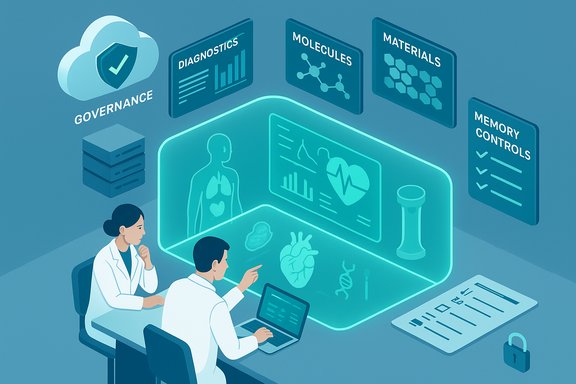
- Early emphasis on medical superintelligence and scientific domains where superhuman performance could deliver measurable public benefit. Microsoft signaled a line‑of‑sight to meaningful advances in areas such as diagnostics and molecule discovery.
- Continued product integration with the Copilot family while building more first‑party MAI models to regain operational control and reduce dependence on external frontier model providers.
Why the “Humanist” Label Matters
The normative design choice
By labeling the program humanist, Microsoft is making an explicit ethical and product tradeoff: the company will prioritize systems that are demonstrably in service of human well‑being and subject to hard limits on autonomy and emergent agency. That means design defaults and governance will favor:- Constrained autonomy — systems that solve well‑defined problems rather than self‑directed agents with open access.
- Transparency and auditable behavior — outputs and decision paths that can be inspected and traced.
- Human‑centric objectives — optimization targets tied to societal outcomes, e.g., earlier disease detection, materials discovery for clean energy, or safer automation.
Technical and Practical Orientation: Domain Specialists, Not Universal Minds
Microsoft’s MAI team intends to pursue systems that are superhuman within a target domain rather than universal problem solvers. Practically this translates to:- Building models that combine reasoning architectures, retrieval‑augmented memory, and high‑fidelity domain knowledge (for example, curated medical datasets and structured scientific data).
- Orchestrating a model ecosystem — routing tasks to the best class of model depending on privacy, latency, and cost constraints (OpenAI models where appropriate, MAI models where governance matters).
- Engineering interpretability, robustness and containment features so that models operate within clearly defined bounds and can be shut down, restricted or explained.
The Medical Superintelligence Claim — Promise and Limits
Microsoft has publicly suggested it has a “line of sight” toward systems that can meaningfully augment diagnostics and other clinical tasks and referenced internal tests where models performed strongly compared to clinician groups. Independent reporting restates Microsoft’s confidence that medical superintelligence could be achievable in the near term if validated. These claims are notable and plausible given recent progress in multimodal reasoning, medical image analysis, and large‑scale biomedical training data, but they require rigorous verification. Cautionary note: performance claims about “outperforming groups of doctors” must be treated as provisional until details are published: peer‑reviewed studies, independent replication, dataset provenance, and regulatory approval processes are essential before such systems are trusted in clinical settings. If Microsoft’s internal tests exist, they should be published or reviewed by independent clinical bodies before any broad clinical rollout. This is not just best practice — it’s a regulatory and ethical imperative.Strategic Implications: OpenAI, Cloud Optionality, and Competitive Positioning
Microsoft’s move is strategically two‑pronged:- Reasserting first‑party model capabilities while preserving the partnership with OpenAI where it remains advantageous. Microsoft’s commercial relationship with OpenAI has evolved, and MAI gives Microsoft the ability to reduce operational dependencies where necessary (latency, cost, data governance), while still partnering on features and licensing.
- Positioning to lead in regulated sectors by offering models under Microsoft’s governance, cloud controls, and enterprise SLAs. Many organizations want strong contractual controls over model telemetry, data retention, and interpretability; Microsoft’s in‑house MAI models aim to provide that option.
Safety and Control: The Core Unresolved Challenge
Suleyman and Microsoft foreground the safety question: how do you guarantee that advanced, steerable systems remain safe? That question has no settled technical answer today. The company’s public materials emphasize:- Containment engineering — restrict what models can access and act on; prefer domain constraints over open tool access.
- Human‑in‑the‑loop governance — keep humans in the decision chain for critical actions.
- Alignment by design — bake human values into objectives and testing regimes, not as an afterthought.
Product and UX Consequences: What Windows and Copilot Users Should Watch For
Microsoft has already been iterating Copilot and voice/visual personas with a clear line toward human‑centered defaults: opt‑in memory, optional avatars (e.g., the new voice persona experiments), “Real Talk” modes that push back rather than sycophantically agree, and explicit refusal to create eroticized assistant experiences. These are design choices that reflect the HSI posture and Suleyman’s SCAI concerns. Expect MAI’s research to show up in product choices like:- Default settings that favor safety over engagement.
- Expanded enterprise controls for Copilot and agent deployments (memory governance, connector approvals, audit logs).
- Specialized MAI models powering high‑sensitivity workloads (e.g., enterprise healthcare tenants) with tight data governance and on‑prem / sovereign cloud options.
Strengths of Microsoft’s Approach
- Pragmatism over rhetoric: Framing superintelligence as domain‑specific aligns the research agenda with measurable societal goals and existing regulatory pathways. This reduces speculative risk and focuses resources on high‑value outcomes.
- Operational scale and resources: Microsoft’s cloud infrastructure, data partnerships, and enterprise reach give MAI a distinctive advantage for deploying contained, audited systems at real scale.
- Product discipline on personhood: Suleyman’s SCAI critique and the company’s conservative UX defaults reduce the psychological and legal harms that emerging anthropomorphic assistants have produced elsewhere.
- Optionality for enterprise customers: Building first‑party MAI models creates choices for customers concerned about dependence on third‑party model providers.
Potential Weaknesses and Risks
- The control problem remains unsolved. No currently available engineering paradigm offers provable guarantees that high‑capability models cannot circumvent constraints or exploit emergent behaviors. Microsoft’s emphasis on containment is sensible, but it’s not a silver bullet. Independent verification and new research into robust, provable control mechanisms are required.
- Transparency vs. competitive secrecy. Building cutting‑edge models is a competitive business; but withholding architecture, training data provenance, and benchmark details will erode public trust. The commitment to safety will be tested by how much Microsoft is willing to reveal to independent auditors and regulators.
- Regulatory and liability complexity. Domain‑specific superintelligence in healthcare or legal domains will face strict regulatory scrutiny and potential liability claims; Microsoft must prepare governance, certification, and insurance frameworks before wide deployment.
- Ecosystem fragmentation. As Microsoft develops MAI models, customers will face a more complex decision matrix (OpenAI vs. MAI vs. other clouds), increasing integration complexity for organizations and potentially amplifying vendor lock‑in dynamics.
What Microsoft Should Build — A Practical Human‑Centric Roadmap
Below are pragmatic, prioritized actions consistent with the Humanist Superintelligence promise:- Publish rigorous evaluation protocols and external audit programs for MAI models, including red‑team results and failure modes.
- Release replicable clinical validation studies (for medical systems) to peer‑reviewed journals and engage regulatory bodies early in the design process.
- Implement mandatory, auditable memory and persona controls for any consumer‑facing assistant; default to off for persistent memory and require age‑appropriate gating.
- Invest in research for provable containment and formal verification methods to reduce the risk of undesired tool use or “escape” behaviors.
- Create a transparent governance board that includes independent safety researchers, ethicists, patient advocates (for medical domains), and regulators to review MAI deployments.
- Offer flexible hosting options (sovereign cloud, on‑prem) for high‑sensitivity customers with corresponding technical assurances and SLAs.
Cross‑Checking the Big Claims (Verification Summary)
- MAI Superintelligence Team formation and the Humanist Superintelligence framing are documented in Microsoft’s official announcement and widely reported by major outlets; the key quotes and mission framing come directly from Mustafa Suleyman’s Microsoft AI essay.
- Microsoft’s strategic pivot to more first‑party models and the emphasis on containment have been independently covered by multiple news outlets reporting on the same announcement.
- Financial context — Microsoft’s growing AI revenue and Copilot adoption figures — are corroborated by company disclosures and reporting during 2025 earnings cycles; these numbers contextualize why Microsoft can fund an effort like MAI. These financial claims are supported by Microsoft’s investor materials and reputable press coverage, though precise segment attributions can vary across outlets.
- Claims about clinical performance should be treated cautiously until detailed, peer‑reviewed evidence is published and independently replicated; current coverage references internal Microsoft tests and line‑of‑sight claims but not public clinical datasets or regulatory filings. Those clinical performance claims remain provisional.
Conclusion — A Measured, Responsible Path That Still Needs Scrutiny
Microsoft’s MAI Superintelligence Team and the Humanist Superintelligence framing represent a consequential attempt to square technical ambition with ethical constraint. The company is leveraging its unique combination of product reach, cloud infrastructure, and regulatory exposure to pursue domain‑specialist superhuman systems while promising containment, alignment, and human‑first defaults. Those are responsible and strategically coherent choices.Yet the crucial technical and governance questions remain unresolved: how to guarantee safety at scale, how to independently verify medical performance, and how to maintain public trust while competing for frontier capabilities. Microsoft’s commitments move the conversation beyond abstract AGI metaphysics into operational product design — which is precisely where practical safety is won or lost.
If Microsoft truly wants HSI to be more than marketing, it must rapidly operationalize the transparency, auditability, and independent validation that will make containment trustworthy. The industry needs measurable standards, external audits, and regulatory engagement now — not once superhuman systems are already widely deployed. The MAI team’s work will matter enormously for the next decade; the public will judge it by whether measurable safety and usefulness accrue before unbounded capability.
Microsoft’s move to humanist superintelligence is an important and pragmatic reframing of a high‑stakes problem: build powerful tools narrowly, measure them openly, and keep people — not the code — squarely in control. The rest will depend on whether the company transforms words into verifiable practices and whether regulators, independent auditors, and the research community are given the access and evidence they need to hold those promises to account.
Source: TechPowerUp Microsoft's AI Goal is Humanist Intelligence in Service of People and Humanity | TechPowerUp}
