

Minecraft's version numbers are getting a facelift — and while players won't notice new blocks or mobs in their inventory, this quiet change matters a lot for creators, server operators, and the modding ecosystem that keeps the game alive and evolving. Mojang is switching from the long-standing "1.x.x" notation to a year-based scheme (for example, "25.3" or "26.1"), aligning release names with calendar years and making snapshots, previews, patches, and hotfixes easier to read and automate. This move is official and rolling out now in previews, with the new numbering system intended to be the default for 2026 releases.
Minecraft used incremental "1.x.x" versioning for nearly a decade, where major content updates advanced the middle digit (1.14, 1.15, 1.16, etc. and each update's ongoing patches and fixes used the trailing numbers. That made sense when Minecraft shipped one large feature update per year. In recent years Mojang changed course: instead of annual monoliths, the team ships more frequent "game drops" throughout the year — smaller, focused releases that add features, balance, and content at a higher cadence. Those multiple drops within a single year exposed the limitations of the 1.x.x scheme and led to confusing decimal chains like 1.21.50 (Bedrock) versus 1.21.4 (Java). Mojang's official explanation frames the new approach as a clarity and usability improvement so creators and players can immediately see which year a release belongs to.
Source: Windows Central https://www.windowscentral.com/gami...hanging-update-version-numbers-december-2025/
 Background
Minecraft used incremental "1.x.x" versioning for nearly a decade, where major content updates advanced the middle digit (1.14, 1.15, 1.16, etc. and each update's ongoing patches and fixes used the trailing numbers. That made sense when Minecraft shipped one large feature update per year. In recent years Mojang changed course: instead of annual monoliths, the team ships more frequent "game drops" throughout the year — smaller, focused releases that add features, balance, and content at a higher cadence. Those multiple drops within a single year exposed the limitations of the 1.x.x scheme and led to confusing decimal chains like 1.21.50 (Bedrock) versus 1.21.4 (Java). Mojang's official explanation frames the new approach as a clarity and usability improvement so creators and players can immediately see which year a release belongs to. Why the change now
- Mojang now ships several meaningful game drops per year rather than one annual feature update.
- Bedrock and Java have different release cadences; a year-based prefix provides a common anchor across editions while still allowing edition-specific numbering.
- The new system makes snapshots and preview identifiers simpler and more discoverable for content creators and automated tooling.
What exactly is changing
The mechanics of the new numbering are straightforward:- The leading number equals the calendar year the update is released in: "25" for releases in 2025, "26" for 2026, and so on.
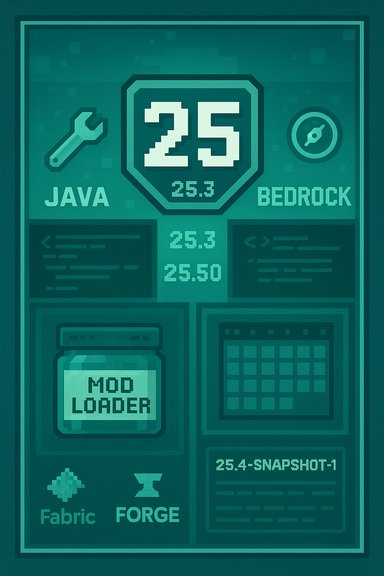
- The number(s) after the year count sequentially through the drops and differ between Java and Bedrock because of their separate cadences. For example, a Copper Age drop that appeared as 1.21.9 on Java and 1.21.110 on Bedrock would be represented as 25.3 for Java and 25.50 for Bedrock under the new scheme (Bedrock numbers tend to be higher because it receives more frequent micro‑releases).
- Patches/hotfixes continue to use additional trailing increments: Java uses a third dot (e.g., 25.3.1) while Bedrock will count upward from the "0" slot (e.g., 25.51 as the next Bedrock increment). Snapshots and previews will also adopt this pattern (for example, a snapshot like 25w41a would be renamed to something like 25.4-snapshot-1).
Overview: immediate timeline and rollout
Mojang's official blog laid out the change and says previews and snapshots will start adopting the new style immediately, with full adoption for the next-year releases (the first post-change release after Mounts of Mayhem is slated to be Minecraft 26.1). The Mounts of Mayhem drop itself is scheduled for December 9, 2025 and is the final major 2025 release before the full switchover. Major outlets and community trackers corroborate the date and the sequencing for the next releases; those announcements are reflected in both Mojang's posts and independent coverage.Why this matters — at a glance
- Clarity for creators and modders: A year-first scheme makes it easier to say "this mod works on 26.1 Java" and reduces ambiguity caused by long decimal strings that previously persisted for months.
- Easier snapshot identification: Testers and content creators will see snapshot series tied to a year and a simple counter, which reduces confusion with legacy snapshot codes like "25w41a."
- Automation and tooling: Build pipelines, deployment scripts, version-parsing libraries, and CI checks that rely on human-readable version tokens can be simplified or hardened against brittle parsing rules.
- Cross-edition coherence: Even though Java and Bedrock keep separate counters, sharing the year prefix helps align documentation and community discussion.
Deep dive: what creators, server admins, and modders need to know
For content creators and tutorial writers
- Update documentation and video descriptions to use the year-based version references for new content. Saying "Minecraft 26.1" will be clearer to readers than a cryptic 1.21.x patch number.
- When linking to official patch notes or snapshots, include the KB, snapshot tag, or build identifier in addition to the new year‑based version to preserve traceability for readers who want the exact build.
For server administrators and operators
- Server jar/file naming: If your deployment system relies on strings like "1.21.9" to decide whether a server is compatible, plan a migration to match either:
- Canonical version metadata (the format inside server‑side manifest or jar metadata), or
- A robust parsing routine that understands both legacy 1.x.x and the new year-prefixed format.
- Plugin and mod compatibility: Many plugins declare support for specific version tokens. Encourage plugin authors and CI pipelines to switch to range-based checks (for example, "25.x" or ">=25.1 <26.0") to avoid accidental rejections when the string format changes.
- Backups and staging: Because the numbering change itself does not alter world formats, your usual staging and backup practices remain essential. However, labeled test runs should adopt the new naming to avoid confusion when catalogs or dashboards show mixed naming conventions during the transition.
For modders and the modding ecosystem
- The version string change on its own is benign for mod API compatibility; the real game-changer is Mojang’s separate commitment to remove code obfuscation in Java Edition.
- Mojang plans to provide unobfuscated experimental releases alongside obfuscated ones during the transition period, enabling modders and tooling authors to adapt without immediate breakage. That reduces the friction of mapping obfuscated names and streamlines debugging.
- Mapping files: Existing workflows that rely on community-maintained mapping files (name maps between obfuscated identifiers and logical names) will become simpler over time, but mapping producers and loader projects (Fabric, Forge) will need to update workflows and test compatibility during the handoff.
- Tooling updates: Mod loaders, decompilers, and IDE integrations will have to be revised to accept unobfuscated jars and to detect edition type — but Mojang's plan to ship both obfuscated and unobfuscated builds during transition reduces risk.
Concrete examples and how to interpret them
- The Copper Age release that appeared as 1.21.9 (Java) and 1.21.110 (Bedrock) would be represented as 25.3 and 25.50, respectively, under the new schema — a clear demonstration of the year-first approach and edition-specific counters. For Java patching, a subsequent hotfix would be labeled 25.3.1, while Bedrock's incremental update could appear as 25.51. These are illustrative mappings that mirror how Mojang described the change.
- Snapshot renaming: A weekly snapshot previously shown as "25w41a" will instead be something like "25.4-snapshot-1." That shifts snapshot identification from a week-of-year token to a simple ordinal snapshot tied to the year's update sequence, which is easier for automated parsers and human readers to follow. Mojang's blog explains that previews and snapshots will fall under the same year-based system.
Cross-referencing the claims (verification)
- Mojang's official announcement of the new numbering system appears on Minecraft.net and describes the year-first scheme and the rationale for the change. That is the authoritative source for the policy.
- Independent reporting and community coverage (Windows Central, PC Gamer, and other outlets) confirm the timing around Mounts of Mayhem and summarize how the change will look in practice, offering concrete examples and editorial interpretation. These corroborating accounts match Mojang's official narrative and provide real-world mappings that illustrate the new scheme.
- The wider developer community has also tracked Mojang's parallel decision to remove obfuscation in Java Edition, a separate but related change that will materially affect how mods are built and maintained. Multiple outlets reported the obfuscation removal and Mojang's intention to ship experimental unobfuscated builds to ease the transition.
- An archived community note from a Windows forum summary also flagged Mojang’s Mounts of Mayhem date and the versioning switch in community discussions, reflecting how server operators and admins were preparing for the change.
Risk analysis — what could go wrong
- Automation breakage: Scripts and CI that match version strings may fail if they expect the long "1.x.x" layout, causing release tooling, download mirrors, or deployment checks to misclassify builds. The fix is straightforward but necessary — shift parsers to use canonical metadata (manifest files or the in‑jar version token) rather than fragile string pattern matches.
- Documentation drift: Legacy tutorials, wiki pages, and mod pages that refer to old version tokens will create confusion for newcomers. Community documentation should be updated and maintain cross-reference tables (old -> new) during the transition period.
- Transitional ambiguity: During the rollout, you'll see both naming schemes in the wild (old 1.21.x strings in previously released artifacts and new year-prefixed strings for newer drops); that mixed reality can be confusing for players and admins who rely on visual cues to decide whether to update, revert, or test a build.
- Toolchain lag: Mod loaders, plugin managers, and third-party stores may lag in adopting conventions for the new strings. This could temporarily block automated testing or compatibility checks until those projects publish updates or patches.
- Misinterpretation of "unobfuscated": Removing obfuscation does not change licensing or legal terms. Mojang is not open-sourcing the entire code under a permissive license — they are publishing unobfuscated builds to improve modding accessibility while retaining the EULA and the game's licensing terms. Modders and third parties should not infer a license change from unobfuscation announcements.
Practical migration checklist (for server admins, modders, and creators)
- Audit any scripts or tools that parse the Minecraft version string and switch them to use canonical version tokens from the game's manifest or file metadata rather than visible title strings.
- Add support for both old and new naming schemes in dashboards and documentation: map 1.x.x → YY.n for the transition period.
- Communicate to your userbase: announce the change in server welcome messages, mod pages, and Discord/Reddit channels to reduce confusion on release day.
- Test your mod/plugin on experimental unobfuscated snapshots as Mojang releases them to catch API or namespace differences early. Use the dual-release period (obfuscated + experimental unobfuscated) to validate your tooling.
- Back up worlds, configs, and modpacks before applying any previews or pre-release snapshots; that remains the best safeguard for irreversible format changes.
The bigger picture: what Mojang gains, and what the community should watch
Mojang's change is a pragmatic engineering decision that lines up release names with the reality of quarterly or semi-regular drops. Clear, year‑based naming reduces cognitive load, simplifies content scheduling for creators, and helps players understand when a feature landed. On the modding side, the simultaneous move toward unobfuscated Java builds — if executed carefully — can dramatically lower the barrier for new modders, make debugging far easier, and modernize tooling workflows that have long relied on fragile name mappings. But the transition carries short-term costs in automation maintenance, documentation refreshes, and potential developer confusion. The most productive path is proactive: update parsers to use canonical metadata, test against experimental unobfuscated builds when available, and publish cross-reference guides so community education scales with the change.Conclusion
This is one of those changes that is boring to many players but highly consequential to the ecosystem that supports Minecraft. The switch to year-based version numbers will not change what you build or how you play, but it will make release history easier to read, snapshots easier to identify, and the lives of creators and server operators measurably simpler. Coupled with Mojang’s removal of Java Edition obfuscation, this period marks perhaps the most developer-friendly reshaping of Minecraft’s release and tooling landscape in years. The net is a lower barrier to entry for modders, clearer labels for creators, and cleaner automation for operators — provided the community treats the transition as a migration project rather than a throwaway cosmetic tweak. Prepare scripts, update docs, test on experimental builds, and back up your worlds; the day-to-day game will be the same, but the plumbing around it is getting a useful, overdue cleaning.Source: Windows Central https://www.windowscentral.com/gami...hanging-update-version-numbers-december-2025/
