

Satya Nadella opened 2026 with a short, strategic essay that reframes a headline debate about generative AI into a product-and-policy agenda: stop arguing over whether outputs are “slop” and instead build systems that treat AI as a cognitive amplifier—a tool to reliably extend human thinking and judgment.
Satya Nadella posted the piece on a personal site branded “sn scratchpad” in late December 2025, calling for a new “theory of the mind” for human‑AI collaboration and urging the industry to move from isolated model showmanship toward engineered systems—orchestration layers that combine models, memory, entitlements, provenance, and safety guardrails. The Verge’s coverage of the post emphasized the rhetorical pivot: Nadella wants attention shifted away from meme‑driven criticisms and toward product design, governance and demonstrable real‑world impact. This intervention arrives against a noisy cultural backdrop. Merriam‑Webster’s choice of “slop” as its 2025 Word of the Year captured public frustration with mass‑produced, low‑value AI content and the reputational drag that creates for the whole industry. Nadella’s note is both defensive and constructive: defensive of a massive corporate bet on AI and constructive in sketching a map for how to make that bet produce reliable value. WindowsForum community threads and internal analyses circulated immediately after Nadella’s post, parsing its three central priorities—human‑centered design, “models to systems,” and deliberate allocation of scarce compute, energy and talent—as both a roadmap and a defensive repositioning of Microsoft’s strategy. These forum summaries make clear that Nadella’s piece is being read as product direction as much as corporate persuasion.
But words alone won’t convince developers, creators, or regulators. The future of the “cognitive amplifier” depends on measurable engineering progress: robust retrieval and provenance, human‑in‑the‑loop safety nets, transparent audit logs, and pricing and copyright frameworks that distribute benefits more fairly. Microsoft has the cloud scale, partner relationships, and enterprise distribution to make such progress meaningful—but it also bears the asymmetric burden of proof because of the size of its platform bets. Bloomberg and CNBC have documented the scale of Microsoft’s OpenAI commitments that make success essential to its economics; community reporting and forum threads show a skeptical user base that will demand demonstrable gains, not just better slogans. The crack between concept and practice is where 2026’s real contest will be fought. If the industry can shrink that gap—by shipping systems that reliably amplify human cognition while reducing slop and documenting that reduction—Nadella’s mantra will have been more than spin. If not, the cultural verdict that gave us “slop” will remain a potent shorthand for failed promises and unmet expectations.
Source: WebProNews Microsoft CEO Nadella: AI as Cognitive Amplifier to Transform 2026
 Background
Satya Nadella posted the piece on a personal site branded “sn scratchpad” in late December 2025, calling for a new “theory of the mind” for human‑AI collaboration and urging the industry to move from isolated model showmanship toward engineered systems—orchestration layers that combine models, memory, entitlements, provenance, and safety guardrails. The Verge’s coverage of the post emphasized the rhetorical pivot: Nadella wants attention shifted away from meme‑driven criticisms and toward product design, governance and demonstrable real‑world impact. This intervention arrives against a noisy cultural backdrop. Merriam‑Webster’s choice of “slop” as its 2025 Word of the Year captured public frustration with mass‑produced, low‑value AI content and the reputational drag that creates for the whole industry. Nadella’s note is both defensive and constructive: defensive of a massive corporate bet on AI and constructive in sketching a map for how to make that bet produce reliable value. WindowsForum community threads and internal analyses circulated immediately after Nadella’s post, parsing its three central priorities—human‑centered design, “models to systems,” and deliberate allocation of scarce compute, energy and talent—as both a roadmap and a defensive repositioning of Microsoft’s strategy. These forum summaries make clear that Nadella’s piece is being read as product direction as much as corporate persuasion.What Nadella actually said — the core claims
Nadella’s short essay can be distilled into three interlocking claims:- AI should be treated as a cognitive amplifier—tools that augment human decision‑making rather than substitutes for it. He recasts the old “bicycles for the mind” metaphor into an agentic, assistive frame intended to normalize human‑in‑the‑loop use and design.
- The engineering focus must shift from isolated, benchmark‑driven models to systems engineering—platforms that stitch models, retrieval, safety checks, and provenance together so AI services work reliably in the real world. Nadella calls this the move “from models to systems.”
- Because compute, energy and technical talent are finite, the industry must make deliberate choices about where to apply these resources so AI deployments demonstrably produce societal benefit, thereby earning what Nadella calls “societal permission.” This is both a product and a policy argument.
Why this matters: the corporate context
Microsoft has restructured its public identity around Copilot, Azure, and agentic interfaces for years. The company’s multibillion‑dollar investments in model development, datacenter capacity and its partnership with OpenAI have made AI the central commercial play. External reporting and regulatory filings show Microsoft’s financial exposure and strategic commitment: regulators and business press have repeatedly noted that Microsoft has committed more than $13 billion to OpenAI and treats that relationship as foundational to its cloud and AI strategy. Bloomberg and other outlets have documented regulatory reviews and clearances tied to that investment. That economic reality is the subtext to Nadella’s tone. If Copilot and Microsoft’s agentic ambitions deliver durable value, subscription and Azure consumption economics can justify enormous datacenter and GPU investments. If they don’t, the company faces rising costs, skeptical enterprise customers, and regulatory scrutiny. WindowsForum threads and internal summaries captured this calculus: Nadella’s post is as much an investor and partner message as it is a product manifesto.Public reception and industry echoes
Immediate reaction across press and social channels was mixed. Tech outlets ran straightforward summaries and skeptical reads; some framed Nadella’s post as a needed reframe from hype to engineering, while others saw it as a defensive pivot intended to blunt critiques about product quality and “slop.” PC Gamer and Windows‑facing outlets underscored both the rhetorical move and the credibility gap between Microsoft’s vision and many users’ experience of Copilot features. Social platforms echoed this divide: some users appreciated a shift toward useful AI; others read “stop calling it slop” as tone‑setting that could minimize real harms—misinformation, copyright erosion, and job disruption. Community conversations on WindowsForum reflected this split: many readers welcomed a product focus, but a substantial minority called for immediate, measurable commitments to fix reliability and provenance problems before asking the public to trust pervasive AI.The technical stakes: what “models → systems” requires
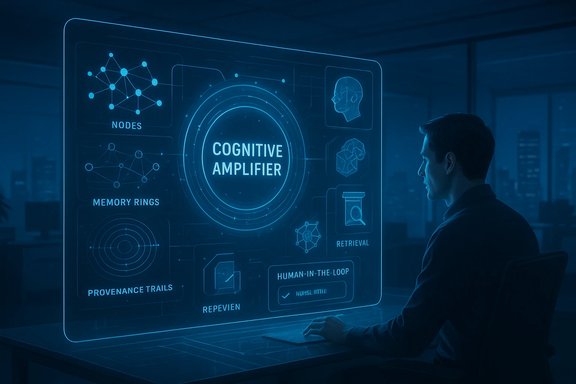
Nadella’s central engineering claim—move from models to systems—is sound in principle and difficult in practice. The technical work required includes:- Orchestration and routing: Decide which model or tool handles each subtask, optimizing for latency, cost and accuracy.
- Retrieval‑augmented generation and provenance: Ensure generated outputs are grounded in verifiable sources; attach traceable citations or data lineage so users and auditors can see why an answer was produced.
- Memory and context management: Maintain secure, privacy‑aware long‑term state for agents so they can be useful across sessions without leaking sensitive information.
- Entitlements, governance and audit trails: Record who authorized what agent actions, support human approval gates for high‑risk tasks, and provide forensic logs for compliance.
- Fallbacks and uncertainty handling: If an agent is unsure, it should ask for clarification or defer to human oversight rather than fabricate answers.
The persistent problem of “slop” and why Nadella’s framing doesn’t magically solve it
“Slop” is a cultural shorthand for the flood of low‑value, sometimes deceptive content produced by generative AI—short videos, sloppy blog posts, fabricated citations, cheap images and mass‑produced creative artifacts. Merriam‑Webster’s 2025 selection of “slop” both reflects and amplifies the risk: reputational damage to the technology sector and to platforms that host AI content. Nadella’s amplifier metaphor reframes the problem but does not, by itself, address three concrete failure modes:- Hallucination and misinformation: AI systems can invent facts and plausible‑looking but false claims. Without strong retrieval and verification pipelines, amplification multiplies error. Independent reporting has documented high‑profile hallucinations and user‑facing mistakes that undermine trust.
- Quality dilution at scale: Even when outputs are harmless, mass production of middling content reduces attention and discoverability for high‑quality human work, creating an attention‑economy externality.
- Economic and employment friction: Automation that shifts tasks into prompt engineering and finish‑editing can deskill roles and concentrate economic gains with platform owners unless policy and business models distribute value differently.
Microsoft’s leverage — and its vulnerabilities
Microsoft holds several strategic levers that could make Nadella’s vision real:- A major cloud footprint and ongoing datacenter investments that can host agentic workloads and provide hybrid on‑device/offload models for Copilot+ experiences.
- Deep enterprise relationships that make it possible to pilot auditable, compliance‑sensitive agents for regulated industries.
- A commercial relationship with OpenAI and in‑house model development that together supply both the frontier models and application‑level tooling.
Reactions from creators, regulators and competitors
Creative professionals and labor advocates remain skeptical. While Nadella frames AI as collaboration, many artists and writers view agentic tools as an eroding force that commoditizes style and intellectual property. Tech press and community threads documented studio closures, creative industry pushback, and calls for better rights frameworks—pressures that Nadella’s essay gestures toward but does not address in practical policy terms. Regulators are already circling. Antitrust filings, competition reviews and class action litigation have sprung up around exclusive cloud partnerships and the market power effects of platform-model alliances. That legal backdrop is part of why Nadella emphasized “societal permission” and deliberate deployment choices; he is signaling to regulators that Microsoft wants a governance voice at the table even as scrutiny intensifies. Reuters and other reporting noted legal challenges and antitrust concerns tied to AI‑era exclusivity and cloud provisioning. Competitors will not cede the framing. Google, Meta and others are promoting their own agent and model architectures and will press rival narratives about reliability, privacy and openness. The debate over centralized vs. federated deployments, model licensing, and data provenance will shape regulatory contours and commercial adoption in 2026.Verifiable facts — and the things we could not confirm
Several claims circulating in commentary require careful verification:- Microsoft’s total OpenAI commitments: Multiple independent outlets, including Bloomberg and CNBC, report Microsoft has committed approximately $13 billion to OpenAI; filings and reporting confirm the magnitude, although accounting treatments and timing of payments vary across reports. This figure is a central economic fact underpinning Microsoft’s exposure.
- Nadella’s language and the existence of the “sn scratchpad” essay: Nadella’s blog post and the phrasing about a “theory of the mind” and “cognitive amplifier” are published and verifiable via mainstream tech reporting. The Verge and PC Gamer both summarized the post and quoted key lines.
- Claims that Nadella publicly said “10x compute increases yield 100x capability gains” were not found in a direct, attributable quote. Reporting and commentary discuss compute scaling and industry scaling laws in general terms, but no authoritative transcript or post was located with that exact phrasing. Until a primary source is produced, such specific numerical framing should be treated as interpretive shorthand rather than a verified Nadella claim. This is an example of a paraphrase that has propagated in social posts and threads; flag it as unverified.
- Whether Nadella’s scratchpad entry was written with the direct assistance of Microsoft Copilot or other generative tools: several outlets and community commentators speculated about AI assistance and ran lightweight stylistic checks. Some publications reported that automated detectors or writing analysis suggested generative patterns; others concluded the piece was human‑authored. There is no conclusive, public proof that Nadella used Copilot to write the post—only speculative signals. Mark this as ambiguous and treat any claim of AI authorship as unverified unless Microsoft explicitly confirms it.
Practical steps Microsoft and the industry must take to make the “cognitive amplifier” real
If Nadella’s framing is to move from slogan to substance, engineering and governance teams should prioritize the following, in roughly descending order of urgency:- Adopt retrieval‑first architectures and attach provenance metadata to every external claim; ensure outputs cite the sources and provide mechanisms to verify them.
- Build human‑in‑the‑loop gates for high‑risk decisions—health, legal, financial, and public safety—so agents can only act after explicit human approval or when a verifiable confidence threshold is met.
- Create durable evaluation metrics that measure real‑world impact rather than synthetic benchmark scores: uplift in task completion, reduction in human time‑to‑decision, and measurable error reductions in production. Make those metrics publicly auditable.
- Invest in continuous model monitoring and versioned audit trails so enterprises can trace when a model change caused downstream issues.
- Implement clear commercial and copyright policies for creative content: attribution metadata, compensation frameworks for trained creators where appropriate, and opt‑out mechanisms.
- Open third‑party auditing partnerships: invite accredited auditors to validate key claims about safety, bias mitigation, and environmental footprint.
Risks and downsides that still need direct answers
Even with the engineering playbook above, critical risks remain:- Amplifying error at scale: A well‑integrated, high‑reach agent that occasionally hallucinates can produce systematic, fast‑spreading misinformation.
- Centralization of control: If one or a few platforms control the scaffolding layers (memory, entitlements, billing), they also control which agents succeed and whose data trains future models.
- Environmental and cost externalities: The compute and energy footprint of agentic AI is nontrivial; Nadella acknowledged scarce resources, but the industry must show how it reduces per‑unit waste and deploys energy responsibly. Public filings and analyst reports show these costs are material in Microsoft’s capex and operating expense picture.
- Labor market impacts: The cognitive amplifier model implies augmentation, but historical patterns of automation suggest both upskilling and displacement; public policy must prepare for uneven transitions.
A realistic timeline and what to watch for in 2026
Nadella called 2026 a “pivotal year.” What will make it so?- Measurable adoption where AI features demonstrably reduce human time‑to‑outcome in enterprise pilots (ROI backed by telemetry).
- Independent audits of Copilot/agent safety in regulated sectors, with public audit summaries.
- Evidence of reduction in high‑volume “slop” content—platforms deploying provenance and content labelling at scale.
- Policy movement: regulators publishing guidance on model transparency, provenance requirements, and liability frameworks for agent actions.
- New pricing approaches for agent consumption that better align incentives across platform operators, creators and end users.
Conclusion
Satya Nadella’s scratchpad essay is an important reframing: it replaces a cultural insult—slop—with an engineering and policy challenge—cognitive amplification plus systems engineering. That rhetorical move is useful because it focuses attention on the patch of ground where product teams, auditors and regulators can actually act.But words alone won’t convince developers, creators, or regulators. The future of the “cognitive amplifier” depends on measurable engineering progress: robust retrieval and provenance, human‑in‑the‑loop safety nets, transparent audit logs, and pricing and copyright frameworks that distribute benefits more fairly. Microsoft has the cloud scale, partner relationships, and enterprise distribution to make such progress meaningful—but it also bears the asymmetric burden of proof because of the size of its platform bets. Bloomberg and CNBC have documented the scale of Microsoft’s OpenAI commitments that make success essential to its economics; community reporting and forum threads show a skeptical user base that will demand demonstrable gains, not just better slogans. The crack between concept and practice is where 2026’s real contest will be fought. If the industry can shrink that gap—by shipping systems that reliably amplify human cognition while reducing slop and documenting that reduction—Nadella’s mantra will have been more than spin. If not, the cultural verdict that gave us “slop” will remain a potent shorthand for failed promises and unmet expectations.
Source: WebProNews Microsoft CEO Nadella: AI as Cognitive Amplifier to Transform 2026
