

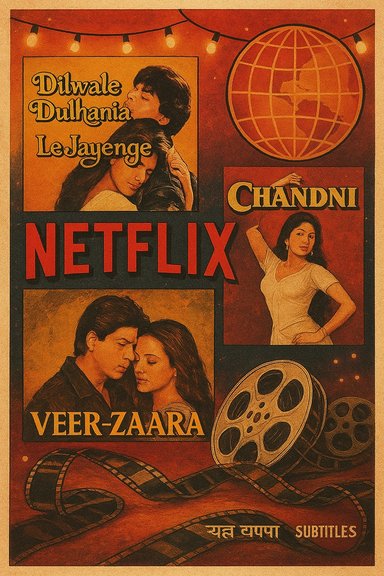
Netflix and Yash Raj Films have struck a timed, global streaming partnership that will bring a curated roster of YRF’s most iconic Bollywood titles — including Dilwale Dulhania Le Jayenge (DDLJ), Veer‑Zaara, Dil To Pagal Hai and Chak De! India — to Netflix subscribers in phased rollouts timed around birthdays, festivals and seasonal events.
If Netflix invests properly — commissioning restorations, producing mini‑documentaries about the films’ historical context, and ensuring high‑quality subtitle and dubbing tracks — the YRF catalogue can become a long‑term engine for cultural exchange. Conversely, if titles are simply uploaded without context or quality control, the opportunity to cement Bollywood’s global prestige may be diminished.
Source: Storyboard18 Netflix partners with Yash Raj Films to stream Bollywood classics such as 'DDLJ' and 'Veer Zaara' worldwide
 Background
Why this matters now
Two forces are converging: the growing global appetite for Indian cinema and the strategic value of legacy film libraries in the streaming era. Yash Raj Films (YRF) is one of Bollywood’s oldest and most influential studios, with a catalogue that spans romantic classics, blockbuster franchises and star‑led spectacles across five decades. Netflix, meanwhile, has been expanding its South Asian slate aggressively — not only with local originals and documentaries, but by securing rights to established IP to deepen global reach and win back subscribers through nostalgia and eventized programming. The new YRF deal packages restored-era favourites into calendarized drops that are explicitly designed to generate engagement during high‑attention moments.The announced scope (what’s coming)
Reports from multiple news outlets indicate Netflix will roll out YRF titles in waves:- A Shah Rukh Khan centric drop aligned with his birthday weekend, featuring nine SRK titles such as DDLJ, Mohabbatein, Dil To Pagal Hai, Veer‑Zaara and Chak De! India.
- A Salman Khan package arriving on (or around) December 27 with Ek Tha Tiger, Sultan and Tiger Zinda Hai.
- Classic Yash Chopra era films (Chandni, Kabhi Kabhie, Lamhe, Silsila and others) arriving November 14.
- A Dhoom trilogy roll‑out, franchise series like Mardaani, a Ranveer Singh block of titles, and a large holiday schedule with two films releasing daily during mid‑December. Valentine’s‑week romantic lineups are also planned for early February.
The strategic logic — what both sides get
For Yash Raj Films
- Renewed monetization of back‑catalogue: Licensing high‑value, older films to a global streaming platform creates a new, steady revenue stream without cannibalizing theatrical re‑runs or DVD sales.
- Global discovery and archival visibility: Titles that had limited availability outside South Asia will find new audiences, and the YRF brand will get renewed cultural capital in markets where Netflix has strong penetration. Akshaye Widhani, YRF’s CEO, framed the collaboration as “a gateway to five decades of culture, creativity, and passion” — a positioning that treats the catalogue as cultural heritage as much as inventory.
For Netflix
- Library differentiation and event programming: Netflix gains instantly recognizable tentpoles (DDLJ, Chak De! India, Dhoom) that can be used to anchor curated seasons, anniversaries and social campaigns.
- Subscriber retention and acquisition: Classic films and star‑led collections are high‑value content for lapsed and new subscribers in diaspora markets and for non‑Hindi speaking viewers curious about Bollywood’s mainstream canon.
- Local market credibility: Deepening partnership ties with a marquee Indian studio strengthens Netflix’s bargaining position and brand perception in a highly competitive Indian OTT landscape.
What viewers will actually see (and when)
Phased rollout, festival timing and eventization
The deal is deliberately scheduled. The early November Shah Rukh Khan batch capitalizes on SRK’s 60th birthday celebrations; further drops target the Christmas/Holiday season, Salman Khan’s birthday in late December, and Valentine’s Day collections in February — converts calendar moments into programming hooks. This sequencing suggests Netflix intends to make YRF content a recurring, promotional asset rather than a single‑time acquisition.Catalogue highlights and breadth
Expect a mixed slate across eras and genres:- Golden‑era romances (Chandni, Silsila, Kabhi Kabhie)
- 1990s‑2000s blockbusters and star vehicles (DDLJ, Dil To Pagal Hai, Mohabbatein)
- Contemporary franchises (Dhoom trilogy, Tiger series)
- Star‑based mini‑collections (SRK, Salman, Ranveer)
- Genre and mood collections (Valentine’s romance week, holiday family fare).
Technical and user‑experience considerations (Windows users and beyond)
Availability on Windows devices
Netflix’s front‑end and DRM ecosystem have historically constrained the maximum technical fidelity available on Windows PCs. For users who want to enjoy these YRF films in highest quality, a few platform realities matter:- 4K streaming on Windows is only supported via the Netflix app from the Microsoft Store or the Microsoft Edge browser; other browsers (Chrome, Firefox) are limited to 720p or 1080p because they lack the necessary DRM support.
- Additional system requirements for 4K on Windows include support for HEVC playback (often via the HEVC extension), PlayReady DRM support, and HDCP 2.2 on the display chain. Some earlier Windows‑PC setups and GPUs historically failed to meet these DRM/hardware checks, meaning users may be limited to Full HD despite having a capable monitor.
- 4K playback also requires a Netflix Premium subscription tier and adequate network bandwidth (Netflix recommends ~15 Mbps sustained for 4K).
Cultural and market impact — analysis
Strengths and opportunities
- Nostalgia as acquisition engine: Curated legacy content has proven value for subscriber re‑engagement. The emotional heft of titles like DDLJ — arguably the single most referenced Bollywood romantic film globally — is quantifiable as social media chatter and shared viewership spikes during anniversaries.
- Wider global exposure for Indian cinema: The move lowers barriers for non‑native audiences to sample mainstream Bollywood, supported by Netflix’s subtitle and dubbing infrastructure. That can broaden talent recognition, export music, and expand IP monetization opportunities.
- Eventized marketing: Staggered, theme‑based rollouts create repeated promotional moments that Netflix can monetize with preview content, cast‑led interviews, archive features and curated playlists.
Risks and trade‑offs
- Licensing windows and territorial complexity: Headlines say “over 190 countries,” but availability is rarely uniform. Pre‑existing windowing deals, local broadcaster contracts, and censorship or certification hurdles can restrict titles in specific territories. Expect regional exceptions and time‑bound licensing that could see titles rotate out. Users should verify availability in their market on the Netflix app.
- Quality and preservation issues: Many Bollywood classics were shot on film or early digital formats. Netflix will be judged on the restoration quality, subtitle accuracy and localization work provided. Poor transfers or bad subtitle translations could undercut global appreciation for these films.
- Political, legal and reputational exposures: Historical or contemporary films sometimes trigger legal challenges or public controversies. Recent years have shown titles tied to sensitive subjects can face petitions, court stays or calls for boycotts. Netflix and YRF will need to manage risk around releases that could provoke social or legal contestation.
Business and industry implications
For competing streamers
This deal resets the competitive baseline in India’s streaming market: library acquisitions from legacy studios are increasingly strategic advantages. Competitors will have to decide whether to pursue exclusive legacy libraries, deepen local original spending, or double down on sports and live experiences to differentiate.For studios and rights owners
YRF’s decision underscores that studios are willing to fragment their distribution model: theatrical windows, limited theatrical revivals (YRF has run nostalgia festivals in cinemas), and streaming windows can coexist under a staged monetization plan. Licensing to a global platform also preserves — and monetizes — IP without requiring large‑scale in‑house tech builds.For creators and talent
The Netflix distribution window offers increased residual visibility for actors, composers and technicians whose work may be discovered by new markets and filmmakers. However, back‑catalogue deals can also complicate revenue sharing and performance credits unless contracts are modernized to reflect streaming economics.What could go wrong — a closer look at the downside scenarios
- Legal and censorial pushback
Large releases tied to heritage content or historical themes sometimes attract legal challenges. A prior Netflix release tied to a YRF‑produced work faced a court stay and public controversy in another context; producers and platforms must account for the possibility of litigation-driven delays or geo‑blocks. - Fragmented availability and consumer confusion
Even when a headline states global availability, practical access can vary by country, language track, or platform. Consumers may expect uniform access only to find regional licencing constraints or staggered rollouts create disappointment. - Poor restoration or localization quality
International audiences judge films by the quality of subtitles, audio mixes and picture restoration. If the engineering and localization investment is insufficient, some titles may fail to find a global audience despite being culturally iconic. - Platform fatigue and attention dilution
Over‑programming the library on a daily cadence during holiday seasons could cause signal‑to‑noise problems: too many titles released too quickly can dilute social momentum and reduce per‑title conversation volume.
How to prepare (practical checklist for Windows users)
- Confirm Netflix availability in your country via the Netflix app.
- Upgrade subscription if you want 4K: move to Netflix Premium.
- Use Microsoft Edge or the Netflix Microsoft Store app for the best chance of higher resolutions.
- Ensure HEVC support on Windows: install HEVC extensions if required and check driver updates for your GPU.
- Check your display chain for HDCP 2.2 compliance if you’re using external monitors or capture devices.
Wider cultural consequences and preservation angle
This agreement is not only a commercial transaction — it’s a cultural preservation and dissemination act. When global platforms acquire legacy national cinemas, they take on the role of curators. That stewardship comes with responsibilities: careful restoration, thoughtful metadata and contextualization (liner notes, essays, and archival extras), and sensitive localization so that new viewers can appreciate both language and cultural cues.If Netflix invests properly — commissioning restorations, producing mini‑documentaries about the films’ historical context, and ensuring high‑quality subtitle and dubbing tracks — the YRF catalogue can become a long‑term engine for cultural exchange. Conversely, if titles are simply uploaded without context or quality control, the opportunity to cement Bollywood’s global prestige may be diminished.
Conclusion
The Netflix–Yash Raj Films partnership is a high‑profile example of how streaming platforms are buying time and attention through licensed heritage content. Strategically timed rollouts — leveraging birthdays, festivals and seasonal moments — turn library films into repeated engagement events rather than one‑off catalog additions. For viewers, particularly global and diaspora audiences, this will dramatically expand access to Bollywood’s most beloved titles; for Windows users, the experience will hinge on the usual technical caveats around DRM, codec support and subscription tier for high‑resolution playback. This collaboration could meaningfully accelerate global discovery of Hindi cinema’s mainstream canon — provided the catalogues are restored, localized, and marketed smartly. The deal also reinforces a marketplace reality: streaming success increasingly depends on a mix of new originals and thoughtfully curated legacy IP. The next test will be whether Netflix and YRF treat the partnership as an ongoing cultural program, investing in restorations, contextual features and reliable global availability, or as a timed marketing play that fades once headlines subside.Source: Storyboard18 Netflix partners with Yash Raj Films to stream Bollywood classics such as 'DDLJ' and 'Veer Zaara' worldwide