

Neudesic’s new platform promises to treat fleets of AI agents like employees—provisioning, assigning, auditing, and retiring them—while running them natively on Microsoft’s Azure AI Foundry to deliver a governed, enterprise-ready “digital workforce.”
Neudesic, an IBM Company, today introduced Digital Workforce Management—an Azure-native platform that positions itself as the enterprise control plane for agentic architectures built on Microsoft’s Azure AI Foundry. The offering promises centralized lifecycle management, role-based provisioning, safety and compliance automation, a governed catalog of tools and skills, and telemetry-driven observability so organizations can operate fleets of autonomous and semi‑autonomous AI agents at scale. This announcement is framed as an answer to the operational gap that blocks many organizations from moving beyond pilots to production-grade agent deployments. This feature examines what Neudesic is actually shipping, how it maps to Microsoft’s Foundry platform, which enterprise problems it is likely to solve, and where buyers should exercise caution before committing to a production rollout.
Neudesic’s announcement is an important signal: vendor and partner ecosystems are rapidly delivering the operational glue enterprises need to scale agentic AI. The work that remains is less about technology and more about disciplined governance, measurable pilots, and accountable operational practices—conditions that will determine whether digital workforces become a reliable productivity multiplier or a new source of operational risk.
Conclusion
Neudesic’s Digital Workforce Management adds a necessary operational control plane on top of Azure AI Foundry for enterprises serious about agentic AI. It aligns with Microsoft’s identity-first, observability-centered roadmap and provides useful enterprise accelerators—but the platform’s promise will only be realized when organizations pair it with rigorous governance, clear operational contracts, and realistic TCO planning.
Source: The Columbus Dispatch Neudesic Unveils Digital Workforce Management for Enterprise-Scale AI Agents on Microsoft Azure AI Foundry
 Overview
Neudesic, an IBM Company, today introduced Digital Workforce Management—an Azure-native platform that positions itself as the enterprise control plane for agentic architectures built on Microsoft’s Azure AI Foundry. The offering promises centralized lifecycle management, role-based provisioning, safety and compliance automation, a governed catalog of tools and skills, and telemetry-driven observability so organizations can operate fleets of autonomous and semi‑autonomous AI agents at scale. This announcement is framed as an answer to the operational gap that blocks many organizations from moving beyond pilots to production-grade agent deployments. This feature examines what Neudesic is actually shipping, how it maps to Microsoft’s Foundry platform, which enterprise problems it is likely to solve, and where buyers should exercise caution before committing to a production rollout.Background: why this matters now
The industry has shifted from single-model experiments toward agentic systems—multi-step AI programs that can plan, call tools, and act across enterprise systems. Microsoft’s Azure AI Foundry has become the production surface for those systems, exposing primitives such as an agent runtime, model catalog, identity integration, and observability hooks. Partners and systems integrators are now building the operational layer enterprises need: identity-first governance, lifecycle controls, auditing, and multi‑agent orchestration. Neudesic’s announcement explicitly positions Digital Workforce Management as that operational layer for Azure First customers. Neudesic’s market positioning is also influenced by the company’s current ownership: Neudesic has been a part of IBM since 2022, which reinforces its enterprise services pedigree and Microsoft partner credibility. IBM’s acquisition of Neudesic was formalized in February 2022.What Neudesic says it delivers
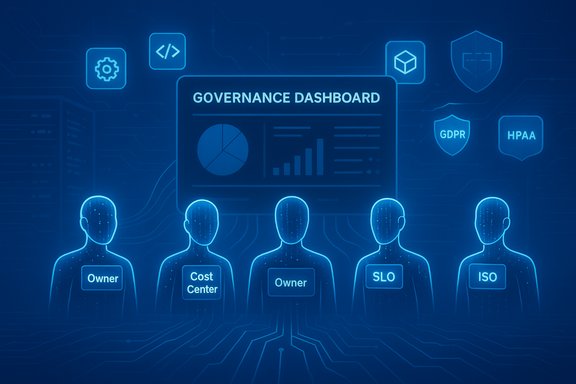
Neudesic describes a multi-layer platform built natively on Azure that adds enterprise-grade controls to the Foundry runtime. The key capabilities the vendor highlights include:- Agent lifecycle management: register, onboard, update, and decommission agents while attaching business metadata (owners, cost centers, SLOs).
- Identity-first governance: bind agents to directory identities (Entra-style agent objects), enabling conditional access, revocation, and auditability.
- Governed catalog of tools & skills: limit agents to vetted connectors and APIs to reduce risk from untrusted integrations.
- Built-in safety & compliance: compliance “packs” (GDPR, HIPAA, ISO cited as examples), automated remediation workflows, and risk filters to mitigate prompt injection and data leakage.
- Observability & telemetry: thread-level tracing and audit trails using OpenTelemetry-style primitives so operator teams can investigate agent actions end-to-end.
- Dynamic workflow automation: orchestrate multi‑agent workflows and handoffs to human reviewers with visibility into state, retries, and durable context.
How this maps to Azure AI Foundry (technical verification)
Neudesic’s platform is explicitly built to sit on top of Azure AI Foundry’s runtime and management primitives. Multiple documentation sources confirm the core Foundry capabilities Neudesic claims to leverage:- Azure AI Foundry provides a managed Agent Service and a project-based endpoint model for running and managing agents, including APIs and SDKs for provisioning and running agents in production. The Quickstart documentation documents project endpoints, Entra-based authentication, and sample SDK usage.
- Microsoft has introduced the concept of Entra Agent ID—a directory identity for agents that brings non-human identities under the same lifecycle and conditional access controls as human users. This is central to identity-first governance for agents.
- Foundry supports OpenTelemetry-style tracing, multi-agent orchestration, and preview features for protocol-driven interoperability such as the Model Context Protocol (MCP) and Agent-to-Agent (A2A) communication—capabilities that enable discovery, tool invocation, and cross-agent collaboration.
Strengths and real advantages
- Azure-native design reduces integration friction. By building directly on Azure AI Foundry, Neudesic can reuse Microsoft’s identity, networking, and observability features—shortening time to production for Azure-first customers. This matters in enterprises that already use Microsoft 365, Azure identity (Entra), and Logic Apps.
- Operational discipline for a new class of automation. Enterprises repeatedly report failure modes when moving from pilots to production: unmanaged agent sprawl, weak audit trails, and brittle handoffs. Neudesic’s focus on lifecycle, version control, telemetry and cataloged roles addresses these gaps directly.
- Prepackaged compliance accelerators. Packaging GDPR, HIPAA and ISO mappings can accelerate procurement and compliance reviews—especially for regulated industries. That is a pragmatic deliverable for legal and audit teams that otherwise must invent governance controls from scratch. However, buyers must validate how these packs map to contractual obligations and evidence artifacts in practice.
- Partner pedigree and scale. As an IBM-owned consultancy with deep Microsoft partnership history, Neudesic brings systems-integration experience and enterprise services capability—useful when agent workflows need integrations with ERP, HR systems, or core-line-of-business apps. IBM’s acquisition of Neudesic in 2022 reinforces scale and credibility claims.
Practical enterprise outcomes promised
Neudesic and its marketing materials position these outcomes for early adopters:- Reduced manual effort through automation of repetitive and complex tasks.
- Faster time-to-value by promoting prebuilt templates from idea to production.
- Better decision support via agents that combine retrieval-augmented generation (RAG), dynamic reasoning and analytics.
- Scalable operations with centralized provisioning, cost attribution, and version control.
Critical risks and open questions (what buyers must validate)
Neudesic’s platform addresses real operational needs, yet several high-impact questions remain that procurement and technical teams must close before signing contracts.- Automated remediation behavior. The press materials reference “automated remediation.” Buyers must confirm what remediation means in practice: Are remedial actions automatic (e.g., rapid revocation of tool access) or human-mediated? What are safe rollback mechanisms if remediation triggers cascade failures? Request an example incident playbook.
- Granularity of data and tool access controls. Agent-driven actions can traverse sensitive systems. Review how the platform enforces least-privilege for tool bindings and whether secrets access is brokered via ephemeral credentials or long-lived keys. Ask where stateful agent data (conversation threads, tool outputs) is stored and who controls retention/export.
- Escalation, human-in-the-loop (HITL) patterns and SLOs. Autonomy levels should be tunable and auditable. Confirm default escalation paths, human approval gates, and agreed SLOs for agent reliability and error recovery. Ensure traceable decision trails exist for regulatory audits.
- Cost predictability at scale. Large agent fleets multiply inference calls, tool executions, and telemetry—potentially creating unpredictable cloud bills. Require example TCO models, typical cost drivers, and tooling that attributes spend to agents and teams.
- Vendor lock‑in and portability. Neudesic’s solution is Azure‑native and optimized for Azure AI Foundry. That helps Azure-first organizations, but it makes multi-cloud portability harder. If a future strategy requires multi-cloud or on-prem options, demand a migration strategy or API contracts that minimize rewrite risk.
- Regulatory maintenance and evidence. Prebuilt compliance packs help, but confirm an update cadence and evidence artifacts. Regulatory mappings change; the vendor must provide auditable proof that the controls mapped to regulations are implemented and maintained.
A procurement checklist for enterprise buyers
Enterprises should insist on the following artifacts and demonstrations before committing to Neudesic’s platform:- A live demo showing thread-level observability and an audit trail for a multi-step agent action (including tool calls and downstream system changes).
- Documentation of compliance packs with mappings to GDPR, HIPAA, ISO controls and the vendor’s update cadence.
- Clear data residency and storage diagrams: what’s customer-owned vs vendor-managed, how long thread state is retained, and export mechanisms.
- An incident playbook showing automated remediation actions versus human review and how to roll back.
- Example TCO models including compute, model inference, storage for threads, telemetry ingestion, and connector licensing.
- SLA commitments for uptime, security patching, and incident response times.
- A pilot plan with KPIs, success thresholds, and a rollback strategy.
- Evidence of security testing (adversarial prompt-injection tests, privacy leakage tests) and third-party security assessments.
Recommended rollout path (practical steps)
- Discovery and prioritization: classify candidate processes by volume, sensitivity, and automation suitability.
- Proof-of-value pilot: instrument 1–3 agents with tight human oversight and measurable KPIs (accuracy, time saved, error rates).
- Compliance and security review: validate data flows, logging, and remediation behavior against internal and regulatory controls.
- Promote to Catalog: when successful, publish agent blueprints with versioning, owners, and cost centers.
- Continuous improvement: use telemetry and adversarial evaluators to iterate on models, tool bindings, and policies.
How Neudesic compares to other vendor patterns
- Azure-first, partner-led approach. Neudesic’s strategy favors customers who are heavily invested in Microsoft’s cloud and productivity stack. That delivers integration ease with Entra, Logic Apps, Microsoft 365, and Fabric. For these customers, the Azure-native approach is a major advantage.
- Platform vs. tooling. Unlike point solutions that offer a single type of agent or connector, Neudesic markets a control plane: cataloging, lifecycle, compliance packs, and telemetry. This is similar to other systems integrators and orchestration vendors that offer a “management plane” rather than model hosting. Buyers should compare the breadth of connectors and the depth of governance controls across vendors.
- Managed services pedigree. Neudesic’s IBM ownership and consulting footprint mean they can support complex integrations (ERP, CRM, legacy systems) and provide managed operations—an advantage for conservative, regulated enterprises.
What’s verifiable right now (and what remains vendor‑reported)
Verified facts:- Neudesic publicly announced Digital Workforce Management on October 29, 2025; the press release is widely syndicated.
- Neudesic is an IBM company (acquired in 2022), and the IBM/Neudesic acquisition is documented.
- Azure AI Foundry supports agent runtimes, Entra-based authentication patterns, thread-level observability, OpenTelemetry, and protocols such as MCP and A2A; Microsoft documentation confirms these platform capabilities.
- The exact behavior of automated remediation workflows (what is auto-resolved vs. human-mediated) is a vendor behavior that must be demonstrated.
- The real cost impact at scale (TCO) depends on each customer’s agent volume, model usage patterns and connector mix—these are operational metrics vendors cannot precompute for every customer.
- Effectiveness of compliance packs in satisfying regulatory audits will depend on documentation, evidence artifacts, and third-party attestation—buyers should require proof during procurement.
The governance imperative: people, process, and technology
A platform alone cannot create trustworthy, auditable agent fleets. Neudesic’s tooling must be paired with organizational processes:- Establish a cross-functional Agent Governance Board (Legal, Security, Compliance, Business Owners, IT) to classify risk levels and sign off on high-autonomy agents.
- Define autonomy tiers and mandatory test suites (prompt-injection, hallucination rate checks, connector stress tests) for each tier before promotion to production.
- Require continuous evaluation: ongoing telemetry reviews, fairness/bias checks, and periodic red-team testing to detect emergent risks.
Final assessment
Neudesic’s Digital Workforce Management is a pragmatic and necessary evolution for enterprises that want to move from scattered agent pilots to governed, production-grade agent fleets on Microsoft’s platform. The offering is coherent with Azure AI Foundry’s technical capabilities—identity, telemetry, agent runtime and protocol-level interoperability—and addresses many operational pain points: lifecycle, compliance packaging, cataloging, and observability. For Azure-heavy organizations and regulated industries, the solution offers a clear path to operationalize agents with the enterprise-level controls they require. However, the value of the platform depends on execution and governance. Buyers must validate automated remediation semantics, data residency practices, cost models, and the practical coverage of compliance packs. The right combination for safe, high-value adoption is a conservative, phased rollout backed by clear procurement artifacts and stakeholder alignment.Neudesic’s announcement is an important signal: vendor and partner ecosystems are rapidly delivering the operational glue enterprises need to scale agentic AI. The work that remains is less about technology and more about disciplined governance, measurable pilots, and accountable operational practices—conditions that will determine whether digital workforces become a reliable productivity multiplier or a new source of operational risk.
Going forward (what enterprise IT teams should do in the next 90 days)
- Assemble a short list of candidate processes to automate and sketch the agent roles you would need.
- Request a technical briefing and a sandbox demo from Neudesic that includes a live audit trail and an example remediation event.
- Demand TCO and data-residency models for your expected agent volumes.
- Establish a governance board and define autonomy tiers and acceptance criteria.
- Run a tightly scoped pilot (30–90 days) with explicit KPIs and rollback criteria.
Conclusion
Neudesic’s Digital Workforce Management adds a necessary operational control plane on top of Azure AI Foundry for enterprises serious about agentic AI. It aligns with Microsoft’s identity-first, observability-centered roadmap and provides useful enterprise accelerators—but the platform’s promise will only be realized when organizations pair it with rigorous governance, clear operational contracts, and realistic TCO planning.
Source: The Columbus Dispatch Neudesic Unveils Digital Workforce Management for Enterprise-Scale AI Agents on Microsoft Azure AI Foundry
