

OpenAI’s latest public maneuvering suggests the company is no longer treating Microsoft as a singular strategic home, and that shift could mark one of the most consequential AI relationship changes since ChatGPT reshaped the market. The underlying message is blunt: OpenAI wants broader enterprise reach, more infrastructure freedom, and fewer gatekeepers between its products and customers. That ambition puts Amazon squarely in the frame as a new partner of record, while Microsoft is increasingly cast as both enabler and constraint. The result is a more multipolar AI market, where cloud, model access, and enterprise distribution are all up for renegotiation.
OpenAI’s relationship with Microsoft has always been both symbiotic and uneasy. Microsoft provided capital, cloud infrastructure, and global distribution at exactly the moment OpenAI needed scale, while OpenAI provided the breakthrough models that gave Microsoft a credible AI story across Azure, Microsoft 365, and Windows. But the same arrangement that made Microsoft indispensable also gave it enormous leverage, and in AI, leverage quickly turns into friction.
That tension is no longer theoretical. OpenAI and Microsoft issued a joint statement in late February 2026 saying the partnership remained intact, that revenue-sharing terms were unchanged, and that Microsoft retained its exclusive cloud provider position for stateless APIs. The same statement also made clear that OpenAI could still commit additional compute elsewhere, including through major infrastructure initiatives. In other words, the relationship was still strong, but no longer exclusive in the way early headlines implied.
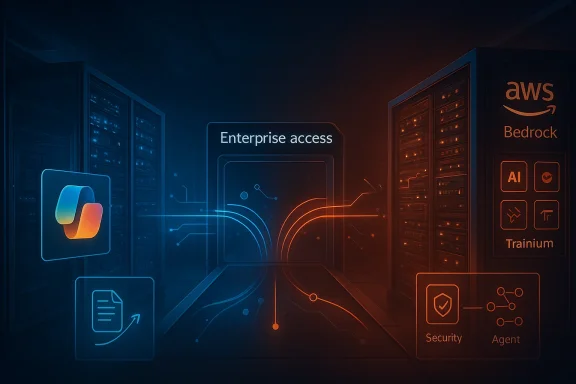
Then came Amazon. OpenAI’s February 27, 2026 partnership announcement with AWS described a multi-year deal to accelerate enterprise AI adoption, including a joint Stateful Runtime Environment for Amazon Bedrock, deeper AWS-native deployment, and access to significant Trainium capacity. OpenAI also said AWS would be the exclusive third-party cloud distribution provider for OpenAI Frontier, its enterprise agent platform. That alone would have been enough to signal a strategic reset.
The newly surfaced internal memo reportedly goes a step further by framing Microsoft itself as an obstacle to enterprise growth. According to the reporting surfaced in the uploaded material, OpenAI’s revenue leadership believes Microsoft has “limited our ability” to reach certain business customers directly. Whether that reflects contractual reality, sales-channel conflict, or simple frustrationthe same: OpenAI now sees its biggest investor as a bottleneck as much as a backer.
The partnership worked because each side brought something the other needed. OpenAI needed compute, capital, and a massive enterprise distribution engine. Microsoft needed a model leader to anchor Azure AI, Copilot, and the broader Microsoft 365 ecosystem. That mutual dependency created a powerful flywheel, but it also meant both companies were constantly trying to protect their own leverage.
At the same time, Microsoft’s own marketing success became a source of tension. The company embedded OpenAI-powered features across Azure and Microsoft 365 while also selling Copilot as its own productivity layer. That created a powerful but complicated narrative, where Microsoft could claim AI leadership without fully owning the underlying model stack. In enterprise software, that is usually enough; in frontier AI, it is only enough for a while.
The longer OpenAI grew, the more it had reason to ask whether Microsoft was still the best channel for every customer segment. Enterprise buyers often want direct vendor relationships, not only because they can negotiate better terms, but because they want product roadmaps, support channels, and security conversations that are not filtered through another platform owner. That is where the first cracks in the alliance became visible.
Microsoft’s public posture has remained steady. It continues to emphasize the strategic importance of OpenAI, and its investor materials still frame the relationship as central to its AI future. But the market has clearly moved on from the idea that one partnership can define the entire AI economy. The number of moving parts is now too large, and the incentive to diversify is too strong.
OpenAI has spent the last year building its enterprise motion more deliberately. Its April 2026 public messaging said enterprise now makes up more than 40% of revenue and is on track to reach parity with consumer revenue by the end of 2026. It also highlighted a growing partner ecosystem that includes AWS, Databricks, Snowflake, and several consulting firms. That tells you where the company thinks the next phase of growth lives: in business workflows, not just in chat prompts.
That shift matters because enterprise AI is not bought the same way consumer AI is used. Consumer tools can spread through familiarity and novelty. Enterprise tools must pass procurement, compliance, governance, and integration tests before they become sticky. The companies that control those gates can shape the economics of the entire market.
That is the likely subtext of the memo’s complaint. Even if Microsoft’s channel was helpful in the early phases, it may now be limiting OpenAI’s ability to form direct, high-value relationships with large buyers. For a business chasing long-term enterprise revenue, that is not a minor annoyance. It is a strategic ceiling.
The more OpenAI leans on direct enterprise deals, the more it needs distribution that is not beholden to a single cloud partner. That is why AWS suddenly matters so much. It is not just another cloud. It is a second enterprise sales surface, one that reaches a different buyer set and weakens the old dependency on Azure.
That is why this story is bigger than one memo. It is about who gets to own the AI customer over the next decade. OpenAI clearly wants that answer to be “OpenAI, across multiple clouds.” Microsoft would much rather preserve a world in which Azure and Copilot are the natural defaults.
OpenAI’s February announcement made the Amazon relationship sound unusually broad. It described AWS as the exclusive third-party cloud distribution provider for Frontier, said the two companies would jointly develop a Stateful Runtime Environment, and noted that OpenAI would consume significant Trainium capacity through AWS. It also said Amazon would invest $50 billion in OpenAI as part of a broader $110 billion funding round led by Amazon, Nvidia, and SoftBank.
That is not just a cloud deal. It is a signal that AWS is willing to move higher up the AI stack. For years, Amazon was seen as a reliable infrastructure provider with strong enterprise relationships but less cultural mindshare in generative AI than Microsoft or Google. Now it is helping shape how frontier AI gets distributed to enterprise customers.
There is also a compute economics angle. AWS has increasingly emphasized proprietary silicon, including Trainium, and its public messaging has tied AI growth to custom infrastructure and managed services. From OpenAI’s perspective, a diversified compute strategy reduces dependence on any one cloud and improves bargaining leverage. From Amazon’s perspective, hosting OpenAI workloads helps prove that AWS is still the first-class destination for frontier AI.
The partnership also creates a competitive counterweight to Microsoft’s Azure/OpenAI narrative. Instead of Azure being the obvious infrastructure home for OpenAI, the market now has to consider AWS as a serious alternative for enterprise AI deployment and distribution. That is a major psychological shift.
The deal also gives Amazon a chance to show that AI workloads can be cloud-agnostic. That is a compelling sales pitch against Azure, especially for customers who want flexibility and dislike lock-in. In other words, AWS does not need to beat Microsoft everywhere. It just needs to make sure the market no longer assumes Microsoft is the default.
What changes is the narrative. Microsoft no longer gets to present itself as the sole steward of OpenAI’s enterprise future. The company still has its own direct enterprise channels, but OpenAI is increasingly acting like a platform vendor in its own right. That creates overlap, and overlap creates conflict.
Microsoft’s investor commentary has repeatedly emphasized the breadth of its AI opportunity, including its cloud, security, productivity, and developer stack. It has also said its partnership with OpenAI remains central and that its cloud business continues to benefit from AI demand. That is all true. But it does not resolve the distribution question behind the memo.
Still, the company is operating in a more crowded field than many investors assumed during the first wave of ChatGPT enthusiasm. AWS is more aggressive than before. Google Cloud is still relevant. Anthropic has become a formidable enterprise-oriented rival in the model layer. And OpenAI itself is now acting like a more independent platform. That narrows the room for Microsoft to claim easy victory.
The challenge is not weakness. It is compression. Microsoft still has one of the best AI platforms in the market, but every layer of that platform now has more rivals than it did a year ago. That is enough to make investors and customers rethink assumptions.
The reported internal tension around OpenAI only adds to that pressure. Microsoft wants to be seen as the platform where business users live, but OpenAI wants to own more of the enterprise relationship directly. Those goals can coexist for a time. Eventually, they begin colliding at the customer level.
That distinction matters. A cloud company can host workloads without shaping the product experience. But if it also becomes the preferred distribution partner for the model provider, it gains influence far beyond raw compute sales. AWS and Azure both understand that, which is why the Amazon-OpenAI deal sends such a loud signal.
The impact is likely to be strongest in enterprise buying. Businesses do not just buy compute; they buy confidence. They want a platform that can support security controls, governance, regional deployment, agent workflows, and vendor accountability. The partner that can bundle those qualities around frontier models will have a serious advantage.
The market is moving toward a world where multiple clouds can support frontier AI, and that weakens the old assumption that one model company will define one cloud partner. Instead, model providers are becoming more strategic, cloud vendors are becoming more model-aware, and enterprise customers are getting more leverage in between. That is a healthier market, but it is also a more contentious one.
The revised reality is straightforward:
That is why the memo matters so much. It suggests the disagreement is not just about cloud architecture. It is about customer access, sales ownership, and who gets credit for enterprise growth. Those are exactly the kinds of issues that turn partnerships into bargaining battles.
There are also important product signals ahead. If OpenAI’s enterprise tools increasingly launch in AWS-native workflows, that will confirm the company wants direct access to business users. If Microsoft responds by deepening Copilot integration and pushing harder on AI governance, it will be a sign that the company still believes it can own the enterprise interface even if it no longer owns the entire distribution story.
In the end, this is not just a dispute about cloud contracts or enterprise outreach. It is a preview of how the AI economy will mature: through partnerships that start with shared ambition, then evolve into competitive coexistence as the stakes get larger. OpenAI’s pivot toward Amazon may not sever its Microsoft ties, but it does mark the moment when the old arrangement stopped looking like a permanent foundation and started looking like just one layer in a much more contested AI stack.
Source: The Tech Buzz https://www.techbuzz.ai/articles/openai-pivots-to-amazon-blames-microsoft-for-client-limits/
 Overview
OpenAI’s relationship with Microsoft has always been both symbiotic and uneasy. Microsoft provided capital, cloud infrastructure, and global distribution at exactly the moment OpenAI needed scale, while OpenAI provided the breakthrough models that gave Microsoft a credible AI story across Azure, Microsoft 365, and Windows. But the same arrangement that made Microsoft indispensable also gave it enormous leverage, and in AI, leverage quickly turns into friction.That tension is no longer theoretical. OpenAI and Microsoft issued a joint statement in late February 2026 saying the partnership remained intact, that revenue-sharing terms were unchanged, and that Microsoft retained its exclusive cloud provider position for stateless APIs. The same statement also made clear that OpenAI could still commit additional compute elsewhere, including through major infrastructure initiatives. In other words, the relationship was still strong, but no longer exclusive in the way early headlines implied.
Then came Amazon. OpenAI’s February 27, 2026 partnership announcement with AWS described a multi-year deal to accelerate enterprise AI adoption, including a joint Stateful Runtime Environment for Amazon Bedrock, deeper AWS-native deployment, and access to significant Trainium capacity. OpenAI also said AWS would be the exclusive third-party cloud distribution provider for OpenAI Frontier, its enterprise agent platform. That alone would have been enough to signal a strategic reset.
The newly surfaced internal memo reportedly goes a step further by framing Microsoft itself as an obstacle to enterprise growth. According to the reporting surfaced in the uploaded material, OpenAI’s revenue leadership believes Microsoft has “limited our ability” to reach certain business customers directly. Whether that reflects contractual reality, sales-channel conflict, or simple frustrationthe same: OpenAI now sees its biggest investor as a bottleneck as much as a backer.
The Partnership That Built the Boom
Microsoft’s bet on OpenAI was one of the defining strategic moves of the generative AI era. It gave the software giant a credible frontier-model story before most rivals had even settled on a go-to-market plan. It also allowed Microsoft to connect the excitement around ChatGPT to a product and cloud stack it already controlled, which is a rare advantage in a market that rewards speed but punishes hesitation.The partnership worked because each side brought something the other needed. OpenAI needed compute, capital, and a massive enterprise distribution engine. Microsoft needed a model leader to anchor Azure AI, Copilot, and the broader Microsoft 365 ecosystem. That mutual dependency created a powerful flywheel, but it also meant both companies were constantly trying to protect their own leverage.
Why the relationship mattered so much
The OpenAI-Microsoft deal was never just about hosting models. It was about owning the path from breakthrough research to enterprise adoption, and that path passes through cloud infrastructure, identity controls, procurement, compliance, and sales coverage. Microsoft’s strength lay in all of those layers, which is why the partnership became so valuable so quickly.At the same time, Microsoft’s own marketing success became a source of tension. The company embedded OpenAI-powered features across Azure and Microsoft 365 while also selling Copilot as its own productivity layer. That created a powerful but complicated narrative, where Microsoft could claim AI leadership without fully owning the underlying model stack. In enterprise software, that is usually enough; in frontier AI, it is only enough for a while.
The longer OpenAI grew, the more it had reason to ask whether Microsoft was still the best channel for every customer segment. Enterprise buyers often want direct vendor relationships, not only because they can negotiate better terms, but because they want product roadmaps, support channels, and security conversations that are not filtered through another platform owner. That is where the first cracks in the alliance became visible.
- Microsoft gave OpenAI scale.
- OpenAI gave Microsoft credibility.
- Enterprise customers gave both companies revenue.
- Control over that customer relationship became the real prize.
- Once that prize was contested, friction was inevitable.
The original bargain was powerful, but not permanent
AI partnerships age differently from classic software partnerships. They are not simply about software licensing or reseller rights. They are about compute access, model choice, infrastructure exclusivity, and who gets to define the customer experience. That makes them far more dynamic, and far more conflict-prone, than traditional enterprise alliances.Microsoft’s public posture has remained steady. It continues to emphasize the strategic importance of OpenAI, and its investor materials still frame the relationship as central to its AI future. But the market has clearly moved on from the idea that one partnership can define the entire AI economy. The number of moving parts is now too large, and the incentive to diversify is too strong.
Why Enterprise Matters More Than Consumer Hype
The internal memo’s focus on enterprise access is the key to understanding the strategic shift. Consumer subscriptions may have built the brand, but enterprise software is where durable AI revenue scales. That means distribution matters more than viral attention, and channel control matters more than product buzz.OpenAI has spent the last year building its enterprise motion more deliberately. Its April 2026 public messaging said enterprise now makes up more than 40% of revenue and is on track to reach parity with consumer revenue by the end of 2026. It also highlighted a growing partner ecosystem that includes AWS, Databricks, Snowflake, and several consulting firms. That tells you where the company thinks the next phase of growth lives: in business workflows, not just in chat prompts.
That shift matters because enterprise AI is not bought the same way consumer AI is used. Consumer tools can spread through familiarity and novelty. Enterprise tools must pass procurement, compliance, governance, and integration tests before they become sticky. The companies that control those gates can shape the economics of the entire market.
Enterprise sales are a different game
In the enterprise world, the sales cycle is slower but the contracts are larger, the renewals matter more, and the switching costs are higher. OpenAI understands this, which is why it has been building direct sales capability alongside partner-led distribution. But if Microsoft controls too much of the customer relationship, OpenAI has less room to own the economics of its own enterprise growth.That is the likely subtext of the memo’s complaint. Even if Microsoft’s channel was helpful in the early phases, it may now be limiting OpenAI’s ability to form direct, high-value relationships with large buyers. For a business chasing long-term enterprise revenue, that is not a minor annoyance. It is a strategic ceiling.
The more OpenAI leans on direct enterprise deals, the more it needs distribution that is not beholden to a single cloud partner. That is why AWS suddenly matters so much. It is not just another cloud. It is a second enterprise sales surface, one that reaches a different buyer set and weakens the old dependency on Azure.
- Enterprise buyers want direct accountability.
- They prefer clear governance.
- They value integration flexibility.
- They dislike hidden channel conflict.
- They reward platforms that can meet them where they already operate.
The revenue mix changes the power balance
Once enterprise revenue becomes the majority of the business, the relationship between model provider and infrastructure partner changes. The model provider can no longer afford to let one cloud partner mediate too much of the customer journey. The cloud partner, meanwhile, wants to keep the customer inside its ecosystem for as many adjacent products as possible.That is why this story is bigger than one memo. It is about who gets to own the AI customer over the next decade. OpenAI clearly wants that answer to be “OpenAI, across multiple clouds.” Microsoft would much rather preserve a world in which Azure and Copilot are the natural defaults.
Amazon’s Strategic Opening
Amazon’s role in this story is not accidental. AWS has been aggressively repositioning itself as a serious AI platform, not just a dependable cloud utility. OpenAI’s decision to build more visibly with AWS gives Amazon a chance to turn its infrastructure strength into model-layer relevance, which is exactly the kind of repositioning large cloud vendors crave.OpenAI’s February announcement made the Amazon relationship sound unusually broad. It described AWS as the exclusive third-party cloud distribution provider for Frontier, said the two companies would jointly develop a Stateful Runtime Environment, and noted that OpenAI would consume significant Trainium capacity through AWS. It also said Amazon would invest $50 billion in OpenAI as part of a broader $110 billion funding round led by Amazon, Nvidia, and SoftBank.
That is not just a cloud deal. It is a signal that AWS is willing to move higher up the AI stack. For years, Amazon was seen as a reliable infrastructure provider with strong enterprise relationships but less cultural mindshare in generative AI than Microsoft or Google. Now it is helping shape how frontier AI gets distributed to enterprise customers.
Why AWS is attractive to OpenAI
AWS brings scale, global reach, and deep enterprise trust. It also brings a customer base that already buys cloud services in a modular, multi-vendor way. That matters because OpenAI’s enterprise ambitions depend on making its products easy to adopt wherever business users already live.There is also a compute economics angle. AWS has increasingly emphasized proprietary silicon, including Trainium, and its public messaging has tied AI growth to custom infrastructure and managed services. From OpenAI’s perspective, a diversified compute strategy reduces dependence on any one cloud and improves bargaining leverage. From Amazon’s perspective, hosting OpenAI workloads helps prove that AWS is still the first-class destination for frontier AI.
The partnership also creates a competitive counterweight to Microsoft’s Azure/OpenAI narrative. Instead of Azure being the obvious infrastructure home for OpenAI, the market now has to consider AWS as a serious alternative for enterprise AI deployment and distribution. That is a major psychological shift.
What Amazon gains from the deal
Amazon is not just renting compute here. It is buying relevance in the AI conversation. That matters because cloud markets are increasingly defined by ecosystem gravity, not just raw infrastructure. If the most important model companies are willing to build on AWS, enterprise buyers will assume AWS is part of the AI mainstream.The deal also gives Amazon a chance to show that AI workloads can be cloud-agnostic. That is a compelling sales pitch against Azure, especially for customers who want flexibility and dislike lock-in. In other words, AWS does not need to beat Microsoft everywhere. It just needs to make sure the market no longer assumes Microsoft is the default.
Microsoft’s Enterprise Advantage Is Real, But Not Absolute
Microsoft is still incredibly well positioned in enterprise AI. It has the most valuable business productivity suite on the planet, deep trust with IT departments, and a cloud platform that already underpins a massive share of corporate workloads. Those advantages do not disappear because OpenAI added another partner.What changes is the narrative. Microsoft no longer gets to present itself as the sole steward of OpenAI’s enterprise future. The company still has its own direct enterprise channels, but OpenAI is increasingly acting like a platform vendor in its own right. That creates overlap, and overlap creates conflict.
Microsoft’s investor commentary has repeatedly emphasized the breadth of its AI opportunity, including its cloud, security, productivity, and developer stack. It has also said its partnership with OpenAI remains central and that its cloud business continues to benefit from AI demand. That is all true. But it does not resolve the distribution question behind the memo.
Azure is still a huge AI engine
Azure remains one of the most powerful enterprise clouds in the world, and Microsoft’s FY26 Q2 results showed strong overall momentum, with cloud revenue crossing $50 billion for the quarter. That is a reminder that Microsoft’s AI story is not hanging on a single deal or one vendor relationship. It is supported by a broad commercial machine.Still, the company is operating in a more crowded field than many investors assumed during the first wave of ChatGPT enthusiasm. AWS is more aggressive than before. Google Cloud is still relevant. Anthropic has become a formidable enterprise-oriented rival in the model layer. And OpenAI itself is now acting like a more independent platform. That narrows the room for Microsoft to claim easy victory.
The challenge is not weakness. It is compression. Microsoft still has one of the best AI platforms in the market, but every layer of that platform now has more rivals than it did a year ago. That is enough to make investors and customers rethink assumptions.
- Microsoft has enterprise trust.
- Microsoft has distribution power.
- Microsoft has integration depth.
- Microsoft no longer has uncontested narrative control.
- Microsoft must now compete on execution, not just access.
Copilot is where the pressure shows up
Copilot is the most visible expression of Microsoft’s AI strategy, and that makes it both powerful and vulnerable. If users love it, Microsoft can turn AI into recurring software revenue. If they find it fragmented, expensive, or inconsistent across products, the brand starts to work against itself.The reported internal tension around OpenAI only adds to that pressure. Microsoft wants to be seen as the platform where business users live, but OpenAI wants to own more of the enterprise relationship directly. Those goals can coexist for a time. Eventually, they begin colliding at the customer level.
The Cloud War Just Got More Personal
This story is bigger than OpenAI and Microsoft because it changes the competitive logic of the cloud market itself. For years, the big debate was which hyperscaler could capture the most AI infrastructure spending. Now the debate includes who controls the most important AI customer relationships, and who gets to distribute the models that enterprises actually use.That distinction matters. A cloud company can host workloads without shaping the product experience. But if it also becomes the preferred distribution partner for the model provider, it gains influence far beyond raw compute sales. AWS and Azure both understand that, which is why the Amazon-OpenAI deal sends such a loud signal.
The impact is likely to be strongest in enterprise buying. Businesses do not just buy compute; they buy confidence. They want a platform that can support security controls, governance, regional deployment, agent workflows, and vendor accountability. The partner that can bundle those qualities around frontier models will have a serious advantage.
The new battle lines
Microsoft’s advantage has always been the combination of Azure plus Microsoft 365 plus OpenAI-powered features. Amazon’s answer is AWS plus Bedrock plus custom infrastructure plus direct OpenAI collaboration. That is a much more even matchup than the early ChatGPT era suggested.The market is moving toward a world where multiple clouds can support frontier AI, and that weakens the old assumption that one model company will define one cloud partner. Instead, model providers are becoming more strategic, cloud vendors are becoming more model-aware, and enterprise customers are getting more leverage in between. That is a healthier market, but it is also a more contentious one.
The revised reality is straightforward:
- OpenAI wants optionality.
- Microsoft wants stickiness.
- Amazon wants credibility.
- Enterprise customers want choice.
- The cloud market wants more AI workload share.
Why legal tension is likely to persist
The joint Microsoft statement stressed that the companies’ existing arrangements already contemplated partnerships with other cloud providers, and that the revenue share would remain unchanged. But public statements are often designed to reduce panic, not eliminate ambiguity. The more money and strategic importance on the table, the more likely each side is to interpret the same language differently.That is why the memo matters so much. It suggests the disagreement is not just about cloud architecture. It is about customer access, sales ownership, and who gets credit for enterprise growth. Those are exactly the kinds of issues that turn partnerships into bargaining battles.
Strengths and Opportunities
The strategic upside here is substantial for all parties, even if the relationship drama looks messy on the surface. OpenAI gets more room to grow enterprise revenue, Amazon gets a marquee AI workload and deeper model credibility, and Microsoft keeps a major foothold in the enterprise AI stack while forcing itself to compete more directly on product quality. In a market this early, optionality is often worth more than neatness.- OpenAI can broaden its enterprise reach beyond a single partner channel.
- AWS gains a stronger claim as a frontier AI infrastructure platform.
- Microsoft can sharpen Copilot and Azure by facing more direct competition.
- Enterprise buyers gain more choice across clouds and model providers.
- The AI ecosystem becomes less dependent on one corporate relationship.
- Multi-cloud deployment can improve resilience and procurement flexibility.
- New partner models may accelerate agentic AI adoption in businesses.
Risks and Concerns
The downside is that strategic diversification can easily turn into operational confusion. Customers may face inconsistent product experiences, overlapping sales motions, and unclear responsibility when something goes wrong. The more these companies compete and cooperate at the same time, the more likely it is that legal, commercial, and technical tensions will spill into the open.- Contract ambiguity could trigger prolonged disputes.
- Channel conflict may slow enterprise sales cycles.
- Microsoft and OpenAI could confuse buyers with overlapping offerings.
- AWS may face heavy capital intensity before payoff arrives.
- OpenAI could dilute the simplicity of its enterprise pitch.
- Microsoft risks losing some of the aura around its OpenAI alliance.
- Public infighting could spook enterprise customers seeking stability.
What to Watch Next
The next phase of this story will be defined less by rhetoric and more by execution. Watch for how OpenAI structures enterprise sales around AWS versus Microsoft, whether Microsoft adjusts its own go-to-market language, and how quickly AWS can turn the partnership into visible customer wins. The real test is whether this becomes a durable multi-cloud architecture or a temporary bargaining phase that eventually hardens into another exclusive arrangement.There are also important product signals ahead. If OpenAI’s enterprise tools increasingly launch in AWS-native workflows, that will confirm the company wants direct access to business users. If Microsoft responds by deepening Copilot integration and pushing harder on AI governance, it will be a sign that the company still believes it can own the enterprise interface even if it no longer owns the entire distribution story.
- Monitor OpenAI’s direct enterprise sales expansion.
- Track AWS customer adoption tied to OpenAI Frontier.
- Watch for Microsoft messaging on Copilot and Azure AI.
- Pay attention to any legal or contractual escalations.
- Look for further signs of multi-cloud model deployment.
In the end, this is not just a dispute about cloud contracts or enterprise outreach. It is a preview of how the AI economy will mature: through partnerships that start with shared ambition, then evolve into competitive coexistence as the stakes get larger. OpenAI’s pivot toward Amazon may not sever its Microsoft ties, but it does mark the moment when the old arrangement stopped looking like a permanent foundation and started looking like just one layer in a much more contested AI stack.
Source: The Tech Buzz https://www.techbuzz.ai/articles/openai-pivots-to-amazon-blames-microsoft-for-client-limits/
