

In Pakistan’s shifting digital landscape, the work that keeps banks, hospitals, software houses, and universities running rarely makes headlines — but it is exactly this steady, unspectacular engineering that decides whether a migration to Microsoft Azure, Microsoft 365, or hybrid cloud becomes a durable business advantage or a recurring operational headache. A recent profile in a national paper highlights one such engineer, Karachi‑based cloud and infrastructure specialist Kelash, and uses his career to illustrate an increasingly important truth: migration is only the start; long‑term reliability, security, cost discipline and people enablement are where value is earned.
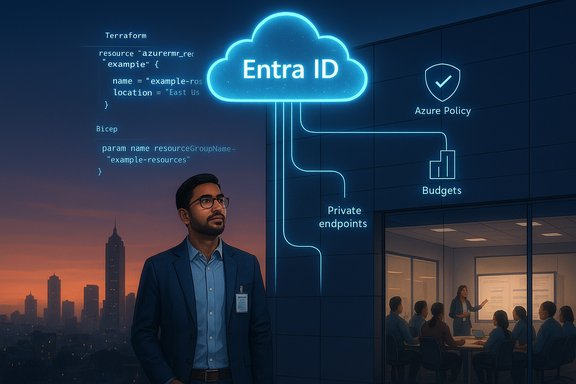
Cloud adoption across Pakistan and the broader region has accelerated. Public‑cloud platforms and Microsoft’s ecosystem in particular have become the default target for modernisation projects, and partners — local and international — are the practical bridge between platform capabilities and business outcomes. Microsoft’s partner model itself has evolved to emphasise verified, outcome‑driven skills through Solutions Partner designations rather than the older silver/gold competency system, reflecting how customers now buy partner capability as much as they buy platform technology. The profile of Kelash presents a typical modern infrastructure professional: a mix of cloud architecture, identity and access controls, secure network design, automation and a heavy emphasis on governance and training. Those capabilities align precisely with what organisations need after a migration: predictable operations, auditability for compliance, and cost control mechanisms that scale as usage grows. While individual case details in the profile are specific to his engagements, the technical building blocks he uses — Entra ID (formerly Azure AD), Private Endpoints/Private Link, Azure Policy and budgets, Terraform and Bicep, Microsoft Defender and Intune, and data governance services like Microsoft Purview — are mainstream, supported platform features.
The country’s partner ecosystem — now framed through the Solutions Partner model — incentivises measurable skilling and customer success, making it more practical for buyers to identify partners that can deliver secure, compliant operations rather than simple lift‑and‑shift migrations.
Those are not glamorous headlines, but they are the practices that stop migrations from becoming recurring operational liabilities. The platform pieces are there — Entra ID, Private Link/Private Endpoint, Azure Policy, Cost Management, Defender and Purview — and Microsoft’s partner model now rewards the organisations that can combine them into repeatable, auditable outcomes. What the profile captures well is the intersection of technical proficiency and disciplined operations: that combination is what turns complex cloud problems into practical, sustainable solutions. Note: the specific client stories and implementation details described in the profile are practitioner claims published in the profile itself and were not independently reproduced for this article; they are plausible given the platform capabilities but should be validated with architecture diagrams and audit artefacts during any procurement or technical review.
Source: The Nation (Pakistan) Kelash: The Pakistani Cloud Professional Turning Complex Problems into Practical Solutions
 Background / Overview
Cloud adoption across Pakistan and the broader region has accelerated. Public‑cloud platforms and Microsoft’s ecosystem in particular have become the default target for modernisation projects, and partners — local and international — are the practical bridge between platform capabilities and business outcomes. Microsoft’s partner model itself has evolved to emphasise verified, outcome‑driven skills through Solutions Partner designations rather than the older silver/gold competency system, reflecting how customers now buy partner capability as much as they buy platform technology. The profile of Kelash presents a typical modern infrastructure professional: a mix of cloud architecture, identity and access controls, secure network design, automation and a heavy emphasis on governance and training. Those capabilities align precisely with what organisations need after a migration: predictable operations, auditability for compliance, and cost control mechanisms that scale as usage grows. While individual case details in the profile are specific to his engagements, the technical building blocks he uses — Entra ID (formerly Azure AD), Private Endpoints/Private Link, Azure Policy and budgets, Terraform and Bicep, Microsoft Defender and Intune, and data governance services like Microsoft Purview — are mainstream, supported platform features. What the profile says — a tightly focused summary
- Kelash is a Senior IT Infrastructure Professional and Microsoft Certified Trainer (MCT) with more than eight years of hands‑on experience and a portfolio of Microsoft certifications. He currently operates inside a Microsoft‑centric organisation in Pakistan that holds a Microsoft Solutions Partner accreditation, servicing international customers with ERP and cloud expertise.
- His technical practice spans Azure, Microsoft 365 and Dynamics 365, with concrete work in hybrid identity (Microsoft Entra ID and Okta), network design (including a cross‑tenant model using OpenVPN with Azure Private Endpoints), automation and standardised deployments (Terraform, Bicep, PowerShell), security (Zero Trust, Defender, Intune, Conditional Access, Purview DLP), and cost governance (Azure Policy, budgets, automation).
- Two client vignettes are highlighted: a compliance‑sensitive SFTP transfer model that uses OpenVPN plus Azure Private Endpoints to avoid public exposure, and a mass‑scale Microsoft 365 data retrieval project across thousands of mailboxes and OneDrive accounts, preserving full audit trails.
- Beyond technical delivery, Kelash teaches engineers as an MCT and prioritises human‑centred outcomes: reducing the burden on teams so systems stay stable and manageable.
Why these skills matter now
Post‑migration complexity
Migrating workloads to cloud platforms is one milestone. The subsequent months and years expose a different set of challenges: configuration drift, sprawling identity surfaces, network exposure, runaway costs, incomplete logging for audits, and the people‑side friction when new operational models are required. Organisations that treat migration as an endpoint often see repeated incidents, security gaps, and surprise bills. The patterns highlighted in the profile — governance, automated guardrails, identity hardening, and training — are exactly the interventions that stop those negative cycles.Partner‑led delivery and verification
Microsoft’s Solutions Partner model now quantifies partner capability through performance, skilling and customer success metrics; the change reflects market demand for partners that can operationalise platform capabilities into repeatable outcomes. That partner context is relevant to the profile: when engineers operate inside accredited partners, customers benefit from pre‑built practices, compliance playbooks, and organisational governance.Technical deep dive: the practical building blocks
Identity and hybrid identity: Microsoft Entra ID and federation
Microsoft renamed Azure Active Directory to Microsoft Entra ID, and the identity portfolio is explicitly positioned as part of the Microsoft Entra family. The platform remains the central control plane for user authentication, Conditional Access, device registration and many compliance workflows. Changing the name did not change capabilities — it clarified that identity is a cross‑platform, multi‑cloud concern. Federation and B2B collaboration remain common patterns when organisations need to accept external identity providers. Integrating an external IdP (for example Okta) with Entra for workforce or guest users is a supported and well‑documented approach: you can federate SAML or configure direct federation for partner tenants so that authentication happens at the partner’s IdP while your tenant retains governance and auditing visibility. Okta specifically documents and supports integration scenarios and federation patterns with Microsoft environments. These federation paths are practical but operationally non‑trivial; they require planning for provisioning flows (SCIM), lifecycle management, and a clear security model for which tenant controls what.Network design and private connectivity: Private Endpoints and guarded cross‑tenant access
The profile’s SFTP example — moving files over a cross‑tenant private connectivity model that avoids public exposure by combining VPN and Azure Private Endpoints — is technically feasible and increasingly common in compliance‑driven sectors. Microsoft’s guidance explicitly warns about cross‑tenant Private Endpoint connectivity and offers configuration options to limit or prevent cross‑tenant connections where data leakage or compliance concerns exist. Designing such a pattern requires careful consideration of DNS, route tables, firewall/NVA design and tenant‑level trust. It’s practical, but not “out of the box”; cross‑tenant private networking introduces governance overhead and increased operational testing. Important operational considerations for patterns like this:- Private Endpoint traffic is private to Azure’s backbone once correctly configured, but you must handle DNS resolution and routing so that the client resolves the private IP, not a public endpoint.
- Cross‑tenant Private Endpoint connections should be scoped and audited; Microsoft documentation provides recommended controls to block or limit such connections for DLP reasons.
Infrastructure as Code: Terraform, Bicep, PowerShell
Standardising deployments with Terraform, Bicep, and PowerShell is best practice: Terraform gives cross‑cloud IaC flexibility and broad community modules, while Bicep is Azure‑native and maps directly to ARM capabilities. Both are supported in Microsoft’s developer tooling and Azure Developer CLI. Using IaC enables repeatable, auditable resource creation and integrates with pipelines for CI/CD‑driven governance. State management, remote backends, service principals and sensitive secret handling are the recurring operational tasks to get right.Governance: Azure Policy, Budgets and guardrails
The profile emphasises guardrails: Azure Policy to prevent non‑compliant resource creation and Azure Budgets / Cost Management to alert and automate responses to spending thresholds. These platform features are designed for exactly the scenario described — preventing resource sprawl, applying mandatory configuration (for example: enforce Private Endpoint for PaaS), and sending automated alerts or action group triggers when budget thresholds are crossed. Good practice ties policy enforcement to deployment pipelines so that non‑compliance is blocked early, not remediated after the fact.Security: Zero Trust, Microsoft Defender, Intune, Conditional Access, Purview DLP
The profile references a Zero Trust posture — enforce least privilege, verify every access, and assume breach. In Microsoft stacks, that translates to Entra ID Conditional Access, Defender for Endpoint / Defender for Cloud, Intune for device management, and Purview for data classification and DLP. Each of those product families integrates: enforcement signals from Intune feed Conditional Access, Defender telemetry feeds security operations, and Purview DLP informs policy decisions about data movement. These integrations exist and are mature, but delivering them reliably requires mapped use cases and response playbooks.Case work described in the profile — feasibility and caveats
The Nation profile gives two specific examples: an OpenVPN + Private Endpoint SFTP model, and a large‑scale Microsoft 365 mailbox and OneDrive retrieval with full audit traceability. Both are plausible and align with established platform patterns, but they also highlight practical caveats that merit flagging.- OpenVPN + Private Endpoints to secure SFTP flows: feasible, commonly implemented in regulated environments. The engineering steps include private DNS plumbing, VPN gateway or client VPN architecture, RBAC and identity mapping across tenants, and careful logging. Microsoft documentation explicitly warns about cross‑tenant Private Endpoint connections and recommends limiting them for DLP reasons; this implies the solution requires disciplined controls and explicit design decisions. The described pattern is realistic, but the precise operational design details — e.g., how keys are rotated, how guest identities are managed and logged, or what the failover path is — were not independently verifiable from public sources and depend on the implementer’s design choices.
- Large‑scale M365 data retrieval across thousands of mailboxes and OneDrive: technically possible using Microsoft Graph, eDiscovery and Compliance Center APIs, and well‑known export pipelines. Ensuring complete audit traceability requires strong governance: retention policies, audit logging enabled, secure export controls, and forensic‑grade chain‑of‑custody processes. The platform provides tools; implementing a defensible, legally sound retrieval at scale is non‑trivial and is an area where experienced engineers and lawyers usually collaborate. The profile’s claim is credible in scope; however, the specific implementation details (retention settings, legal holds, proof of custody sequences) were not publicly confirmed beyond the profile itself and should be validated per engagement.
People and training: the multiplier effect of MCT work
The profile emphasises that Kelash works as a Microsoft Certified Trainer (MCT) and invests in upskilling local engineers. That human element is a crucial multiplier: platform investments return value when internal teams can operate and evolve the systems. The MCT role is a recognized pathway to scale knowledge transfer — trainers certified by Microsoft are expected to combine technical mastery with pedagogical skills. Upskilling reduces ticket volumes, increases first‑time fixes and enables safer automation adoption. Training and playbook dissemination inside an organisation are, in practice, as important as the initial architecture.Critical analysis: strengths, practical limits and risks
Strengths highlighted by the profile
- Holistic skillset: combining identity, networking, automation and security is precisely what modern cloud operations require. This reduces handoffs and the class of brittle, cross‑domain failures.
- Governance‑first approach: using Azure Policy, budgets and automated guardrails reduces both financial risk and compliance drift before problems become crises.
- People focus: training and mentoring multiplies value and reduces reliance on single engineers for runbooks and incident response.
Practical limits and risks to be aware of
- Cross‑tenant networking complexity: while private endpoints and cross‑tenant patterns can eliminate public exposure, they increase the surface area for misconfiguration. DNS, role mapping and tenant‑level policy need rigorous controls and continuous monitoring. Microsoft’s guidance explicitly recommends limiting cross‑tenant Private Endpoint usage unless required and protected by compensating controls.
- False sense of automation = security: automation can enforce policy, but policy definitions must be correct. Overly permissive or poorly scoped policies will either block necessary work or, worse, leave gaps. Continuous policy validation and policy‑as‑code testing are essential.
- Human and process dependencies: tools like Defender, Intune and Purview only deliver value when alerts are triaged and compliance actions are executed. Staff shortages, support model weaknesses and budget pressure can degrade outcomes quickly.
- Vendor and integration risk: integrating third‑party identity providers like Okta is supported, but these integrations add complexity around provisioning, password flows, MFA expectations and API dependencies. Okta and Entra integrations need specific operational design around provisioning (SCIM), federation and MFA coverage.
- Cost governance is necessary but not sufficient: Azure Budgets and notifications are effective for alerting but do not, by themselves, stop consumption. They must be combined with policy enforcement, tagging discipline, quotas (where available), and chargeback/finops processes to change behaviour.
Practical recommendations for organisations (operational checklist)
- Align identity and access model first
- Use Microsoft Entra ID as the central identity plane, define tenant boundaries, and document federation flows for partners (Okta or other IdPs). Validate SCIM and provisioning processes.
- Implement policy as code and guardrails
- Translate organisational rules into Azure Policy definitions and run policy checks as part of CI/CD. Enforce deny policies for high‑risk settings (e.g., public network access on sensitive PaaS) and audit for exceptions.
- Standardise infrastructure with IaC and remote state
- Choose IaC patterns (Terraform or Bicep) that match your team’s skills and enforce remote state storage and RBAC on state access. Include linting and automated plan reviews to prevent drift.
- Design private connectivity conservatively
- Avoid ad‑hoc cross‑tenant Private Endpoint connections; where required, codify DNS, RBAC and monitoring. Test the design for failure scenarios and logging integrity.
- Combine budgets with automated responses
- Use Azure Budgets for alerts, connect budgets to action groups and automation runbooks to throttle or quarantine non‑compliant deployments where appropriate. Don’t rely on email alerts alone.
- Build an incident playbook that connects Defender/Intune signals to response actions
- Integrate Defender telemetry with your SIEM, define playbooks for device isolation and user remediation, and run tabletop exercises with the operations team.
- Invest in people
- Training and documented runbooks reduce single‑person risk. Use trainer resources (internal or MCT‑led) to upskill the operations team and codify knowledge transfer after each major change.
Verifiability and where to be cautious
The technical patterns presented in the Nation profile are supported by public platform features and documented patterns (Entra ID, Private Endpoint/Private Link, Azure Policy, Terraform/Bicep, Defender/Intune, Purview DLP). For these platform capabilities, Microsoft documentation and partner guidance confirm the feasibility and commonality of the approaches described. That said, the profile contains organisation‑specific project details and client engagements that are not independently verifiable from public sources (for example, the exact cross‑tenant architecture diagrams, the contractual audit processes used during the large‑scale M365 retrieval, and the specific cost savings achieved for named clients). Readers should treat those case vignettes as practitioner examples rather than universally reproducible blueprints. When adopting similar approaches, organisations should request architecture diagrams, runbooks, audit trails and independent security attestations from delivery partners and validate them in a staging or compliance lab environment before production rollouts.The broader significance for Pakistan’s IT market
Profiles like this matter because they illustrate a transition from ad hoc cloud projects to disciplined, governed cloud operations. Pakistan’s market — with its mix of financial institutions, regulated health providers, and rapidly growing software exporters — benefits when local engineers can deliver to global standards while understanding local constraints such as data residency, regulatory requirements and constrained connectivity patterns.The country’s partner ecosystem — now framed through the Solutions Partner model — incentivises measurable skilling and customer success, making it more practical for buyers to identify partners that can deliver secure, compliant operations rather than simple lift‑and‑shift migrations.
Conclusion
The profile of Kelash is, at one level, a human story about a professional doing steady, high‑value work. At another level, it’s an operational blueprint: modern cloud value is extracted through identity discipline (Entra ID and careful federation), private connectivity when required, automation and Infrastructure as Code, policy‑driven governance, and continuous investment in people.Those are not glamorous headlines, but they are the practices that stop migrations from becoming recurring operational liabilities. The platform pieces are there — Entra ID, Private Link/Private Endpoint, Azure Policy, Cost Management, Defender and Purview — and Microsoft’s partner model now rewards the organisations that can combine them into repeatable, auditable outcomes. What the profile captures well is the intersection of technical proficiency and disciplined operations: that combination is what turns complex cloud problems into practical, sustainable solutions. Note: the specific client stories and implementation details described in the profile are practitioner claims published in the profile itself and were not independently reproduced for this article; they are plausible given the platform capabilities but should be validated with architecture diagrams and audit artefacts during any procurement or technical review.
Source: The Nation (Pakistan) Kelash: The Pakistani Cloud Professional Turning Complex Problems into Practical Solutions
