

Proofpoint’s new global partner programme is a clear bet on one strategic idea: make it easier and more profitable for partners to sell human‑ and agent‑centric security by aligning incentives, simplifying engagement and opening hyperscaler marketplaces as new routes to market. Announced in February 2026, the Proofpoint Partner Network replaces prior, regionally inconsistent models with a three‑tier structure — Select, Elite and Elite+ — and layers in new financial protections, enablement assets such as not‑for‑resale (NFR) licences, and expanded marketplace access via AWS and Microsoft Azure. For channel leaders, MSPs and solution providers the launch is both an opportunity and a test: it promises clearer economics and faster time to value, but it also raises familiar questions about partner segmentation, margin capture in cloud marketplaces, and how Proofpoint will operationalise a truly global programme at scale.
Proofpoint’s recent corporate moves underline that strategy. Over the last 18 months the company has publicised investments in AI and data security, expanded engineering presence in Cork with an AI Innovation Centre, strengthened local data‑residency offerings in the Middle East, and announced a major acquisition aimed at widening its reach into the MSP and SMB segments. Those actions — combined with the new partner programme — constitute a coherent play: build platform and product depth, then give partners the commercial structure and tools to monetise it.
That said, the programme is not a panacea. Execution — not intent — will determine whether Proofpoint can truly deliver a globally consistent, partner‑first experience. Partners should view the launch as an invitation to co‑design scalable services, but they must also insist on contractual clarity around marketplace economics, renewals protection and the operational details that make a programme workable in day‑to‑day selling.
Proofpoint’s move is a necessary evolution for a vendor that wants partners to sell beyond legacy email protection into AI‑aware, data‑centric security. The new partner network bundles sensible incentives and tools that will help committed partners accelerate services revenue — but only if Proofpoint and its channel can operationalise the promises in a transparent, margin‑friendly way. For partners ready to invest in enablement and services packaging, the window is open; for those who treat this as just another vendor update, the risk is being left behind as customers shift procurement to cloud marketplaces and demand outcomes that extend beyond a boxed product sale.
Source: CRN UK Proofpoint launches new global partner programme
 Background
Why now: threats, AI and changing buying patterns
Cyber risk is increasingly focused on the human layer — phishing, account takeover and misuse of AI agents are driving security spending patterns. At the same time, procurement is moving rapidly toward hyperscaler marketplaces and subscription‑based buying models. Proofpoint positions itself at the intersection of these trends: defending people and data in environments where both humans and AI assistants interact with corporate systems.Proofpoint’s recent corporate moves underline that strategy. Over the last 18 months the company has publicised investments in AI and data security, expanded engineering presence in Cork with an AI Innovation Centre, strengthened local data‑residency offerings in the Middle East, and announced a major acquisition aimed at widening its reach into the MSP and SMB segments. Those actions — combined with the new partner programme — constitute a coherent play: build platform and product depth, then give partners the commercial structure and tools to monetise it.
What Proofpoint announced
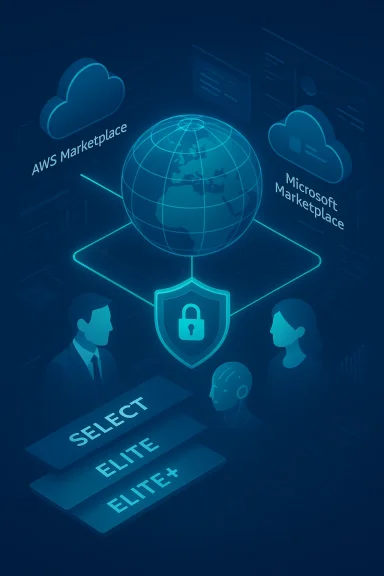
The new Proofpoint Partner Network introduces:- A simplified, global three‑tier structure: Select, Elite and Elite+ to recognise partner investment and performance.
- NFR licences for mid and top tiers to support hands‑on learning, technical enablement and customer demos.
- Strengthened partner economics: higher incentives for acquiring and renewing customers, deal protections, and co‑investment funds for demand generation.
- Expanded market routes via AWS Marketplace and Microsoft Azure Marketplace, enabling new cloud procurement flows for partners and customers.
- A focus on building partner services: health checks, certified deployment offerings, and managed services pathways designed to create higher‑margin, recurring revenue.
What the programme actually delivers
Tiers, benefits and the enablement stack
The three tiers create a clear ladder for partners:- Select: entry tier for partners meeting baseline requirements, intended to broaden the ecosystem and make it easy to start transacting with Proofpoint.
- Elite: mid‑tier for partners making a larger go‑to‑market investment; expected to gain meaningful commercial incentives and technical support.
- Elite+: the top tier aimed at strategic partners that will receive the most extensive benefits, protections and co‑investment opportunities.
- NFR licences for hands‑on experience (targeted at Elite and Elite+ partners).
- Enhanced training and certification pathways to accelerate technical competence.
- Prescriptive marketing and demand‑gen support funded via co‑investment.
- Tools and frameworks to build repeatable service offerings (health checks, certified deployment packages).
Marketplace integration: AWS and Azure routes to market
Proofpoint is expanding its routes to market by deepening presence on both AWS Marketplace and Microsoft Azure Marketplace. That move is significant for three reasons:- It meets buyer expectations: many enterprise and midmarket customers now prefer to procure software through cloud marketplaces as part of consolidated cloud spend.
- It supports new commercial plays: partners can package Proofpoint capabilities into managed service offerings consumable via cloud procurement flows.
- It opens partner opportunities: marketplace transactions can accelerate deal closure and may count toward hyperscaler spend commitments that unlock additional incentives.
Service and product focus: data, collaboration and agentic security
The programme doubles down on Proofpoint’s product roadmap: collaboration security, data security and protection for the emergent agentic workspace — where humans and AI agents collaborate. Proofpoint positions these areas as high‑growth, partner‑ready opportunity zones, with the opportunity for partners to build differentiated services (e.g., AI‑aware DLP, Copilot/assistant safe‑guards, collaboration monitoring).Strategic implications for partners and the channel
Strengths: what’s genuinely useful
- Clarity and consistency. A single global programme reduces partner confusion and administration overhead when working across multiple regions. That alone simplifies partner planning and quota setting for international MSPs and resellers.
- Hands‑on enablement. NFR licences and increased technical training materially help partners shorten sales cycles — demos and PoCs are often the difference between a pipeline opportunity and a closed deal.
- Better protections and economics. Strengthened deal protections, incumbency protection on renewals and demand‑gen funds protect partner investments in account development and make margin modelling more predictable.
- Hyperscaler reach. Marketplace availability on AWS and Azure is a smart move: customers increasingly procure via hyperscalers and marketplaces, and partners that can transact through those channels will win more deals.
- Services‑first pathway. By emphasising health checks, certified deployments and managed services, Proofpoint is encouraging partners to move up the value chain — from one‑time implementations to recurring, higher‑margin managed security services.
Risks and open questions
- Marketplace margin leakage. Marketplaces can speed transactions, but they tend to compress margins if pricing and packaging are not managed carefully. Partners need clarity on discounts, incentives and margin protection for marketplace transactions to ensure services remain profitable.
- Channel conflict with MSP models. The strategic acquisition of MSP‑friendly businesses (see below) brings two advantages — access to SMB channels and multitenant capabilities — but it also raises the possibility of channel overlap and conflict between direct partner models and MSP‑focused go‑to‑market approaches.
- Operationalising “one programme.” Standardising benefits globally is simple in principle but hard in practice. Countries differ in certification availability, tax and procurement rules, and customer buying patterns. Execution will determine whether the promise of global consistency holds.
- Trust and verification of claims. Some headline numbers tied to corporate moves — for example, exact acquisition valuations — have been variably reported in the market. Partners should treat reported deal values and timelines as guidance rather than contractual fact until Proofpoint issues formal confirmations.
- Partner enablement burden. Rolling out new certifications, NFRs and marketplace operations requires partner engineering and sales enablement investment. Smaller partners may struggle to adopt changes fast enough to capitalise.
M&A, EMEA expansion and what it means for channel strategy
Proofpoint’s recent acquisitive moves and regional investments reshape its channel addressable market.- The company announced a major acquisition of a European MSP‑oriented email security vendor in 2025, a move positioned to open access to thousands of MSPs and large numbers of SMB customers. Public reporting has variably cited a headline value in the region of around $1 billion, with some later accounts reporting higher figures; partners should treat the precise number as market reporting rather than a contractual disclosure until it is confirmed.
- Proofpoint’s Cork AI Innovation Centre and investments in data science and LLM specialists strengthen its technical IP in AI‑powered detection and data classification. For partners this signals deeper R&D backing for the company’s product claims around agentic security and data protection.
- Regional datacentre capacity and local data residency offerings in the Middle East and EMEA are intended to ease sovereign data concerns for regulated customers, and to provide localised support for cloud and SaaS solutions.
Practical guidance: how partners should evaluate and respond
If you sell Proofpoint today — or are assessing whether to invest — here are pragmatic steps to take now:- Map your customer base to the partner tier economics. Determine which of your customers (and prospects) are most likely to benefit from Proofpoint’s expanded agentic, collaboration and data security suites. Estimate ARR upside and identify where NFR licences would accelerate opportunities.
- Model marketplace economics. Build a simple P&L that compares a direct perpetual/subscription sale versus an AWS/Azure marketplace sale. Include discounts, revenue recognition timing and the potential for marketplace transaction fees.
- Secure NFRs and enablement spots. If you qualify for Elite or Elite+, request NFR entitlements early. Use those licences to create standardised demo and PoC templates your sales teams can reuse.
- Design services bundles. Create packaged services — e.g., “Proofpoint Secure Collaboration Health Check” or “Agentic Workspace Hardening” — with fixed scopes, pricing and timeframes. This makes selling repeatable and positions you to capture recurring revenue.
- Invest in certification and lab time. Ensure one or two engineers are certified and able to lead technical workshops. Technical credibility shortens sales cycles and increases win rates.
- Define marketplace go‑to‑market plays with hyperscaler partners. Work with distributors or marketplace integrators to establish entitlement, billing and SSO flows so customers get seamless onboarding.
- Negotiate protections in writing. Where possible, lock in deal registration, renewal protections and pricing guarantees. These reduce risk when investing in new customers.
What partners should ask Proofpoint (and expect answers to)
- How are marketplace transactions treated for tier progression, margins and MDF calculations?
- What specific entitlements and usage caps come with NFR licences? Are there controls to prevent abuse?
- How will incumbency protections be operationalised during renewals and where is the escalation path if disputes arise?
- How are multi‑tenant MSP deals handled vs single‑tenant enterprise deals — particularly following Proofpoint’s acquisition activity?
- What is the roadmap and SLA for services partners: certified deployments, health checks and service‑level commitments?
- Where are the local data‑residency options physically located, and how do they map to regulated industries?
Competitive landscape: why this matters
Proofpoint’s partner programme reset should be read in the context of three broader market dynamics:- Consolidation in email and cloud security. Large vendors are acquiring niche and MSP‑focused players to secure distribution and product breadth; that increases competition for MSP mindshare and squeezes partners that don’t specialise.
- Hyperscaler marketplace competition. As more security vendors list on AWS and Azure, customers increasingly compare on procurement convenience and integration with cloud spend. Partners who can orchestrate cloud procurement and deliver value‑added services will win.
- The rise of AI and the agentic workspace. Vendors that tie AI protection capabilities to easy partner enablement stand to capture early managed services revenue for “AI‑safe” deployments.
Risks for Proofpoint and its partners
- Execution risk: A global programme with local thresholds only works if the back‑office processes — partner portal, MDF distribution, deal registration adjudication — operate smoothly across time zones and tax regimes.
- Channel cannibalisation: Moving aggressively into MSP markets via acquisition can create conflict with existing higher‑margin enterprise partners unless channel roles are tightly defined.
- Perception risk: If partners perceive marketplaces as a route for low‑margin, direct sales that undercut services, programme uptake will be slow.
- Integration risk: Acquisitions (and rapid product innovation around AI) increase integration complexity; partners will be wary until they see stable, integrated feature sets and clear migration paths.
The verdict: opportunity with guardrails
Proofpoint’s Proofpoint Partner Network is a well‑designed, strategically timed attempt to simplify partner economics and align Proofpoint’s own product evolution with partner success. For partners focused on email, collaboration and data security, the programme offers meaningful upside: NFRs for demos, clearer tier benefits, demand‑gen co‑investment and hyperscaler marketplace routes are all practical enablers for growth.That said, the programme is not a panacea. Execution — not intent — will determine whether Proofpoint can truly deliver a globally consistent, partner‑first experience. Partners should view the launch as an invitation to co‑design scalable services, but they must also insist on contractual clarity around marketplace economics, renewals protection and the operational details that make a programme workable in day‑to‑day selling.
Action checklist for channel leaders (quick reference)
- Get programme documentation and map to your existing Proofpoint revenue mix.
- Secure NFR licences and build repeatable PoC templates.
- Recalculate deal economics for marketplace transactions.
- Build two packaged services (health check + certified deployment) with fixed pricing.
- Nominate an enablement lead to complete Proofpoint certifications and run internal training.
- Formalise escalation paths for renewal disputes and deal registration.
Proofpoint’s move is a necessary evolution for a vendor that wants partners to sell beyond legacy email protection into AI‑aware, data‑centric security. The new partner network bundles sensible incentives and tools that will help committed partners accelerate services revenue — but only if Proofpoint and its channel can operationalise the promises in a transparent, margin‑friendly way. For partners ready to invest in enablement and services packaging, the window is open; for those who treat this as just another vendor update, the risk is being left behind as customers shift procurement to cloud marketplaces and demand outcomes that extend beyond a boxed product sale.
Source: CRN UK Proofpoint launches new global partner programme