

Quantum computing moved decisively from lab demos toward practical deployment in 2025, and the companies to watch heading into 2026 reflect a mix of pure‑play specialists, cloud incumbents and infrastructure giants each pursuing complementary — and competing — strategies to capture the first commercial value from quantum advantage.
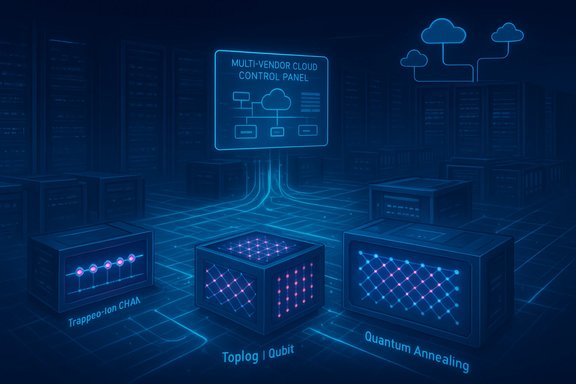
The past 18 months saw a string of high‑visibility milestones: a leading trapped‑ion vendor announced a new world‑record two‑qubit gate fidelity that pushes the industry toward far lower logical error rates; a major software‑and‑cloud player unveiled the first topological‑qubit processor; and GPU and HPC leaders launched purpose‑built quantum‑classical interconnects to make hybrid workflows practical. At the same time, quantum annealers and early gate systems continued to produce customer pilots in logistics, materials and optimization.
This transition matters because the practical use of quantum computers is governed less by raw qubit counts and more by three interdependent factors:
Why fidelity matters:
Strengths
Why Alphabet matters now
Why the topological route matters
What Nvidia brings
Why enterprises favor IBM
Why D‑Wave remains relevant
Strengths to celebrate
Source: Blockonomi Best Quantum Computing Companies to Watch in 2026 - Blockonomi
 Background
The past 18 months saw a string of high‑visibility milestones: a leading trapped‑ion vendor announced a new world‑record two‑qubit gate fidelity that pushes the industry toward far lower logical error rates; a major software‑and‑cloud player unveiled the first topological‑qubit processor; and GPU and HPC leaders launched purpose‑built quantum‑classical interconnects to make hybrid workflows practical. At the same time, quantum annealers and early gate systems continued to produce customer pilots in logistics, materials and optimization.This transition matters because the practical use of quantum computers is governed less by raw qubit counts and more by three interdependent factors:
- gate fidelity (how accurate each quantum operation is),
- error correction and logical‑qubit overhead, and
- integration with classical infrastructure (cloud, HPC and software stacks).
Overview: Who’s leading and why
- IonQ: pure‑play trapped‑ion vendor that claims a world record in two‑qubit fidelity and a roadmap focused on error reduction and modular scale.
- Alphabet / Google Quantum AI ecosystem: deep R&D resources, cloud distribution leverage, and spin‑outs that bridge quantum and AI.
- Microsoft: software‑first play through Azure Quantum, multi‑vendor access, and a long‑term bet on topological qubits to reduce error correction overhead.
- Nvidia: positioning as the hybrid‑compute fabric provider — enabling GPU ↔ QPU integration and real‑time error‑correction workflows.
- IBM: enterprise‑grade quantum cloud services, transparent roadmaps, and strong relationships with government and research customers.
- D‑Wave: commercial quantum annealing systems with real customer pilots in logistics and supply‑chain optimization.
IonQ: fidelity-first, pure play
Record fidelity and what it means
IonQ has positioned itself as the fidelity leader, reporting two‑qubit gate fidelities that cleared the 99.9% threshold and subsequently reached a “four‑nines” performance milestone. High two‑qubit fidelity reduces the physical‑to‑logical qubit overhead required for error correction and shortens the time to run deeper circuits without prohibitive shot counts.Why fidelity matters:
- Error correction scales poorly with high gate error rates; every tenth of a percentage point of fidelity improvement dramatically cuts required physical‑qubit counts for a given logical qubit.
- Improved native fidelity enables deeper circuits, more reliable mid‑circuit measurements and practical deployment of near‑term hybrid algorithms.
Product and go‑to‑market
IonQ is focused on a full‑stack approach: engineered trapped‑ion QPUs, control electronics and a cloud delivery model that places systems on major cloud marketplaces and via direct cloud access. That gives IonQ early customer exposure while it pursues productizing higher‑fidelity devices and modular scale.Strengths
- Pure‑play focus on engineering and fidelity.
- Clear technical metrics and milestone cadence.
- Cloud distribution partnerships that let enterprises experiment without buying hardware.
- Pure‑play vendors carry higher financial and execution risk vs. diversified tech giants.
- Single‑number metrics can obscure real application performance; benchmarking and cross‑vendor comparisons require careful scrutiny.
- Manufacturing scale, supply chain robustness and service economics remain unproven at large volumes.
Alphabet and Google Quantum: research depth plus cloud reach
Strategy
Alphabet leverages deep R&D in quantum hardware and algorithms while maximizing Google Cloud as the primary commercial distribution channel. Spin‑outs and subsidiaries operating at the intersection of quantum and AI are a core part of Alphabet’s playbook: they accelerate applied model development today and seed future uptake of quantum hardware when capacity and fidelity permit.Why Alphabet matters now
- Large R&D budgets let Alphabet pursue multiple hardware approaches in parallel.
- Direct channel to enterprise customers via Google Cloud and an ability to bundle quantum‑adjacent services into broader AI and data offerings.
- Investments into quantum‑informed AI models create practical near‑term revenue avenues (quantitative AI, simulation tooling) that don’t rely on full fault tolerance.
- Scale of capital and cloud sales motion.
- Talent ecosystem across cloud, AI and quantum research.
- Building and maintaining competitive cloud margins while divesting R&D resources across AI and quantum is costly.
- The pace of translating lab breakthroughs to commercial hardware still takes years; large firms face the challenge of aligning investor expectations with long technical timelines.
Microsoft Azure Quantum: software‑first and topological qubits
Platform approach
Microsoft continues to sell a software‑first model: Azure Quantum aggregates multiple hardware providers under a common interface and toolchain, giving developers access to diverse QPU types while Microsoft pursues its own topological qubit research. The company’s public demonstrations of early topological devices signal a long‑term bet: topological qubits, if realized at scale, promise substantially lower error correction overhead.Why the topological route matters
- Topological protection is a hardware‑level error‑suppression method. If it delivers on promise, the number of physical qubits to realize one logical qubit could fall by an order of magnitude or more.
- Microsoft’s approach merges platform convenience (multi‑vendor access, Q# and tooling) with a strategic hedge: purchase hardware from partners when advantageous, while seeking a disruptive in‑house breakthrough.
- Enterprise cloud reach and deep enterprise integrations with Azure.
- Unified developer experience and a growing list of hardware partners.
- Long‑term roadmap grounded in a plausible path to lower fault‑tolerance costs.
- Topological qubits remain experimentally challenging — timelines are uncertain and early demonstrators must still scale.
- Microsoft’s business case depends on converting research into deployable cloud QPUs while maintaining enterprise platform economics.
Nvidia: building the hybrid bridge (NVQLink and CUDA‑Q)
The hybrid reality
Quantum devices — for the foreseeable future — will operate as accelerators that require fast classical orchestration. Nvidia has moved beyond simulation libraries and GPU acceleration to offer explicit hardware/software bridging designed for real‑time quantum‑classical workflows.What Nvidia brings
- A high‑bandwidth, low‑latency interconnect fabric and software orchestration layer that links QPUs to GPU‑accelerated supercomputers.
- Tools and middleware to run hybrid workloads: classical pre/post processing, real‑time error correction decoding, and quantum control loops.
- Many quantum algorithms (and especially practical error‑correction schemes) require real‑time classical decoding and control that modern HPC clusters and GPUs can accelerate.
- By positioning GPUs as a persistent element of quantum data centers, Nvidia creates a durable commercial role for its products even if fully fault‑tolerant QPUs become available years later.
- Clear product role in a hybrid future: interconnects, HPC nodes and software for quantum‑classical co‑processing.
- Strong partnerships with national labs and supercomputing centers to validate hybrid workflows.
- NVQLink and hybrid claims require integration with a wide variety of QPU hardware and control systems; vendor lock‑in and interoperability are practical obstacles.
- Performance promises (throughput and latency) will be validated only as deployed at scale in customer environments.
IBM: enterprise relationships and transparent roadmaps
Roadmap and enterprise focus
IBM remains the enterprise stalwart: consistent roadmap disclosures, open software stacks (Qiskit) and long‑standing customer relationships with government, research and corporate clients. IBM’s roadmap emphasizes modular processors, quantum‑centric supercomputing integration and clear milestones for incremental capability increases.Why enterprises favor IBM
- Proven track record of complex systems programs and multi‑year government contracts.
- Mature cloud platform for quantum experiments, developer tooling, and industry partnerships.
- Transparent roadmap that lets procurement and research teams plan pilot projects and R&D engagements.
- Stability and trust in regulated and mission‑critical environments.
- Deep integration with academic and government research.
- IBM’s superconducting approach continues to face competition from trapped‑ion and neutral‑atom vendors on fidelity and connectivity tradeoffs.
- The rate of commercial adoption depends on IBM’s ability to move beyond research engagements to identified, repeatable enterprise workflows that return measurable value.
D‑Wave: annealing and pragmatic optimization
Real customers, practical problems
D‑Wave focuses on quantum annealing — a different computational model well suited to combinatorial optimization. It has accumulated a string of customer pilots and case studies in logistics, vehicle routing, scheduling and manufacturing optimization. These are real‑world problem domains where hybrid classical/quantum solutions can deliver incremental advantage today.Why D‑Wave remains relevant
- Quantum annealers are commercially available and capable of addressing large combinatorial instances via hybrid solvers.
- Many enterprise optimization problems (routing, packing, resource scheduling) map naturally to annealing formulations and benefit from iterative integration with classical solvers.
- Mature commercial product offering with a customer base using cloud‑based annealing services.
- Demonstrated pilots in logistics and supply chain domains that show measurable operational benefits.
- Annealing is not a universal model; not every problem maps efficiently, and gate‑model advances could shift competitive dynamics.
- Claims of “advantage” must be tested against strong classical hybrid heuristics and bespoke optimization engines — rigorous benchmarking is essential.
Technical barriers that persist
Error rates and fault tolerance
- Even with headline‑grabbing fidelity improvements, logical error rates — after accounting for error correction overhead — remain the central bottleneck for commercial advantage on widely useful problems.
- Error correction requires orders of magnitude more physical qubits per logical qubit; until that overhead is reduced, many real‑world problems will rely on hybrid, domain‑specific approaches rather than full fault‑tolerant runs.
Benchmarking subtleties
- Single metrics (qubit count, “algorithmic qubits”, or proprietary composite scores) are useful shorthand but can be misleading. Application‑level benchmarks, reproducible experiments and independent validation are the proper basis for comparisons.
- Comparison across technologies requires consistent testbeds and transparent error‑mitigation disclosures.
Integration and orchestration
- Quantum systems are sensitive to control latencies and classical orchestration. The most promising near‑term deployments combine QPUs with classical HPC resources for pre/post computation and error correction decoding.
- Standards and open interconnects will be important to avoid vendor lock‑in and to make hybrid workflows portable.
Investment and procurement considerations
For investors
- Differentiate execution risk from technical promise. Pure‑play quantum stocks offer high upside if roadmaps are met but also higher downside if timelines slip. Diversified tech firms provide safer exposure but with diluted quantum upside.
- Evaluate revenue and customer traction. Beyond press releases, look for multi‑year enterprise contracts, cloud marketplace listings, and recurring services revenue.
- Watch capital intensity and cash runway. Commercializing quantum hardware is manufacturing‑heavy; the balance sheet matters.
For enterprise buyers and IT leaders
- Start with pilots that have measurable KPIs. Prioritize optimization, simulation or sampling tasks with clear classical baselines.
- Use multi‑vendor platforms. Platforms that aggregate QPUs reduce lock‑in risk and let you evaluate different architectures on the same pipeline.
- Plan for hybrid deployments. Expect to run quantum tasks adjacent to GPUs and HPC for the next several product cycles.
What to watch in 2026
- Fidelity vs. application outcomes: will high two‑qubit fidelities translate into demonstrable logical‑level gains on real applications, not just laboratory benchmarks?
- Hybrid system rollouts: major HPC centers deploying GPU ↔ QPU interconnects and validating real‑time error‑correction pipelines will be a key inflection point.
- Enterprise contracts that move from pilots to production: several vendors claim customer deployments in logistics, materials, and finance — the shift to paid, repeatable engagements matters more than announced partnerships.
- Standardized benchmarks and independent verification: as the market matures, neutral benchmarking across vendors will be essential to separate marketing from engineering reality.
- Supply chain and manufacturing scale: who can produce and service quantum systems at data‑center scale? Hardware vendors that demonstrate reliable manufacturing and field support will have a commercial advantage.
Final analysis: strengths, risks and practical advice
The quantum computing landscape in 2026 is best described as diversified maturation. Companies are no longer only publishing proofs of concept; they are shipping hardware, building cloud integrations and piloting domain‑specific workloads. That incremental maturation is healthy: it makes the technology evaluable on business metrics rather than pure hype.Strengths to celebrate
- Visible, repeatable engineering progress in gate fidelity and component stability.
- Growing ecosystem of software and middleware that enables hybrid quantum‑classical workflows.
- Multiple credible routes to commercial value: optimization via quantum annealing, quantum‑informed models for simulation, and eventual fault‑tolerant capabilities for cryptography, materials and large‑scale simulation.
- Timelines remain uncertain: topological qubits, large‑scale error correction, and universal quantum advantage could still take years to mature.
- Benchmarks and proprietary metrics can be gamed; rigorous, application‑level verification is essential.
- Economic viability depends on not just technical breakthroughs but also manufacturing scale, cloud economics and predictable service delivery.
- Investors: allocate exposure across pure plays and large tech incumbents while monitoring milestone delivery and contract wins.
- IT and procurement: start pragmatic pilots on multi‑vendor platforms, quantify classical baselines, and plan hybrid architectures that integrate GPUs and QPUs.
- Technical leaders: demand reproducible benchmarks, validate claimed fidelities in application contexts and insist on clear SLAs for hybrid orchestration components.
Source: Blockonomi Best Quantum Computing Companies to Watch in 2026 - Blockonomi
