

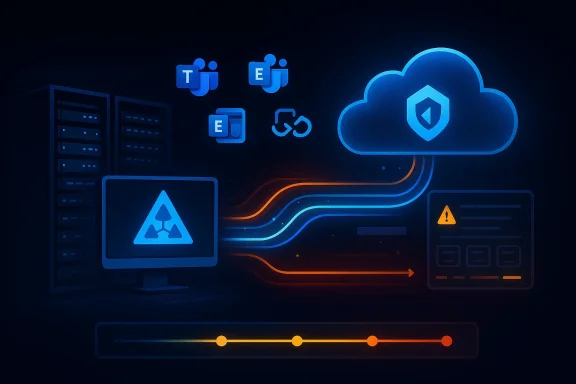
Identity security in hybrid Microsoft estates is moving from a periodic compliance exercise to a continuous operational discipline, and that shift is exposing a hard truth: free, snapshot-based Microsoft identity tools are no longer enough for enterprises that need to see change as it happens. The latest Petri survey, sponsored by Cayosoft, suggests that delayed awareness is now one of the most dangerous blind spots in modern identity defense, especially in environments spanning Active Directory, Microsoft Entra ID, Teams, Exchange Online, and Intune
Hybrid identity has become the default operating model for many organizations, but the complexity it introduces is easy to underestimate. The Petri material describes a world where access changes constantly across on-premises and cloud platforms: new accounts are created, roles are assigned, Conditional Access policies are updated, permissions shift, and synchronization layers quietly do their work in the background
That complexity matters because identity has become the control plane for everything else. If defenders do not know when access changes, they often do not know when risk changes either. The article’s central argument is that many organizations are still relying on tools designed for posture reviews and audits, not for continuous monitoring and immediate response
That timing gap is the real security problem. Once an attacker gets a foothold, even a short delay between change and awareness can be enough to:
That should worry anyone responsible for enterprise identity because these are not fringe systems. They are the backbone of access, authentication, authorization, and policy enforcement. If monitoring fails here, it fails at the layer where compromise is most likely to become enterprise-wide.
The article also notes that collaboration and endpoint services such as Exchange Online, Teams, and Intune are repeatedly flagged as difficult to monitor consistently . That is a reminder that identity risk does not live in one console anymore. It is distributed across the Microsoft stack, and attackers often exploit the seams between tools and teams.
In a hybrid Microsoft estate, access can change through:
Respondents identified familiar concerns: keeping up with vulnerabilities and threats, missing real-time alerts, incomplete visibility across platforms, budget pressure, and tools that are too complex to deploy or maintain . That is a classic enterprise security failure pattern: the stack becomes too fragmented to support fast decision-making.
Many teams end up with a patchwork of scripts, logs, standalone scanners, and ad hoc workflows. These may each solve a small problem, but together they create overlap, blind spots, and a lot of manual maintenance. Over time, that burden makes identity security feel slower and more brittle, not more resilient
Free tools can be useful for:
That list is important because it shows the market has matured beyond simple detection. Organizations want:
That is a much harder operational model, but it is also a much more realistic one for hybrid identity. The article’s core warning is that continuous monitoring should not be treated as a premium feature or a nice-to-have enhancement. It is becoming the baseline expectation for defending Microsoft identity infrastructure
If a malicious change happens between scans, or if a dangerous configuration slips through a manual review queue, the attacker gets an uninterrupted window to act. That can translate into:
That shift will likely reshape licensing expectations too. In many organizations, the question is no longer whether identity should be monitored continuously, but whether continuous monitoring should be part of the baseline cost of operating Microsoft identity at scale.
This is a meaningful change. For years, identity security was often treated as a supporting function. Now it is becoming a front-line control plane problem. That has consequences for staffing, tooling, governance, and board-level risk reporting.
The practical takeaways are clear:
What makes this shift especially important is that it is not about one product or one vendor. It is about the operating model itself. Identity security is moving from periodic assessment to continuous control, from manual review to automated response, and from isolated tools to unified workflows. For enterprises that depend on Microsoft identity infrastructure, that is not a luxury upgrade. It is becoming the minimum standard.
Source: Petri IT Knowledgebase Free Microsoft Identity Tools Are Quietly Increasing Risk
 Background
Hybrid identity has become the default operating model for many organizations, but the complexity it introduces is easy to underestimate. The Petri material describes a world where access changes constantly across on-premises and cloud platforms: new accounts are created, roles are assigned, Conditional Access policies are updated, permissions shift, and synchronization layers quietly do their work in the backgroundThat complexity matters because identity has become the control plane for everything else. If defenders do not know when access changes, they often do not know when risk changes either. The article’s central argument is that many organizations are still relying on tools designed for posture reviews and audits, not for continuous monitoring and immediate response
Why snapshot-based identity security is breaking down
The biggest flaw in free identity tools is not that they are useless. It is that they are built around a moment in time. They can tell you what the environment looked like when the scan ran, but they cannot tell you what happened five minutes later, or whether a privileged account was created, modified, or abused in the interimThat timing gap is the real security problem. Once an attacker gets a foothold, even a short delay between change and awareness can be enough to:
- establish persistence
- escalate privileges
- move laterally
- hide in legitimate administrative activity
- trigger damage before the next scan or review cycle
The hardest places to monitor are the ones that matter most
One of the most important findings in the survey is where defenders struggle the most. Active Directory and Microsoft Entra ID—the very systems that govern access across hybrid enterprises—are also among the hardest to monitor effectively. Petri reports that 40% of respondents said Active Directory is hard to monitor for threats, and 37% said the same about Microsoft Entra IDThat should worry anyone responsible for enterprise identity because these are not fringe systems. They are the backbone of access, authentication, authorization, and policy enforcement. If monitoring fails here, it fails at the layer where compromise is most likely to become enterprise-wide.
The article also notes that collaboration and endpoint services such as Exchange Online, Teams, and Intune are repeatedly flagged as difficult to monitor consistently . That is a reminder that identity risk does not live in one console anymore. It is distributed across the Microsoft stack, and attackers often exploit the seams between tools and teams.
Hybrid complexity multiplies the attack surface
Petri’s survey says more than 90% of respondents manage environments spanning at least five Microsoft platforms . That fact alone explains why point-in-time tools struggle.In a hybrid Microsoft estate, access can change through:
- group membership updates
- role assignments
- app consent
- policy changes
- synchronized directory objects
- delegated administration
- cloud-only and on-premises controls acting together
Tool sprawl is becoming a security problem
The article is persuasive because it does not blame ignorance. It shows that most organizations understand the risk. Their problem is operational execution.Respondents identified familiar concerns: keeping up with vulnerabilities and threats, missing real-time alerts, incomplete visibility across platforms, budget pressure, and tools that are too complex to deploy or maintain . That is a classic enterprise security failure pattern: the stack becomes too fragmented to support fast decision-making.
Many teams end up with a patchwork of scripts, logs, standalone scanners, and ad hoc workflows. These may each solve a small problem, but together they create overlap, blind spots, and a lot of manual maintenance. Over time, that burden makes identity security feel slower and more brittle, not more resilient
The hidden cost of “free”
The word free is doing a lot of work here.Free tools can be useful for:
- audits
- baseline posture checks
- one-time assessments
- quick diagnostics
- low-frequency compliance reviews
What modern identity protection now requires
Petri’s survey also reveals what IT and security leaders now want from identity protection. The “very important” capabilities include real-time threat detection, automatic threat intelligence updates, coverage across Active Directory, Entra ID, Teams, Exchange Online, and Intune, and the ability to roll back or remediate changes through a single operational workflowThat list is important because it shows the market has matured beyond simple detection. Organizations want:
- continuous visibility
- automated intelligence
- faster response
- unified remediation
- fewer handoffs between tools and teams
From periodic assessment to continuous control
The shift is subtle but significant. A periodic posture review asks, “What does the environment look like right now?” Continuous monitoring asks, “What changed, who changed it, and does that change affect security?”That is a much harder operational model, but it is also a much more realistic one for hybrid identity. The article’s core warning is that continuous monitoring should not be treated as a premium feature or a nice-to-have enhancement. It is becoming the baseline expectation for defending Microsoft identity infrastructure
Why timing matters more than ever
The Petri piece is strongest when it frames identity security as a race against time. Many identity incidents are not caused by an absence of security controls. They are caused by a delay between compromise and detection. That delay is where attackers operate.If a malicious change happens between scans, or if a dangerous configuration slips through a manual review queue, the attacker gets an uninterrupted window to act. That can translate into:
- longer dwell time
- privilege escalation
- ransomware spread
- unauthorized data access
- audit failures
- slower incident response
Critical analysis: what the article gets right
There is a lot to like in the Petri argument.It identifies the real problem
The piece correctly focuses on timing gaps, not just tool quality. That is a more sophisticated and more useful framing than the usual “legacy tools are bad” narrative.It reflects how hybrid environments actually work
The article recognizes that identity is spread across multiple Microsoft platforms, each with its own administrative surface and its own risk profile . That makes the argument relevant to real enterprise operators, not just security theorists.It connects operational delay to business risk
The piece does not stop at technical monitoring. It links delayed awareness to ransomware downtime, data exposure, compliance issues, and executive accountability . That is a crucial bridge for CIOs and CISOs trying to justify budget and redesign workflows.Where caution is still warranted
The article’s conclusion is directionally right, but readers should still be careful not to overcorrect.Not every organization needs the same level of tooling
Smaller environments, or those with less identity complexity, may not need enterprise-grade continuous monitoring everywhere on day one. The risk rises sharply with scale, platform sprawl, delegated administration, and regulatory pressure. That means the right answer is often staged modernization, not an instant rip-and-replace.“Continuous visibility” can become a vague sales phrase
Vendors love to claim continuous monitoring, but real continuous coverage should mean more than frequent scans and colorful dashboards. Buyers should ask whether the product truly detects changes in near real time, how it correlates events across AD and Entra ID, and whether remediation is genuinely integrated rather than stitched together from separate consoles.Free tools are not always the problem
The article sometimes treats free tools as if they are inherently outdated, when the real issue is usually fit. A free scanner may still be valuable for baseline audits, lab environments, or narrow administrative use. The risk comes when organizations confuse assessment with defense.The market implication: identity security is being redefined
Petri’s survey hints at a broader industry transition. As hybrid Microsoft estates become more common, buyers are rethinking what identity security should include by default. The market is moving away from occasional snapshots and toward continuous awareness, faster remediation, and a single operational chain from detection to actionThat shift will likely reshape licensing expectations too. In many organizations, the question is no longer whether identity should be monitored continuously, but whether continuous monitoring should be part of the baseline cost of operating Microsoft identity at scale.
This is a meaningful change. For years, identity security was often treated as a supporting function. Now it is becoming a front-line control plane problem. That has consequences for staffing, tooling, governance, and board-level risk reporting.
What this means for CIOs, CISOs, and IT leaders
For enterprise leaders, the lesson is straightforward: if you cannot detect identity changes quickly, you cannot manage identity risk effectively.The practical takeaways are clear:
- Audit your current visibility model. Determine whether your tools alert in real time or merely report after the fact.
- Map identity across platforms. Understand where Active Directory, Entra ID, Exchange Online, Teams, Intune, and synchronization layers intersect.
- Reduce manual handoffs. The more times an analyst has to switch tools, the more time attackers gain.
- Prioritize the highest-risk control planes. Focus first on the systems that define privilege and access.
- Separate compliance checks from threat detection. A clean audit report is not the same thing as active defense.
Conclusion
The Petri survey captures a major inflection point in Microsoft identity security: organizations are discovering that free, snapshot-based tools can no longer keep pace with the speed of change in hybrid enterprise environments. Active Directory and Microsoft Entra ID remain the hardest and most important systems to monitor, and the cost of delayed awareness is rising fastWhat makes this shift especially important is that it is not about one product or one vendor. It is about the operating model itself. Identity security is moving from periodic assessment to continuous control, from manual review to automated response, and from isolated tools to unified workflows. For enterprises that depend on Microsoft identity infrastructure, that is not a luxury upgrade. It is becoming the minimum standard.
Source: Petri IT Knowledgebase Free Microsoft Identity Tools Are Quietly Increasing Risk
