

Reply’s presence on the Microsoft Ignite 2025 stage underscores a clear partner play: package Copilot-era capabilities into vertical, enterprise-ready solutions that bridge Microsoft’s new agent platform with real-world business processes and measurable outcomes.
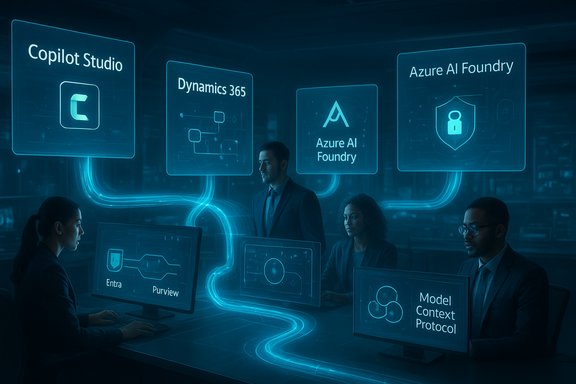
Microsoft Ignite 2025 set an unmistakable tone: the company is accelerating from “Copilot as a helper” to Copilot as a platform of agentic services, and partners are the delivery mechanism that turns platform primitives into production outcomes. Key platform components highlighted across Ignite — Copilot Studio, Azure AI Foundry, the Azure AI Agent Service, Model Context Protocol (MCP), and a governance control plane that Microsoft calls Agent 365 — form the technical scaffolding partners must integrate with to deliver enterprise solutions.
For systems integrators and ISVs, the event reframed three commercial priorities:
Highlights attributable to Reply’s presence include:
Strengths:
That said, the transition to agentic automation raises new responsibilities for buyers. Model routing, cost controls, identity-bound execution, and incident readiness must be contractually and operationally explicit. Partners like Reply can accelerate delivery, but procurement and IT must convert marketing signals and awards into verifiable production evidence: baseline metrics, security testing, and explicit governance playbooks. When those elements are in place, Copilot-era automation promises meaningful productivity gains; without them, the same innovations can amplify risk and cost.
Source: Business Wire https://www.businesswire.com/news/h...riences-and-Intelligent-Enterprise-Solutions/
Source: The AI Journal Reply at Microsoft Ignite 2025: Showcasing AI Innovation, Copilot Experiences, and Intelligent Enterprise Solutions | The AI Journal
 Background / Overview
Microsoft Ignite 2025 set an unmistakable tone: the company is accelerating from “Copilot as a helper” to Copilot as a platform of agentic services, and partners are the delivery mechanism that turns platform primitives into production outcomes. Key platform components highlighted across Ignite — Copilot Studio, Azure AI Foundry, the Azure AI Agent Service, Model Context Protocol (MCP), and a governance control plane that Microsoft calls Agent 365 — form the technical scaffolding partners must integrate with to deliver enterprise solutions.For systems integrators and ISVs, the event reframed three commercial priorities:
- Productize agent-first workflows that map to concrete business outcomes (customer service, field operations, finance, HR).
- Demonstrate governance, auditability, and identity-bound execution so customers can adopt agents in regulated environments.
- Use Microsoft’s unified Marketplace and co-sell mechanics to accelerate go-to-market and procurement cadence.
What Reply Showcased at Ignite 2025
Partner positioning and product focus
Reply (and its network companies) framed their Ignite participation around three themes that enterprise buyers care about: verticalized Copilot experiences, end-to-end integration with Dynamics 365/Power Platform, and governance-ready agent deployments. The partner spotlight materials from the event explicitly list Reply-driven case work combining Dynamics 365, Copilot Studio authoring, and Power Platform automation as representative customer outcomes.Highlights attributable to Reply’s presence include:
- Solutions that embed Copilot-driven agents into Dynamics 365 Customer Engagement for sales and service workflows, aimed at automating repetitive tasks and surfacing contextual insights in-flow.
- Integration patterns that use Copilot Studio and Azure AI Foundry to author, test, and deploy agent behaviors while preserving tenant-level governance and Purview labeling semantics.
- Go-to-market positioning via Microsoft’s unified Marketplace and partner/co-sell mechanisms, enabling quicker procurement and deployment cycles for enterprise customers.
Recognition and awards as a signaling mechanism
Root16 Reply — a member of the Reply network focused on Dynamics 365 and Power Platform — won the Microsoft Americas SI Emerging Partner of the Year in 2025. That regional award signals market validation: Microsoft judged the company’s projects as strong examples of partner-driven outcomes that use Dynamics/Copilot integrations. But awards are signals, not contracts: they ease introductions and pipeline access, yet they should not replace technical due diligence and production references during vendor selection.Why Reply’s approach matters for enterprises
Practical translation of platform primitives into deliverables
Microsoft’s platform announcements are necessary but not sufficient for enterprise adoption. Partners like Reply matter because they:- Convert Copilot Studio designs into reproducible automations with runbooks and rollback paths.
- Build connector templates and tenant-scoped permission patterns that reduce the risk of credential exposure when agents call CRM, ERP or SaaS endpoints.
- Provide industry context (compliance, data residency, workflows) so agents solve real operational problems instead of just producing one-off demos.
Commercial and operational advantages
- Faster procurement: Marketplace packaging and co-sell support reduce procurement friction for enterprise buyers when compared to bespoke, multi-vendor procurements.
- Measurable ROI potential: When agents replace repetitive tasks (e.g., lead qualification, routine service desk triage), partners can present time-saved and FTE-equivalent arguments to CFOs — the kind of outcome that helped Root16 Reply win recognition.
- Reduced integration lift: Prebuilt templates and partner-tested connectors lower the probability of surprises in production—provided those templates are validated against the buyer’s scale, security baseline, and SLAs.
Technical anatomy of partner-delivered Copilot solutions
Core building blocks partners must master
- Copilot Studio — the authoring surface for agents; partners must use labeled experiences, data connectors, and environment segregation for safe testing and rollout.
- Azure AI Foundry / Agent Service — the runtime for agent orchestration, offering tracing, multi-agent scenarios and deployment controls that production systems need.
- Model Context Protocol (MCP) — the interoperability layer enabling agents to request contextual data and call tools (e.g., CRM, ticketing) in a standardized way.
- Entra / Purview / Sentinel integrations — identity, data protection and observability layers that make agent actions auditable and compliant.
Operational patterns partners should implement
- Isolated Agent Workspaces for runtime containment and least-privilege operation.
- Role-based model routing and explicit tenant model choices to reduce surprise third-party model usage.
- Tracing and immutable audit logs that tie agent actions to an identity and a policy decision.
Strengths of Reply’s Ignite play (what they do well)
- Strong Microsoft alignment: Reply’s award and partner narratives show deep competence in Dynamics 365, Power Platform and Copilot integration patterns, which shortens time-to-value for enterprise customers.
- Verticalization: Packaging solutions by industry use-case (sales automation, service automation, frontline enablement) makes the technology conversation pragmatic and procurement-friendly, rather than speculative.
- Emphasis on governance: Public partner materials and event talk tracks repeatedly highlight governance, telemetry, and labeled experiences — a practical signal that Reply understands the compliance controls enterprises need.
Risks and gaps enterprises must evaluate
1. Model routing and third‑party model exposure
Microsoft’s multi-model approach routes workloads to a combination of Microsoft’s models and third-party providers. That flexibility is powerful but complicates compliance: customers must verify which models handle sensitive data, where model inference occurs, and whether data residency and contractual protections are sufficient. Partners must document model routing behavior and provide tenant-level controls. Treat any vendor claim about model usage as something to validate in your tenant.2. Cost unpredictability
Agent deployments can be metered in multiple ways — Copilot seats, model inference consumption, storage for artifacts, and runtime minutes for agent workloads running inside Cloud PCs. Absent transparent FinOps patterns and quotas, automation can create runaway bills. Procurement and IT must insist on demonstrable cost-control mechanisms and showback billing during pilots.3. Operational and security surface expansion
Treat agents as first-class production services: they require patching, incident playbooks, access-review integration, and vulnerability scanning. Attackers will probe agent connectors and token flows (OAuth, short-lived credentials); vendors and partners must provide hardened connector patterns and incident response plans. Enterprises should require proof of security testing and threat modeling from partners before production sign-off.4. Overreliance on awards and marketing
Awards and partner recognition (like Root16 Reply’s Microsoft award) are useful procurement signals but not substitutes for references, architecture reviews, and production evidence. Ask for live customer references with measurable KPIs — not just pilot anecdotes.Practical recommendations for IT, Procurement, and Architects
For IT leaders and architects
- Start with low-risk pilots: customer service summarization, marketing reporting, or internal knowledge triage before delegating agentic automation to critical systems. Validate outputs against known baselines.
- Demand model lineage and tenant configuration: require partners to produce a model-routing map, default model choices, and a tenant override process that prevents inadvertent routing of sensitive data to unsuitable models.
- Enforce “agent owner” roles: designate human owners who maintain runbooks, approve agent playbooks, and sign off on production changes.
For procurement and legal
- Insist on clear SLAs and FinOps guardrails: include consumption caps, alerting thresholds, and cost governance clauses in initial contracts.
- Validate data handling and residency: require the partner to show how Copilot artifacts, logs and training telemetry are stored and who owns them.
- Convert awards into evidence: ask for documented case studies, production metrics, and security attestations accompanying any partner marketing claims.
For security teams
- Run connector penetration tests: validate OAuth token handling and check for credential leakage paths.
- Integrate agent audit trails into SIEM: ensure Sentinel (or your chosen SIEM) ingests agent traces and that playbook actions are discoverable during incident response.
What to expect from partner-led Copilot projects in the next 12 months
- Increased marketplace offerings: more packaged Copilot solutions in Microsoft’s unified Marketplace will reduce integration time but increase the need for standard validation templates.
- Broader vertical case studies: partners will push outcome metrics (hours saved, ticket reduction rates). Treat these as starting points — request methodology and raw baselines.
- A governance arms race: vendors who can demonstrate deep integration with Entra identities, Purview labeling, and Sentinel observability will have a competitive edge for regulated customers.
Critical analysis: Reply’s strategy — strengths, caveats, and strategic fit
Reply’s Ignite narrative maps well to what enterprise buyers now demand: domain-specific automation, Microsoft-aligned engineering, and demonstrable governance controls. That combination is necessary for scale — but not sufficient.Strengths:
- Proven alignment with Microsoft’s evolving agent platform and co-sell mechanics gives Reply fast access to procurement channels and field engineering support.
- Verticalized solutions reduce the cognitive load on buyers who otherwise face a “build from scratch” choice with raw platform primitives.
- The agent era redistributes risk: operational errors, model hallucinations, or misrouted data can have outsized consequences. Partners must demonstrate end-to-end governance and incident containment, not just automation capability.
- Many partner templates will be early-stage: buyers should expect iterative improvements and plan for a staged adoption roadmap rather than expecting immediate, full production maturity.
- Reply is a strong fit for organizations that need Microsoft-first integrations (Dynamics 365, Power Platform), seek quick packaged deployments, and are prepared to invest in governance and FinOps controls.
- Organizations with strict model lineage or alternative model preferences (on-premise LLM, other cloud vendors) will need deeper validation before selecting a standard partner package.
Checklist for enterprises evaluating Reply (or any Copilot partner)
- Does the partner provide a documented agent lifecycle (authoring → testing → staging → production) with labeled data controls?
- Can the partner show tenant-level model-routing maps and allow tenant overrides?
- Are Azure AI Foundry and Copilot Studio artifacts testable in your tenant before go-live?
- Is there clear FinOps guardrail tooling and consumption alerting included in the engagement?
- Does the partner supply production references with KPIs, SLAs and security attestation evidence?
Conclusion
The Microsoft Ignite 2025 narrative shifted the market: agents are no longer experiments, they are an operational model. Reply’s booth and partner messaging at Ignite reflect a pragmatic partner strategy — vertically packaged Copilot solutions, Dynamics 365 and Power Platform integration expertise, and an emphasis on governance-ready deployments. Those are precisely the capabilities enterprises need to move from pilots to production.That said, the transition to agentic automation raises new responsibilities for buyers. Model routing, cost controls, identity-bound execution, and incident readiness must be contractually and operationally explicit. Partners like Reply can accelerate delivery, but procurement and IT must convert marketing signals and awards into verifiable production evidence: baseline metrics, security testing, and explicit governance playbooks. When those elements are in place, Copilot-era automation promises meaningful productivity gains; without them, the same innovations can amplify risk and cost.
Source: Business Wire https://www.businesswire.com/news/h...riences-and-Intelligent-Enterprise-Solutions/
Source: The AI Journal Reply at Microsoft Ignite 2025: Showcasing AI Innovation, Copilot Experiences, and Intelligent Enterprise Solutions | The AI Journal
