

Rubrik’s announcement that Rubrik Agent Cloud will integrate with Microsoft Copilot Studio marks a pragmatic milestone in enterprise AI operations: the vendor promises a unified control plane to discover, monitor, govern and—importantly—remediate actions taken by AI agents that operate across Microsoft 365 (including OneDrive and SharePoint). The offering pairs Rubrik’s recovery-first heritage with Microsoft’s new agent identity and telemetry primitives, and brings a headline feature—Agent Rewind—that claims to selectively roll back unwanted agent-driven changes without downtime. Rubrik positions the integration as a limited early-access solution for joint customers and is demonstrating the capability at Microsoft Ignite 2025.
Conclusion
Rubrik’s integration with Microsoft Copilot Studio is an important step toward mainstream AgentOps: it surfaces critical control and recovery features that enterprises will demand as agentic automation proliferates. The combination of Entra‑backed agent identities, Copilot Studio telemetry, and Rubrik’s recovery tooling forms a convincing architecture for safer agent deployments. Still, the technology’s real-world effectiveness depends on implementation details, telemetry fidelity, and rigorous operational discipline. Organizations should pilot deliberately, verify rollback behavior end-to-end, and maintain layered defenses so that agents accelerate business goals without multiplying operational risk.
Source: iTWire iTWire - Rubrik Agent Cloud Accelerates Trusted Agentic AI Deployments for Microsoft Copilot Studio
 Background
Why this matters now
AI agents—software that can reason, plan, call tools and write back into enterprise systems—have moved from lab experiments to real business automation. Microsoft’s Copilot Studio provides a tenant-scoped authoring and runtime surface that assigns directory-grade identities to agents (Entra Agent ID), exposes telemetry and enables connectors into Microsoft Graph, Dataverse, SharePoint and other enterprise systems. That combination makes agent deployments powerful but also operationally risky: agents can perform high-impact actions at machine speed, touching sensitive data and critical systems. Rubrik frames Agent Cloud as a way to make those agent fleets auditable, policy-governed and recoverable.The platform primitives that make third‑party governance feasible
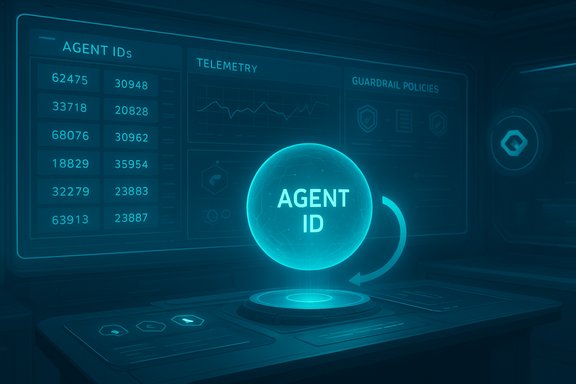
Microsoft has been formalizing agents as directory objects and exposing agent-level telemetry and control surfaces in Copilot Studio and Entra. The platform includes agent metadata (Agent ID), an Agent Inventory in Dataverse, skills and skill-manifests for custom actions, and the public preview of Microsoft Entra Agent ID for lifecycle and access governance. Those primitives are the technical preconditions Rubrik needs to discover agents, map their identities to actions, and correlate activity with backup snapshots for targeted recovery.What Rubrik announced — the product breakdown
Rubrik’s public messaging groups the Copilot Studio integration into three operational pillars: Agent Monitor, Agent Govern, and Agent Remediate. The company says the integration is available for limited early access.Agent Monitor (discovery & observability)
- Auto-discovers agents authored in Microsoft Copilot Studio and agents running in Azure or other cloud runtimes.
- Continuously monitors agent activity and data access by ingesting Azure-native logs and other telemetry sources.
- Builds immutable audit trails enriched with identity, data and application context to support forensics and compliance.
Agent Govern (runtime policy & behavior controls)
- Tracks agent usage and evaluates performance against prompts and expected behaviors.
- Defines and enforces real‑time guardrails: action policies, data access restrictions, and runtime blocking of destructive actions.
- Integrates with enterprise identity systems to enforce least-privilege and lifecycle controls.
Agent Remediate (Agent Rewind — selective rollback)
- Agent Rewind, announced earlier in 2025, integrates with Rubrik Security Cloud and claims to provide precise time‑ and blast‑radius rollback of agent-driven changes (files, records, configurations) without full restores or downtime.
- Rubrik frames this as going “beyond observability” — from detection to surgical recovery that undoes only unwanted agent actions while preserving legitimate changes.
Cross‑checking the key claims
- Rubrik will discover Copilot Studio agents and map activity to identities.
- Microsoft documents show Copilot Studio exposes Agent IDs and maintains agent inventory and metadata in Dataverse and Copilot Studio settings—allowing third parties to enumerate agents and tie actions to agent identities. That makes Rubrik’s discovery claim technically feasible.
- Runtime enforcement (real‑time blocking) is possible because Copilot Studio supports external protection hooks.
- Microsoft’s platform supports runtime hooks and integrations with Defender-class tooling; however, the exact latency, coverage and granularity of those hooks vary by action type and connector. Rubrik’s enforcement will depend on those Microsoft primitives and any additional agents’ runtime instrumentation.
- Selective rollback of agent actions (Agent Rewind) is claimed to be precise and non‑disruptive.
- Rubrik’s Agent Rewind press release and follow-on materials describe selective, context-aware rollback tied to immutable backups. That capability aligns with Rubrik’s core data-protection technology, but independent third‑party validation of scale, speed, and limits for live tenant scenarios is not yet publicly available. Treat the “industry’s only solution” phrasing as vendor positioning pending third-party tests.
- Availability and maturity.
- Rubrik has declared the integration in limited early access and cautioned that not all features are available now. Enterprises should assume staged rollouts and validate features against tenant-specific scenarios before trusting automated rollback in production.
Strengths — where this pairing legitimately helps enterprises
- Data‑centric recovery pedigree. Rubrik’s core competency in immutable backups and fast restores maps naturally to the need for recovery-first agent operations. If selective rollback works as described, it turns high‑impact agent errors into manageable remediation tasks rather than multi‑day incidents.
- Identity‑aware correlation. Microsoft’s Entra Agent ID and Copilot telemetry let third-party platforms link an agent’s identity to the actions it performed. That identity-first approach is essential for auditable discovery, attestation, and selective reversal.
- Operational consolidation. Rubrik’s single-pane Agent Cloud reduces the blind spots that arise when agents are built by many teams across varied tools (Copilot Studio, custom Azure agents, OpenAI/Bedrock builders). Centralizing discovery and policy reduces “shadow agent” risk.
- Brings recovery into AgentOps. Most observability tools stop at alerting. Coupling observability with an automated remediation mechanism (rollback) shortens MTTR and aligns risk controls with business continuity practices.
Risks, caveats and practical limits
- Vendor claims need independent validation. The most load‑bearing claim—surgical rollback with zero downtime—comes from Rubrik and has not yet been independently benchmarked in a range of tenant topologies, governance models, or data volumes. Treat the claim as promising but currently vendor‑provided until third-party or customer case studies are available.
- Complexity of writeback vectors. Agents can write back through APIs, via Dataverse, through SharePoint/OneDrive, or by UI automation when APIs don’t exist. Mapping and reversing GUI-driven changes (for example, multi-step UI flows performed by a hosted Cloud PC) is harder than reversing an API transaction. Expect edge cases that require manual remediation.
- Latency and coverage of telemetry. Effective discovery and rollback rely on complete, timely telemetry. If logs are delayed, filtered, or missing for certain connectors, the reconstruction of an agent’s blast radius may be incomplete, complicating safe rollback. Validate log retention, ingestion paths, and timing during pilots.
- Over-reliance on a safety net can encourage riskier deployments. A recovery capability is not a replacement for robust approval gating, testing, and least‑privilege. Treat Agent Rewind as a last-resort safety mechanism — not a license to deploy untested agents broadly.
- New attacker techniques exploiting agents. Recent security research shows that Copilot Studio agents themselves can be weaponized (e.g., OAuth token theft techniques) if social engineering or malicious agents gain traction. Any agent governance plan must include consent restrictions, conditional access, and monitoring for malicious agent creation or sharing. Rubrik’s control plane helps detect and respond but does not eliminate the need for tighter tenant-level IAM controls.
Operational checklist for IT and security teams (practical, sequential steps)
- Establish governance foundations before scaling agents.
- Assign owners, sponsors and approval workflows for every agent type. Create an Agent Store or catalog policy and require review for publish-to-tenant actions.
- Pilot Rubrik Agent Cloud in an isolated tenant or sandbox.
- Validate discovery, telemetry ingestion, policy enforcement, and—critically—dry-run selective rollback on representative datasets before permitting production writebacks. Rubrik’s limited early access implies guarded expectations; probe functionality and failover paths thoroughly.
- Map all writeback vectors and classify risk by data domain.
- Catalog where agents can write (SharePoint, OneDrive, Dataverse, SQL, APIs, Cloud PCs) and classify sensitivity. Prioritize rollback validation for high‑risk targets (finance, HR, legal).
- Tighten identity and consent flows.
- Enforce least-privilege for Entra Agent IDs, restrict third‑party consent, and use conditional access policies. Enable Entra Agent ID inventory and integrate it with your identity lifecycle processes.
- Build runtime guardrails and test blocking policies.
- Create action whitelists/blacklists, prompt-output validation rules, usage quotas and runtime denial rules. Simulate prompt injection and malicious agent actions during red-team exercises.
- Validate and document rollback playbooks.
- For each high-risk scenario, document how Agent Rewind (or equivalent) will be invoked, who approves rollback, what scope is permitted, expected RTO/RPO and communications procedures. Test the playbook end-to-end.
- Monitor for agent sprawl and anomalous behavior.
- Use the Agent Cloud inventory paired with SIEM and data classification signals to detect shadow agents and suspicious access patterns. Implement automated alerts for unusual access volumes or credential use.
- Establish metrics and SLAs for agent operations.
- Track number of active agents, false positives/negatives in enforcement, rollback success rates, mean time to detect and mean time to remediate. Use these KPIs to scope expansion.
Technical considerations IT teams should validate in pilots
- Telemetry completeness: confirm all relevant Azure-native logs, Copilot Studio session logs, and Microsoft Graph signals are accessible and retained at the required fidelity.
- Rollback granularity and dependencies: test selective undo across complex, multi-object transactions (e.g., a process that updates SharePoint metadata, writes files to OneDrive, and pushes entries into Dataverse). Assess dependency resolution to avoid inconsistent state.
- Performance & scale: measure time-to-rollback for large-scale edits and the operational impact on production SLAs. Understand Rubrik’s concurrency limits and any throttling behavior.
- False positive / negative balance: tune enforcement policies to avoid excessive blocking (hurting business workflows) while preserving safety. Incorporate business‑approved exceptions and escalation paths.
How to position Rubrik Agent Cloud within your broader AgentOps program
- Use Rubrik as a recovery and control plane, not the only layer of protection. Pair it with:
- Microsoft Entra Agent ID lifecycle governance for identity hygiene.
- Data classification and Purview policies to control agent access to regulated information.
- Runtime protection (Defender/third‑party) for near‑real‑time blocking and threat detection.
- Treat the integration as part of a multi‑layer defense-in-depth strategy: prevention (policies, least privilege), detection (telemetry, SIEM), and recovery (Agent Rewind and standard backups).
Verdict — measured optimism with guarded rollout
Rubrik Agent Cloud’s Copilot Studio integration addresses a real and growing need: enterprises must operationalize discovery, governance, and recoverability for fleets of AI agents. The technical building blocks exist—Microsoft’s Entra Agent ID, Copilot Studio telemetry, and Rubrik’s mature backup/recovery platform—making Rubrik’s claims plausible in principle. Early demonstrations and vendor materials show a sensible architecture: identity-aware discovery, policy enforcement, and a recovery mechanism that leverages immutable backups. However, the most consequential claims—precise, blast‑radius-limited rollback without downtime—remain vendor-declared and require independent, tenant-specific validation. The integration introduces new operational complexity that must be managed: mapping diverse writeback vectors, ensuring telemetry completeness, and resisting the temptation to treat rollback as a substitute for disciplined approvals and testing. Recent research that shows Copilot Studio agents can be abused for OAuth token theft reinforces the need for layered protection and human review. For teams evaluating Rubrik Agent Cloud now, the pragmatic path is a staged pilot tied to a rigorous AgentOps playbook: validate discovery and telemetry, test governance rules under varied loads, and exhaustively dry‑run rollback scenarios on non‑production data. If those pilots confirm the product’s promises at scale, the integration could materially reduce the operational risk of agentic automation; until then, consider Rubrik Agent Cloud a promising and practical addition to a broader governance and resilience program—not a singular fix-all.Conclusion
Rubrik’s integration with Microsoft Copilot Studio is an important step toward mainstream AgentOps: it surfaces critical control and recovery features that enterprises will demand as agentic automation proliferates. The combination of Entra‑backed agent identities, Copilot Studio telemetry, and Rubrik’s recovery tooling forms a convincing architecture for safer agent deployments. Still, the technology’s real-world effectiveness depends on implementation details, telemetry fidelity, and rigorous operational discipline. Organizations should pilot deliberately, verify rollback behavior end-to-end, and maintain layered defenses so that agents accelerate business goals without multiplying operational risk.
Source: iTWire iTWire - Rubrik Agent Cloud Accelerates Trusted Agentic AI Deployments for Microsoft Copilot Studio
