

Microsoft’s abrupt end to native Android app support in Windows 11 has left users hunting for practical, reliable alternatives — and there are solid paths forward. The Windows Subsystem for Android (WSA) and the Amazon Appstore on Windows were officially marked deprecated, with Microsoft confirming that support and distribution would cease on March 5, 2025. That doesn’t mean Android apps vanish from the PC, but it does change the toolbox: Google’s Play Games for PC is the sanctioned route for many titles, emulators and Android-based VMs cover the rest, and phone mirroring remains the simplest, lowest‑risk continuity option for everyday mobile apps. The following guide verifies the timeline, explains the realistic trade‑offs, and gives step‑by‑step, security‑minded instructions so Windows 11 users can keep running Android apps without surprises.
Microsoft introduced the Windows Subsystem for Android as a desktop bridge: an AOSP‑derived Android runtime running inside a lightweight virtual machine that integrated apps into the Windows shell (Start, Taskbar, Snap layouts, notifications). The runtime used a curated Amazon Appstore catalog rather than Google Play, and employed translation technologies (Intel Bridge-style approaches) to run ARM‑targeted apps on x86 hardware. That experiment delivered useful convenience — but it was always narrower in scope than a full Play Store experience.
In early 2024 Microsoft began signalling a change in direction. The company’s support documentation and license materials state that WSA and the Amazon Appstore on Windows would no longer be available in the Microsoft Store beginning March 5, 2025, and customers who had installed WSA or Amazon Appstore prior to March 5, 2024 would be able to use existing installs through the deprecation window. The practical implication: the native, officially supported path to install arbitrary Android apps directly under Windows is gone; the platform will no longer receive updates or new store deliveries after the sunset date. Why this matters: Android‑only mobile apps remain central to many workflows (banking, messaging, home automation, some developer tools), and the presence of Windows 11 across desktop fleets makes convenient access to those apps valuable. Market share figures rise and fall by month, but Windows 11’s user base has been climbing — the OS is no longer a tiny niche — which means demand for mobile apps on the desktop is very much alive even without WSA. Note that older figures quoted in some summer‑2024 articles (for example “about 30%”) are outdated — recent StatCounter and industry reporting show Windows 11’s share much higher, and adoption has continued to change through 2025. Use the latest StatCounter numbers or an industry tracker for current adoption when deciding whether to invest in cross‑device solutions.
Key practical points:
Common, well‑established emulators:
Microsoft’s pivot away from running Android directly inside Windows is inconvenient for users who liked WSA’s tight integration, but it doesn’t end Android on the desktop: it reshapes how Android arrives there. For gamers, the sanctioned path is Google Play Games on PC; for utility apps, emulators and Android‑x86 remain practical if you accept the trade‑offs. If security and simplicity are top priorities, mirror your phone and let the phone run the apps. The technical pieces to keep Android working — virtualization, Windows features like Virtual Machine Platform and Windows Hypervisor Platform, trusted emulators — are all well documented and supported by vendors and Microsoft documentation; the task now is choosing the right lane for your needs and accepting the associated security and maintenance responsibilities. In closing: the convenience of one‑click Android installs from WSA was valuable, but the ecosystem isn’t broken — it’s redistributed. Follow the paths above, back up your data, verify sources, and pick the tool that matches whether you care most about convenience, compatibility, or security.
Source: findarticles.com Windows 11 ends Android app support: practical workarounds
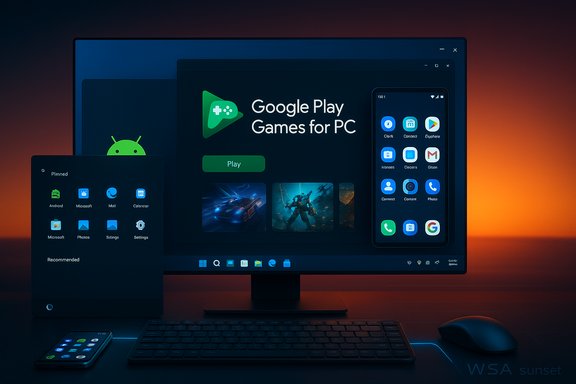 Background / Overview
Microsoft introduced the Windows Subsystem for Android as a desktop bridge: an AOSP‑derived Android runtime running inside a lightweight virtual machine that integrated apps into the Windows shell (Start, Taskbar, Snap layouts, notifications). The runtime used a curated Amazon Appstore catalog rather than Google Play, and employed translation technologies (Intel Bridge-style approaches) to run ARM‑targeted apps on x86 hardware. That experiment delivered useful convenience — but it was always narrower in scope than a full Play Store experience.In early 2024 Microsoft began signalling a change in direction. The company’s support documentation and license materials state that WSA and the Amazon Appstore on Windows would no longer be available in the Microsoft Store beginning March 5, 2025, and customers who had installed WSA or Amazon Appstore prior to March 5, 2024 would be able to use existing installs through the deprecation window. The practical implication: the native, officially supported path to install arbitrary Android apps directly under Windows is gone; the platform will no longer receive updates or new store deliveries after the sunset date. Why this matters: Android‑only mobile apps remain central to many workflows (banking, messaging, home automation, some developer tools), and the presence of Windows 11 across desktop fleets makes convenient access to those apps valuable. Market share figures rise and fall by month, but Windows 11’s user base has been climbing — the OS is no longer a tiny niche — which means demand for mobile apps on the desktop is very much alive even without WSA. Note that older figures quoted in some summer‑2024 articles (for example “about 30%”) are outdated — recent StatCounter and industry reporting show Windows 11’s share much higher, and adoption has continued to change through 2025. Use the latest StatCounter numbers or an industry tracker for current adoption when deciding whether to invest in cross‑device solutions.
What changed — the official timeline and core consequences
- Microsoft’s formal message: WSA and the Amazon Appstore on Windows will not be available in the Microsoft Store starting March 5, 2025; support and distribution are being retired. Existing installs before the March 5, 2024 cutoff were permitted to run until deprecation, but ongoing support ends with the sunset date. This is documented in Microsoft support and Learn pages.
- Practical fallout:
- You can no longer rely on the out‑of‑box Microsoft route to discover, install, and update Android apps on Windows.
- Existing WSA installs may continue to function for a time, but without security updates or fixes and with uncertain behavior following future Windows updates.
- Developers lose a managed distribution channel for Windows‑targeted Android packages via Amazon’s Appstore on Windows.
- What Microsoft is emphasizing instead: cross‑device continuity and integration models (phone‑to‑PC handoff, Resume/Continuity SDK patterns) where the preferred model is to have a native Windows experience continue or receive context from a phone app — not to host Android itself on the desktop indefinitely. That’s a strategic shift from hosting a foreign runtime to encouraging native continuity.
The two realistic lanes now: Google Play Games (for games) and emulators/VMs (for everything else)
1) Google Play Games on PC — the official game channel
Google has expanded Play Games for PC as the sanctioned first‑party gaming route on Windows. This offering focuses on gaming: title cataloging, saved progress synced to your Google account, controller mapping, and PC‑oriented input improvements.Key practical points:
- The Play Games PC client is gaming‑first. It is not a drop‑in replacement for general Android productivity apps or sideloading arbitrary APKs.
- Hardware baseline Google recommends: 8 GB RAM minimum (16 GB preferable), modern quad‑core CPU, SSD with ~10 GB free space, GPU capable of hardware acceleration. Hardware virtualization must be enabled so the runtime can use accelerated virtualization features. Wired and other early reviews summarize these baseline requirements and the current catalog approach.
- If the apps you care about are games on the Play catalog and you want the convenience of Google account sync, achievements, and controller support.
- If you prefer an officially supported, updateable route for popular mobile titles rather than tinkering with third‑party virtualization.
- If you need side‑loaded APKs, non‑game Android apps, or device‑level services not covered by the Play Games whitelist.
2) Emulators and Android VM alternatives — the catch‑all
If your priority is productivity apps, messaging clients, utilities, or sideloaded APKs, your practical options are third‑party emulators and Android‑x86/Bliss OS / PrimeOS style installations.Common, well‑established emulators:
- BlueStacks — polished, Play Store support, frequent updates, broad compatibility. Offers Android 64‑bit images and optimized gaming modes. System requirements and virtualization recommendations are published by BlueStacks.
- LDPlayer, GameLoop, NoxPlayer, MEmu — each has strengths (lightweight options, game‑focused features, legacy compatibility) and different telemetry/privacy practices.
- Android‑x86 / Bliss OS / PrimeOS — full Android images you can run in a VM or dual‑boot, providing a near‑native Android experience (more work, less Windows integration).
- Pros: full app access (including Play Store inside the VM), sideloading, frequent updates from commercial vendors, strong gaming-related feature sets.
- Cons: less seamless Windows shell integration, potential telemetry/ads, and security trade‑offs when sideloading. You’ll often trade the tight integration of WSA (taskbar pinning, Snap integration) for raw compatibility.
Practical setup: how to get Android apps running now (step‑by‑step)
A. Prepare Windows and enable virtualization (applies to Play Games and most emulators)
- Check hardware virtualization support:
- Open System Information (msinfo32) → look for “Virtualization: Enabled/Supported”.
- If not enabled, reboot into your UEFI/BIOS and enable Intel VT‑x or AMD‑V (sometimes called SVM). Many vendor docs vary; consult your OEM if unsure.
- Turn on Windows virtualization features:
- Open “Turn Windows features on or off” and enable Virtual Machine Platform and Windows Hypervisor Platform. (Hyper‑V is optional depending on edits — Virtual Machine Platform + WHP are the core features most Android runtimes rely on. Reboot. Microsoft documents this flow and troubleshooting steps.
- Reboot and confirm virtualization in Task Manager → Performance → CPU.
B. Google Play Games for PC (install flow)
- Download and install Google Play Games for PC (follow Google’s installer).
- Sign in with your Google account.
- Browse the Play Games catalog and install whitelisted titles. Remember: this client is game‑focused and won’t let you sideload arbitrary productivity APKs.
C. Emulator installation (typical flow for BlueStacks / LDPlayer)
- Download the emulator installer from the vendor site.
- Run the installer as Administrator; follow on‑screen prompts.
- After install, open the emulator, sign in to Google Play (if supported) or drag‑and‑drop an APK to sideload.
- In emulator settings, allocate recommended CPU cores and RAM (4 cores + 4–8 GB RAM is a reasonable starting point for modern games/app usage), enable GPU acceleration, and set your preferred resolution. BlueStacks recommends virtualization enabled for best performance.
D. Android‑x86 / VM approach
- Download an Android‑x86 ISO or Bliss OS image.
- Create a VM (VirtualBox, VMware, Hyper‑V) or prepare a dual‑boot USB.
- Install and configure drivers, storage, and input mappings.
- This route is powerful but more technical — expect driver quirks on certain hardware.
Sideloading and security — rules to live by
Sideloading APKs is convenient but increases your attack surface. Follow these hard rules:- Use reputable APK repositories (examples commonly recommended by community reviewers are APKMirror and F‑Droid) and verify cryptographic hashes when available. Avoid sources that advertise “modded” or “cracked” apps. Community reporting shows sideload sources have historically higher rates of harmful packages than Play Store.
- Treat emulator accounts and Play accounts used in emulators like any cloud service: unique passwords, two‑factor authentication, and minimal permission grants.
- Keep emulators updated. Commercial emulator vendors (BlueStacks, LDPlayer) publish release notes and security patches; apply them promptly.
- If you work with sensitive corporate apps (banking, MDM‑protected apps, enterprise MFA tools), prefer Phone Link mirroring or native desktop replacements rather than running those apps inside a consumer emulator — enterprises must evaluate compliance and data leakage risks.
- Community projects that repackage WSA with Google Mobile Services exist and can restore Play Store functionality to a WSA‑style runtime. These are unofficial, time‑sensitive, and can introduce maintenance, privacy, and legal risks. Treat them as advanced community experiments — not enterprise solutions.
Performance tuning and troubleshooting
- Resource allocation: give emulators 4 CPU cores and 4–8 GB RAM for typical modern apps/games. Emulators often benefit from SSD installs and up‑to‑date GPU drivers.
- GPU selection: force the emulator to use your discrete GPU in the emulator’s settings or via the Windows graphics settings if you have a dGPU.
- Resolution and FPS: lowering the emulator’s resolution to 1080p and capping at 60 fps often reduces stutter and improves stability.
- Hypervisor conflicts: some virtualization stacks conflict with one another. WSL2, Docker, VMware, VirtualBox, and Hyper‑V toggles can require adjustments — if you rely on VirtualBox or VMware for development, test which emulator works best with your configuration and follow vendor troubleshooting guides. Microsoft’s Learn pages and vendor support articles list common fixes.
Phone Link (mirror from your device) — the “least risky” path for many users
If you prefer not to install emulators or sideload APKs, Phone Link (Link to Windows) mirrors app windows from your Android phone to Windows. The app runs on the phone; Windows is the display and input surface. Advantages:- Low security risk: app execution and credentials stay on the phone.
- Seamless for many tasks: notifications, SMS, photo transfer, and supported app mirroring.
- No need to enable virtualization or install third‑party VM software.
- Mirroring depends on OEM/phone compatibility; not every Android phone supports multi‑app mirroring.
- Latency and any DRM or secure video may break or be blocked in mirrored sessions.
- It’s a streaming model, not an on‑PC runtime — you can’t run the app offline on the PC.
Enterprise and admin considerations
- Don’t depend on WSA for business workflows going forward. Microsoft’s deprecation makes WSA an unsupported long‑term choice; enterprises should plan migration to native Windows apps, web apps/PWAs, or vetted virtualization stacks the organization controls.
- Admins should evaluate emulators for telemetry, privacy, licensing, and endpoint management implications. Some consumer emulators are not designed for corporate deployment. Vet vendors and prefer containerized or managed virtualization solutions where possible.
- Where security and compliance matter (MFA, banking, regulated data), the phone‑mirror model or native desktop applications remain the safest bets.
What’s not fully verifiable or remains in flux
- Longevity of existing WSA installs: Microsoft states the subsystem isn’t available in the Store after March 5, 2025 and support ends then; whether installed instances will continue to work indefinitely on every machine is uncertain. Community reports show mixed outcomes after the deprecation window, and future Windows cumulative updates could break behavior. Treat any WSA-based setup as temporary and back up app data if you rely on it.
- Community WSA+GMS builds: these projects can restore Play Store functionality for technically advanced users, but they are unsupported by Microsoft/Google and may fail after Windows updates. Use them only with full backups and a clear understanding of the risks.
Bottom line and recommended action plan
- Inventory your Android apps. Mark which ones are essential and which are convenience‑only. (This prevents unnecessary tinkering.
- For games in the Play catalog: use Google Play Games for PC for the cleanest, officially supported experience. Ensure virtualization and the recommended hardware baseline.
- For productivity, messaging, and apps not on Play: use reputable emulators (BlueStacks, LDPlayer) or Android‑x86 VMs. Allocate appropriate CPU/RAM and use SSD storage. Verify vendor privacy/telemetry practices before installing on work devices.
- For sensitive or lower‑risk workflows: prefer Phone Link mirroring to keep execution on your phone and reduce endpoint risk.
- Enterprises: don’t plan roadmaps that depend on WSA. Move to native apps, web/PWA approaches, or fully managed virtualization that you control.
Microsoft’s pivot away from running Android directly inside Windows is inconvenient for users who liked WSA’s tight integration, but it doesn’t end Android on the desktop: it reshapes how Android arrives there. For gamers, the sanctioned path is Google Play Games on PC; for utility apps, emulators and Android‑x86 remain practical if you accept the trade‑offs. If security and simplicity are top priorities, mirror your phone and let the phone run the apps. The technical pieces to keep Android working — virtualization, Windows features like Virtual Machine Platform and Windows Hypervisor Platform, trusted emulators — are all well documented and supported by vendors and Microsoft documentation; the task now is choosing the right lane for your needs and accepting the associated security and maintenance responsibilities. In closing: the convenience of one‑click Android installs from WSA was valuable, but the ecosystem isn’t broken — it’s redistributed. Follow the paths above, back up your data, verify sources, and pick the tool that matches whether you care most about convenience, compatibility, or security.
Source: findarticles.com Windows 11 ends Android app support: practical workarounds
