

Shah Rukh Khan’s six-decade sweep across cinema and commerce reads like a mirror held up to modern India: the same face that romanticized a nation on screen also sold it cars, colas, phones and the promise of aspiration. As he marks his 60th birthday, the arc from Santro salesman to Toofan‑brand megastar traces more than celebrity deals — it maps the transformation of advertising itself, from mass‑market TV jingles to programmatic, AI‑driven hyper‑personalisation. A recent retrospective by industry press lays out that journey — from Hyundai Santro in the late 1990s through Pepsi’s youth campaigns, Nokia and Lux, to Cadbury’s AI‑led “My Ad” and Thums Up’s Toofan platform — and shows how a single star became an evolving marketing instrument for changing consumer needs.
Shah Rukh Khan’s relationship with brands began as a natural extension of his on‑screen persona: charming, aspirational and endlessly relatable. Brands seized that persona and, in doing so, reached the mass markets that Bollywood films already touched. Over three decades, the nature of those associations shifted along with India’s media ecosystem:
That journey also holds lessons for brand custodians: celebrity power remains potent, but the landscape demands sharper governance, clearer ethical rules for synthetic media, and an insistence on measurement beyond momentary buzz. The campaigns that endure will be those that combine cultural fit with disciplined strategy, technical responsibility and an eye to long‑term brand health.
What the last three decades show is simple: when celebrity, creative craft and evolving media meet in disciplined ways, advertising can do more than sell a product — it can shape culture. Shah Rukh Khan’s ad career is a running case study of exactly that phenomenon.
Source: Storyboard18 Santro to Thums Up: Shah Rukh Khan’s iconic ad Journey through decades of stardom
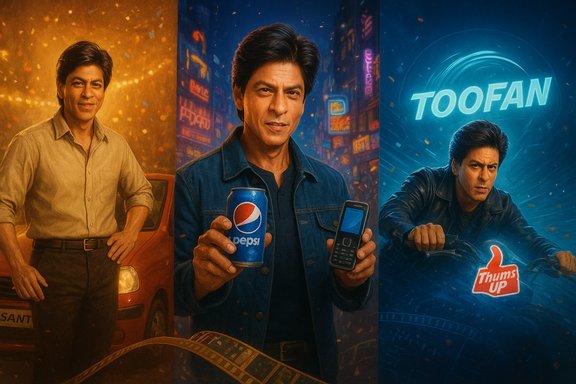 Background / Overview
Shah Rukh Khan’s relationship with brands began as a natural extension of his on‑screen persona: charming, aspirational and endlessly relatable. Brands seized that persona and, in doing so, reached the mass markets that Bollywood films already touched. Over three decades, the nature of those associations shifted along with India’s media ecosystem:- In the late 1990s and early 2000s, the playbook was star‑driven, TV‑first, and aimed at broad reach. Hyundai’s Santro and Pepsi’s “Yeh Dil Maange More” campaigns exemplified this era.
- In the 2000s, product placement, pan‑Indian telecom aspirations (Nokia) and beauty reappraisals (Lux) broadened the kinds of brands that used celebrity credibility.
- From the late 2010s onward, campaigns used digital data, programmatic buying and creative technology — most notably Cadbury Celebrations’ “Shah Rukh Khan – My Ad,” which used generative AI to make SRK a virtual ambassador for thousands of local shops.
- The past few years have seen a return to cinematic, stunt‑driven hero ads (Thums Up), but executed with omnichannel integration and social amplification.
Hyundai Santro — the ad that launched a corporate marriage
The campaign and its cultural fit
When Hyundai entered India in the late 1990s, it needed more than product features — it needed a narrative that made a Korean hatchback feel Indian. Shah Rukh Khan’s warmth and everyman charm were a natural match. The Santro campaign and SRK’s long association with Hyundai are repeatedly noted in industry reporting and contemporary press coverage; the actor’s role in popularising the Santro in India is widely acknowledged. Hyundai’s continued use of SRK is notable: the company publicly extended his ambassadorship multiple times, and the relationship was still being referenced as a 25‑year tie in Auto Expo and trade reporting. Those references corroborate the common industry claim that the Santro partnership was one of SRK’s earliest, durable corporate relationships.Why it mattered
- The Santro campaign aligned the car with the aspirational Indian middle class: affordable, modern, and family‑friendly.
- SRK’s persona helped Hyundai build trust quickly — a vital asset for a new entrant in a competitive market.
- The scale and longevity of the partnership established a template: star + sustained creative platform = durable brand equity.
Verification and caveat
Multiple independent outlets (India Today, Livemint, Moneycontrol) document the Santro association and repeatedly cite the 25‑year figure for SRK–Hyundai ties. That timeline is corroborated by press statements and auto‑industry retrospectives. While those reports align, precise contractual details (start date of the first film‑style commercial shoot, the exact year SRK signed on) vary slightly between accounts and are commonly summarised as “late 1990s.” The broad claim — that Santro was SRK’s early long‑term corporate partnership and a foundational endorsement — is well supported.Pepsi — youth culture, catchy slogans, and mass reach
“Yeh Dil Maange More” and the late‑90s youth moment
Pepsi’s “Yeh Dil Maange More” slogan, coined in 1998, became an instant cultural shorthand for youthful aspiration. SRK’s association with Pepsi in the late ’90s positioned him as the public face of that energy; his ads aligned with an urban, aspirational youth culture and helped cement Pepsi’s challenger position against Coca‑Cola. The slogan itself has a documented origin in advertising creative and was widely used across campaigns; it later permeated pop culture and public discourse.Oye Bubbly and the early‑2000s refresh
Pepsi continued to refresh its creative with celebrity‑driven executions — “Oye Bubbly” (2005) being one of the prominent examples featuring SRK. Industry coverage and contemporaneous advertising trade reporting describe the campaign’s audacious visual ideas and soundtrack‑led promotion. Those ads illustrate how cola brands used star power and music to dominate summer ad cycles.Why the Pepsi tie worked
- Youth positioning: Pepsi’s brand voice — rebellious, immediate, and musical — mapped onto SRK’s early image.
- Memetic power: short, repeatable taglines and pop culture tie‑ins (songs, celebrity cameos) made campaigns stick.
- Platform fit: TV plus music distribution (CDs, early web promos) created cultural momentum.
Risks and enduring questions
The downside of long celebrity-brand entanglement is overexposure and the occasional mismatch between star image and campaign tone. Some later Pepsi executions received mixed critical response for tone and creative choices, showing that even dominant pairings require fresh creative insight. Still, the Pepsi–SRK era remains a textbook case of star‑led platform building.Nokia — ‘Connecting People’ and the pre‑smartphone tech icon
The partnership in context
Before smartphones, Nokia was aspirational in India: durable handsets, local ring‑tones and the iconic Snake game. Nokia leveraged celebrities — including SRK — to make mobile phones feel personal and modern. The company used his pan‑Indian appeal to position devices as tools for connection rather than mere gadgets. Industry retrospectives and campaign histories describe SRK’s role in multiple Nokia activations and IPL tie‑ups, reinforcing a long‑standing association between the star and the brand.The marketing play
Nokia’s use of celebrity assets was not limited to TV commercials; it extended to experiential and cricket collaborations (Nokia’s long IPL presence and the KKR tie‑ups), where SRK’s fandom amplified product visibility. The partnership was an exemplar of combining product features with cultural aspiration.Takeaway
Nokia used SRK as a bridge between functional product claims (“durable phone, great battery”) and emotional messaging about connectivity — a tactic that worked strongly before software ecosystems became the main battleground.Lux — subversion and star‑driven glamour
The “Har Star Lucky Star” moment
Lux’s decision to feature Shah Rukh Khan in a campaign that placed him among beauty icons (Hema Malini, Sridevi, Juhi Chawla, etc. was deliberately provocative. The 2005 Lux spot — captured in multiple advertising retrospectives — used humour and self‑parody to reposition a legacy beauty brand for modern consumers. Critics at the time called it bold; Lux framed the ad as an attempt to modernise its image through playful gendered reversal.Why it mattered
- Breaking norms: the spot showed a top Bollywood male star in a context usually reserved for female endorsers, signalling Lux’s desire to be topical and culturally current.
- Risk‑taking: the ad courted controversy precisely because it challenged expectations — a sign that brands were prepared to use star power not only for safe likability, but for provocative repositioning.
Validation
Trade coverage and mainstream press documented the ad’s concept and reactions, confirming both execution details and market response. The episode is a useful data point about how celebrity endorsements evolved from straightforward face‑of‑the‑brand deals to riskier, image‑redefining collaborations.Cadbury Celebrations — “Shah Rukh Khan‑My‑Ad” and the ethics of synthetic likeness
What the campaign did
In one of the clearest examples of advertising adapting to digital tools, Cadbury Celebrations (Mondelez/Ogilvy) launched a program that used generative AI to personalise a Shah Rukh Khan ad for thousands of neighbourhood retailers during Diwali. The system recreated his face and voice at scale so a local shopkeeper’s name could be inserted into each micro‑ad. The execution was celebrated in creative festivals and won multiple industry awards for creative data and tech‑led activation.Strengths
- Empathy at scale: the campaign used celebrity equity to materially boost small businesses’ local visibility, which generated strong PR and social goodwill.
- Technical innovation: programmatic creative and synthetic media allowed a mass personalisation that would have been impossible with traditional production budgets.
- Business impact: case studies and award juries flagged the campaign’s effectiveness for footfall and social amplification.
Risks and ethical considerations
- Synthetic likeness: using a recreated image and voice of a living celebrity raises consent, rights and authenticity questions. In this case, the campaign had SRK’s participation and agency involvement, but the wider precedent matters: today’s tools make such personalisation trivially repeatable, and not all uses will have the same governance.
- Deepfake fatigue: repeated use of synthetic celebrity assets can erode authenticity. Brands must adopt clear disclosure and consent policies when deploying generative media.
- Legal/regulatory exposure: IP, publicity rights and data‑protection rules intersect in new ways with programmatic, location‑based creative.
Thums Up — action, spectacle and the Toofan playbook
From soft drink to ‘Toofan’ identity
Thums Up’s “Soft Drink Nahin, Toofan” repositioning is a textbook reinvention: it redefines the product category by imbuing it with attitude — a quality SRK’s recent Thums Up spots exploit through high‑octane stunts, train sequences and the “palat de” bottle gimmick. Reports from marketing press and mainstream outlets document SRK’s onboarding for the campaign and the integrated nature of the roll‑out across TV, social, OOH and retail.Why the collaboration works now
- Cinematic fit: SRK’s action‑hero avatar in these ads aligns with the dramatized, filmic storytelling that Thums Up wants to own.
- Omnichannel execution: the campaign is not just a TVC, it is tied to social filters, retail activations and cricket tie‑ins — reflecting a modern integrated approach.
- Emotional resonance: the brand positions itself around resilience and ambition, values that dovetail with SRK’s public narrative of perseverance.
Corroboration
Industry reports from ET BrandEquity, Mint and Campaign India provide multiple independent accounts of the creative idea and media strategy, confirming the shape and intent of the campaign.The arc of effectiveness — why SRK has endured as a marketing instrument
- Pan‑India reach: SRK’s fandom cuts across regions and languages, giving brands an immediate mass footprint.
- Persona flexibility: he can play the romantic, the comic foil, the metrosexual, the action hero — a rare versatility that enables diverse brand narratives.
- Trust and credibility: decades of consistent public image confer a redeeming reliability many brands value.
Critical analysis: strengths, blind spots and systemic risks
Notable strengths
- Brand levelling: SRK has a unique ability to lift emerging or repositioning brands almost instantly — Hyundai’s Santro and Nokia’s mass appeal are early examples.
- Creative elasticity: the actor’s willingness to parody himself (Lux), to play heroic stunts (Thums Up), or to participate in tech‑forward campaigns (Cadbury) gives agencies more creative levers.
- Cultural longevity: few endorsers remain relevant across three media generations; SRK’s continuing resonance is a major asset in a market that prizes cultural continuity.
Potential risks and tensions
- Overexposure and dilution: a singular celebrity across too many categories risks reducing message specificity. When the same face sells cars, colas, phones and soaps, the halo can flatten into background noise.
- Reputational coupling: star controversies (real or manufactured) can have outsized impacts on client brands. Long‑term brand equity can become hostage to a celebrity’s personal PR cycle.
- Ethical frontier in synthetic media: the Cadbury “My Ad” campaign works because SRK’s involvement was negotiated; a future where brands digitally replicate celebrity likenesses without clear consent is a real risk. Industry governance is still catching up.
- Political and cultural entanglement: celebrity endorsements sometimes bleed into political symbolism (a generic tension in India’s public life), which can complicate brand neutrality.
Practical guidance for brand managers
- Limit category overlap: avoid having the same celebrity endorse direct category competitors or too many adjacent categories.
- Contract for volatility: embed reputation and moral‑clauses in long‑term deals, and plan exit paths.
- Govern synthetic use: require explicit rights, disclosure language, and user opt‑ins for any AI‑generated deployment.
- Measure creative ROI: move beyond vanity metrics (likes) to footfall, purchase conversion and long‑term brand health.
How advertising evolved across SRK’s endorsements
- From mass to micro: campaigns shifted from big‑bang TV spends to data‑driven, hyperlocal activations (Cadbury).
- From static to dynamic creative: product claims once sufficed; now brands demand cinematic storytelling and interactive formats.
- From one‑way to platformed experiences: IPL tie‑ups, AR filters, programmatic video and social integrations have changed the distribution stack.
- From analogue integrity to legal complexity: synthetic media and voice‑cloning introduce new IP, publicity and disclosure obligations.
Verification note and source confidence
This article synthesises industry retrospectives and contemporaneous reporting to verify the key claims in the advertising narrative. The Storyboard18 piece (the user‑provided compilation) summarises SRK’s ad trajectory and served as the initial framework for this article. That narrative is corroborated across multiple independent trade and mainstream sources:- Hyundai–Santro association: corroborated by India Today, Livemint and industry press.
- Pepsi slogans and SRK’s role: documented in advertising histories and contemporaneous coverage (Wikipedia’s advertising entry, Business Standard, Exchange4media).
- Nokia partnership and IPL ties: supported by Nokia marketing retrospectives and IPL partnership reporting.
- Lux campaign and reaction: confirmed by feature reporting and mainstream press summaries.
- Cadbury “My Ad”: supported by agency case studies, award pages and programmatic partners’ writeups; technical details (use of Rephrase.ai/DeltaX and programmatic creative) are described in agency materials. Readers should note the campaign’s technical claims are based on agency disclosures and festival juries’ writeups.
- Thums Up’s Toofan repositioning and SRK hero ads: corroborated by ET BrandEquity, Mint and Campaign India coverage.
Conclusion
Shah Rukh Khan’s advertising journey — from Santro salesmanship through Pepsi anthems, Nokia handsets, Lux playfulness, Cadbury’s AI experiments, to Thums Up’s cinematic Toofan — is a rare continuous thread through India’s modern advertising history. It is a story of adaptability: of a star who never became trapped in a single image, and of an industry that learned to fold celebrity into ever more sophisticated technical and media strategies.That journey also holds lessons for brand custodians: celebrity power remains potent, but the landscape demands sharper governance, clearer ethical rules for synthetic media, and an insistence on measurement beyond momentary buzz. The campaigns that endure will be those that combine cultural fit with disciplined strategy, technical responsibility and an eye to long‑term brand health.
What the last three decades show is simple: when celebrity, creative craft and evolving media meet in disciplined ways, advertising can do more than sell a product — it can shape culture. Shah Rukh Khan’s ad career is a running case study of exactly that phenomenon.
Source: Storyboard18 Santro to Thums Up: Shah Rukh Khan’s iconic ad Journey through decades of stardom
