

John Blumenthal’s short, wry column about “staying chill during an authoritarian nightmare” reads like a survival manual for anyone trying to protect their mood while the country’s politics feels like a sustained emergency — and it offers a practical, if imperfect, set of strategies that mix media hygiene, nostalgia, humor and deliberate disengagement.
John Blumenthal is a Los Angeles–based writer and humorist whose career spans novels, magazine work and screenplay credits — he is credited as a co‑writer on the 1999 comedy film Blue Streak — and he has written frequently for regional outlets. The column is an opinion piece that addresses a very real phenomenon: political strain and anxiety caused by persistent media coverage, social media loops, and daily crises. It’s less a policy argument than a personal therapy session—Blumenthal uses humor (and pop‑culture escapism) to map how he protects his mental bandwidth. The piece is full of relatable tactics: stop watching TV news, curtail political content on social feeds, swap in pet videos, re‑watch idealized portrayals of governance like The West Wing, and retreat into memories and small pleasures. Those are behavioral coping moves that many readers will recognize or already practice.
At the same time, the column mixes fact, observation and sharp opinion: it name‑checks media personalities and public figures, mis‑spells a pharmaceutical name (Lexapro appears as “Lexipro”), and uses rhetorical hyperbole (comparing modern political theater to Dr. Strangelove). Where the column is explicit about being personal and humorous, it’s fair journalism to separate verifiable facts, reasonable inferences, and subjective claims — and to consider both the benefits and the risks of Blumenthal’s approach.
At its heart, Blumenthal’s column is a personal survival guide that emphasizes emotional regulation over ideological purity. That frame is helpful for many readers, but it should be paired with occasional, deliberate civic participation to ensure that comfort does not calcify into complacency.
Key takeaways:
Source: Cleveland.com How I’m staying chill during an authoritarian nightmare: John Blumenthal
 Background / Overview
John Blumenthal is a Los Angeles–based writer and humorist whose career spans novels, magazine work and screenplay credits — he is credited as a co‑writer on the 1999 comedy film Blue Streak — and he has written frequently for regional outlets. The column is an opinion piece that addresses a very real phenomenon: political strain and anxiety caused by persistent media coverage, social media loops, and daily crises. It’s less a policy argument than a personal therapy session—Blumenthal uses humor (and pop‑culture escapism) to map how he protects his mental bandwidth. The piece is full of relatable tactics: stop watching TV news, curtail political content on social feeds, swap in pet videos, re‑watch idealized portrayals of governance like The West Wing, and retreat into memories and small pleasures. Those are behavioral coping moves that many readers will recognize or already practice.At the same time, the column mixes fact, observation and sharp opinion: it name‑checks media personalities and public figures, mis‑spells a pharmaceutical name (Lexapro appears as “Lexipro”), and uses rhetorical hyperbole (comparing modern political theater to Dr. Strangelove). Where the column is explicit about being personal and humorous, it’s fair journalism to separate verifiable facts, reasonable inferences, and subjective claims — and to consider both the benefits and the risks of Blumenthal’s approach.
What Blumenthal recommends — a practical breakdown
Blumenthal’s tactics are straightforward and actionable. Below is a distilled version of his approach, with commentary on why each move works and what to watch out for.1. Stop watching TV news
- The move: Tune out the 24/7 cable churn and avoid hourly “Breaking News” cycles.
- Why it helps: Constant exposure to sensationalized content amplifies stress responses, keeps the sympathetic nervous system chronically activated, and reduces cognitive bandwidth for constructive action.
- Risk / caveat: Complete disengagement can leave you uninformed about critical developments (policy changes, local emergency alerts). Balance matters: consider curated, trusted summaries rather than nonstop live coverage.
2. Re‑train social feeds (TikTok, Instagram) to non‑political content
- The move: Reset algorithmic preferences from politics to light content (pets, hobbies, comedy).
- Why it helps: Algorithms optimize for engagement — which often means outrage and attention‑grabbing posts. Switching what the feed rewards quickly lowers the frequency of political stimuli in your day.
- Risk / caveat: Algorithm changes are not perfect; important civic information may also be filtered out. Use a parallel, minimal news channel (email newsletter from a reliable source, or a single podcast) for essential updates.
3. Seek fictional political comfort (The West Wing, reruns)
- The move: Watch idealized representations of public service and governance.
- Why it helps: Narrative therapy and restorative media consumption can restore a sense of how things might work in a well‑functioning democratic system. It re‑frames expectations and offers models of competent, principled leadership.
- Risk / caveat: Relying solely on fiction risks living in a curated reality that can blunt civic energy or misrepresent complexity. Use this as emotional grounding, not as a substitute for civic engagement.
4. Practise nostalgia and “simpler times” recall
- The move: Reminisce about childhood freedoms and less politically saturated pasts.
- Why it helps: Positive memory recall can improve mood and reduce anxiety for many people; it’s a classic coping mechanism.
- Risk / caveat: Nostalgia can whitewash structural injustices of the past and suggest a false sense that “it was better then for everyone.” A balanced reflection acknowledges the imperfections of prior eras while accepting the benefits of respite.
5. Create physical and psychological “Trump‑free zones”
- The move: Designate spaces, times, or rituals that are intentionally free of political content.
- Why it helps: Boundaries protect mental health; ritualized escapes provide renewal and interrupt the cognitive pattern of rumination.
- Risk / caveat: Complete avoidance inside the home can cause friction with partners or family members who are politically active. Negotiate boundaries explicitly.
The psychology behind Blumenthal’s tactics
Blumenthal’s column is rooted in a simple premise: chronic exposure to political emergency is a stressor, and stressors are manageable through behavior change.- Stress‑buffering through selective exposure: Reducing intake of high‑arousal media lowers baseline stress. Clinically, avoidance strategies can reduce acute distress; the goal is to keep avoidance strategic rather than absolute.
- Emotional regulation via humor and nostalgia: Humor activates reward circuits and creates emotional distance; nostalgia provides identity continuity and meaning during uncertain times.
- Behavioral activation: Choosing actionable swaps (pets, old TV shows, music) is a form of behavioral activation — replacing maladaptive coping (doom‑scrolling) with activities that reliably increase positive affect.
- Social validation and protest: The column acknowledges protests as a collective regulatory mechanism: public action both channels grievance and produces social support.
Verifying claims and author credentials
Good reporting distinguishes personal narrative from verifiable claim. Two straightforward, checkable facts from the column:- John Blumenthal’s credentials as a writer and screenwriter: public biographies and film records list him as the co‑writer on Blue Streak and as an author with a long magazine background. This confirms that the author is an experienced writer with film credits — a useful context for interpreting his blend of media references and humor.
- Lexapro (the SSRI Blumenthal references in passing) is spelled and marketed as Lexapro (generic escitalopram). The drug is an SSRI approved for depression and anxiety — the column’s shorthand about friends “on Lexapro” references the common use of that drug class for mood management. Note that the column misspells it as “Lexipro”; the correct spelling and medical details are recorded in standard drug references.
Critical analysis: what works in Blumenthal’s approach — and what’s risky
Strengths — why many of these tactics are effective
- Immediate mood relief: Simple behavioral swaps (pets, oldies music, comedy) produce quick emotional returns and are easy to implement.
- Agency and boundaries: The column models an active stance: you can alter your environment and media diet to protect mental health rather than letting the news set the day’s rhythm.
- Humor as inoculation: Using satire and allegory (Dr. Strangelove, B‑movie metaphors) helps re‑scale fear into manageable perspective and fosters social bonding among readers who share the joke.
- Practical, low‑cost steps: Unlike counseling or activism infrastructure, Blumenthal’s tactics require no special resources — just time and intentional choices.
Risks and blind spots
- Information gaps: Radical avoidance can generate ignorance on essential civic matters. For example, missing shifts in voting procedures, local emergency alerts, or policy changes can have real consequences.
- Polarization of social ties: A hard partition between political and non‑political life may isolate friends or family who feel the urgency to act; that can produce interpersonal strain.
- Complacency hazard: Comfort and distraction can become long‑term disengagement if not paired with purposeful civic action where it matters (voting, local organizing, advocacy).
- Medical simplification: Joking about antidepressants (and misspelling medication names) risks trivializing legitimate clinical treatment for serious conditions. If mood changes are persistent and impairing, professional care is essential.
A pragmatic toolkit: a balanced, evidence‑informed plan to “stay chill” without becoming oblivious
Below is a practical, step‑by‑step plan that builds on Blumenthal’s tactics while addressing their limitations.- Establish your information minimum
- Pick one or two trusted sources (a daily newsletter, a public broadcaster digest, or a short podcast) for essential updates.
- Schedule a single 20–30 minute check once per day to avoid continuous monitoring.
- Curate your feed intentionally
- On social platforms, use built‑in settings: unfollow politicized accounts, mute keywords, and favor positive interests (pets, hobbies).
- Consider one “news account” that posts only verified updates you need.
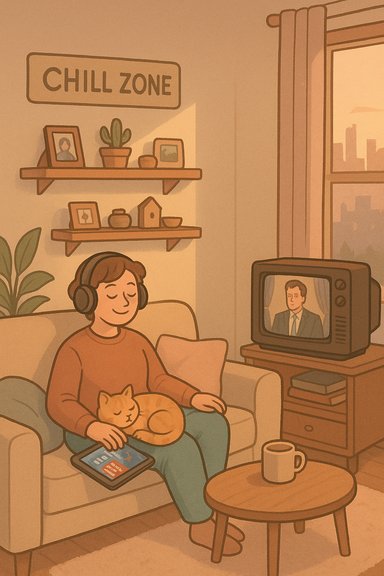
- Create a “chill zone” ritual
- Designate certain rooms/times as political‑free: dinner hour, Sunday mornings, bedtime.
- Use those windows for restorative media (fiction, music, old shows) and human connection.
- Use humor and narrative as emotional scaffolding
- Rewatch shows that model competence and decency to replenish civic imagination.
- Balance fiction with a weekly civic check‑in: read a policy explainer or a local paper for context.
- Channel anger into organized action
- Replace reactive venting with scheduled activism: volunteer shifts, a letter‑writing block, or occasional protest participation.
- Set small measurable goals (three calls to reps per month, one neighborhood meeting) to maintain agency without constant exposure.
- Monitor your mental health
- Use simple metrics: if sleep, appetite, work, or relationships suffer for more than two weeks, talk to a professional.
- Remember that medication (e.g., SSRIs like Lexapro), therapy, and support groups are valid options when distress is clinical rather than situational.
Media hygiene: a practical checklist
- Unsubscribe from sensationalist push alerts.
- Replace real‑time cable with a curated morning briefing.
- Set app time limits for social media.
- Use reading apps (Instapaper, Pocket) to save long reads for scheduled, calm consumption.
- If sharing political content, ask: does this inform action or just inflame?
Cultural and civic context
Blumenthal’s column is part of a larger cultural pattern: people combining humor, nostalgia and selective disengagement to maintain emotional equilibrium in an era of political turbulence. Online communities and forums reflect the same pattern: intense bursts of mobilization interleaved with tactical retreats. The conversation about how much news exposure is “too much” is not new; it’s a recurring debate about the balance between being an informed citizen and a healthy human being. Some tech and civic threads have even discussed how shifts in the news cycle and platform algorithms affect mental health and civic behavior, underlining that the problem is structural, not merely individual.At its heart, Blumenthal’s column is a personal survival guide that emphasizes emotional regulation over ideological purity. That frame is helpful for many readers, but it should be paired with occasional, deliberate civic participation to ensure that comfort does not calcify into complacency.
When avoidance becomes abdication — ethical and civic tradeoffs
Avoiding the news may be the right short‑term strategy for emotional preservation, but there’s an ethical tradeoff: democracy depends on an informed citizenry. The practical compromise is to decouple urgency from attention:- Urgent civic actions (voting, jury duty, local public‑health orders) deserve attention and should be scheduled into your life.
- Ongoing political theater — sensational cable segments and performative outrage cycles — can often be safely deprioritized without weakening your civic responsibilities.
Final assessment and recommendations
John Blumenthal’s column is honest, humane and useful for readers seeking immediate emotional relief from political saturation. It succeeds because it provides concrete, low‑friction tactics, and it validates a common need: to preserve one’s mood and relationships while the world feels unstable.Key takeaways:
- Use intentional exposure: choose what to watch and when; don’t let algorithms choose for you.
- Replace doom‑scrolling with restorative habits: pets, music and favorite shows are cheap, effective mood lifts.
- Balance avoidance with civic muscle: preserve energy for concrete acts of participation.
- Be precise about medical language: medication is valid; if symptoms are clinical, seek professional care.
- Set a 20‑minute daily news window and a separate leisure window.
- Mute political keywords on social platforms for 30 days and reassess.
- Schedule one measurable civic activity each month.
- Keep two trusted news sources for factual updates (one national, one local).
- If mood symptoms persist, consult a licensed clinician.
Source: Cleveland.com How I’m staying chill during an authoritarian nightmare: John Blumenthal