

Valve’s latest Steam client beta has quietly opened a new front in cross-platform controller compatibility, adding native recognition for Nintendo’s fresh hardware and bringing long-requested GameCube adapter support to Windows — and it did so at the same moment the Steam client moved to a modern 64‑bit architecture on Windows 10 and Windows 11.
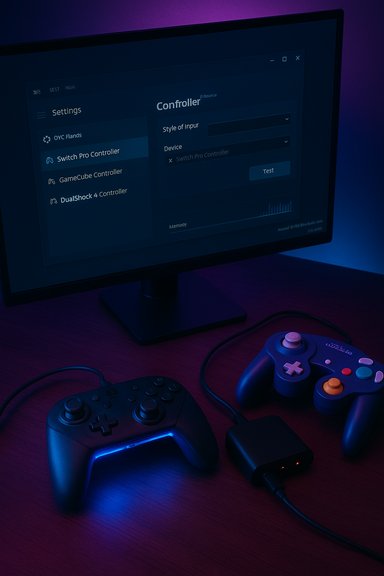
This week’s Steam Client Beta introduced three headline changes that matter to both input purists and system administrators: USB support for Nintendo Switch 2 controllers inside Steam Input, recognition of GameCube adapters in Wii U mode (including rumble) on Windows, and the transition of the Steam client to 64‑bit on Windows 10/11 systems. The beta also resolves a handful of platform-specific bugs — notably an H.265 export/clipboard issue affecting systems with NVIDIA RTX 50‑series GPUs — and promotes newer gyro modes to default behavior inside Steam Input.
Taken together, these updates signal Valve’s continued investment in Steam Input’s device ecosystem and a push to modernize the Steam client for the memory and security demands of contemporary gaming. They also have immediate, practical consequences for players who want to use Nintendo-branded controllers and legacy GameCube peripherals with PC games.
Meanwhile, GameCube controllers retain passionate advocates — particularly in the fighting-game and retro-emulation communities. Historically, getting a GameCube controller to behave correctly on Windows has required third‑party drivers, patchwork adapter modes, or emulator-specific workarounds. Native Steam Input support for adapters in Wii U mode removes friction and brings consistent configurator tooling and community profile sharing to a device many competitive players still prefer.
Finally, the move to a native 64‑bit Steam client on Windows is a technical milestone with measurable impacts for performance, security mitigations, and the future direction of the platform. As games and tools demand ever more memory and tighter process isolation, running the client as a 64‑bit process reduces a class of legacy constraints.
One claim circulating in early coverage — that Nintendo had not officially announced the Switch 2 — is inaccurate. Nintendo’s product timeline shows the Switch 2 as commercially released earlier in 2025, and many Switch 2 units are in the wild today. The Steam patch notes and device support entries refer to the Switch 2 product family — not to an unreleased or vapor device — so Steam’s recognition is consistent with an already‑released console and controller line.
Where certainty drops off is in the implication of formal collaboration between Valve and Nintendo. Valve’s beta inclusion of Switch 2 controller recognition suggests Valve either had access to hardware or device documentation, or implemented compatibility based on reverse engineered/observed behavior. That could have come from formal partner channels, developer hardware circulating among third parties, or community efforts; the beta notes alone don’t prove which. Treat any claim about direct Valve–Nintendo coordination as plausible but unconfirmed unless either company states it outright.
The wired‑only limitation and adapter heterogeneity are reminders that hardware ecosystems remain messy; Valve can reduce friction, but device vendors and platform owners still shape the ultimate user experience. Still, the beta’s combination of quality‑of‑life fixes and forward‑looking engineering makes this a meaningful update for both everyday gamers and power users who depend on precise input behavior and modern client performance.
Source: Rolling Out What Steam just revealed about Nintendo Switch 2 early
 Overview
This week’s Steam Client Beta introduced three headline changes that matter to both input purists and system administrators: USB support for Nintendo Switch 2 controllers inside Steam Input, recognition of GameCube adapters in Wii U mode (including rumble) on Windows, and the transition of the Steam client to 64‑bit on Windows 10/11 systems. The beta also resolves a handful of platform-specific bugs — notably an H.265 export/clipboard issue affecting systems with NVIDIA RTX 50‑series GPUs — and promotes newer gyro modes to default behavior inside Steam Input.Taken together, these updates signal Valve’s continued investment in Steam Input’s device ecosystem and a push to modernize the Steam client for the memory and security demands of contemporary gaming. They also have immediate, practical consequences for players who want to use Nintendo-branded controllers and legacy GameCube peripherals with PC games.
Background: why this matters now
Steam Input has long served as Valve’s compatibility layer that maps a wide range of controllers into usable input for thousands of PC games. Over the last console generation Valve added official support for Nintendo’s Joy‑Con and Pro Controller families; the new beta builds on that effort by recognizing the next generation of Nintendo hardware on PC.Meanwhile, GameCube controllers retain passionate advocates — particularly in the fighting-game and retro-emulation communities. Historically, getting a GameCube controller to behave correctly on Windows has required third‑party drivers, patchwork adapter modes, or emulator-specific workarounds. Native Steam Input support for adapters in Wii U mode removes friction and brings consistent configurator tooling and community profile sharing to a device many competitive players still prefer.
Finally, the move to a native 64‑bit Steam client on Windows is a technical milestone with measurable impacts for performance, security mitigations, and the future direction of the platform. As games and tools demand ever more memory and tighter process isolation, running the client as a 64‑bit process reduces a class of legacy constraints.
What the beta actually changed
Steam Input: Switch 2 controller support (USB only, for now)
- Steam Input now recognizes Nintendo Switch 2 controllers when connected over USB on Windows machines.
- At present the implementation requires a wired connection; Bluetooth or other wireless pairing is not listed as supported in this beta.
- Once recognized, Switch 2 controllers appear as configurable devices within Steam Input, enabling per‑game mappings, community configurations, gyro tuning, and other Steam Input features.
GameCube adapters: Wii U mode and rumble passthrough
- Steam Input gained explicit support for GameCube adapters operating in Wii U mode, with rumble/force‑feedback properly passed through to the controller.
- This update primarily benefits players who use adapters that present themselves to the host as Wii U devices (the mode commonly recommended for accurate mapping in emulators).
- With the adapter recognized by Steam Input, GameCube controllers can be configured and assigned through Steam’s configurator across the entire Steam library.
Steam client goes 64‑bit on Windows 10 and 11
- The Windows Steam client is now a 64‑bit process on Windows 10 (64‑bit) and Windows 11.
- Valve confirmed continued updates for 32‑bit Windows clients until January 1, 2026, after which 32‑bit users should expect the legacy client to be frozen and not receive feature updates.
Other notable fixes and tweaks
- A fix targeting H.265 (HEVC) export and clipboard-copy errors affecting systems with NVIDIA’s 50‑series GPUs was included.
- A regression that affected controller hotplug detection in Unity engine games was fixed.
- Newer gyro modes previously gated in beta were promoted to default; legacy configurations remain available and can be made visible via Steam Input developer mode.
- A rare crash in the desktop configurator when previewing another game’s configuration was addressed.
Verifying the claims and separating fact from speculation
Multiple independent outlets and the Steam beta changelog corroborate the three technical headlines above: Switch 2 USB support, GameCube adapter Wii U mode recognition with rumble, and the 64‑bit client rollout for Windows 10/11. The Switch 2 USB‑only caveat appears explicitly in the beta notes and has been echoed in reports and early tester commentary.One claim circulating in early coverage — that Nintendo had not officially announced the Switch 2 — is inaccurate. Nintendo’s product timeline shows the Switch 2 as commercially released earlier in 2025, and many Switch 2 units are in the wild today. The Steam patch notes and device support entries refer to the Switch 2 product family — not to an unreleased or vapor device — so Steam’s recognition is consistent with an already‑released console and controller line.
Where certainty drops off is in the implication of formal collaboration between Valve and Nintendo. Valve’s beta inclusion of Switch 2 controller recognition suggests Valve either had access to hardware or device documentation, or implemented compatibility based on reverse engineered/observed behavior. That could have come from formal partner channels, developer hardware circulating among third parties, or community efforts; the beta notes alone don’t prove which. Treat any claim about direct Valve–Nintendo coordination as plausible but unconfirmed unless either company states it outright.
Practical impact for users today
For PC gamers and controller enthusiasts
- If you own a Switch 2 controller, you can now plug it into Windows and use it via Steam Input for most titles — provided you’re running the Steam Client Beta and the controller is connected via USB.
- GameCube controller users who own a Wii U‑mode adapter now gain an easier path to integrate their controllers with all Steam games using the Steam configurator and community profiles.
- Gyro users benefit from improved default gyro modes, and Unity developers should see better hotplug behavior in titles built on that engine.
How to opt into the Steam Client Beta (quick steps)
- Open Steam and log in.
- Click Steam → Settings.
- Select Interface → Client Beta Participation.
- Choose Steam Beta Update and restart Steam.
Caveats, gotchas and remaining pain points
- Wireless functionality for Switch 2 controllers is not available in the beta; Bluetooth pairing will need separate support and drivers. Expect wireless support to arrive in future updates or after Nintendo provides additional firmware/drivers.
- Not all GameCube adapters are identical. Some third‑party adapters expose multiple device interfaces or imperfect analog trigger mappings, which can confuse games or Steam Input. Community reports show certain adapters still present buggy inputs that require vendor firmware updates or configuration workarounds.
- The H.265 export fix targets specific NVIDIA 50‑series GPUs; users with other GPU models experiencing related issues should continue to monitor the Steam Beta thread for follow‑ups.
Why Valve’s timing matters
Valve’s inclusion of Switch 2 controller support today reflects multiple concurrent pressures:- A hardware refresh cycle at Nintendo has put new controllers into the market, and PC players increasingly expect seamless cross‑platform controller support.
- The push to a 64‑bit client simplifies Valve’s engineering surface area for future features, including bigger in‑client overlays, more complex recording/streaming integrations, and improved security mitigations that often assume 64‑bit environments.
- Steam Input’s broader compatibility reduces entry friction for players migrating from console ecosystems to PC and helps Valve maintain Steam as the center of players’ controller profiles and social/sharing workflows.
Risks and unknowns: what to watch
Fragmented adapter and vendor behavior
Not all GameCube adapters behave the same. While Wii U mode is the target, vendors implement USB descriptors differently. That can produce:- Duplicate device listings
- Missing analog range for triggers
- Inconsistent rumble/feedback behavior
Wireless and driver support
Steam’s support is currently wired‑only for Switch 2 controllers. Wireless support depends on:- Nintendo releasing Bluetooth profiles/drivers allowing standard host pairing, or
- Valve adding alternative wireless bridging support into Steam.
Enterprise and legacy users left behind
Valve’s 64‑bit migration includes a transition period for 32‑bit Windows users, but the January 1, 2026 cutoff is a hard calendar point. Organizations or hobbyists running legacy 32‑bit systems should plan migration or accept the maintenance freeze. After that date, 32‑bit users should not expect feature updates and will be effectively frozen on older client builds.Privacy and telemetry considerations
Any time a platform expands native device support, it often collects new device descriptors, firmware strings, and usage telemetry to improve compatibility. Users and administrators should be aware of potential new data categories captured by client updates and verify enterprise privacy policies if that matters in managed environments.Deep dive: what Steam Input’s GameCube adapter support means for emulation and competitive play
For Dolphin and other emulators, adapters in Wii U mode have long been the recommended configuration because they present standardized mappings and rumble channels similar to original hardware. Steam Input recognizing those adapters means:- Players can use Steam’s global or per‑game controller profiles to translate GameCube inputs into Steam actions even for titles that lack native GameCube mapping.
- Rumble support being explicitly passed through reduces the need to patch emulators to force rumble on or use intermediary tools.
- Community profiles for popular games — including fighting titles — can be shared through Steam in a single integrated workflow.
The 64‑bit transition: technical and operational implications
Switching the Steam client to 64‑bit on Windows is not just a checkbox change. The consequences include:- Improved memory headroom: The client can address more RAM directly, reducing the chance of memory fragmentation or limits when managing large libraries, running overlays, or processing recordings.
- Better integration with modern libraries: Many third‑party libraries and SDKs have migrated to 64‑bit first; aligning the client avoids painful ABI and dependency mismatches.
- Security benefits: Certain mitigations and OS-level protections are easier to enforce on 64‑bit processes. This doesn’t eliminate attack surfaces but reduces legacy compatibility constraints that sometimes weaken defensive options.
- Operational planning for IT: Organizations with locked‑down update windows or strict environment baselines must schedule Windows upgrades for machines running 32‑bit Windows if they want to remain current after the January 1, 2026 cutoff.
Community reaction and real‑world testing notes
Early testers and community posts show broad enthusiasm — most reactions focus on the ability to use a Switch 2 or GameCube controller with modern PC titles without third‑party utilities. The most common user notes include:- Praise for rumble support on adapters and the convenience of Steam configurator profiles.
- Frustration at the wired‑only limitation for Switch 2 controllers, with requests for Bluetooth pairing support.
- Reports of adapter vendor inconsistencies — some adapters still expose buggy or duplicate inputs that require manual remapping.
- Relief that 64‑bit transition appears smooth for the majority of users, with the NVIDIA H.265 export fix called out by content creators who were previously blocked by the bug.
Recommendations for readers
- Opt into the Steam Beta only if you want early access or you are comfortable troubleshooting occasional regressions. Back up important configurations before switching.
- If you rely on GameCube controllers for competitive play, test your adapter and mapping thoroughly in the beta. Keep a fallback plan for events.
- For Switch 2 owners, use wired USB for now if you want immediate Steam Input integration. Monitor future updates for wireless support.
- Organizations running 32‑bit Windows should schedule migrations well before January 1, 2026 to avoid being locked to a legacy Steam client build.
- If you’re a developer shipping a Unity‑based title, confirm controller hotplug behavior on the updated client to ensure end‑users don’t experience regressions.
Conclusion
Valve’s Steam Client Beta update is a compact but consequential package: it modernizes the client’s foundation by moving to 64‑bit on Windows 10/11, smooths controller interoperability with two notable Nintendo‑adjacent wins, and fixes a few developer and content‑creator headaches. For players, the immediate payoff is simpler access to Switch 2 controllers (via USB) and genuine GameCube adapter support with rumble. For the platform, the move strengthens Steam Input’s role as the central controller hub for PC gaming.The wired‑only limitation and adapter heterogeneity are reminders that hardware ecosystems remain messy; Valve can reduce friction, but device vendors and platform owners still shape the ultimate user experience. Still, the beta’s combination of quality‑of‑life fixes and forward‑looking engineering makes this a meaningful update for both everyday gamers and power users who depend on precise input behavior and modern client performance.
Source: Rolling Out What Steam just revealed about Nintendo Switch 2 early
