

Stellantis’ new five-year collaboration with Microsoft is more than another enterprise AI press release. It is a sign that automotive manufacturing is moving from isolated pilots toward platform-scale transformation, with security, cloud migration, and customer experience tied together under one umbrella. The companies say they will co-develop more than 100 AI initiatives, and that Stellantis will also target a 60% reduction in datacenter footprint by 2029 as it shifts deeper into Microsoft Azure. That combination matters because it links industrial modernization with connected-vehicle security at a moment when both topics are under intense scrutiny.
The announcement lands at a point when automakers are being pushed in two directions at once. On one side, they need to ship software-rich vehicles, mobile apps, and connected services that feel more like digital products than mechanical assets. On the other, they must defend sprawling IT estates, factories, and vehicle platforms against cyberattacks that can disrupt production or compromise customer trust.
Stellantis and Microsoft are framing this partnership as a way to do both at once. According to Microsoft’s announcement, the companies will build more than 100 AI initiatives across customer care, product development, and operations, while Stellantis also plans to migrate to Azure and reduce its datacenter footprint by 60% by 2029. The scale of that ambition suggests this is not a narrow deployment of one tool, but a broader re-architecture of enterprise systems.
The collaboration also reflects a familiar but still consequential pattern in enterprise technology: a large industrial company leans on a hyperscaler to accelerate modernization faster than its own legacy stack could allow. In return, the cloud provider gets a marquee reference customer in a sector where the stakes include safety, uptime, and regulated data handling. That makes the deal strategically useful for both sides, but it also raises the bar for execution. Promising language is cheap; operational change is not.
Stellantis chief engineering and technology officer Ned Curic said the company has been an early adopter of AI across engineering, manufacturing, design, and customer interaction, and that Microsoft will help accelerate that momentum. Microsoft commercial chief Judson Althoff, meanwhile, cast the partnership as a way to deliver value for millions of drivers through trusted cloud, AI, and security platforms. Those are standard corporate talking points, but they point to something real: the carmaker is trying to turn AI into an enterprise operating layer rather than a side experiment.
That spread tells us the program is being designed as an end-to-end transformation effort rather than a single departmental upgrade. In automotive, that matters because engineering, manufacturing, supply chain, and support are deeply interdependent. A better maintenance model can reduce warranty claims, but only if engineering data, service data, and fleet telemetry can move across systems fast enough to influence decisions.
The cybersecurity angle is equally important. The companies say Stellantis will use Microsoft’s security platform to deploy an AI-driven global cyberdefence centre, protecting IT systems, manufacturing sites, digital products, and connected vehicles. That is a broad mandate, and it reflects the reality that a modern automaker’s attack surface is no longer limited to office networks.
Microsoft says Stellantis will use its security platform to build an AI-driven global cyberdefence centre that protects IT systems, manufacturing sites, digital products, and connected vehicles. The company also says safeguarding measures will be embedded into mobile applications, in-vehicle services, and digital vehicle experiences. That is an important shift because it treats security as a design principle, not an after-the-fact patch.
But secure connectivity in vehicles is a difficult engineering problem. Cars increasingly rely on cloud services, over-the-air updates, telematics, mobile apps, and external APIs. Each integration point broadens the attack surface, which means a robust security architecture must cover identity, encryption, monitoring, anomaly detection, and incident response across multiple layers.
The appeal is easy to understand. A carmaker with global operations needs elasticity, resiliency, and faster access to shared data. Cloud platforms can support AI workloads, cross-region collaboration, and standardized security controls better than fragmented on-premises environments. They can also reduce the burden of maintaining old hardware, which is often expensive to refresh and difficult to integrate.
That shift offers clear upside, but it comes with trade-offs. Dependency on a major cloud partner increases concentration risk, and moving critical systems can expose hidden technical debt that only becomes visible during migration. The gain is scale; the cost is reduced architectural independence.
Automakers have been trying for years to make the ownership experience feel more connected, but execution has often been uneven. Too many apps are fragmented, too many support channels are disconnected, and too many digital features feel bolted on rather than integrated. AI offers a way to streamline that experience, but only if the data backbone is good enough to support it.
At the same time, consumer trust will hinge on how Stellantis uses the data. Drivers may welcome a service reminder or a faster help-desk response, but they are less likely to appreciate opaque data collection or overly aggressive personalization. That tension is central to the future of connected mobility.
AI-assisted validation could help engineers test more scenarios, identify design issues sooner, and simulate outcomes before committing to physical prototypes. Combined with manufacturing data, that can help reduce waste and improve quality control. In a company the size of Stellantis, even modest improvements can compound across multiple brands, platforms, and regions.
That means the best use of AI here is likely to be decision support rather than autonomous decision-making. Engineers will still need to verify results, compare scenarios, and interpret edge cases. Human-in-the-loop workflows will remain essential, especially where safety or recall implications could emerge.
This matters because enterprise AI adoption usually succeeds when it becomes part of everyday workflows. If engineers use it for documentation, if support teams use it for case triage, and if operations teams use it for summarization and planning, the organization gradually builds AI fluency. That can make more specialized automation projects easier to implement later.
Still, broad access also raises governance issues. Companies must manage data leakage, prompt hygiene, access controls, and output quality. A well-intentioned employee can still paste sensitive information into a tool that is not configured appropriately, so policy and training matter as much as the model itself.
For Microsoft, Stellantis is a useful proof point in an industry where cloud, AI, and security increasingly need to be sold as a single stack. For Stellantis, Microsoft offers a route to faster transformation with a vendor that already has deep enterprise credibility. The result is a partnership that could influence how other automakers think about platform strategy.
This could also accelerate vendor consolidation. Rather than stitching together point solutions from many providers, manufacturers may prefer broader strategic alliances that cover AI, cloud, and security in one roadmap. That would benefit hyperscalers and large enterprise software vendors, but it could make it harder for smaller specialist firms to break in.
It will also be worth watching how much of the partnership becomes visible to drivers versus remaining mostly behind the scenes. Consumer trust will grow if the AI shows up as more dependable service, better connectivity, and more helpful maintenance tools. If it instead feels like a layer of abstraction with unclear benefit, the value proposition will be harder to defend.
Source: Technology Record Stellantis to co-develop more than 100 AI initiatives with Microsoft
 Overview
The announcement lands at a point when automakers are being pushed in two directions at once. On one side, they need to ship software-rich vehicles, mobile apps, and connected services that feel more like digital products than mechanical assets. On the other, they must defend sprawling IT estates, factories, and vehicle platforms against cyberattacks that can disrupt production or compromise customer trust.Stellantis and Microsoft are framing this partnership as a way to do both at once. According to Microsoft’s announcement, the companies will build more than 100 AI initiatives across customer care, product development, and operations, while Stellantis also plans to migrate to Azure and reduce its datacenter footprint by 60% by 2029. The scale of that ambition suggests this is not a narrow deployment of one tool, but a broader re-architecture of enterprise systems.
The collaboration also reflects a familiar but still consequential pattern in enterprise technology: a large industrial company leans on a hyperscaler to accelerate modernization faster than its own legacy stack could allow. In return, the cloud provider gets a marquee reference customer in a sector where the stakes include safety, uptime, and regulated data handling. That makes the deal strategically useful for both sides, but it also raises the bar for execution. Promising language is cheap; operational change is not.
Stellantis chief engineering and technology officer Ned Curic said the company has been an early adopter of AI across engineering, manufacturing, design, and customer interaction, and that Microsoft will help accelerate that momentum. Microsoft commercial chief Judson Althoff, meanwhile, cast the partnership as a way to deliver value for millions of drivers through trusted cloud, AI, and security platforms. Those are standard corporate talking points, but they point to something real: the carmaker is trying to turn AI into an enterprise operating layer rather than a side experiment.
What Stellantis Is Building
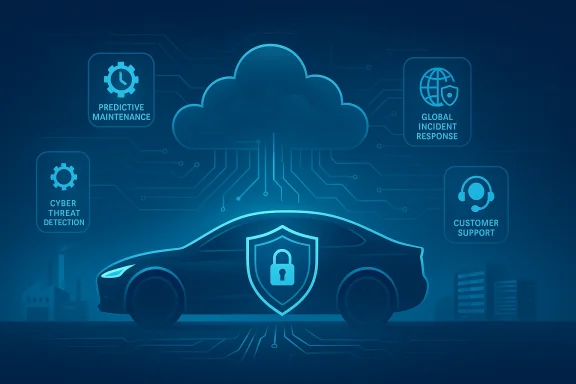
The headline number is the easiest part to remember: more than 100 AI initiatives. The more important question is what those initiatives actually span. Microsoft says the work will cover customer care, product development, and operations, with use cases including predictive vehicle maintenance, product validation, cyberthreat detection, and response capabilities across global operations.That spread tells us the program is being designed as an end-to-end transformation effort rather than a single departmental upgrade. In automotive, that matters because engineering, manufacturing, supply chain, and support are deeply interdependent. A better maintenance model can reduce warranty claims, but only if engineering data, service data, and fleet telemetry can move across systems fast enough to influence decisions.
The core use cases
Several of the planned initiatives stand out because they are both practical and commercially relevant. Predictive maintenance can improve uptime for vehicle owners and fleet customers. Product development and validation can shorten cycles for design teams that need to test more variants, faster, with fewer physical prototypes.The cybersecurity angle is equally important. The companies say Stellantis will use Microsoft’s security platform to deploy an AI-driven global cyberdefence centre, protecting IT systems, manufacturing sites, digital products, and connected vehicles. That is a broad mandate, and it reflects the reality that a modern automaker’s attack surface is no longer limited to office networks.
- Predictive vehicle maintenance
- Product development and validation
- Cyberthreat detection
- Global incident response
- Customer care automation
Why Cybersecurity Is Central
The cybersecurity piece is arguably the most consequential part of the agreement. Connected cars have already turned automakers into custodians of sensitive personal and operational data, while factories and logistics chains have become more digitized and therefore more vulnerable. For a company like Stellantis, a breach can affect more than one business unit; it can cascade across manufacturing, customer relationships, and vehicle functionality.Microsoft says Stellantis will use its security platform to build an AI-driven global cyberdefence centre that protects IT systems, manufacturing sites, digital products, and connected vehicles. The company also says safeguarding measures will be embedded into mobile applications, in-vehicle services, and digital vehicle experiences. That is an important shift because it treats security as a design principle, not an after-the-fact patch.
Security for connected vehicles
For drivers, the practical promise is more reliable connectivity and protected data access, especially in remote terrain or low-coverage environments, where vehicle systems still need to function securely. That is particularly relevant for Jeep customers, whose vehicles are often marketed around off-road capability and adventure use cases. In those scenarios, resilience is not just a convenience feature; it is part of the brand promise.But secure connectivity in vehicles is a difficult engineering problem. Cars increasingly rely on cloud services, over-the-air updates, telematics, mobile apps, and external APIs. Each integration point broadens the attack surface, which means a robust security architecture must cover identity, encryption, monitoring, anomaly detection, and incident response across multiple layers.
- Vehicle software
- Mobile applications
- Factory networks
- Digital customer services
- Identity and access management
Azure, Infrastructure, and the Datacenter Cut
The cloud migration piece may sound less flashy than AI or cyberdefence, but it could have the largest long-term operational impact. Stellantis says it will modernize and scale its digital infrastructure on Microsoft Azure while reducing its datacenter footprint by 60% by 2029. That is a major infrastructure shift, and one that suggests a serious effort to simplify legacy complexity.The appeal is easy to understand. A carmaker with global operations needs elasticity, resiliency, and faster access to shared data. Cloud platforms can support AI workloads, cross-region collaboration, and standardized security controls better than fragmented on-premises environments. They can also reduce the burden of maintaining old hardware, which is often expensive to refresh and difficult to integrate.
What a smaller footprint really means
A 60% reduction in datacenter footprint is not just a real-estate story. It implies consolidation of applications, migration of workloads, and a likely rethinking of which systems must remain close to the plant or local operations. It may also mean that some workloads once managed in-house will now depend on cloud-native controls, governance, and uptime guarantees.That shift offers clear upside, but it comes with trade-offs. Dependency on a major cloud partner increases concentration risk, and moving critical systems can expose hidden technical debt that only becomes visible during migration. The gain is scale; the cost is reduced architectural independence.
- Lower datacenter overhead
- Faster AI deployment
- More unified security policy
- Better global data access
- Greater reliance on cloud uptime
Customer Experience and the Driver Relationship
The customer-care dimension of the partnership may end up being the most visible to everyday drivers. Microsoft and Stellantis say the work spans customer care initiatives, digital experiences, and in-vehicle services. In practical terms, that could mean better support automation, more responsive service routing, smarter product recommendations, and more context-aware app experiences.Automakers have been trying for years to make the ownership experience feel more connected, but execution has often been uneven. Too many apps are fragmented, too many support channels are disconnected, and too many digital features feel bolted on rather than integrated. AI offers a way to streamline that experience, but only if the data backbone is good enough to support it.
The consumer side of the equation
For consumers, the main benefit is convenience. Faster support, more reliable digital services, and predictive maintenance can reduce friction across the ownership lifecycle. In off-road or remote-use cases, the added promise of more secure connectivity may be especially meaningful because drivers depend on systems that must keep working outside urban network coverage.At the same time, consumer trust will hinge on how Stellantis uses the data. Drivers may welcome a service reminder or a faster help-desk response, but they are less likely to appreciate opaque data collection or overly aggressive personalization. That tension is central to the future of connected mobility.
- Better customer support
- More proactive maintenance alerts
- Smoother mobile app experiences
- Improved in-vehicle digital services
- Potentially more personalized ownership tools
Product Development and Manufacturing
One of the more intriguing elements of the agreement is the promise to use AI in product development and validation. That suggests Stellantis wants AI to influence the earliest parts of the vehicle lifecycle, not just the consumer-facing end. In automotive, this is where large gains in time and cost efficiency can be found, because design choices made early affect manufacturing, serviceability, and long-term support.AI-assisted validation could help engineers test more scenarios, identify design issues sooner, and simulate outcomes before committing to physical prototypes. Combined with manufacturing data, that can help reduce waste and improve quality control. In a company the size of Stellantis, even modest improvements can compound across multiple brands, platforms, and regions.
Engineering at scale
The challenge is that vehicle engineering is not a purely digital process. It involves safety constraints, homologation requirements, supplier dependencies, and physical testing that cannot simply be replaced by a model. AI can accelerate insight, but it cannot abolish the laws of physics or regulatory scrutiny.That means the best use of AI here is likely to be decision support rather than autonomous decision-making. Engineers will still need to verify results, compare scenarios, and interpret edge cases. Human-in-the-loop workflows will remain essential, especially where safety or recall implications could emerge.
- Faster design cycles
- Improved validation pipelines
- Earlier fault detection
- Better supplier coordination
- More efficient manufacturing planning
Enterprise AI and Copilot Adoption
The announcement also notes that all employees now have access to Microsoft Copilot Chat. That detail may seem minor beside the 100-plus AI initiatives, but it is a strong signal that Stellantis wants broad internal adoption, not just executive-level experimentation. Giving employees access to a general-purpose AI assistant is often the first step toward normalizing AI-assisted work across a company.This matters because enterprise AI adoption usually succeeds when it becomes part of everyday workflows. If engineers use it for documentation, if support teams use it for case triage, and if operations teams use it for summarization and planning, the organization gradually builds AI fluency. That can make more specialized automation projects easier to implement later.
What broad access can change
The upside is obvious: faster writing, quicker retrieval of information, and fewer repetitive tasks. The less obvious benefit is cultural. When employees are exposed to AI tools directly, they begin to spot where automation helps and where it does not, which can improve requirements for future deployments.Still, broad access also raises governance issues. Companies must manage data leakage, prompt hygiene, access controls, and output quality. A well-intentioned employee can still paste sensitive information into a tool that is not configured appropriately, so policy and training matter as much as the model itself.
- Employee productivity
- Workflow standardization
- Faster internal knowledge sharing
- Better AI literacy
- New governance requirements
Competitive and Industry Implications
This partnership also sends a message to the broader automotive sector. The next competitive battleground is not only horsepower, battery chemistry, or model design. It is increasingly about the speed, security, and intelligence of the digital layer that sits on top of the vehicle and the factory.For Microsoft, Stellantis is a useful proof point in an industry where cloud, AI, and security increasingly need to be sold as a single stack. For Stellantis, Microsoft offers a route to faster transformation with a vendor that already has deep enterprise credibility. The result is a partnership that could influence how other automakers think about platform strategy.
Pressure on rivals
Rival automakers will watch two things closely. First, whether Stellantis can make AI visibly improve customer experience and operational performance. Second, whether the company can do so without creating new reliability or security problems. If the answer to both is yes, pressure will mount on competitors to announce similarly ambitious cloud-and-AI programs.This could also accelerate vendor consolidation. Rather than stitching together point solutions from many providers, manufacturers may prefer broader strategic alliances that cover AI, cloud, and security in one roadmap. That would benefit hyperscalers and large enterprise software vendors, but it could make it harder for smaller specialist firms to break in.
- More cloud-platform consolidation
- Higher expectations for secure connected vehicles
- Faster AI adoption across manufacturing
- Increased pressure on legacy infrastructure
- Stronger coupling between IT and product engineering
Strengths and Opportunities
The partnership’s biggest strength is that it connects strategy with execution in a way many AI announcements do not. It combines customer-facing value, operational efficiency, and security into one program, which makes it more likely to create cross-functional momentum. It also gives Stellantis a credible platform for scaling AI beyond isolated pilots, while giving Microsoft a high-profile industrial showcase.- Clear multi-year commitment
- Broad use-case coverage
- Strong security emphasis
- Enterprise-wide AI adoption
- Potential for faster product cycles
- Better connected-vehicle resilience
- Improved operational visibility
Risks and Concerns
The biggest risk is overreach. More than 100 initiatives sounds impressive, but large programs can become diffuse if priorities are not tightly managed. Another concern is dependency: deeper reliance on a single cloud and security partner can improve consistency, but it can also concentrate risk and reduce flexibility.- Program sprawl
- Cloud dependency
- Migration complexity
- Data governance challenges
- False confidence in AI outputs
- Security implementation gaps
- Resistance from legacy systems
Looking Ahead
The most important thing to watch next is not whether Stellantis and Microsoft can generate headlines, but whether they can convert the collaboration into measurable business outcomes. The targets are visible enough: broader AI deployment, stronger security, better customer experience, and a smaller datacenter footprint by 2029. The real test will be whether those goals translate into faster decisions, fewer incidents, and better service across the vehicle lifecycle.It will also be worth watching how much of the partnership becomes visible to drivers versus remaining mostly behind the scenes. Consumer trust will grow if the AI shows up as more dependable service, better connectivity, and more helpful maintenance tools. If it instead feels like a layer of abstraction with unclear benefit, the value proposition will be harder to defend.
- Progress on the 60% datacenter reduction target
- Deployment speed of the AI initiatives
- Security outcomes across factories and vehicles
- Copilot Chat adoption across the workforce
- Visible improvements in customer service
Source: Technology Record Stellantis to co-develop more than 100 AI initiatives with Microsoft
Last edited:
