

Stellantis is making its clearest bet yet that AI is no longer a side project but a core operating system for a modern automaker. The five-year partnership with Microsoft, announced on April 16, 2026, stretches from employee productivity and cybersecurity to customer-facing vehicle insights and in-car assistance. It also arrives at a moment when Stellantis is trying to prove that digital transformation can translate into real-world speed, lower costs, and better customer experience rather than just better slide decks. Microsoft, meanwhile, keeps extending its AI footprint into industries where the payoff depends on turning data into operational discipline.
The Stellantis-Microsoft agreement matters because it sits at the intersection of two huge industry shifts: the race to embed generative AI into enterprise workflows and the automotive industry's push toward software-defined vehicles. In the WindowsForum coverage already in our archive, the deal is described as a five-year alliance aimed at accelerating AI-driven automotive capabilities, with a focus on connected-car value, real ROI, and a broader operational rethink of how a global carmaker uses digital tools.
This is not simply about adding a chatbot to a dashboard. It is about wiring AI into the systems that run design, engineering, sales, service, fleet operations, and the customer experience around the vehicle. That distinction matters because the real value in automotive AI is usually not in a flashy demo, but in shaving days off a workflow, reducing service friction, or making vehicle data more usable at scale. The coverage in the forum also frames the alliance as part of a wider Microsoft push to make AI a governed, enterprise-grade platform rather than an assortment of disconnected features.
The timing is important, too. Automakers are being squeezed by software complexity, electrification costs, regulatory pressure, and customer expectations that now extend far beyond horsepower and interior trim. At the same time, Microsoft has been tightening its AI story across the stack, from Copilot organization changes to enterprise governance and agentic automation. The Stellantis partnership fits neatly into that pattern: Microsoft provides the platform muscle, while Stellantis provides a real-world industrial testbed where AI either produces measurable gains or gets exposed quickly.
There is also a geopolitical and competitive angle. Stellantis is a sprawling global manufacturer with brands, markets, and supply chains that span continents. Any durable AI strategy in that environment has to be secure, scalable, and operationally boring in the best possible way. The forum material suggests the companies want to build that kind of foundation, not merely pilot consumer-facing features.
That breadth matters because automotive AI only works when the data trail is continuous. If engineering teams, dealers, service desks, and in-car systems all operate in separate silos, the result is fragmented intelligence and duplicated effort. A five-year partnership gives Stellantis enough runway to connect those systems, but it also creates a high bar for execution because the payoff depends on sustained coordination, not a one-off press release. That is where many enterprise AI programs stumble.
The company also needs to prove that its digital initiatives are not isolated experiments. Automakers have spent years talking about connected vehicles, digital twins, cloud analytics, and predictive maintenance. The difference now is that AI can stitch those ideas together into a workflow that feels more unified, especially when the underlying platform is already familiar to enterprise teams. Microsoft gives Stellantis a ready-made ecosystem of identity, collaboration, cloud, and AI services, which lowers the friction of deployment.
That matters because the market is increasingly crowded. Enterprise buyers now see competing claims from cloud vendors, AI startups, and infrastructure providers, all promising automation and intelligence. Microsoft’s advantage is that it can bundle identity, endpoint management, collaboration, cloud, and AI into one integrated story. The Stellantis deal strengthens that story by showing that the same stack can reach into manufacturing-adjacent and customer-facing environments.
That makes sense in a market where customers expect their vehicle to behave more like a digital product than a static machine. Drivers want seamless assistance, remote diagnostics, and services that feel personalized without becoming intrusive. If Microsoft’s AI tools help Stellantis interpret telemetry, service histories, and customer interactions in one place, the result could be a more responsive ownership experience. The vehicle becomes part of a living service model.
This is where the partnership becomes more than a business announcement. It becomes a test of whether Microsoft’s governance-first AI posture can survive contact with a real industrial customer. Automakers operate with strict compliance expectations, varied regional laws, and a mix of old and new systems that do not always play nicely together. Beautiful demos do not fix messy governance.
For automakers, the deal also raises the bar. If Stellantis can show gains from a five-year AI partnership, others will need to respond with their own platform strategies rather than one-off pilots. That could accelerate consolidation around a few large AI ecosystems, especially where enterprise security and workflow integration matter more than experimentation. The market may be moving from AI trials to AI alliances.
For enterprise users inside Stellantis, the impact is likely to be broader but less visible. That includes faster reporting, better knowledge retrieval, improved cybersecurity, and more efficient collaboration across business units. Those are the kinds of changes that can quietly transform a large enterprise, especially one with global scale and recurring complexity.
There is also a wider industry implication. If this five-year plan works, it strengthens the case that automakers need long-term AI and cloud partnerships rather than isolated technology purchases. That would push the sector further toward platform thinking, where the competitive battleground is no longer just the vehicle, but the intelligence layer surrounding it. That shift may define the next decade of automotive software.
Source: Latest news from Azerbaijan Microsoft and Stellantis launch 5-year AI plan | News.az
Source: Latest news from Azerbaijan Stellantis and Microsoft forge five-year alliance to accelerate ai-driven automotive future | News.az
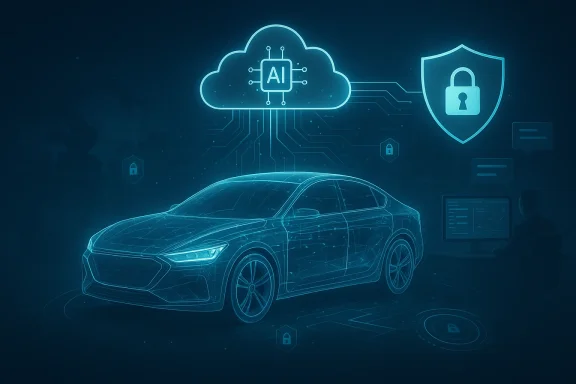 Overview
The Stellantis-Microsoft agreement matters because it sits at the intersection of two huge industry shifts: the race to embed generative AI into enterprise workflows and the automotive industry's push toward software-defined vehicles. In the WindowsForum coverage already in our archive, the deal is described as a five-year alliance aimed at accelerating AI-driven automotive capabilities, with a focus on connected-car value, real ROI, and a broader operational rethink of how a global carmaker uses digital tools.This is not simply about adding a chatbot to a dashboard. It is about wiring AI into the systems that run design, engineering, sales, service, fleet operations, and the customer experience around the vehicle. That distinction matters because the real value in automotive AI is usually not in a flashy demo, but in shaving days off a workflow, reducing service friction, or making vehicle data more usable at scale. The coverage in the forum also frames the alliance as part of a wider Microsoft push to make AI a governed, enterprise-grade platform rather than an assortment of disconnected features.
The timing is important, too. Automakers are being squeezed by software complexity, electrification costs, regulatory pressure, and customer expectations that now extend far beyond horsepower and interior trim. At the same time, Microsoft has been tightening its AI story across the stack, from Copilot organization changes to enterprise governance and agentic automation. The Stellantis partnership fits neatly into that pattern: Microsoft provides the platform muscle, while Stellantis provides a real-world industrial testbed where AI either produces measurable gains or gets exposed quickly.
There is also a geopolitical and competitive angle. Stellantis is a sprawling global manufacturer with brands, markets, and supply chains that span continents. Any durable AI strategy in that environment has to be secure, scalable, and operationally boring in the best possible way. The forum material suggests the companies want to build that kind of foundation, not merely pilot consumer-facing features.
What the Five-Year Alliance Appears to Cover
The broad shape of the collaboration is clear even if some implementation details remain proprietary. The reported five-year plan extends across productivity, security, customer support, and connected-vehicle experiences, with Microsoft playing the role of cloud and AI enabler. The forum’s own writeups describe the deal as encompassing employee tools, cybersecurity, and customer-facing vehicle intelligence, which suggests a full-stack integration rather than a single product launch.That breadth matters because automotive AI only works when the data trail is continuous. If engineering teams, dealers, service desks, and in-car systems all operate in separate silos, the result is fragmented intelligence and duplicated effort. A five-year partnership gives Stellantis enough runway to connect those systems, but it also creates a high bar for execution because the payoff depends on sustained coordination, not a one-off press release. That is where many enterprise AI programs stumble.
Likely focus areas
Based on the report, the most plausible focus areas include internal productivity, customer support automation, and vehicle-data interpretation. Those are the places where Microsoft's AI stack can create near-term return on investment because they sit close to existing business processes. The forum’s analysis repeatedly emphasizes connected-car value and real ROI, which is a clue that the companies are trying to avoid vanity AI and target measurable operational wins.- Employee productivity and knowledge work
- Cybersecurity and identity-aware controls
- Connected-car analytics and service insights
- Customer support and digital assistance
- Cloud-backed data processing for automotive workflows
- Longer-term in-vehicle AI experiences
Why Stellantis Needs This
Stellantis has one of the most complex brand portfolios in the auto industry, and complexity is the enemy of software consistency. Managing multiple marques, regional markets, supplier ecosystems, and product lifecycles creates enormous pressure on IT and engineering teams. AI becomes attractive not because it is fashionable, but because it promises to compress those layers into something faster to query, easier to automate, and cheaper to operate at scale.The company also needs to prove that its digital initiatives are not isolated experiments. Automakers have spent years talking about connected vehicles, digital twins, cloud analytics, and predictive maintenance. The difference now is that AI can stitch those ideas together into a workflow that feels more unified, especially when the underlying platform is already familiar to enterprise teams. Microsoft gives Stellantis a ready-made ecosystem of identity, collaboration, cloud, and AI services, which lowers the friction of deployment.
The operational payoff
The practical payoff is straightforward: fewer manual steps, faster access to insights, and more consistent decision-making. That could mean service teams getting better context before a customer walks in, or management getting faster summaries of fleet and usage patterns. In a business where margins are tight and scale matters, those improvements can be more valuable than a headline-grabbing feature. Automotive AI is often won in the background.- Faster internal decision cycles
- Improved service response and diagnostics
- Better use of vehicle and customer data
- Reduced duplication across brand silos
- More consistent digital experiences across markets
Why Microsoft Wins Either Way
For Microsoft, this partnership is less about one automaker and more about proving that its AI stack belongs inside heavily regulated, asset-heavy industries. The company has been steadily pushing Copilot, Azure, and enterprise AI governance into more operational roles, and Stellantis offers a marquee deployment where Microsoft can showcase credibility beyond office productivity.That matters because the market is increasingly crowded. Enterprise buyers now see competing claims from cloud vendors, AI startups, and infrastructure providers, all promising automation and intelligence. Microsoft’s advantage is that it can bundle identity, endpoint management, collaboration, cloud, and AI into one integrated story. The Stellantis deal strengthens that story by showing that the same stack can reach into manufacturing-adjacent and customer-facing environments.
Platform leverage
The real commercial win for Microsoft is platform leverage. If Stellantis succeeds, Microsoft can point to a global automaker as evidence that its AI and cloud stack is not just useful for office workers but robust enough for high-stakes industrial workflows. That makes future sales conversations easier, especially with companies that want fewer vendors and more governance. Enterprise IT loves a platform that reduces procurement noise.- Stronger proof of industry-specific AI value
- More Azure workload stickiness
- Better Copilot and agent positioning
- Expanded credibility in manufacturing and mobility
- Additional reference architecture for other automakers
Connected Cars and the Data Problem
Connected cars generate enormous amounts of data, but data volume alone is not value. The challenge is extracting the right signals, routing them to the right teams, and doing it fast enough to change outcomes. The Stellantis-Microsoft plan is interesting because it appears to treat the vehicle not as a gimmick for AI branding, but as a node in a larger data and support ecosystem.That makes sense in a market where customers expect their vehicle to behave more like a digital product than a static machine. Drivers want seamless assistance, remote diagnostics, and services that feel personalized without becoming intrusive. If Microsoft’s AI tools help Stellantis interpret telemetry, service histories, and customer interactions in one place, the result could be a more responsive ownership experience. The vehicle becomes part of a living service model.
What connected AI could enable
The highest-value use cases are likely to emerge where connected-car data intersects with service and support. That could include proactive maintenance recommendations, issue triage, and better call-center context when a customer reports a problem. Those are not glamorous features, but they are the kind that can improve loyalty and reduce expensive friction at scale.- Proactive service alerts
- Smarter diagnostics and issue routing
- Better support-agent context
- More personalized ownership experiences
- Fleet insights for business customers
Enterprise AI Governance Will Matter More Than Features
The broader Microsoft context is important here. The company has been moving steadily toward more governed, enterprise-safe AI, with recent forum coverage describing a stronger focus on control planes, agent management, and tighter integration between product experiences and model layers. That matters because any automotive rollout at Stellantis will need the same kind of discipline: access controls, auditability, and clear data boundaries.This is where the partnership becomes more than a business announcement. It becomes a test of whether Microsoft’s governance-first AI posture can survive contact with a real industrial customer. Automakers operate with strict compliance expectations, varied regional laws, and a mix of old and new systems that do not always play nicely together. Beautiful demos do not fix messy governance.
Why governance is the real differentiator
In automotive, a bad AI answer can create a support headache; a bad data policy can create a legal problem. That is why governance is not a side issue but the core enabler of trust. Microsoft’s enterprise identity, security, and telemetry tooling may be the unglamorous part of the story, but it is probably the part that determines whether Stellantis can scale the program safely.- Access control and tenant isolation
- Audit trails for AI-assisted actions
- Data residency and regional compliance
- Human oversight for customer-facing outputs
- Security monitoring across connected systems
How Rivals Will Read the Deal
Competitors will likely see this as another sign that Microsoft is becoming the default AI partner for large enterprises that want broad integration and comparatively mature governance. In the automotive world, that puts pressure on cloud rivals, consulting-heavy digital transformation shops, and any vendor trying to sell isolated AI tools without a deep operational footprint.For automakers, the deal also raises the bar. If Stellantis can show gains from a five-year AI partnership, others will need to respond with their own platform strategies rather than one-off pilots. That could accelerate consolidation around a few large AI ecosystems, especially where enterprise security and workflow integration matter more than experimentation. The market may be moving from AI trials to AI alliances.
Competitive implications
This alliance also reinforces a broader industry pattern: the winners are likely to be companies that can connect AI to existing business systems, not just those with the flashiest demos. That favors vendors with long-standing enterprise relationships and proven cloud infrastructure. It also makes it harder for smaller AI companies to win large regulated accounts unless they slot neatly into a bigger platform.- More pressure on rival cloud ecosystems
- Stronger case for bundled AI plus governance
- Higher expectations for measurable ROI
- Less tolerance for isolated pilot projects
- Greater demand for cross-functional integration
Consumer Impact Versus Enterprise Impact
For consumers, the most visible result may be smoother service interactions and more intelligent in-car assistance. Those are the features people notice because they affect everyday ownership. If AI reduces friction when scheduling service, understanding a warning light, or interacting with support, the brand experience improves immediately.For enterprise users inside Stellantis, the impact is likely to be broader but less visible. That includes faster reporting, better knowledge retrieval, improved cybersecurity, and more efficient collaboration across business units. Those are the kinds of changes that can quietly transform a large enterprise, especially one with global scale and recurring complexity.
Two very different value propositions
It is tempting to talk about the deal as one story, but it is really two stories layered together. Consumer value depends on reliability and simplicity. Enterprise value depends on governance, speed, and operational coherence. If either side falters, the overall partnership looks weaker than it actually is. That split is where many AI programs get lost.- Consumer wins need to feel intuitive
- Enterprise wins need to be measurable
- Support workflows can connect both worlds
- In-car features carry the brand visibly
- Internal automation carries the economics quietly
Strengths and Opportunities
The Stellantis-Microsoft alliance has several strengths that could make it one of the more meaningful AI partnerships in automotive if the execution holds. It combines a major global manufacturer with a platform vendor that already has deep enterprise distribution, mature cloud infrastructure, and a strong security story. The result is a partnership with enough scale to matter and enough technical breadth to spread across the business.- Long-term commitment rather than a short pilot
- Strong fit with Microsoft’s enterprise AI stack
- Clear potential for operational efficiency gains
- Better customer support and service experiences
- A credible path to connected-car intelligence
- Stronger governance than ad hoc AI deployments
- Platform reuse across multiple Stellantis brands
Risks and Concerns
The biggest risk is that the partnership becomes too broad too quickly. Large AI deals often promise everything at once, but value tends to come from a few carefully executed workflows. If Stellantis and Microsoft try to touch every part of the organization before proving the model in a narrow set of use cases, the initiative could stall under its own ambition.- Overpromising on near-term transformation
- Integration complexity across legacy systems
- Privacy and data-governance exposure
- User resistance if AI feels imposed
- Vendor lock-in and roadmap dependence
- Consumer trust risk around connected-car data
- Unrealistic ROI expectations from leadership
Looking Ahead
The next phase of this story will be about implementation, not announcement. The market has already seen enough AI partnerships to know that press releases are easy and durable outcomes are hard. What will matter is whether Stellantis can translate Microsoft’s platform into measurable improvements in service, support, and operational speed without compromising privacy or control.There is also a wider industry implication. If this five-year plan works, it strengthens the case that automakers need long-term AI and cloud partnerships rather than isolated technology purchases. That would push the sector further toward platform thinking, where the competitive battleground is no longer just the vehicle, but the intelligence layer surrounding it. That shift may define the next decade of automotive software.
What to watch next
- Early proof points from service or support workflows
- Any signs of in-vehicle AI features reaching customers
- Governance and privacy disclosures around connected data
- Evidence of productivity gains inside Stellantis operations
- Whether Microsoft positions the deal as a template for other automakers
Source: Latest news from Azerbaijan Microsoft and Stellantis launch 5-year AI plan | News.az
Source: Latest news from Azerbaijan Stellantis and Microsoft forge five-year alliance to accelerate ai-driven automotive future | News.az
