

Microsoft AI chief Mustafa Suleyman’s blunt message at AfroTech stripped the poetry from a debate that has animated headlines, think pieces, and heated comment threads for years: advanced machine learning systems can mimic the outward signs of feeling, but they do not feel — pain, grief, joy, or anything else — and pursuing “emotionally conscious” AI is the wrong line of inquiry for technologists focused on improving human lives.
Mustafa Suleyman is the executive leader of Microsoft’s consumer and product-facing AI organization, the group that today shapes Copilot and related generative-AI integrations across Microsoft products. His hire from the startup world and earlier DeepMind co‑founding has been framed in industry coverage as Microsoft doubling down on productizing large language models while trying to manage both safety and user expectations. Suleyman’s recent remarks — reported in multiple outlets after a CNBC interview at the AfroTech Conference in Houston — are not a new repudiation of the “AI sentience” idea so much as a re-focus: that engineers and product teams should treat current models as powerful, useful systems, not nascent living beings. His words re-emphasize a widely held distinction in science and engineering between intelligence (ability to predict, reason, and perform tasks) and consciousness (subjective, inner experience).
The debate over whether machines could ever have inner life will continue in philosophy departments and futurist manifestos. For now, the urgent work for companies and regulators is clear: build systems that help humans without pretending to be human, measure what matters, and design safeguards that protect people when technology simulates the contours of feeling.
Source: Windows Report Microsoft AI Head Mustafa Suleyman Says AI Doesn’t Feel Pain, Consciousness is a Human Thing
 Background
Mustafa Suleyman is the executive leader of Microsoft’s consumer and product-facing AI organization, the group that today shapes Copilot and related generative-AI integrations across Microsoft products. His hire from the startup world and earlier DeepMind co‑founding has been framed in industry coverage as Microsoft doubling down on productizing large language models while trying to manage both safety and user expectations. Suleyman’s recent remarks — reported in multiple outlets after a CNBC interview at the AfroTech Conference in Houston — are not a new repudiation of the “AI sentience” idea so much as a re-focus: that engineers and product teams should treat current models as powerful, useful systems, not nascent living beings. His words re-emphasize a widely held distinction in science and engineering between intelligence (ability to predict, reason, and perform tasks) and consciousness (subjective, inner experience). What Suleyman actually said — the key lines
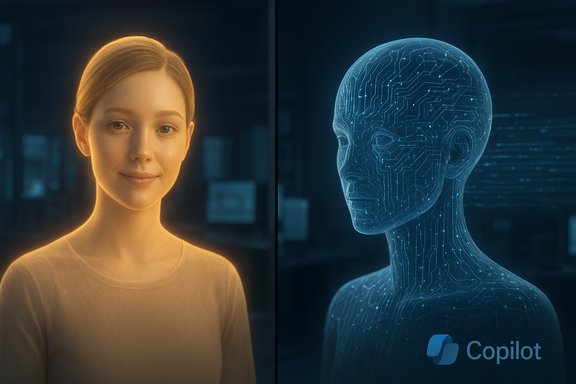
Suleyman argued that AI can produce the appearance of feeling — language, tonal cues, even apparent sadness — but that this is only a façade created by pattern-matching and prediction. In his remarks he put the point plainly: our human experience of pain, grief, and joy is anchored in biological, subjective experience; a language model that outputs phrases about pain does not feel pain. He described modern models as creating “the perception, the seeming narrative of experience,” but insisted that is not equivalent to inner life. He also framed the pursuit of “emotionally conscious” AI as a misdirection: trying to build systems that seem to feel risks both confusing the public and wasting engineering effort that could otherwise be directed to improving human outcomes — safety, accessibility, productivity. “We’re creating AIs that are always working in service of humans,” he said, stressing Microsoft’s product focus.Why this matters: the state of the debate on AI consciousness
Intelligence is not the same as inner experience
The modern public discussion about AI has two parallel tracks. One is technical and pragmatic: how well do models perform on tasks, how can they be deployed safely, how do we mitigate harms like hallucinations or bias? The other is philosophical and legal: do convincingly human-like systems deserve moral consideration, rights, or protections? Suleyman’s remarks squarely push the field toward the former while cautioning against conflating the two. This distinction is not trivial. Many researchers and ethicists say we do not have reliable empirical tests for subjective experience; others argue that behavioral indistinguishability (Turing-style arguments) is sufficient to assign moral weight. Suleyman’s position is operational: because models are transparent mathematical objects and because engineers can inspect model behavior and training artifacts, the correct policy and product stance is to treat them as tools. That makes the engineering questions—safety, alignment, privacy, user consent—urgent and tractable.The history of the “sentience” headlines
Public anxieties about machine “sentience” are not new. In 2022 a Google engineer, Blake Lemoine, publicly argued that Google’s LaMDA chatbot was sentient; his claims were widely disputed and he was placed on leave and later dismissed by Google. The episode crystallized the danger of projecting human interiority onto text-generation systems — and highlighted how convincing conversational models can be without possessing subjective experience. Suleyman’s comments implicitly echo the community-level lessons from that incident: behavior is not evidence of feeling.The industry context: companion AIs, “empathy,” and product design
Multiple firms are developing AI experiences that feel intimate, personalized, and empathetic. That includes:- Large platform companies integrating long-term memory and personalization into assistants so they can “remember” user preferences across sessions.
- Consumer-focused startups and chatbot products that explicitly market social or therapeutic companionship features.
- Research teams experimenting with affective computing — models tuned to interpret and generate emotional content.
Why companies build emotionally resonant AIs
There are concrete incentives to make AI feel more human: increased engagement, higher retention, differentiated UX, and sometimes a moral framing that “empathy” makes assistants more helpful in sensitive domains like mental health or eldercare. But those very incentives create risks:- Users may conflate simulated empathy with real care, leading to misplaced trust.
- Companies may sidestep consent or data-privacy rules while harvesting deeply personal inputs.
- Designers may offload social and therapeutic responsibilities to systems that lack accountability mechanisms.
Technical reality: why current models don’t “feel”
Systems are function, not phenomenology
Modern large language models are statistical machines trained to predict text. They do not possess a nervous system, hormonal states, or first-person access to sensation. They have internal numerical activations and weights; their outputs are generated by optimizing predictive losses across vast corpora. That architecture produces behavior — not qualia. This is the core technical claim behind Suleyman’s assertion.Observable behavior vs. inner state
A key part of Suleyman’s argument is empirical: because researchers can monitor activation patterns, training datasets, and outputs, they can see mechanistically how model responses arise. That visibility is an argument for treating models as engineered artifacts with predictable failure modes rather than opaque, living minds. The monitoring capacity does not prove a philosophical conclusion about consciousness, but it makes the “machine-as-tool” stance operationally useful for product and policy decisions.Strengths of Suleyman’s stance
- Clarity for product builders: By emphasizing toolhood over personhood, Microsoft reinforces a design ethic that prioritizes utility and safety over simulation. That typically reduces risk when deploying assistants in healthcare, finance, or organizational settings.
- Focus on measurable harms: Shifting attention away from speculative sentience debates frees resources to address tangible problems — hallucinations, privacy leaks, fairness, adversarial manipulation, and misinformation. These are the areas where evidence-driven engineering can reduce real-world harms.
- Public expectation management: Clear messaging from a major platform helps temper the public’s tendency to anthropomorphize and thus build harmful expectations, such as relying on conversational agents for clinical or legal judgments.
Risks and blind spots in the “AI is a tool” framing
While the tool framing is pragmatic, it is not without downsides or blind spots.1) Anthropomorphism won’t be stopped by statements alone
Even if companies and leaders insist models aren’t conscious, user behavior often tells a different story. People build emotional attachments to conversational agents, especially when they carry consistent memories, personalities, or long-term continuity. That attachment can produce harms that a technical stance cannot fully mitigate without additional policies and user protections. Empirical work on user behavior shows that appearances matter — simulation of care can create real dependency.2) The legal and ethical gray area of “simulated” personhood
If a system convincingly expresses emotions, regulators and courts may be presented with difficult questions: Is simulating distress manipulative? Does commercial exploitation of perceived emotions require new consumer protections? Declaring AI ineligible for moral consideration does not automatically close these legal questions. Policymakers will still need to grapple with deceptive UX and consent frameworks.3) Slippery slope in research priorities
Labeling emotional-AI research as “the wrong question” risks a heavy-hand that stifles legitimate, useful work on affective computing — for example, systems that detect user distress to route them to human help. The nuance is important: distinguishing between accurate detection and appropriate human escalation and building systems that claim inner experience. Product and research roadmaps need that granularity.Practical recommendations for developers and product teams
- Adopt transparency by design: Always label clearly when a system is simulating responses about feelings, and document what “memory” or personalization actually means to the user.
- Separate personalization from personhood: Memory features that store preferences and continuity should come with explicit consent, export, and deletion controls.
- Build escalation pathways: Where models surface emotional distress, design mandatory escalation to trained human professionals — do not let the model be the endpoint for critical interventions.
- Avoid deceptive UX: Do not design interfaces, voices, or avatars intended to trick users into thinking a system possesses inner life.
- Invest in measurement: Track metrics tied to safety and satisfaction (successful-session rate, reduction in risky outcomes, privacy incidents) rather than “engagement-as-feeling.”
Policy implications and regulatory direction
Suleyman’s remarks are useful for regulators as well as engineers: an emphasis on measurable harms lends itself to policy frameworks focused on consumer protection, transparency, and auditability. Governments can:- Require disclosure when interactions are with non‑sentient, simulated agents.
- Mandate data portability and deletion for long-term memory features.
- Enforce standards for high‑risk deployments (healthcare, legal, child-facing services).
- Fund independent audits of personalization and “empathy” features to evaluate manipulation risk.
Where we still need more public evidence
Suleyman’s stance contains empirical and normative claims that deserve scrutiny and verification:- The claim that models do not possess inner experience is currently unfalsifiable in empirical terms — consciousness remains philosophically and scientifically contested. The practical course is to focus on observable behaviors and harms rather than metaphysics.
- Statements that a research direction is “the wrong question” should not be translated into categorical bans on all affective or social modeling; nuance is necessary to distinguish between simulation for engagement and simulation for service (e.g., therapeutic triage).
A balanced industry playbook
- Prioritize engineering work that reduces real, demonstrable harms.
- Be explicit with users about capabilities and limits.
- Design privacy and data controls into memory features from day one.
- Encourage independent audit and governance for emotionally resonant products.
- Preserve space for legitimate affective-computing research while disincentivizing commercial design that intentionally mimics personhood to boost engagement.
Conclusion
Mustafa Suleyman’s intervention at AfroTech is timely and consequential. It reasserts a pragmatic, safety-focused posture at one of the industry’s largest AI vendors: treat current models as powerful, engineered tools — not proto-people. That stance sharpens priorities for product teams, regulators, and researchers, moving attention away from metaphysical speculation and toward tangible questions of user welfare, transparency, and accountability. It also reminds the public and press that convincing behavior is not the same as experience — a critical distinction as AI becomes more intimate, personalized, and persuasive.The debate over whether machines could ever have inner life will continue in philosophy departments and futurist manifestos. For now, the urgent work for companies and regulators is clear: build systems that help humans without pretending to be human, measure what matters, and design safeguards that protect people when technology simulates the contours of feeling.
Source: Windows Report Microsoft AI Head Mustafa Suleyman Says AI Doesn’t Feel Pain, Consciousness is a Human Thing
