

Microsoft has begun offering a Surface Pro 12-inch bundle that includes the detachable keyboard for a limited time, changing the effective price of its smallest Copilot+ PC after launching the device as a tablet-first product with the keyboard sold separately. The move looks tactical, but it exposes a larger truth about Surface: Microsoft still markets the Pro as a laptop replacement while pricing its most laptop-like component as an accessory. For buyers, the promotion is welcome. For the Surface business, it is an admission that the old unbundled model is harder to defend in 2026.
For more than a decade, the Surface Pro pitch has depended on a polite fiction. Microsoft sells the device as the most flexible Windows PC: a tablet when you want touch, a laptop when you need work, a sketchpad when the pen comes out. But the laptop part has usually required a second purchase.
That separation has always been easy to explain from a product-management spreadsheet. Some customers want only the tablet. Some already own a compatible keyboard. Some business buyers prefer à la carte procurement. Yet for normal people comparing a Surface Pro against a MacBook Air, iPad Pro, ThinkPad, or Dell XPS, the distinction feels less like choice and more like a surcharge.
The Surface Pro 12-inch makes that tension sharper because it is explicitly the smaller, more approachable member of the modern Surface Pro family. It uses Qualcomm’s Snapdragon X Plus platform, qualifies as a Copilot+ PC, and starts below the larger Surface Pro line. It is supposed to be the attainable Surface Pro, not the one that forces customers to mentally rebuild the product in the cart.
That is why including the keyboard, even temporarily, matters. Microsoft is not merely discounting an accessory. It is lowering the psychological barrier between “interesting Windows tablet” and “usable everyday computer.”
That bargain made sense. Surface has often struggled when it tries to be both aspirational and practical at the same time. The flagship Surface Pro has become technically impressive, but once buyers add a keyboard and pen, the total price often lands in premium laptop territory. The 12-inch model gave Microsoft a chance to reset expectations around a simpler, lighter Windows machine.
The hardware reflects that intent. Microsoft lists the Surface Pro 12-inch at roughly 1.5 pounds without the keyboard, with a 12-inch PixelSense LCD display, Wi-Fi 7, two USB-C ports, 16GB of RAM, and Snapdragon X Plus silicon with a 45 TOPS NPU. Battery estimates vary by workload, as they always do, but Microsoft’s own positioning frames it as an on-the-go device for web, Office, communication, AI features, and light creative work.
That is precisely the kind of PC that lives or dies by whether it feels complete out of the box. A 12-inch detachable without a keyboard is a tablet with Windows. A 12-inch detachable with a keyboard is a small laptop that can shed its base when needed. Those are very different products in the eyes of a buyer.
The Surface Pro keyboard has always occupied a strange category. It is not a generic Bluetooth keyboard, and it is not a bonus like a sleeve or mouse. It is custom-fit, magnetically attached, physically protective, and central to the device’s identity. Without it, the Surface Pro loses the very mode that gives the product its name in the mainstream PC market.
That matters more now because Windows remains a keyboard-and-pointer operating system at heart. Microsoft has improved touch support over the years, and Windows 11 is more tablet-friendly than the Windows 8 backlash might suggest. But the center of gravity is still desktop apps, browser tabs, file management, keyboard shortcuts, and cursor precision.
So when Microsoft sells a Surface Pro without the keyboard, it is technically selling a complete device but practically selling an unfinished experience. The limited-time bundle does not solve that contradiction. It spotlights it.
That pitch becomes harder when the buying experience is full of caveats. This model includes Windows 11 Home unless you buy business. This keyboard is sold separately unless a promotion applies. The power supply may not be included. Some AI features depend on region, rollout timing, account type, language, silicon, and Microsoft’s changing product roadmap. Each caveat may be defensible on its own, but together they make the category feel less clean than Apple’s “buy the thing, open the lid, use the thing” simplicity.
The Surface Pro 12-inch is arguably the model where Microsoft most needed simplicity. A smaller Copilot+ PC should be easy to recommend to students, travelers, hybrid workers, and Windows 10 holdouts who delayed replacing aging hardware. The more the buyer has to calculate accessories and compatibility, the more Microsoft weakens its own upgrade story.
The company knows this. Bundles exist because they reduce friction. They make a product easier to advertise, easier to compare, and easier to justify. A limited-time keyboard inclusion may be structured as a promotion, but strategically it behaves like a correction.
This is not unique to Microsoft. Apple’s iPad Pro has the same problem, and arguably a worse one because its Magic Keyboard and Pencil can push the total cost into absurd territory. But Microsoft does not get much comfort from that comparison. The Surface Pro is a Windows PC, and Windows PC buyers are trained by the broader market to expect the basics in the box.
That expectation is especially strong among IT buyers. A procurement manager does not want to explain to finance why a “laptop replacement” requires a separate keyboard line item. A school district does not want to manage detachables, pens, and chargers as separate cost centers unless there is a clear benefit. A small business owner shopping in a retail store does not want to discover at checkout that the advertised price was the tablet-only version of the computer they thought they were buying.
Microsoft’s limited-time bundle reduces that pain, but only while it lasts. The deeper question is why the company still treats the keyboard as negotiable on a device whose whole selling point is flexibility.
That argument gets stronger when the keyboard is included. Against an iPad Air or iPad Pro, Surface can say: this is the full desktop Windows environment, now with the input hardware you need. Against a MacBook Air, Surface can say: this is lighter and more flexible, with touch and pen support. Against low-cost Windows laptops, Surface can say: this is more premium, more portable, and built for the Copilot+ generation.
Without the keyboard, every one of those comparisons becomes muddier. The iPad comparison becomes accessory-versus-accessory. The MacBook comparison becomes price-adjusted. The Windows laptop comparison becomes a fight against devices that may be less elegant but are complete in the box.
That is why even a temporary bundle can change how the product feels in the market. It lets Microsoft compete on the experience rather than the invoice.
That is classic retail choreography. A bundle can be positioned as a deal rather than a retreat. If sales improve, Microsoft can extend it, repeat it, or quietly make similar offers through retailers. If sales do not move, the company can let the promotion expire and treat it as seasonal experimentation.
But customers read these signals too. A limited-time keyboard inclusion teaches buyers to wait for bundles. It reinforces the idea that the list price is not the real price. Surface has long trained its audience to watch for discounts, and this kind of promotion may deepen that habit.
That is not necessarily bad for consumers. Waiting can pay off. But it complicates Microsoft’s premium-hardware ambitions. Premium brands want pricing confidence. Repeated accessory promotions tell the market that the complete Surface experience is negotiable.
Still, the same underlying issue applies. A detachable PC fleet without keyboards is not useful for most workers. If the keyboard is required for the workflow, it becomes part of the device cost regardless of how Microsoft categorizes it. Procurement systems may separate the SKUs, but users do not separate the experience.
The Surface Pro 12-inch for Business adds features aimed at managed environments, including Windows 11 Pro options and business-oriented security and deployment positioning. The 12-inch form factor could make sense for field staff, healthcare workers, educators, and mobile teams who need a lightweight Windows machine. But those buyers are also sensitive to accessory availability and replacement logistics.
A bundled keyboard can simplify small deployments, but large organizations will still want predictable purchasing terms. If Microsoft sees real uptake in business channels, it may need a clearer long-term accessory strategy than “sometimes included, sometimes not.”
But it creates a strange perception problem. Microsoft may include the keyboard for a limited time while still omitting the charger. The result is a box that is more complete in one crucial way and less complete in another mundane way.
For many buyers, this will not matter. USB-C chargers are everywhere, and standardizing around them is a good thing. For others, especially first-time Surface customers, it adds yet another line to the mental checklist.
The broader lesson is that PC buying has become less intuitive even as devices have become more integrated. A Surface Pro customer must ask: does it include the keyboard, does it include the pen, does it include the charger, does this keyboard fit this generation, and does the configuration have the Windows edition I need? That is a lot of friction for a product built around elegance.
The Snapdragon X generation changed that balance. It did not make every Windows app perfect on Arm, and compatibility still matters for specialized software, drivers, VPN clients, plug-ins, and peripherals. But the baseline experience is far stronger than it was a few years ago. For web work, Microsoft 365, Teams, media, writing, note-taking, and mainstream productivity, Arm Windows is now plausible in a way that earlier Surface attempts were not.
That makes the Surface Pro 12-inch more interesting. The question is less “can this tiny fanless Windows tablet perform?” and more “has Microsoft packaged it in a way that makes sense?” The limited-time keyboard inclusion nudges the answer toward yes.
There is irony in that. Microsoft spent years solving the silicon and battery-life story, only to leave the customer experience vulnerable to an accessory decision. The hardware platform finally supports the Surface vision. The sales model still occasionally undermines it.
Microsoft appears to understand this distinction. The Surface Pro 12-inch Keyboard can be purchased separately, and Microsoft also offers keyboard-and-pen bundles. The device itself includes a place for pen attachment or storage depending on configuration and accessory choices, keeping the pen in the ecosystem without making it mandatory for everyone.
That is the right hierarchy. A keyboard turns the Surface Pro into a general-purpose PC. A pen turns it into a better canvas, notebook, or markup device. Both matter, but they do not matter equally to every buyer.
If Microsoft wants the Surface Pro 12-inch to become a volume device rather than a niche one, bundling the keyboard makes more sense than bundling the pen. It broadens the audience instead of narrowing it.
That argument worked. Even competitors that never copied Surface exactly absorbed its lessons. Premium Windows laptops got better. Convertibles improved. Displays became taller. Touch and pen support became more normal. Microsoft proved a point.
But proving a point is not the same as sustaining a product line. In 2026, Surface is no longer the only elegant Windows hardware in the room. Lenovo, HP, Dell, Asus, Samsung, and others all sell premium machines with strong displays, good keyboards, long battery life, and increasingly credible Arm or AI-PC configurations. Surface has to win not by being novel, but by being coherent.
The keyboard bundle is a small move toward coherence. It says, at least temporarily, that the Surface Pro 12-inch should be judged as a whole computer. That is where the line needs to go.
Separating the keyboard made the entry price look better, but it also made the product easier to criticize. Including the keyboard makes the value proposition more honest. It may not make the device cheap, but it makes the comparison fairer.
Microsoft does not have to abandon accessory choice entirely. It can still sell premium keyboards, pen bundles, replacement units, business packs, and color options. But the baseline consumer Surface Pro experience should not require a scavenger hunt.
The company has spent years telling customers that Surface is the PC reimagined. A reimagined PC should not arrive missing the part most people use to type their password.
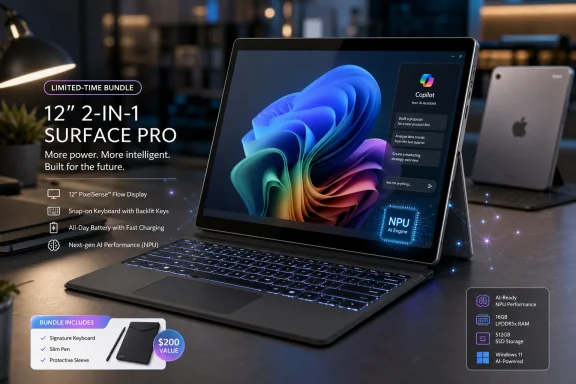 Microsoft Blinks on the Accessory Tax
For more than a decade, the Surface Pro pitch has depended on a polite fiction. Microsoft sells the device as the most flexible Windows PC: a tablet when you want touch, a laptop when you need work, a sketchpad when the pen comes out. But the laptop part has usually required a second purchase.That separation has always been easy to explain from a product-management spreadsheet. Some customers want only the tablet. Some already own a compatible keyboard. Some business buyers prefer à la carte procurement. Yet for normal people comparing a Surface Pro against a MacBook Air, iPad Pro, ThinkPad, or Dell XPS, the distinction feels less like choice and more like a surcharge.
The Surface Pro 12-inch makes that tension sharper because it is explicitly the smaller, more approachable member of the modern Surface Pro family. It uses Qualcomm’s Snapdragon X Plus platform, qualifies as a Copilot+ PC, and starts below the larger Surface Pro line. It is supposed to be the attainable Surface Pro, not the one that forces customers to mentally rebuild the product in the cart.
That is why including the keyboard, even temporarily, matters. Microsoft is not merely discounting an accessory. It is lowering the psychological barrier between “interesting Windows tablet” and “usable everyday computer.”
The 12-Inch Surface Was Built to Be a Correction
The Surface Pro 12-inch arrived in May 2025 as part of Microsoft’s second wave of Copilot+ PC hardware, alongside a 13-inch Surface Laptop. It was smaller, lighter, fanless, and more colorful than the flagship 13-inch Surface Pro. It also made a different bargain: less screen, less storage headroom, and fewer high-end options in exchange for portability and a lower starting price.That bargain made sense. Surface has often struggled when it tries to be both aspirational and practical at the same time. The flagship Surface Pro has become technically impressive, but once buyers add a keyboard and pen, the total price often lands in premium laptop territory. The 12-inch model gave Microsoft a chance to reset expectations around a simpler, lighter Windows machine.
The hardware reflects that intent. Microsoft lists the Surface Pro 12-inch at roughly 1.5 pounds without the keyboard, with a 12-inch PixelSense LCD display, Wi-Fi 7, two USB-C ports, 16GB of RAM, and Snapdragon X Plus silicon with a 45 TOPS NPU. Battery estimates vary by workload, as they always do, but Microsoft’s own positioning frames it as an on-the-go device for web, Office, communication, AI features, and light creative work.
That is precisely the kind of PC that lives or dies by whether it feels complete out of the box. A 12-inch detachable without a keyboard is a tablet with Windows. A 12-inch detachable with a keyboard is a small laptop that can shed its base when needed. Those are very different products in the eyes of a buyer.
The Keyboard Is Not a Peripheral When the Product Is a 2-in-1
Microsoft’s own language gives the game away. The company describes the Surface Pro 12-inch Keyboard as the thing that “transforms” the device into a laptop, with a backlit keyset, precision touchpad, Copilot key, and a hinge that can fold flat against the tablet. That is not how companies talk about optional luxuries. That is how they talk about core functionality.The Surface Pro keyboard has always occupied a strange category. It is not a generic Bluetooth keyboard, and it is not a bonus like a sleeve or mouse. It is custom-fit, magnetically attached, physically protective, and central to the device’s identity. Without it, the Surface Pro loses the very mode that gives the product its name in the mainstream PC market.
That matters more now because Windows remains a keyboard-and-pointer operating system at heart. Microsoft has improved touch support over the years, and Windows 11 is more tablet-friendly than the Windows 8 backlash might suggest. But the center of gravity is still desktop apps, browser tabs, file management, keyboard shortcuts, and cursor precision.
So when Microsoft sells a Surface Pro without the keyboard, it is technically selling a complete device but practically selling an unfinished experience. The limited-time bundle does not solve that contradiction. It spotlights it.
Copilot+ PCs Need Fewer Asterisks, Not More
The timing also matters because Microsoft is still trying to make Copilot+ PCs feel like a coherent category. The pitch is not just faster Arm laptops or better standby time. It is supposed to be a new generation of Windows PCs with local AI acceleration, modern security expectations, and tighter integration between hardware and software.That pitch becomes harder when the buying experience is full of caveats. This model includes Windows 11 Home unless you buy business. This keyboard is sold separately unless a promotion applies. The power supply may not be included. Some AI features depend on region, rollout timing, account type, language, silicon, and Microsoft’s changing product roadmap. Each caveat may be defensible on its own, but together they make the category feel less clean than Apple’s “buy the thing, open the lid, use the thing” simplicity.
The Surface Pro 12-inch is arguably the model where Microsoft most needed simplicity. A smaller Copilot+ PC should be easy to recommend to students, travelers, hybrid workers, and Windows 10 holdouts who delayed replacing aging hardware. The more the buyer has to calculate accessories and compatibility, the more Microsoft weakens its own upgrade story.
The company knows this. Bundles exist because they reduce friction. They make a product easier to advertise, easier to compare, and easier to justify. A limited-time keyboard inclusion may be structured as a promotion, but strategically it behaves like a correction.
Surface Pricing Has Always Asked Buyers to Do Homework
Surface fans are used to decoding Microsoft’s pricing. The entry price often looks compelling until the configuration reality sets in. More storage costs more. The keyboard costs more. The pen may cost more. Business features cost more. A charger may not be in the box. Suddenly the device that looked like a clean alternative to a laptop is competing against machines that include a keyboard because, well, they are laptops.This is not unique to Microsoft. Apple’s iPad Pro has the same problem, and arguably a worse one because its Magic Keyboard and Pencil can push the total cost into absurd territory. But Microsoft does not get much comfort from that comparison. The Surface Pro is a Windows PC, and Windows PC buyers are trained by the broader market to expect the basics in the box.
That expectation is especially strong among IT buyers. A procurement manager does not want to explain to finance why a “laptop replacement” requires a separate keyboard line item. A school district does not want to manage detachables, pens, and chargers as separate cost centers unless there is a clear benefit. A small business owner shopping in a retail store does not want to discover at checkout that the advertised price was the tablet-only version of the computer they thought they were buying.
Microsoft’s limited-time bundle reduces that pain, but only while it lasts. The deeper question is why the company still treats the keyboard as negotiable on a device whose whole selling point is flexibility.
The Promotion Is Also a Competitive Signal
The Surface Pro 12-inch lives in a crowded middle ground. It is not a pure tablet in the iPad sense, not a traditional clamshell, not a workstation, and not a budget PC. Its best argument is that it can be the one small Windows device that handles travel, meetings, note-taking, and everyday productivity without feeling like a compromise.That argument gets stronger when the keyboard is included. Against an iPad Air or iPad Pro, Surface can say: this is the full desktop Windows environment, now with the input hardware you need. Against a MacBook Air, Surface can say: this is lighter and more flexible, with touch and pen support. Against low-cost Windows laptops, Surface can say: this is more premium, more portable, and built for the Copilot+ generation.
Without the keyboard, every one of those comparisons becomes muddier. The iPad comparison becomes accessory-versus-accessory. The MacBook comparison becomes price-adjusted. The Windows laptop comparison becomes a fight against devices that may be less elegant but are complete in the box.
That is why even a temporary bundle can change how the product feels in the market. It lets Microsoft compete on the experience rather than the invoice.
The Limited-Time Wording Keeps Microsoft’s Options Open
The phrase “limited time” is doing a lot of work here. It allows Microsoft to test demand without permanently changing the Surface Pro pricing model. It creates urgency for buyers. It protects accessory margins if the company decides to return to the old structure. And it avoids admitting that the keyboard should have been included from the start.That is classic retail choreography. A bundle can be positioned as a deal rather than a retreat. If sales improve, Microsoft can extend it, repeat it, or quietly make similar offers through retailers. If sales do not move, the company can let the promotion expire and treat it as seasonal experimentation.
But customers read these signals too. A limited-time keyboard inclusion teaches buyers to wait for bundles. It reinforces the idea that the list price is not the real price. Surface has long trained its audience to watch for discounts, and this kind of promotion may deepen that habit.
That is not necessarily bad for consumers. Waiting can pay off. But it complicates Microsoft’s premium-hardware ambitions. Premium brands want pricing confidence. Repeated accessory promotions tell the market that the complete Surface experience is negotiable.
The Business Case Is Different, but Not Opposite
For enterprise customers, the keyboard question is less emotional and more operational. IT departments care about standardization, lifecycle support, repairability, warranty terms, security features, Windows 11 Pro availability, and whether accessories can be sourced consistently over time. A temporary consumer-style bundle may not map neatly onto those priorities.Still, the same underlying issue applies. A detachable PC fleet without keyboards is not useful for most workers. If the keyboard is required for the workflow, it becomes part of the device cost regardless of how Microsoft categorizes it. Procurement systems may separate the SKUs, but users do not separate the experience.
The Surface Pro 12-inch for Business adds features aimed at managed environments, including Windows 11 Pro options and business-oriented security and deployment positioning. The 12-inch form factor could make sense for field staff, healthcare workers, educators, and mobile teams who need a lightweight Windows machine. But those buyers are also sensitive to accessory availability and replacement logistics.
A bundled keyboard can simplify small deployments, but large organizations will still want predictable purchasing terms. If Microsoft sees real uptake in business channels, it may need a clearer long-term accessory strategy than “sometimes included, sometimes not.”
The Charger Omission Makes the Bundle Feel More Complicated
The keyboard promotion also sits beside another modern hardware trend: no power adapter in the box. Microsoft’s store listing for the Surface Pro 12-inch says the device includes a USB-C charging cable but no charger, and notes compatibility with a 27W or higher USB-C power supply. That is defensible in environmental terms and increasingly common across consumer electronics.But it creates a strange perception problem. Microsoft may include the keyboard for a limited time while still omitting the charger. The result is a box that is more complete in one crucial way and less complete in another mundane way.
For many buyers, this will not matter. USB-C chargers are everywhere, and standardizing around them is a good thing. For others, especially first-time Surface customers, it adds yet another line to the mental checklist.
The broader lesson is that PC buying has become less intuitive even as devices have become more integrated. A Surface Pro customer must ask: does it include the keyboard, does it include the pen, does it include the charger, does this keyboard fit this generation, and does the configuration have the Windows edition I need? That is a lot of friction for a product built around elegance.
Arm Windows Is No Longer the Weak Link
One reason the keyboard issue stands out is that the old Surface Pro compromises are less severe than they used to be. Earlier Arm-based Windows devices, including the Surface Pro X era, often asked customers to accept too many trade-offs in performance, compatibility, and price. The hardware looked futuristic, but the software story lagged.The Snapdragon X generation changed that balance. It did not make every Windows app perfect on Arm, and compatibility still matters for specialized software, drivers, VPN clients, plug-ins, and peripherals. But the baseline experience is far stronger than it was a few years ago. For web work, Microsoft 365, Teams, media, writing, note-taking, and mainstream productivity, Arm Windows is now plausible in a way that earlier Surface attempts were not.
That makes the Surface Pro 12-inch more interesting. The question is less “can this tiny fanless Windows tablet perform?” and more “has Microsoft packaged it in a way that makes sense?” The limited-time keyboard inclusion nudges the answer toward yes.
There is irony in that. Microsoft spent years solving the silicon and battery-life story, only to leave the customer experience vulnerable to an accessory decision. The hardware platform finally supports the Surface vision. The sales model still occasionally undermines it.
The Pen Has Quietly Become the Secondary Accessory
The keyboard debate also clarifies the role of the Surface Slim Pen. For some Surface buyers, the pen is essential. Artists, annotators, students, architects, and heavy OneNote users may see pen support as a defining feature. But for the mainstream Surface Pro audience, the keyboard is the non-negotiable add-on and the pen is the specialization tool.Microsoft appears to understand this distinction. The Surface Pro 12-inch Keyboard can be purchased separately, and Microsoft also offers keyboard-and-pen bundles. The device itself includes a place for pen attachment or storage depending on configuration and accessory choices, keeping the pen in the ecosystem without making it mandatory for everyone.
That is the right hierarchy. A keyboard turns the Surface Pro into a general-purpose PC. A pen turns it into a better canvas, notebook, or markup device. Both matter, but they do not matter equally to every buyer.
If Microsoft wants the Surface Pro 12-inch to become a volume device rather than a niche one, bundling the keyboard makes more sense than bundling the pen. It broadens the audience instead of narrowing it.
The Old Surface Identity Is Being Tested
Surface began as Microsoft’s argument that Windows hardware could be more imaginative. The kickstand, the detachable keyboard, the magnesium body, the strict aspect ratios, the pen support — these were not just features. They were a rebuke to a PC market that had grown complacent.That argument worked. Even competitors that never copied Surface exactly absorbed its lessons. Premium Windows laptops got better. Convertibles improved. Displays became taller. Touch and pen support became more normal. Microsoft proved a point.
But proving a point is not the same as sustaining a product line. In 2026, Surface is no longer the only elegant Windows hardware in the room. Lenovo, HP, Dell, Asus, Samsung, and others all sell premium machines with strong displays, good keyboards, long battery life, and increasingly credible Arm or AI-PC configurations. Surface has to win not by being novel, but by being coherent.
The keyboard bundle is a small move toward coherence. It says, at least temporarily, that the Surface Pro 12-inch should be judged as a whole computer. That is where the line needs to go.
The Deal Reveals the Product Microsoft Should Have Sold
The most frustrating part of this story is that the bundled version is the obvious version. A 12-inch Surface Pro with its matching keyboard is exactly the kind of device people imagine when they hear “small Surface.” It is portable, flexible, modern, and sufficiently laptop-like for real work.Separating the keyboard made the entry price look better, but it also made the product easier to criticize. Including the keyboard makes the value proposition more honest. It may not make the device cheap, but it makes the comparison fairer.
Microsoft does not have to abandon accessory choice entirely. It can still sell premium keyboards, pen bundles, replacement units, business packs, and color options. But the baseline consumer Surface Pro experience should not require a scavenger hunt.
The company has spent years telling customers that Surface is the PC reimagined. A reimagined PC should not arrive missing the part most people use to type their password.
The Surface Pro 12 Finally Gets Its Missing Half
The practical read is simple: if you were already considering the Surface Pro 12-inch, a keyboard-included promotion materially improves the deal. It reduces the effective cost, simplifies the purchase, and makes the device closer to the product Microsoft advertises. The strategic read is more interesting: Microsoft may be testing whether Surface Pro demand improves when the company stops asking buyers to pay extra for the laptop half of a laptop replacement.- The Surface Pro 12-inch is most compelling when evaluated as a complete 2-in-1 with its keyboard, not as a standalone Windows tablet.
- The limited-time keyboard inclusion improves the value proposition but also trains buyers to wait for Surface bundles and promotions.
- Microsoft’s Copilot+ PC messaging benefits from simpler configurations because accessory caveats weaken the upgrade story.
- Business buyers will still care less about promotional timing than predictable accessory sourcing, Windows 11 Pro options, and deployment consistency.
- The keyboard matters more than the pen for mainstream buyers because it changes the device from a tablet into an everyday PC.
- Microsoft’s long-term Surface challenge is no longer proving that the form factor is clever; it is making the buying experience as coherent as the hardware idea.
References
- Primary source: thurrott.com
Published: Tue, 16 Jun 2026 16:21:15 GMT

Microsoft will finally include a keyboard with its new Surface Pro 12, but only for a limited time - Thurrott.com
“For a limited time, customers in the U.S. can take advantage of our exclusive hero offer from June 16 through June 30, including a free Surface Pro 13-inch Keyboard when purchasing a Surface Pro 13-inch,” Microsoft confirmed”...www.thurrott.com - Official source: support.microsoft.com

Use Surface Pro 12-inch Keyboard | Microsoft Support
Learn how to set up and use the Surface Pro 12-inch Keyboard.support.microsoft.com - Related coverage: phonearena.com

One of the greatest Microsoft Surface Pro 12 deals yet is back on for a (super) limited time - PhoneArena
Microsoft's latest Windows-powered tablet is massively discounted again for just 24 hours with a bundled keyboard.www.phonearena.com - Official source: microsoft.com
- Related coverage: windowscentral.com

Save $200 with this Surface Pro 12-inch + Keyboard bundle | Windows Central
In honor of Amazon's Prime Day sales, Best Buy is doing some sales of its own, and right now you can grab a Surface Pro 12-inch with keyboard for less than the price of the tablet on its own.www.windowscentral.com - Official source: blogs.windows.com
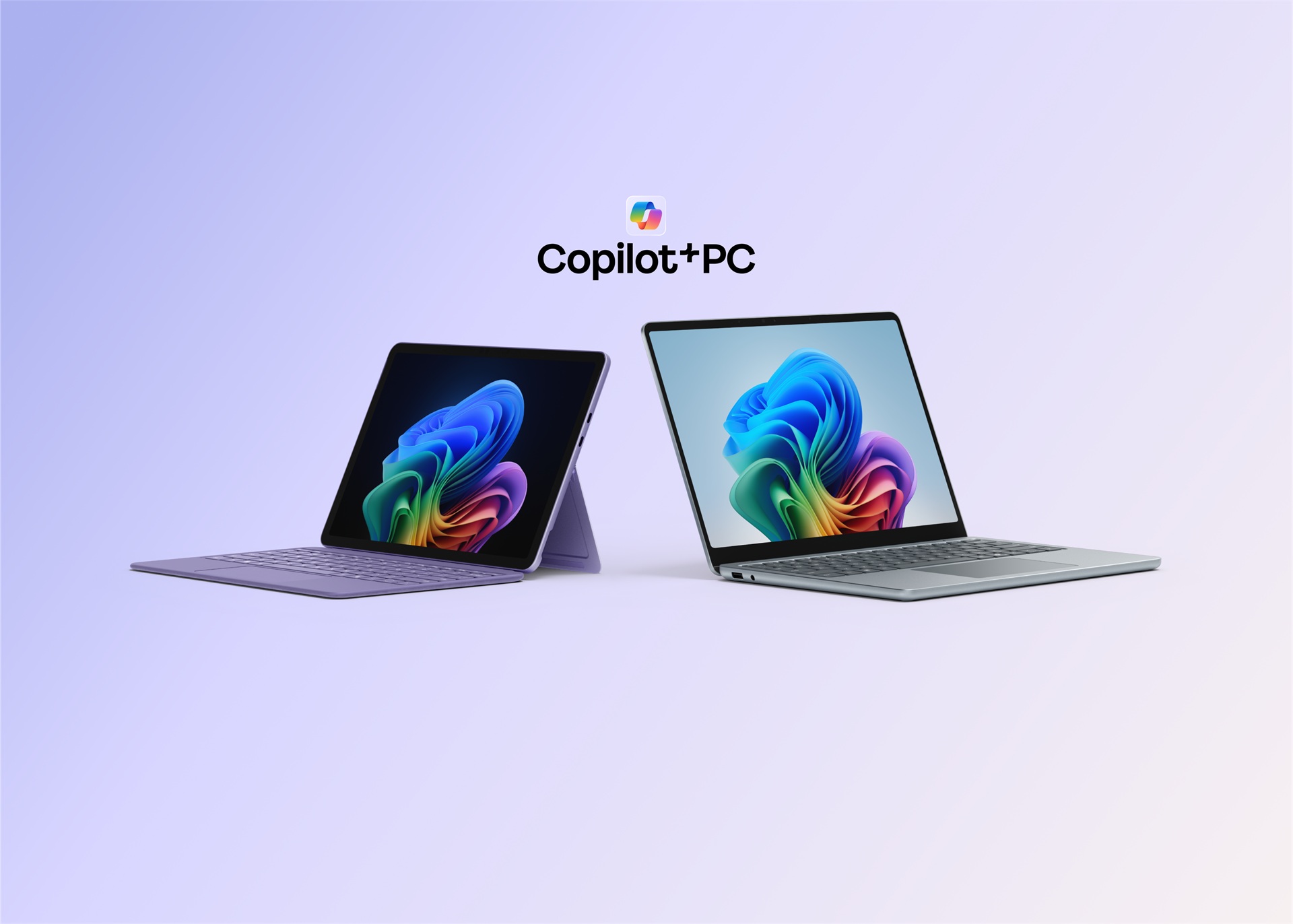
Introducing all-new Surface Copilot+ PCs: The Surface Pro, 12-inch and Surface Laptop, 13-inch
Copilot+ PCs continue to define the next wave of personal computing — fast, long lasting, secure PCs that are purpose-built to unlock AI experiences that empower us to get more done. Today, Microsoft and Surface expand the Copilot+ PC family with tblogs.windows.com
- Related coverage: bestbuy.com
- Related coverage: techspot.com

Microsoft unveils thinner, lighter Surface Laptop and Surface Pro, starting at $799 | TechSpot
Microsoft has expanded its Copilot+ PC family with two new Surface devices: the 12-inch Surface Pro tablet and the 13-inch Surface Laptop. Powered by Qualcomm's Snapdragon X...www.techspot.com - Related coverage: hsn.com

Microsoft Surface Pro 12" Keyboard Bundle with Slim Pen Slate | HSN
Microsoft Surface Pro 12" Keyboard Bundle with Slim Pen Slate, Shop at https://www.hsn.com.www.hsn.com - Related coverage: itpro.com

Microsoft Surface Pro 12in review | IT Pro
The newest Surface Pro tablet is compact, light, powerful, and good value (on its own)www.itpro.com - Related coverage: msftstories.thesourcemediaassets.com
</rdf:Alt> </dc:title> <dc:description> <rdf:Alt> <rdf:li xml:lang="x-default"/> </rdf:Alt> </dc:description> <dc:creator> <rdf:Seq> <rdf:li>v-jrost
</rdf:Alt> </dc:description> <dc:creator> <rdf:Seq> <rdf:li>[email protected]msftstories.thesourcemediaassets.com
- Official source: news.microsoft.com
</rdf:Alt> </dc:title> <dc:description><rdf:Alt><rdf:li xml:lang="x-default"/> </rdf:Alt> </dc:description> <dc:creator><rdf:Seq><rdf:li>Joseph Galbraith (MBO Partners, Inc.)
</rdf:Alt> </dc:description> <dc:creator><rdf:Seq><rdf:li>Joseph Galbraith (MBO Partners, Inc.)news.microsoft.com