

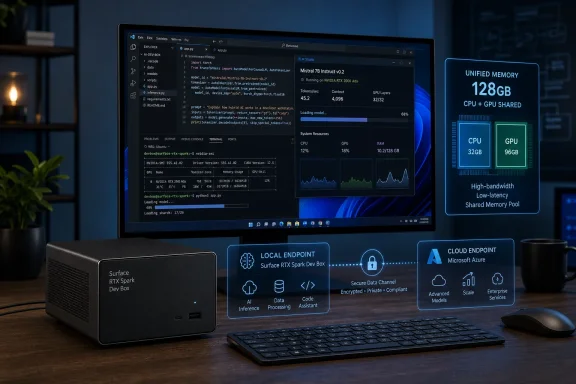
Microsoft introduced the Surface RTX Spark Dev Box at Build 2026 on June 2, pitching a compact Windows 11 Pro desktop with Nvidia RTX Spark silicon, 128GB of unified memory, and up to one petaflop of AI compute for local model development. The announcement is not just another Surface SKU with a faster accelerator inside. It is Microsoft admitting, in hardware, that the cloud-only story for AI development has started to creak under its own economics.
For Windows users and IT shops, the most important part of the machine is not the shiny Blackwell GPU or the small chassis. It is the business model implied by the box: Microsoft wants developers to treat local AI capacity as infrastructure they can own, manage, secure, and amortize, while reserving Azure and frontier APIs for the jobs that truly need them. That is a subtle but meaningful turn from the past three years of “send it to the cloud and meter it by the token.”
The AI boom was built on abstraction. Developers did not need to know where the GPUs lived, how models were scheduled, or what the data center looked like; they called an API, paid by usage, and shipped features at a pace that would have been impossible in the pre-ChatGPT era. That abstraction was liberating, until the bill arrived.
The Surface RTX Spark Dev Box is Microsoft’s answer to a problem that has moved from hacker-news gripe to budget line item. Inference is no longer a curiosity. Agentic coding tools, document workflows, internal search, customer support bots, test generation, and local data analysis can all produce large volumes of repeated calls. The meter that felt trivial during prototyping becomes a tax on iteration once developers begin looping through the same workloads dozens or hundreds of times a day.
Microsoft is not pretending the cloud goes away. That would be absurd from a company whose AI ambitions are welded to Azure. Instead, the pitch is that cloud AI should be used more selectively: frontier models for frontier tasks, local models for the grind of development, testing, experimentation, and private workflows. The Dev Box is therefore less an anti-cloud product than a cloud triage product.
That distinction matters. If Microsoft can persuade developers to build locally and deploy globally, it keeps the developer inside the Windows, GitHub, Visual Studio Code, Foundry, and Azure orbit. If it cannot, developers will continue drifting toward whatever stack offers the cheapest path between an open model and a working application. The Dev Box is a defensive move dressed as a workstation.
Large language models are greedy in ways that conventional desktop workloads are not. The model weights themselves consume memory, and useful context windows add more pressure through the key-value cache that lets a model track what it has already processed. A developer trying to run a large model with a meaningful context length can exhaust a high-end gaming GPU long before the GPU’s raw compute is the issue.
That is why the Dev Box’s architecture is more interesting than a simple “small PC with a fast GPU” description suggests. RTX Spark combines an Arm-based Nvidia Grace CPU with a Blackwell-generation RTX GPU and a unified memory pool shared between CPU and GPU. Instead of treating system RAM and graphics memory as separate territories, the system is designed around the premise that AI workloads need a larger common addressable space.
This is also where Microsoft’s Windows work becomes strategically important. Unified memory is only useful if the operating system and drivers can manage it without turning every serious workload into a paging disaster. Microsoft says the Surface RTX Spark Dev Box ships with Windows 11 Pro configured for development and tuned for this architecture, including GPU-aware memory behavior, WSL support, CUDA readiness, and the usual enterprise controls around identity and security.
The claim that the machine can handle models above 100 billion parameters locally will still need independent testing. Quantization choices, context length, framework support, thermals, storage speed, and actual sustained throughput all decide whether a workload feels practical or merely possible. But Microsoft has clearly identified the right pressure point: local AI development is constrained less by whether a desktop can touch a model than by whether it can keep the model resident long enough to be useful.
RTX Spark changes the conversation because it gives Windows on Arm a workload where the architecture’s usual anxieties matter less than the accelerator stack. Developers buying this box are not primarily asking whether a ten-year-old printer utility runs natively. They are asking whether PyTorch, CUDA, WSL, Visual Studio Code, containers, model conversion tools, and inference runtimes behave predictably.
That is Nvidia’s opening. CUDA remains the default dialect of serious AI acceleration, especially for developers who move between local experiments and cloud GPU instances. Apple’s unified memory architecture is elegant, and Apple Silicon has done more than any other consumer platform to make high-memory local compute feel normal. But the AI software ecosystem still overwhelmingly treats Nvidia as the path of least resistance.
Microsoft knows this. The Dev Box does not try to beat the Mac mini by being a nicer little desktop or a cheaper workstation. It tries to beat it by offering the AI developer something Apple cannot fully match today: a local Windows machine with CUDA-oriented workflows that resemble the cloud environments where many production models are ultimately trained, tested, or deployed.
That does not make Apple irrelevant. Apple’s high-end Mac Studio and MacBook Pro systems have become credible local AI machines for many developers, especially those working with smaller open models, creative tools, and Metal-optimized software. But Microsoft and Nvidia are aiming at the developer who wants local capacity without leaving the CUDA universe. For that audience, architectural purity matters less than ecosystem continuity.
For years, setting up a serious Windows development machine has meant building your own workstation twice. First came the hardware selection, then came the ritual of uninstalling consumer clutter, enabling developer mode, configuring terminals, installing WSL, chasing driver compatibility, setting up package managers, syncing repositories, and hoping the GPU stack lined up with whatever framework the project required. Experienced developers can do this; they should not have to keep doing it.
The Dev Box borrows from the logic of cloud development environments. A good cloud dev box is valuable not merely because it has compute, but because it is reproducible. You can provision it, manage it, reset it, and hand it to another developer without turning setup into folklore. Microsoft is trying to bring some of that predictability back to physical hardware.
That is especially important for enterprises. A local AI workstation that cannot be enrolled, encrypted, patched, monitored, and governed is a science project, not an approved endpoint. Microsoft’s emphasis on Entra ID, Intune, Secured-core PC design, BitLocker, and Defender is not decorative. It is the difference between a developer buying a powerful toy and an organization deploying a sanctioned AI workbench.
There is a catch, of course. The more Microsoft makes the machine feel like an appliance, the more buyers will expect appliance-like reliability. If the CUDA stack breaks after a Windows update, if WSL GPU support becomes brittle, if model tooling demands too much manual repair, the whole “code on day one” story collapses. Developer trust is hard to win and easy to lose, especially among the very people most likely to notice when the abstraction leaks.
A model running on a managed endpoint can be placed under familiar controls. Data can stay inside the organization’s device-management boundary. Logs, storage, encryption, access policies, and network restrictions can be handled using tools IT already understands. For regulated sectors, that may be more persuasive than any promise about lower per-token cost.
This is where the Surface branding carries weight. Microsoft is not simply saying “build your own Linux box with a big GPU.” It is saying Windows can be the managed local AI platform for organizations that want serious model work without abandoning endpoint discipline. That is a message aimed directly at sysadmins and security teams who have spent the last two years watching business units paste proprietary material into whatever AI tool happened to be fashionable that week.
Local AI also gives organizations a better way to classify workloads. A lightweight coding assistant, document summarizer, or internal retrieval workflow may not need a frontier model. A local 70B-class or 100B-class model may be good enough for the majority of repetitive tasks, while sensitive or strategically important jobs can be routed through approved cloud services. The point is not that local models are always superior. The point is that enterprises finally get another place to put the workload.
That said, local does not automatically mean safe. Models can leak data through logs, extensions, plugins, caches, and careless prompt handling. Developers can still install questionable packages. Local agents can still act on files they should not touch. A Dev Box reduces certain cloud-exposure risks, but it increases the importance of endpoint policy, software supply-chain hygiene, and observability on machines that may now be running far more autonomous workflows.
A local AI box that performs well for a five-minute demo and throttles during an overnight run is worse than useless. It creates a false expectation and then fails at exactly the moment developers are relying on it. Training, fine-tuning, evaluation, batch inference, and agentic testing are not bursty office workloads. They are long, repetitive, heat-generating jobs.
That is why the chassis-as-heatsink approach matters. Microsoft appears to be designing the Dev Box as something that can sit on a desk and work continuously without sounding like a rack server. That matters in open offices, home offices, classrooms, labs, and small teams that do not have a machine room. The product category only works if the box can be close to the developer without becoming obnoxious.
The unanswered question is whether Microsoft can scale that design without either pricing the product into boutique territory or compromising the very thermals that make it credible. Metal 3D printing allows shapes that traditional manufacturing struggles to produce, but it also raises obvious questions about yield, cost, and repairability. Microsoft has made beautiful, difficult-to-service hardware before; developers will be less forgiving if the Dev Box becomes another elegant sealed object with workstation expectations and consumer-appliance repairability.
For WindowsForum readers, this is worth watching closely. The history of small powerful PCs is littered with systems that looked brilliant on paper and became frustrating in practice because heat, noise, dust, firmware, and component access were treated as secondary details. AI workloads punish that kind of optimism.
For many teams, the easiest AI infrastructure decision has been to swipe a card for cloud credits. That is flexible, fast, and operationally convenient. It also keeps capital expenditure off the desk and turns capacity planning into a dashboard rather than a procurement cycle. The Dev Box asks organizations to remember an older discipline: buying machines for known workloads.
That will be a harder sell than Microsoft’s launch language implies. A developer may love the idea of unmetered local inference, but a finance team will ask how long the machine must be used before it beats cloud spending. An IT department will ask who owns the endpoint, how it is patched, how failures are handled, and whether the device creates a new class of privileged local compute that needs special policy. A security team will ask whether local models are approved, traceable, and auditable.
The answer will vary wildly. For a startup iterating constantly on open models, a local AI box could pay for itself quickly if the price lands in workstation territory rather than luxury-hardware territory. For an enterprise with negotiated cloud rates and strict data pipelines, the same box may be useful only for specialist teams. For a hobbyist, researcher, or independent developer, the purchase decision may hinge almost entirely on the final price.
Microsoft has not disclosed that price, and that omission is not incidental. Pricing will decide whether the Dev Box is a category-defining development machine or a keynote prop for well-funded AI teams. If it is too expensive, the “without cloud costs” pitch becomes weaker; buyers will simply be prepaying a different kind of bill.
Developers should not have to manually decide every few minutes whether a task belongs on a local model, a workstation model, or a cloud model. The platform has to route work based on capability, cost, latency, privacy, and context. If the routing is clumsy, users will fall back to the simplest option, which is often the cloud API they already know.
This is why integrations such as GitHub Copilot CLI and Microsoft Foundry matter more than the hardware spec sheet. The hardware provides capacity, but the workflow decides whether anyone uses it. If a cloud-based agent can split a task plan and send suitable subtasks to a local model while reserving harder reasoning for a frontier model, hybrid AI becomes a real operating model rather than a whiteboard diagram.
The risk is that “hybrid” becomes another Microsoft complexity layer. Enterprises already juggle Azure services, Microsoft 365, Intune, Entra, Defender, GitHub, Windows management, and a growing menu of Copilot products. Adding local model routing, model catalogs, policy controls, and deployment pipelines could either simplify AI development or bury it under configuration.
The successful version is almost invisible. A developer writes code, runs tests, asks an agent to refactor a module, and the system quietly chooses the right compute target. The failed version is a new set of knobs that only platform teams understand, with developers once again waiting for someone else to provision intelligence.
RTX Spark lets Nvidia push deeper into Windows PCs without limiting itself to gaming, creator workloads, or cloud accelerators. The platform brings Blackwell-generation AI compute into slim laptops and compact desktops, giving OEMs a way to sell “AI PC” as something more substantial than a TOPS number in a marketing chart. Microsoft’s Surface entry gives that push a first-party Windows endorsement.
For Microsoft, that is both powerful and awkward. The company has spent heavily on its own AI infrastructure and has a complex set of partnerships across OpenAI, Azure, and silicon suppliers. Yet at the developer workstation level, Nvidia remains the common language of AI acceleration. The Dev Box leans into that reality rather than fighting it.
That is probably the right call. Developers do not reward platform purity for its own sake. They reward the stack that runs their tools, supports their libraries, and minimizes porting pain. If Windows wants to be the place where AI developers build locally, it needs CUDA compatibility, WSL maturity, and enough memory to run meaningful models. RTX Spark gives Microsoft a credible hardware foundation for that pitch.
The bigger question is how open the ecosystem feels once the devices arrive. If Surface RTX Spark Dev Box becomes a premium reference design that encourages a broader class of OEM systems, Windows developers win. If it becomes a narrow Microsoft-controlled island, the market will treat it as a curiosity while assembling cheaper alternatives elsewhere.
A developer who occasionally runs a model will not automatically benefit from buying a powerful local box. A team that needs the newest frontier model for most of its work will still live in the cloud. A company that values elasticity above all else may prefer metered spending because it can scale up and down without owning idle hardware. The economics are not ideological; they are workload-specific.
There are also operational costs. Someone has to manage the device, patch the system, replace failed units, secure local data, approve models, and support developers when the stack breaks. Cloud bills are painful because they are visible. Local infrastructure costs are painful because they are distributed across procurement, IT, security, and lost developer time.
Still, fixed local capacity has a psychological benefit that spreadsheets often miss. Developers experiment more freely when every run does not feel like a chargeable event. Students, researchers, and small teams can iterate without asking permission from a budget owner. Organizations can run internal evaluations, red-team models, and prototype agents without sending every trial through a cloud meter.
That freedom is the real product. Microsoft is selling a box, but the box is a way to make AI experimentation feel less rented.
The difference this time is timing. Developers now have a concrete reason to want a local high-memory accelerator: open models are good enough for real work, cloud inference costs are noticeable, and enterprises are looking for ways to keep sensitive workflows closer to home. The machine is not trying to create demand from scratch. It is trying to catch a demand wave already forming.
But the launch also raises the bar. If Microsoft is serious about local-first AI development, it cannot treat this as a one-off hero device. It needs predictable driver support, clear lifecycle commitments, enterprise deployment guidance, transparent performance data, repair and replacement options, and a software stack that does not require constant heroic debugging. Developers will forgive missing RGB lighting. They will not forgive flaky compute.
The pricing silence remains the largest gap. A high-memory, Nvidia-backed, Surface-designed AI workstation was never going to be cheap. But there is a difference between expensive and impractical. Microsoft must land close enough to the workstation market that teams can justify the purchase against recurring cloud spend, not just admire it as an engineering object.
It also needs to show real workloads. Not just a model loading successfully, but fine-tuning runs, local agents, coding workflows, retrieval-augmented generation, model conversion, inference latency, power behavior, thermals, and failure modes. The AI hardware market has had enough “up to” claims. The Dev Box needs measured credibility.
For Windows users and IT shops, the most important part of the machine is not the shiny Blackwell GPU or the small chassis. It is the business model implied by the box: Microsoft wants developers to treat local AI capacity as infrastructure they can own, manage, secure, and amortize, while reserving Azure and frontier APIs for the jobs that truly need them. That is a subtle but meaningful turn from the past three years of “send it to the cloud and meter it by the token.”
 Microsoft Puts a Price Tag on Escaping the Meter
The AI boom was built on abstraction. Developers did not need to know where the GPUs lived, how models were scheduled, or what the data center looked like; they called an API, paid by usage, and shipped features at a pace that would have been impossible in the pre-ChatGPT era. That abstraction was liberating, until the bill arrived.The Surface RTX Spark Dev Box is Microsoft’s answer to a problem that has moved from hacker-news gripe to budget line item. Inference is no longer a curiosity. Agentic coding tools, document workflows, internal search, customer support bots, test generation, and local data analysis can all produce large volumes of repeated calls. The meter that felt trivial during prototyping becomes a tax on iteration once developers begin looping through the same workloads dozens or hundreds of times a day.
Microsoft is not pretending the cloud goes away. That would be absurd from a company whose AI ambitions are welded to Azure. Instead, the pitch is that cloud AI should be used more selectively: frontier models for frontier tasks, local models for the grind of development, testing, experimentation, and private workflows. The Dev Box is therefore less an anti-cloud product than a cloud triage product.
That distinction matters. If Microsoft can persuade developers to build locally and deploy globally, it keeps the developer inside the Windows, GitHub, Visual Studio Code, Foundry, and Azure orbit. If it cannot, developers will continue drifting toward whatever stack offers the cheapest path between an open model and a working application. The Dev Box is a defensive move dressed as a workstation.
The 128GB Number Is the Product
Consumer PC marketing has spent decades teaching buyers to stare at CPU names, GPU tiers, and benchmark bars. For local AI, the bottleneck is often less glamorous: memory capacity and how efficiently the system can expose it to the accelerator. Microsoft’s headline specification, 128GB of unified memory, is not a footnote. It is the reason the machine exists.Large language models are greedy in ways that conventional desktop workloads are not. The model weights themselves consume memory, and useful context windows add more pressure through the key-value cache that lets a model track what it has already processed. A developer trying to run a large model with a meaningful context length can exhaust a high-end gaming GPU long before the GPU’s raw compute is the issue.
That is why the Dev Box’s architecture is more interesting than a simple “small PC with a fast GPU” description suggests. RTX Spark combines an Arm-based Nvidia Grace CPU with a Blackwell-generation RTX GPU and a unified memory pool shared between CPU and GPU. Instead of treating system RAM and graphics memory as separate territories, the system is designed around the premise that AI workloads need a larger common addressable space.
This is also where Microsoft’s Windows work becomes strategically important. Unified memory is only useful if the operating system and drivers can manage it without turning every serious workload into a paging disaster. Microsoft says the Surface RTX Spark Dev Box ships with Windows 11 Pro configured for development and tuned for this architecture, including GPU-aware memory behavior, WSL support, CUDA readiness, and the usual enterprise controls around identity and security.
The claim that the machine can handle models above 100 billion parameters locally will still need independent testing. Quantization choices, context length, framework support, thermals, storage speed, and actual sustained throughput all decide whether a workload feels practical or merely possible. But Microsoft has clearly identified the right pressure point: local AI development is constrained less by whether a desktop can touch a model than by whether it can keep the model resident long enough to be useful.
Windows on Arm Gets a New Reason to Exist
Windows on Arm has spent years looking like a platform waiting for its application. It promised battery life, instant-on responsiveness, and cellular mobility, but it struggled against the inertia of x86 compatibility and the gravitational pull of Intel and AMD. Copilot+ PCs gave Windows on Arm a marketing reset, but many of those machines still felt like general-purpose laptops with an NPU story bolted on.RTX Spark changes the conversation because it gives Windows on Arm a workload where the architecture’s usual anxieties matter less than the accelerator stack. Developers buying this box are not primarily asking whether a ten-year-old printer utility runs natively. They are asking whether PyTorch, CUDA, WSL, Visual Studio Code, containers, model conversion tools, and inference runtimes behave predictably.
That is Nvidia’s opening. CUDA remains the default dialect of serious AI acceleration, especially for developers who move between local experiments and cloud GPU instances. Apple’s unified memory architecture is elegant, and Apple Silicon has done more than any other consumer platform to make high-memory local compute feel normal. But the AI software ecosystem still overwhelmingly treats Nvidia as the path of least resistance.
Microsoft knows this. The Dev Box does not try to beat the Mac mini by being a nicer little desktop or a cheaper workstation. It tries to beat it by offering the AI developer something Apple cannot fully match today: a local Windows machine with CUDA-oriented workflows that resemble the cloud environments where many production models are ultimately trained, tested, or deployed.
That does not make Apple irrelevant. Apple’s high-end Mac Studio and MacBook Pro systems have become credible local AI machines for many developers, especially those working with smaller open models, creative tools, and Metal-optimized software. But Microsoft and Nvidia are aiming at the developer who wants local capacity without leaving the CUDA universe. For that audience, architectural purity matters less than ecosystem continuity.
The Dev Box Is Also a Confession About Developer PCs
One of the least flashy parts of Microsoft’s announcement may be one of the most telling: the system ships with a developer-optimized Windows 11 Pro image. Visual Studio Code, GitHub Copilot integrations, WSL 2, PowerShell 7, Git, Python, Node.js, and GPU passthrough support are framed as ready on day one. That sounds like checklist marketing, but it points to a real failure in the Windows developer experience.For years, setting up a serious Windows development machine has meant building your own workstation twice. First came the hardware selection, then came the ritual of uninstalling consumer clutter, enabling developer mode, configuring terminals, installing WSL, chasing driver compatibility, setting up package managers, syncing repositories, and hoping the GPU stack lined up with whatever framework the project required. Experienced developers can do this; they should not have to keep doing it.
The Dev Box borrows from the logic of cloud development environments. A good cloud dev box is valuable not merely because it has compute, but because it is reproducible. You can provision it, manage it, reset it, and hand it to another developer without turning setup into folklore. Microsoft is trying to bring some of that predictability back to physical hardware.
That is especially important for enterprises. A local AI workstation that cannot be enrolled, encrypted, patched, monitored, and governed is a science project, not an approved endpoint. Microsoft’s emphasis on Entra ID, Intune, Secured-core PC design, BitLocker, and Defender is not decorative. It is the difference between a developer buying a powerful toy and an organization deploying a sanctioned AI workbench.
There is a catch, of course. The more Microsoft makes the machine feel like an appliance, the more buyers will expect appliance-like reliability. If the CUDA stack breaks after a Windows update, if WSL GPU support becomes brittle, if model tooling demands too much manual repair, the whole “code on day one” story collapses. Developer trust is hard to win and easy to lose, especially among the very people most likely to notice when the abstraction leaks.
The Box on the Desk Is a Data-Governance Argument
The cost story is obvious, but the privacy and governance story may be more durable. Many organizations are still uncomfortable sending sensitive prompts, source code, customer data, legal material, or internal documents to external AI services, even when vendors promise enterprise controls. Local inference does not eliminate governance problems, but it changes their shape.A model running on a managed endpoint can be placed under familiar controls. Data can stay inside the organization’s device-management boundary. Logs, storage, encryption, access policies, and network restrictions can be handled using tools IT already understands. For regulated sectors, that may be more persuasive than any promise about lower per-token cost.
This is where the Surface branding carries weight. Microsoft is not simply saying “build your own Linux box with a big GPU.” It is saying Windows can be the managed local AI platform for organizations that want serious model work without abandoning endpoint discipline. That is a message aimed directly at sysadmins and security teams who have spent the last two years watching business units paste proprietary material into whatever AI tool happened to be fashionable that week.
Local AI also gives organizations a better way to classify workloads. A lightweight coding assistant, document summarizer, or internal retrieval workflow may not need a frontier model. A local 70B-class or 100B-class model may be good enough for the majority of repetitive tasks, while sensitive or strategically important jobs can be routed through approved cloud services. The point is not that local models are always superior. The point is that enterprises finally get another place to put the workload.
That said, local does not automatically mean safe. Models can leak data through logs, extensions, plugins, caches, and careless prompt handling. Developers can still install questionable packages. Local agents can still act on files they should not touch. A Dev Box reduces certain cloud-exposure risks, but it increases the importance of endpoint policy, software supply-chain hygiene, and observability on machines that may now be running far more autonomous workflows.
The Thermal Story Is Really About Trust
Microsoft’s industrial-design details are easy to dismiss as launch-event theater. A compact aluminum chassis, a 3D-printed top panel, angled perforations, quiet operation, and a roughly 100-watt sustained thermal envelope are the kind of things hardware companies love to describe in close-up product videos. But for AI development, sustained thermals are not cosmetic.A local AI box that performs well for a five-minute demo and throttles during an overnight run is worse than useless. It creates a false expectation and then fails at exactly the moment developers are relying on it. Training, fine-tuning, evaluation, batch inference, and agentic testing are not bursty office workloads. They are long, repetitive, heat-generating jobs.
That is why the chassis-as-heatsink approach matters. Microsoft appears to be designing the Dev Box as something that can sit on a desk and work continuously without sounding like a rack server. That matters in open offices, home offices, classrooms, labs, and small teams that do not have a machine room. The product category only works if the box can be close to the developer without becoming obnoxious.
The unanswered question is whether Microsoft can scale that design without either pricing the product into boutique territory or compromising the very thermals that make it credible. Metal 3D printing allows shapes that traditional manufacturing struggles to produce, but it also raises obvious questions about yield, cost, and repairability. Microsoft has made beautiful, difficult-to-service hardware before; developers will be less forgiving if the Dev Box becomes another elegant sealed object with workstation expectations and consumer-appliance repairability.
For WindowsForum readers, this is worth watching closely. The history of small powerful PCs is littered with systems that looked brilliant on paper and became frustrating in practice because heat, noise, dust, firmware, and component access were treated as secondary details. AI workloads punish that kind of optimism.
The Mac Mini Comparison Misses the Bigger Rival
It is inevitable that the Surface RTX Spark Dev Box will be compared with the Mac mini, Mac Studio, and high-end compact workstations. Apple made unified memory mainstream, and the Mac mini’s small footprint and quiet operation set expectations for what a desktop can be. But Microsoft’s real rival here is not a specific Mac. It is the habit of not buying hardware at all.For many teams, the easiest AI infrastructure decision has been to swipe a card for cloud credits. That is flexible, fast, and operationally convenient. It also keeps capital expenditure off the desk and turns capacity planning into a dashboard rather than a procurement cycle. The Dev Box asks organizations to remember an older discipline: buying machines for known workloads.
That will be a harder sell than Microsoft’s launch language implies. A developer may love the idea of unmetered local inference, but a finance team will ask how long the machine must be used before it beats cloud spending. An IT department will ask who owns the endpoint, how it is patched, how failures are handled, and whether the device creates a new class of privileged local compute that needs special policy. A security team will ask whether local models are approved, traceable, and auditable.
The answer will vary wildly. For a startup iterating constantly on open models, a local AI box could pay for itself quickly if the price lands in workstation territory rather than luxury-hardware territory. For an enterprise with negotiated cloud rates and strict data pipelines, the same box may be useful only for specialist teams. For a hobbyist, researcher, or independent developer, the purchase decision may hinge almost entirely on the final price.
Microsoft has not disclosed that price, and that omission is not incidental. Pricing will decide whether the Dev Box is a category-defining development machine or a keynote prop for well-funded AI teams. If it is too expensive, the “without cloud costs” pitch becomes weaker; buyers will simply be prepaying a different kind of bill.
Hybrid AI Becomes Real Only When Routing Gets Boring
Microsoft’s broader strategy is not just to sell a fast local box. It wants to normalize hybrid AI: small on-device models for lightweight tasks, local workstation-class models for heavier development work, and cloud frontier models for jobs that need maximum capability. That architecture sounds sensible. The hard part is making it boring.Developers should not have to manually decide every few minutes whether a task belongs on a local model, a workstation model, or a cloud model. The platform has to route work based on capability, cost, latency, privacy, and context. If the routing is clumsy, users will fall back to the simplest option, which is often the cloud API they already know.
This is why integrations such as GitHub Copilot CLI and Microsoft Foundry matter more than the hardware spec sheet. The hardware provides capacity, but the workflow decides whether anyone uses it. If a cloud-based agent can split a task plan and send suitable subtasks to a local model while reserving harder reasoning for a frontier model, hybrid AI becomes a real operating model rather than a whiteboard diagram.
The risk is that “hybrid” becomes another Microsoft complexity layer. Enterprises already juggle Azure services, Microsoft 365, Intune, Entra, Defender, GitHub, Windows management, and a growing menu of Copilot products. Adding local model routing, model catalogs, policy controls, and deployment pipelines could either simplify AI development or bury it under configuration.
The successful version is almost invisible. A developer writes code, runs tests, asks an agent to refactor a module, and the system quietly chooses the right compute target. The failed version is a new set of knobs that only platform teams understand, with developers once again waiting for someone else to provision intelligence.
Nvidia Gets the Desktop Beachhead Microsoft Needed
The Surface RTX Spark Dev Box is also a reminder that Microsoft’s AI PC story has needed Nvidia more than Microsoft would probably like to admit. NPUs in Copilot+ PCs are useful for certain local tasks, but they are not a substitute for the GPU memory and software ecosystem needed to run large open models. Intel, AMD, and Qualcomm all have AI PC narratives. Nvidia has the developer mindshare.RTX Spark lets Nvidia push deeper into Windows PCs without limiting itself to gaming, creator workloads, or cloud accelerators. The platform brings Blackwell-generation AI compute into slim laptops and compact desktops, giving OEMs a way to sell “AI PC” as something more substantial than a TOPS number in a marketing chart. Microsoft’s Surface entry gives that push a first-party Windows endorsement.
For Microsoft, that is both powerful and awkward. The company has spent heavily on its own AI infrastructure and has a complex set of partnerships across OpenAI, Azure, and silicon suppliers. Yet at the developer workstation level, Nvidia remains the common language of AI acceleration. The Dev Box leans into that reality rather than fighting it.
That is probably the right call. Developers do not reward platform purity for its own sake. They reward the stack that runs their tools, supports their libraries, and minimizes porting pain. If Windows wants to be the place where AI developers build locally, it needs CUDA compatibility, WSL maturity, and enough memory to run meaningful models. RTX Spark gives Microsoft a credible hardware foundation for that pitch.
The bigger question is how open the ecosystem feels once the devices arrive. If Surface RTX Spark Dev Box becomes a premium reference design that encourages a broader class of OEM systems, Windows developers win. If it becomes a narrow Microsoft-controlled island, the market will treat it as a curiosity while assembling cheaper alternatives elsewhere.
Local AI Will Not Save Everyone Money
The most seductive phrase around this launch is “without cloud costs.” It is also the easiest to overread. Local AI does not abolish cost. It converts variable cost into fixed cost, and that only helps when utilization is high enough, workloads are suitable enough, and the hardware remains useful long enough.A developer who occasionally runs a model will not automatically benefit from buying a powerful local box. A team that needs the newest frontier model for most of its work will still live in the cloud. A company that values elasticity above all else may prefer metered spending because it can scale up and down without owning idle hardware. The economics are not ideological; they are workload-specific.
There are also operational costs. Someone has to manage the device, patch the system, replace failed units, secure local data, approve models, and support developers when the stack breaks. Cloud bills are painful because they are visible. Local infrastructure costs are painful because they are distributed across procurement, IT, security, and lost developer time.
Still, fixed local capacity has a psychological benefit that spreadsheets often miss. Developers experiment more freely when every run does not feel like a chargeable event. Students, researchers, and small teams can iterate without asking permission from a budget owner. Organizations can run internal evaluations, red-team models, and prototype agents without sending every trial through a cloud meter.
That freedom is the real product. Microsoft is selling a box, but the box is a way to make AI experimentation feel less rented.
The Surface Dev Box Test Is Bigger Than Surface
Microsoft has been here before in spirit, if not in silicon. The company has repeatedly tried to define developer hardware for Windows, from Arm developer kits to Surface-branded experiments to cloud-hosted Microsoft Dev Box services. Some efforts were useful; others became niche footnotes. The Surface RTX Spark Dev Box will be judged against that uneven history.The difference this time is timing. Developers now have a concrete reason to want a local high-memory accelerator: open models are good enough for real work, cloud inference costs are noticeable, and enterprises are looking for ways to keep sensitive workflows closer to home. The machine is not trying to create demand from scratch. It is trying to catch a demand wave already forming.
But the launch also raises the bar. If Microsoft is serious about local-first AI development, it cannot treat this as a one-off hero device. It needs predictable driver support, clear lifecycle commitments, enterprise deployment guidance, transparent performance data, repair and replacement options, and a software stack that does not require constant heroic debugging. Developers will forgive missing RGB lighting. They will not forgive flaky compute.
The pricing silence remains the largest gap. A high-memory, Nvidia-backed, Surface-designed AI workstation was never going to be cheap. But there is a difference between expensive and impractical. Microsoft must land close enough to the workstation market that teams can justify the purchase against recurring cloud spend, not just admire it as an engineering object.
It also needs to show real workloads. Not just a model loading successfully, but fine-tuning runs, local agents, coding workflows, retrieval-augmented generation, model conversion, inference latency, power behavior, thermals, and failure modes. The AI hardware market has had enough “up to” claims. The Dev Box needs measured credibility.
The Windows AI Workbench Finally Has a Shape
The practical consequences of the Surface RTX Spark Dev Box are clearer than the hype around “personal supercomputers” suggests. This is not a magic replacement for Azure, nor is it a consumer mini PC with a fashionable AI sticker. It is Microsoft’s first serious attempt to make the Windows desktop a managed local AI workbench.- The Surface RTX Spark Dev Box shifts part of AI development from metered cloud spending to fixed local capacity, which will matter most for teams with frequent iterative workloads.
- The 128GB unified memory pool is the defining specification because it addresses the model-loading and context-window limits that constrain conventional GPU desktops.
- The Nvidia CUDA ecosystem gives Microsoft a stronger developer argument than Windows on Arm has usually had, especially for teams moving between local prototypes and cloud GPU deployments.
- Enterprise value will depend as much on management, security, and lifecycle support as on raw performance, because unmanaged AI workstations are a governance problem waiting to happen.
- Pricing, sustained benchmarks, repairability, and software reliability will decide whether the machine becomes a real category or another impressive Surface experiment.
- Hybrid AI will only work if Microsoft makes workload routing feel automatic, policy-aware, and boring enough that developers stop thinking about where each prompt runs.
References
- Primary source: VentureBeat
Published: 2026-06-02T16:39:10.837504
Loading…
venturebeat.com - Independent coverage: PCMag
Published: Tue, 02 Jun 2026 16:30:25 GMT
Loading…
www.pcmag.com - Related coverage: tomshardware.com

Microsoft Surface Laptop Ultra weilds Nvidia's RTX Spark superchip with 128GB of RAM, 20 Arm CPU cores, and a Blackwell GPU — 15-inch mini-LED PixelSense Ultra display rounds out the powerful package
Microsoft + Nvidia = Mivida?www.tomshardware.com
- Related coverage: windowscentral.com
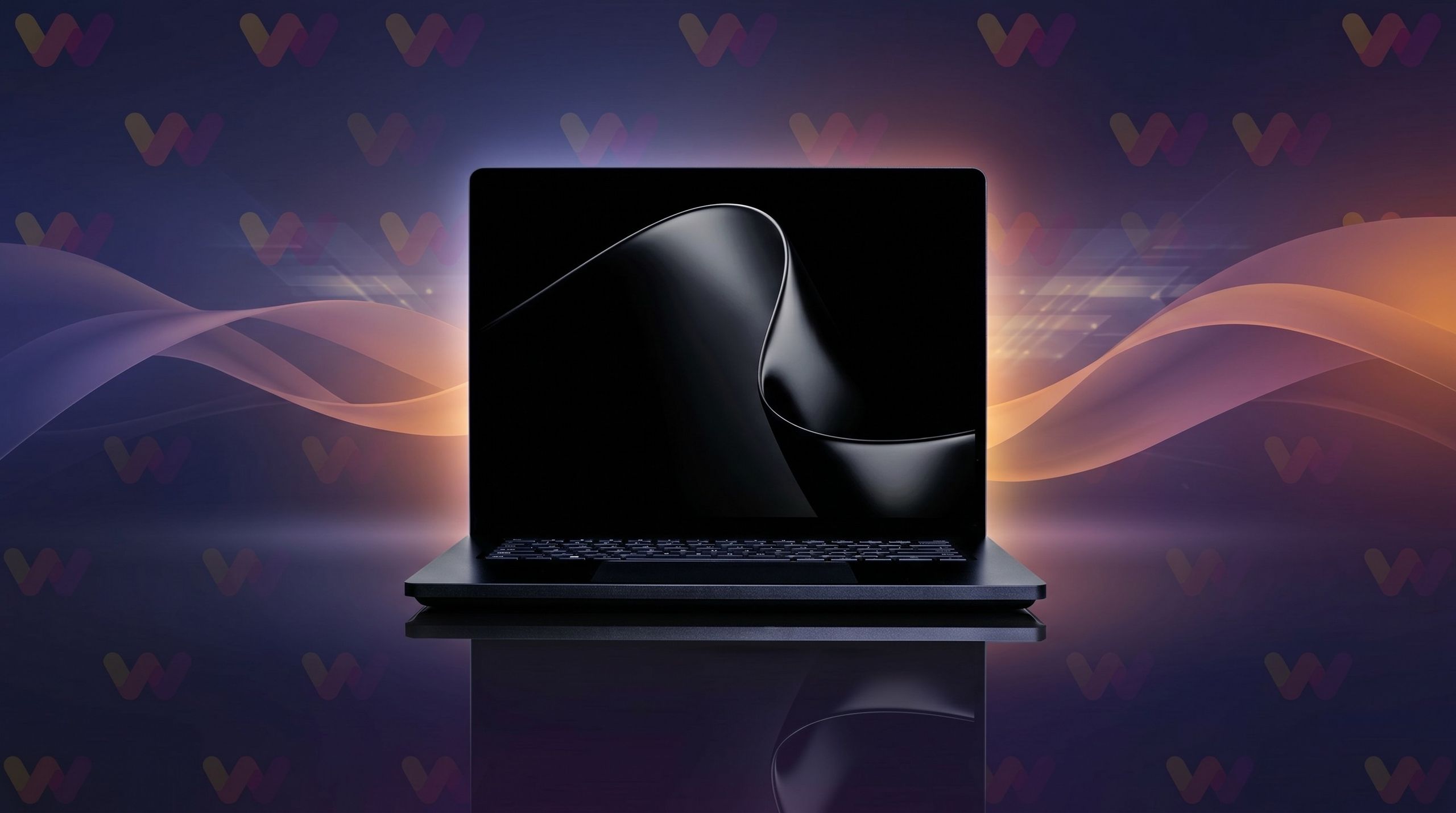
Microsoft and NVIDIA’s Surface Laptop Ultra pushes Windows on Arm into high‑performance territory
Microsoft and NVIDIA unveil the Surface Laptop Ultra, a 128GB RAM beast with Blackwell graphics and a mini-LED display that redefines performance for Windows on Arm. www.windowscentral.com
- Related coverage: axios.com

Microsoft debuts Nvidia-powered Microsoft Surface Ultra laptop
Microsoft is trying again to redefine the PC for the AI era.www.axios.com
- Related coverage: pcgamer.com
Loading…
www.pcgamer.com
- Official source: microsoft.com
- Official source: blogs.windows.com
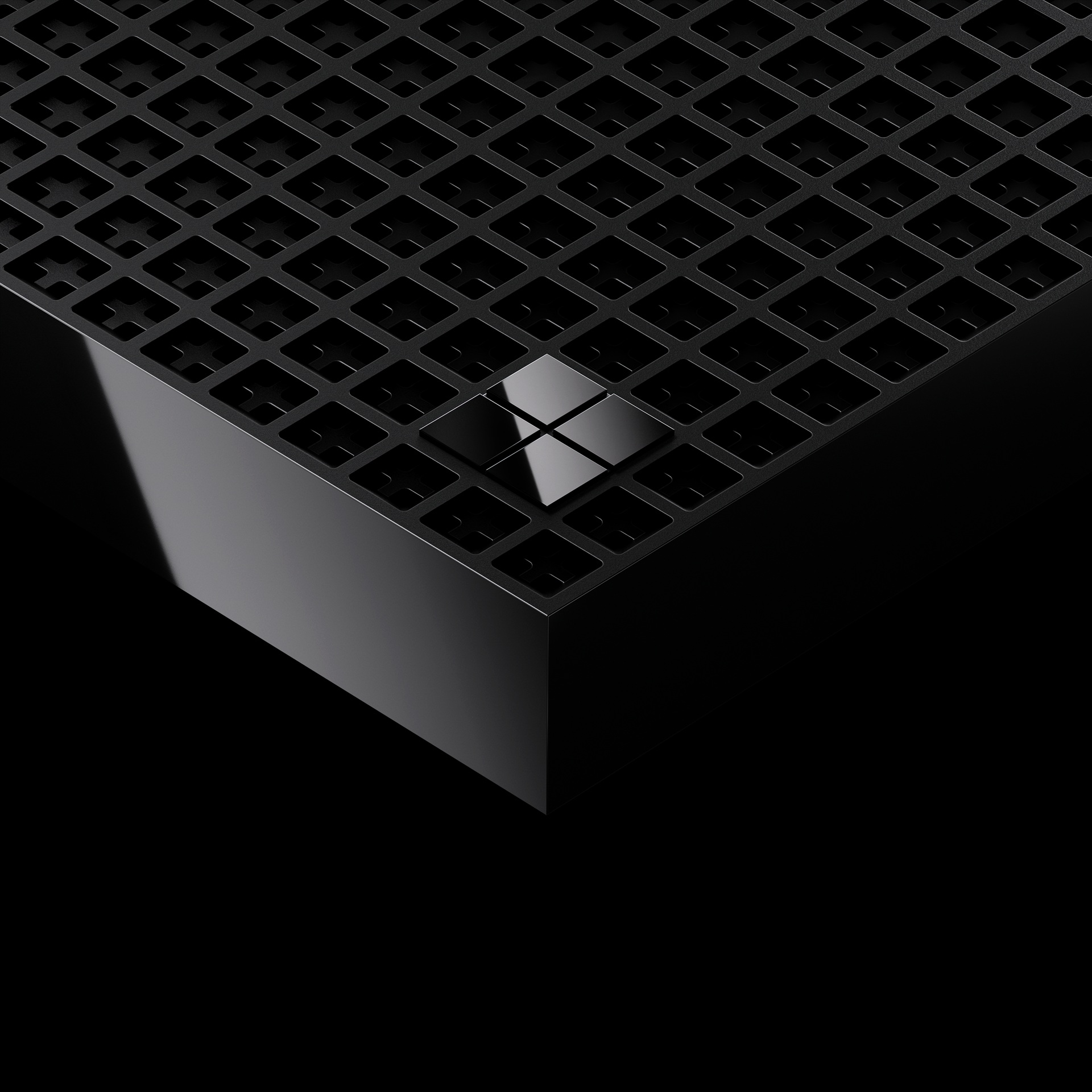
Building the next generation of devices for developers: Surface RTX Spark Dev Box
Software developers are some of the most ambitious makers we serve. They push devices harder, ask more of their tools and expect their environment to help define the pace of modern software creation. Development today means longer runnin blogs.windows.com
- Related coverage: nvidianews.nvidia.com

NVIDIA and Microsoft Reinvent Windows PCs for the Age of Personal AI
NVIDIA today unveiled NVIDIA RTX Spark™, a new superchip that reinvents Windows PCs for the era of personal AI agents — offering a new class of computer that moves from tool to teammate.nvidianews.nvidia.com
- Related coverage: nvidia.com

NVIDIA RTX Spark — Slim Laptops & Small Desktops
The fusion of NVIDIA AI and RTX graphics.www.nvidia.com - Official source: news.microsoft.com

Microsoft Build Live
The home for real-time coverage of the news as it is announced from Microsoft Build, June 2-3, 2026. news.microsoft.com
- Related coverage: notebookcheck.net
Loading…
www.notebookcheck.net - Official source: developer.microsoft.com

Microsoft Developer
Any platform. Any language. Our tools. Develop solutions, on your terms, using Microsoft products and services.developer.microsoft.com - Related coverage: anatoliapulse.com
Loading…
anatoliapulse.com - Related coverage: arstechnica.com

Nvidia RTX Spark comes to Windows PCs with Arm CPU, RTX GPU, and unified memory
Nvidia's new chips will power laptop workstations and mini desktop PCs at first. arstechnica.com
- Related coverage: techradar.com
Loading…
www.techradar.com - Related coverage: tdsynnex.com
- Related coverage: signal65.com
- Official source: cdn.techcommunity.microsoft.com
Loading…
cdn.techcommunity.microsoft.com - Official source: info.microsoft.com
Loading…
info.microsoft.com