

Microsoft unveiled the Surface RTX Spark Dev Box at Build 2026 on June 2, positioning the compact Surface desktop as a Windows 11 Pro developer machine for local AI, agent, and machine-learning workloads powered by NVIDIA’s RTX Spark platform. The announcement is not really about Microsoft discovering the mini PC. It is about Microsoft trying to make Windows feel like the default workbench for the next generation of AI software, before that workbench hardens around Linux servers, Macs, or browser tabs pointed at rented GPUs.
The Surface RTX Spark Dev Box is Microsoft’s clearest admission yet that the AI PC story cannot end with a Copilot key, a neural processing unit, and a few background effects in Teams. Developers need machines that can run real models, test agents under realistic constraints, and iterate locally without turning every experiment into a cloud bill. Microsoft is betting that a small, expensive-looking box with NVIDIA silicon can make that argument better than another keynote slide.
Surface has always carried a second job inside Microsoft. It is a product line, but it is also a signal to OEMs about the kind of Windows hardware Microsoft wants the ecosystem to build. The Surface Pro made detachable tablets feel respectable. Surface Laptop pushed premium Windows notebooks toward better industrial design. Surface Studio tried, with mixed commercial success, to reframe the desktop as a creative canvas.
The Surface RTX Spark Dev Box belongs to that same lineage, but its audience is narrower and more strategic. This is not a family PC, a dorm-room desktop, or a tiny office machine meant to hide behind a monitor. It is a developer appliance for the local AI era, built to make one proposition feel normal: serious AI development should be able to happen on a Windows machine sitting on your desk.
That matters because the last several years of AI development have trained developers to think elsewhere. The serious work happened on cloud GPUs, Linux workstations, remote notebooks, managed inference endpoints, or Apple Silicon laptops with large unified-memory pools. Windows was often present in the workflow, but not always at the center of it.
Microsoft wants to change that before the habits become permanent. The company is pairing the Dev Box with a broader Windows developer push that includes preconfigured tooling, Windows AI APIs, agent infrastructure, containment mechanisms, and deeper NVIDIA integration. The hardware is the tangible part of a software-platform argument.
The box itself is therefore less interesting as a one-off Surface SKU than as a prototype for what Microsoft thinks an AI developer PC should be. Compact, local, preloaded, GPU-rich, memory-heavy, and opinionated. In other words, not a generic PC that can also do AI, but a PC whose reason for existing is AI development.
The unified memory is the part that should make developers pay attention. Traditional PC architectures split memory between CPU system RAM and GPU VRAM, and that division becomes painful when models and datasets get large. Unified memory does not magically solve every bandwidth, latency, or framework problem, but it changes the shape of what is practical on a small machine.
Apple has spent years turning that architectural story into a developer advantage. A MacBook Pro with a large unified-memory configuration became attractive not only because it was fast, but because developers could run surprisingly large local workloads without managing a desktop tower or a remote GPU instance. Microsoft and NVIDIA are now making a similar pitch for Windows, but with CUDA and RTX as the gravitational pull.
That is the more important comparison than any single benchmark. If RTX Spark gives Windows developers a credible local machine with a large shared memory pool and NVIDIA’s software ecosystem, Microsoft gains a cleaner answer to a question it has struggled with: why should AI developers choose Windows as their primary local environment?
The answer Microsoft wants to offer is not nostalgia for Win32 or familiarity with Visual Studio Code. It is that Windows can host the entire loop: code, build, run, inspect, secure, contain, and deploy AI workloads. The Dev Box is meant to make that loop feel immediate.
Microsoft appears to understand that developer hardware is as much about friction as peak performance. If a team can hand a new engineer a preconfigured Windows AI box with Visual Studio Code, GitHub Copilot, PowerShell 7, WSL, Developer Mode, and AI tooling already in place, the machine becomes part of the onboarding process. That is a different sell from “here is a fast PC.”
The preconfiguration angle should not be dismissed as marketing filler. Anyone who has tried to standardize AI development environments across a team knows the pain lives in drivers, runtimes, Python environments, GPU compatibility, container behavior, permissions, and model storage. The difference between an impressive demo and a working development workflow is often several days of yak-shaving.
The Dev Box is Microsoft’s attempt to compress that setup into first boot. Whether it succeeds will depend on the details: how current the drivers are, how cleanly CUDA tooling works on Windows on Arm, how WSL behaves, how reproducible environments are, and how much administrative control enterprises get. But the intent is clear enough. Microsoft wants to sell not just silicon, but time saved.
That may be the most credible commercial path for the product. Many individual developers will look at a specialized Surface AI desktop and wait for price, thermals, and compatibility reports. Enterprises, consultancies, and AI product teams may see a standardized local inference and agent-testing node as a practical procurement item.
That is why local performance matters. For consumer-facing AI features, cloud inference may be acceptable or even preferable. For developer iteration, security testing, privacy-sensitive data, offline scenarios, and enterprise workflows, local execution changes the economics and the risk model. It lets teams fail faster, inspect more deeply, and avoid shipping every experiment to a remote service.
Microsoft’s agent push also makes Windows itself more important as a runtime surface. The company is not merely offering APIs for AI features; it is trying to define how agents interact with the operating system safely. That means containment, identity, permissions, auditability, and management become part of the developer story.
The Dev Box, then, is both a workstation and a test rig. It is meant to be where developers build agents that can later run across Windows devices with different levels of capability. A powerful local box gives teams a high ceiling for experimentation before they optimize down to laptops, Copilot+ PCs, or cloud-backed hybrid deployments.
This is also where Microsoft’s messaging becomes ambitious enough to invite skepticism. The company has repeatedly described Windows as the best place to build for broad PC deployment, and that is still true in terms of installed base. But AI-native development is not automatically won by installed base. It is won by tools, frameworks, reliability, performance, and trust.
For AI developers, compatibility is not merely a question of whether Office launches or a browser runs. It is whether the entire stack behaves: editors, shells, virtualization, containers, package managers, Python wheels, native extensions, GPU libraries, model runtimes, database tools, VPN clients, security agents, and legacy utilities. A single unsupported dependency can turn a beautiful dev machine into a side quest.
NVIDIA’s presence helps because CUDA remains one of the strongest moats in AI development. If RTX Spark delivers a polished CUDA experience on Windows on Arm, Microsoft gets to argue that developers no longer have to choose between Windows ergonomics and NVIDIA acceleration. But the burden of proof will be practical, not theoretical.
The most demanding early adopters will test the unglamorous edges first. They will install messy toolchains, clone old repos, run containerized services, try model servers, benchmark local inference, and see what breaks. They will not care that the box looks like the future if their preferred library has no native Arm build or falls back to emulation at the wrong moment.
That is the risk Microsoft has chosen. By targeting developers, it is targeting the audience least likely to be satisfied by surface-level compatibility claims. But if the Dev Box survives that scrutiny, it could do more for Windows on Arm credibility than another thin-and-light laptop ever could.
That history matters because the Surface RTX Spark Dev Box sounds like a spiritual successor with much higher stakes. It is another compact Windows developer machine. It is another attempt to make Arm-native Windows development feel serious. It is another signal that Microsoft wants developers building for architectures beyond conventional x86 PCs.
The difference is NVIDIA. RTX Spark brings a more compelling performance story and a clearer AI workload target than the older Snapdragon dev box ever had. Microsoft is not merely asking developers to port apps for architectural hygiene; it is asking them to build workloads that need this class of hardware.
Still, developer trust is cumulative. If the Dev Box ships late, costs too much, overheats under sustained loads, struggles with drivers, or receives uneven support, the damage will extend beyond this SKU. It would reinforce the perception that Microsoft’s developer hardware experiments are useful for keynote optics but risky as daily tools.
The Surface brand raises the expectations further. A Surface device is not supposed to feel like a reference board in a nice case. It is supposed to feel finished. For a product aimed at developers, “finished” means not only industrial design, but firmware, thermals, documentation, recovery images, driver cadence, and lifecycle clarity.
That does not mean local hardware replaces the cloud. Large-scale training, production inference, collaboration, evaluation pipelines, and enterprise deployment will still lean heavily on cloud infrastructure. But the development loop is different. Developers want to try things repeatedly, cheaply, and privately before deciding what deserves rented compute.
A local AI dev box can be especially valuable when workloads are spiky and exploratory. Running a model locally overnight may be cheaper and less administratively annoying than filing for cloud quota, managing credentials, tracking spend, and cleaning up abandoned instances. For organizations with sensitive data, keeping early experiments local can also simplify governance.
Microsoft’s problem is to make that local loop feel complementary to Azure rather than competitive with it. The likely answer is a hybrid development story: prototype locally, scale in Azure, manage with GitHub, secure with Windows, and use Microsoft tooling throughout. The Dev Box is the local anchor in that chain.
If Microsoft executes well, this could strengthen Azure rather than weaken it. Developers who build locally on Microsoft’s stack may be more likely to deploy through Microsoft’s cloud. The box is not a retreat from cloud computing; it is a feeder system for it.
Together, they show a company trying to segment AI PCs by workload rather than by old categories alone. The NPU handles everyday background intelligence. RTX-class hardware handles heavier local inference, generation, simulation, and developer experimentation. Cloud AI handles scale and centralized services. Microsoft’s challenge is making these layers feel coherent instead of confusing.
That coherence will matter for Windows users who are not AI developers. Most people will never buy a Surface RTX Spark Dev Box. But the tools and assumptions shaped on machines like this may influence the apps they use later. Today’s developer box is often tomorrow’s software baseline.
There is also an ecosystem signaling effect. Microsoft rarely needs Surface to dominate unit volume. It needs Surface to give Dell, HP, Lenovo, ASUS, MSI, Acer, and others permission to build similar machines. NVIDIA has already framed RTX Spark as a platform for multiple OEMs, not a Microsoft exclusive.
That could lead to a more interesting Windows desktop market. Mini PCs have been having a moment thanks to efficient CPUs, small-form-factor gaming boxes, and office deployments. AI development gives the category a premium tier that is not just about being small, but about bringing workstation-like memory and acceleration to the desk without the workstation tower.
That is where the Surface name may help. Microsoft knows how to sell managed hardware to organizations, and Windows 11 Pro gives the Dev Box a familiar administrative baseline. The inclusion of developer-oriented defaults does not remove the need for enterprise control; it makes that control more important.
The agent angle also raises new governance issues. Local agents with access to files, apps, terminals, and enterprise data are not just productivity tools. They are security principals in practice, even when marketed as assistants. Developers building such systems need hardware that lets them test containment, permissions, and failure modes under realistic local conditions.
That makes the Dev Box potentially useful for security teams, not only app developers. Red teams, platform teams, and governance groups may want local machines where they can evaluate how agents behave before broad deployment. If Microsoft’s containment and execution-container story is serious, this is the kind of hardware that can put it under pressure.
But enterprise adoption will be cautious until pricing and lifecycle commitments are clear. A powerful developer appliance with no published price is still an aspiration. A powerful developer appliance with predictable support, replaceable procurement channels, and validated management guidance becomes a product.
Apple has been strong here because its unified-memory Macs gave developers a simple local story. Linux workstations remain the default for many heavy AI workloads because the tooling is mature and the server environment matches deployment. Windows has Visual Studio Code, WSL, GitHub, a vast install base, and now an increasingly assertive AI platform message, but it has to prove the whole experience feels first-class.
The Surface RTX Spark Dev Box is Microsoft’s attempt to stop Windows from becoming merely the client OS that developers use to access AI infrastructure elsewhere. That is the strategic anxiety behind the product. If the future of software is built around agents, local models, and AI-native apps, Microsoft wants those developers building on Windows, not just shipping to Windows as an afterthought.
NVIDIA’s involvement sharpens the competitive edge. CUDA is not just a feature; it is an ecosystem habit. If Microsoft can combine Windows developer ergonomics with NVIDIA acceleration and large unified memory, it has a plausible answer to both Mac and Linux workstations. If it cannot, the Dev Box becomes another interesting but isolated Surface experiment.
The platform war will be decided by the boring daily experience. Do installs work? Do models load? Do agents run securely? Do fans scream? Do updates break drivers? Does the machine save time after the novelty wears off? Those questions will matter more than the petaflop number.
The Surface RTX Spark Dev Box is Microsoft’s clearest admission yet that the AI PC story cannot end with a Copilot key, a neural processing unit, and a few background effects in Teams. Developers need machines that can run real models, test agents under realistic constraints, and iterate locally without turning every experiment into a cloud bill. Microsoft is betting that a small, expensive-looking box with NVIDIA silicon can make that argument better than another keynote slide.
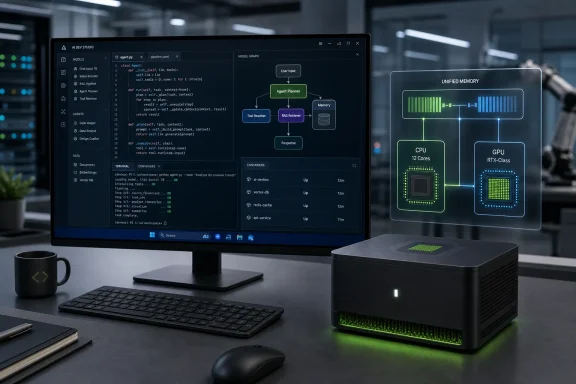 Microsoft Turns Surface Into a Developer Appliance
Surface has always carried a second job inside Microsoft. It is a product line, but it is also a signal to OEMs about the kind of Windows hardware Microsoft wants the ecosystem to build. The Surface Pro made detachable tablets feel respectable. Surface Laptop pushed premium Windows notebooks toward better industrial design. Surface Studio tried, with mixed commercial success, to reframe the desktop as a creative canvas.The Surface RTX Spark Dev Box belongs to that same lineage, but its audience is narrower and more strategic. This is not a family PC, a dorm-room desktop, or a tiny office machine meant to hide behind a monitor. It is a developer appliance for the local AI era, built to make one proposition feel normal: serious AI development should be able to happen on a Windows machine sitting on your desk.
That matters because the last several years of AI development have trained developers to think elsewhere. The serious work happened on cloud GPUs, Linux workstations, remote notebooks, managed inference endpoints, or Apple Silicon laptops with large unified-memory pools. Windows was often present in the workflow, but not always at the center of it.
Microsoft wants to change that before the habits become permanent. The company is pairing the Dev Box with a broader Windows developer push that includes preconfigured tooling, Windows AI APIs, agent infrastructure, containment mechanisms, and deeper NVIDIA integration. The hardware is the tangible part of a software-platform argument.
The box itself is therefore less interesting as a one-off Surface SKU than as a prototype for what Microsoft thinks an AI developer PC should be. Compact, local, preloaded, GPU-rich, memory-heavy, and opinionated. In other words, not a generic PC that can also do AI, but a PC whose reason for existing is AI development.
RTX Spark Gives Windows the Unified-Memory Pitch It Was Missing
The headline numbers are deliberately provocative. RTX Spark is being pitched with up to 1 petaflop of AI compute, up to 128GB of unified memory, Arm-based CPU cores, NVIDIA Blackwell RTX graphics, and support for running large local models that would have been implausible on ordinary compact desktops. Microsoft’s Dev Box wraps that platform in Surface hardware and points it at developers building agents, AI apps, and Windows-native experiences.The unified memory is the part that should make developers pay attention. Traditional PC architectures split memory between CPU system RAM and GPU VRAM, and that division becomes painful when models and datasets get large. Unified memory does not magically solve every bandwidth, latency, or framework problem, but it changes the shape of what is practical on a small machine.
Apple has spent years turning that architectural story into a developer advantage. A MacBook Pro with a large unified-memory configuration became attractive not only because it was fast, but because developers could run surprisingly large local workloads without managing a desktop tower or a remote GPU instance. Microsoft and NVIDIA are now making a similar pitch for Windows, but with CUDA and RTX as the gravitational pull.
That is the more important comparison than any single benchmark. If RTX Spark gives Windows developers a credible local machine with a large shared memory pool and NVIDIA’s software ecosystem, Microsoft gains a cleaner answer to a question it has struggled with: why should AI developers choose Windows as their primary local environment?
The answer Microsoft wants to offer is not nostalgia for Win32 or familiarity with Visual Studio Code. It is that Windows can host the entire loop: code, build, run, inspect, secure, contain, and deploy AI workloads. The Dev Box is meant to make that loop feel immediate.
The Mini PC Form Factor Is a Strategic Choice, Not a Cute One
A mini PC is an odd place to make a grand platform statement, which is exactly why it works. Laptops are compromised by battery, thermals, displays, keyboards, and travel weight. Workstations are powerful but expensive, bulky, and often outside the psychological category of “personal development machine.” A compact desktop sits in the middle: permanent enough to sustain workloads, small enough to feel approachable, and appliance-like enough for teams to deploy in volume.Microsoft appears to understand that developer hardware is as much about friction as peak performance. If a team can hand a new engineer a preconfigured Windows AI box with Visual Studio Code, GitHub Copilot, PowerShell 7, WSL, Developer Mode, and AI tooling already in place, the machine becomes part of the onboarding process. That is a different sell from “here is a fast PC.”
The preconfiguration angle should not be dismissed as marketing filler. Anyone who has tried to standardize AI development environments across a team knows the pain lives in drivers, runtimes, Python environments, GPU compatibility, container behavior, permissions, and model storage. The difference between an impressive demo and a working development workflow is often several days of yak-shaving.
The Dev Box is Microsoft’s attempt to compress that setup into first boot. Whether it succeeds will depend on the details: how current the drivers are, how cleanly CUDA tooling works on Windows on Arm, how WSL behaves, how reproducible environments are, and how much administrative control enterprises get. But the intent is clear enough. Microsoft wants to sell not just silicon, but time saved.
That may be the most credible commercial path for the product. Many individual developers will look at a specialized Surface AI desktop and wait for price, thermals, and compatibility reports. Enterprises, consultancies, and AI product teams may see a standardized local inference and agent-testing node as a practical procurement item.
Build 2026 Is Really About Agents Escaping the Demo Stage
The Dev Box arrives inside Microsoft’s larger Build 2026 message: AI agents are moving from cloud demos into Windows workflows. That shift creates a hardware problem. An agent that can read local files, call tools, watch context, manipulate apps, and respond to user intent cannot be evaluated only as a remote chatbot. Developers need to test how it behaves on the client, under containment, with real permissions and real latency.That is why local performance matters. For consumer-facing AI features, cloud inference may be acceptable or even preferable. For developer iteration, security testing, privacy-sensitive data, offline scenarios, and enterprise workflows, local execution changes the economics and the risk model. It lets teams fail faster, inspect more deeply, and avoid shipping every experiment to a remote service.
Microsoft’s agent push also makes Windows itself more important as a runtime surface. The company is not merely offering APIs for AI features; it is trying to define how agents interact with the operating system safely. That means containment, identity, permissions, auditability, and management become part of the developer story.
The Dev Box, then, is both a workstation and a test rig. It is meant to be where developers build agents that can later run across Windows devices with different levels of capability. A powerful local box gives teams a high ceiling for experimentation before they optimize down to laptops, Copilot+ PCs, or cloud-backed hybrid deployments.
This is also where Microsoft’s messaging becomes ambitious enough to invite skepticism. The company has repeatedly described Windows as the best place to build for broad PC deployment, and that is still true in terms of installed base. But AI-native development is not automatically won by installed base. It is won by tools, frameworks, reliability, performance, and trust.
Windows on Arm Gets Another Trial by Fire
RTX Spark’s Arm-based architecture gives the Surface Dev Box a second job: proving that high-end Windows on Arm can serve developers without feeling like a compatibility science project. That is no small burden. Windows on Arm has improved significantly, but its reputation still carries the weight of earlier devices that felt promising in presentations and fussy in daily use.For AI developers, compatibility is not merely a question of whether Office launches or a browser runs. It is whether the entire stack behaves: editors, shells, virtualization, containers, package managers, Python wheels, native extensions, GPU libraries, model runtimes, database tools, VPN clients, security agents, and legacy utilities. A single unsupported dependency can turn a beautiful dev machine into a side quest.
NVIDIA’s presence helps because CUDA remains one of the strongest moats in AI development. If RTX Spark delivers a polished CUDA experience on Windows on Arm, Microsoft gets to argue that developers no longer have to choose between Windows ergonomics and NVIDIA acceleration. But the burden of proof will be practical, not theoretical.
The most demanding early adopters will test the unglamorous edges first. They will install messy toolchains, clone old repos, run containerized services, try model servers, benchmark local inference, and see what breaks. They will not care that the box looks like the future if their preferred library has no native Arm build or falls back to emulation at the wrong moment.
That is the risk Microsoft has chosen. By targeting developers, it is targeting the audience least likely to be satisfied by surface-level compatibility claims. But if the Dev Box survives that scrutiny, it could do more for Windows on Arm credibility than another thin-and-light laptop ever could.
The Ghost of the Snapdragon Dev Kit Still Haunts the Room
Microsoft has been here before, or close enough for developers to remember. The Windows Dev Kit 2023, powered by Qualcomm’s Snapdragon platform and sold as “Project Volterra,” was supposed to help developers prepare for Windows on Arm. It was intriguing, affordable, and conceptually sound. It also became a cautionary tale about how developer hardware can underdeliver when software readiness, support, and expectations are not aligned.That history matters because the Surface RTX Spark Dev Box sounds like a spiritual successor with much higher stakes. It is another compact Windows developer machine. It is another attempt to make Arm-native Windows development feel serious. It is another signal that Microsoft wants developers building for architectures beyond conventional x86 PCs.
The difference is NVIDIA. RTX Spark brings a more compelling performance story and a clearer AI workload target than the older Snapdragon dev box ever had. Microsoft is not merely asking developers to port apps for architectural hygiene; it is asking them to build workloads that need this class of hardware.
Still, developer trust is cumulative. If the Dev Box ships late, costs too much, overheats under sustained loads, struggles with drivers, or receives uneven support, the damage will extend beyond this SKU. It would reinforce the perception that Microsoft’s developer hardware experiments are useful for keynote optics but risky as daily tools.
The Surface brand raises the expectations further. A Surface device is not supposed to feel like a reference board in a nice case. It is supposed to feel finished. For a product aimed at developers, “finished” means not only industrial design, but firmware, thermals, documentation, recovery images, driver cadence, and lifecycle clarity.
Local AI Is Also a Cloud Cost Story
Microsoft’s messaging around local workloads is careful because the company is also one of the world’s largest cloud vendors. Azure benefits when AI developers train, fine-tune, evaluate, and deploy in the cloud. Yet the Dev Box is partly being sold on avoiding unpredictable cloud costs, which is a quiet admission that the economics of AI experimentation can become hostile.That does not mean local hardware replaces the cloud. Large-scale training, production inference, collaboration, evaluation pipelines, and enterprise deployment will still lean heavily on cloud infrastructure. But the development loop is different. Developers want to try things repeatedly, cheaply, and privately before deciding what deserves rented compute.
A local AI dev box can be especially valuable when workloads are spiky and exploratory. Running a model locally overnight may be cheaper and less administratively annoying than filing for cloud quota, managing credentials, tracking spend, and cleaning up abandoned instances. For organizations with sensitive data, keeping early experiments local can also simplify governance.
Microsoft’s problem is to make that local loop feel complementary to Azure rather than competitive with it. The likely answer is a hybrid development story: prototype locally, scale in Azure, manage with GitHub, secure with Windows, and use Microsoft tooling throughout. The Dev Box is the local anchor in that chain.
If Microsoft executes well, this could strengthen Azure rather than weaken it. Developers who build locally on Microsoft’s stack may be more likely to deploy through Microsoft’s cloud. The box is not a retreat from cloud computing; it is a feeder system for it.
Surface Is Becoming a Map of Microsoft’s AI Priorities
The Surface lineup has become a useful way to read Microsoft’s internal priorities. Copilot+ PCs pushed NPUs and battery-efficient AI features. Surface Laptop Ultra, announced around the same wave of RTX Spark news, aims at mobile high-performance AI and creator workloads. The Surface RTX Spark Dev Box focuses the same platform logic on desks, teams, and sustained development.Together, they show a company trying to segment AI PCs by workload rather than by old categories alone. The NPU handles everyday background intelligence. RTX-class hardware handles heavier local inference, generation, simulation, and developer experimentation. Cloud AI handles scale and centralized services. Microsoft’s challenge is making these layers feel coherent instead of confusing.
That coherence will matter for Windows users who are not AI developers. Most people will never buy a Surface RTX Spark Dev Box. But the tools and assumptions shaped on machines like this may influence the apps they use later. Today’s developer box is often tomorrow’s software baseline.
There is also an ecosystem signaling effect. Microsoft rarely needs Surface to dominate unit volume. It needs Surface to give Dell, HP, Lenovo, ASUS, MSI, Acer, and others permission to build similar machines. NVIDIA has already framed RTX Spark as a platform for multiple OEMs, not a Microsoft exclusive.
That could lead to a more interesting Windows desktop market. Mini PCs have been having a moment thanks to efficient CPUs, small-form-factor gaming boxes, and office deployments. AI development gives the category a premium tier that is not just about being small, but about bringing workstation-like memory and acceleration to the desk without the workstation tower.
The Enterprise Buyer Will Ask the Boring Questions First
For all the futurism around agents, enterprise IT will evaluate the Dev Box with familiar questions. How is it managed? How long is it supported? Can it be imaged, enrolled, patched, audited, locked down, and recovered at scale? Does it behave under endpoint security tools? Does it fit procurement cycles and compliance requirements?That is where the Surface name may help. Microsoft knows how to sell managed hardware to organizations, and Windows 11 Pro gives the Dev Box a familiar administrative baseline. The inclusion of developer-oriented defaults does not remove the need for enterprise control; it makes that control more important.
The agent angle also raises new governance issues. Local agents with access to files, apps, terminals, and enterprise data are not just productivity tools. They are security principals in practice, even when marketed as assistants. Developers building such systems need hardware that lets them test containment, permissions, and failure modes under realistic local conditions.
That makes the Dev Box potentially useful for security teams, not only app developers. Red teams, platform teams, and governance groups may want local machines where they can evaluate how agents behave before broad deployment. If Microsoft’s containment and execution-container story is serious, this is the kind of hardware that can put it under pressure.
But enterprise adoption will be cautious until pricing and lifecycle commitments are clear. A powerful developer appliance with no published price is still an aspiration. A powerful developer appliance with predictable support, replaceable procurement channels, and validated management guidance becomes a product.
The Developer PC Is Becoming a Platform War Again
For years, the developer laptop wars were mostly about operating-system preference, battery life, keyboards, displays, and Unix-like tooling. AI has reopened the hardware question. Memory architecture, GPU software ecosystems, local inference capability, and model compatibility now matter in ways that make traditional spec-sheet comparisons feel incomplete.Apple has been strong here because its unified-memory Macs gave developers a simple local story. Linux workstations remain the default for many heavy AI workloads because the tooling is mature and the server environment matches deployment. Windows has Visual Studio Code, WSL, GitHub, a vast install base, and now an increasingly assertive AI platform message, but it has to prove the whole experience feels first-class.
The Surface RTX Spark Dev Box is Microsoft’s attempt to stop Windows from becoming merely the client OS that developers use to access AI infrastructure elsewhere. That is the strategic anxiety behind the product. If the future of software is built around agents, local models, and AI-native apps, Microsoft wants those developers building on Windows, not just shipping to Windows as an afterthought.
NVIDIA’s involvement sharpens the competitive edge. CUDA is not just a feature; it is an ecosystem habit. If Microsoft can combine Windows developer ergonomics with NVIDIA acceleration and large unified memory, it has a plausible answer to both Mac and Linux workstations. If it cannot, the Dev Box becomes another interesting but isolated Surface experiment.
The platform war will be decided by the boring daily experience. Do installs work? Do models load? Do agents run securely? Do fans scream? Do updates break drivers? Does the machine save time after the novelty wears off? Those questions will matter more than the petaflop number.
The Small Box Carries a Large Bet
The Surface RTX Spark Dev Box announcement gives Windows developers several concrete things to watch as Microsoft moves from Build-stage ambition to shipping hardware.- Microsoft is positioning the Dev Box as a local-first AI development machine, not a general-purpose mini PC with an AI sticker.
- NVIDIA’s RTX Spark platform gives Windows a more credible unified-memory and CUDA-centered answer to Apple Silicon for local AI work.
- The machine’s success will depend less on peak AI compute claims than on driver quality, Arm compatibility, thermals, and developer-tool reliability.
- Enterprises will judge the product by manageability, support lifecycle, security posture, and whether it can standardize AI development environments across teams.
- The Dev Box is a Surface signal to OEMs as much as a Surface product, and its real impact may come from the broader RTX Spark Windows PC ecosystem that follows.
References
- Primary source: Windows Central
Published: Tue, 02 Jun 2026 17:06:55 GMT
- Independent coverage: XDA
Published: Tue, 02 Jun 2026 16:47:56 GMT

Microsoft's Surface RTX Spark Dev Box packs serious Arm-based AI power
The Surface RTX Spark Dev Box is designed with local-first AI development in mind. www.xda-developers.com
- Independent coverage: thewincentral.com
Published: 2026-06-02T17:26:07.654619
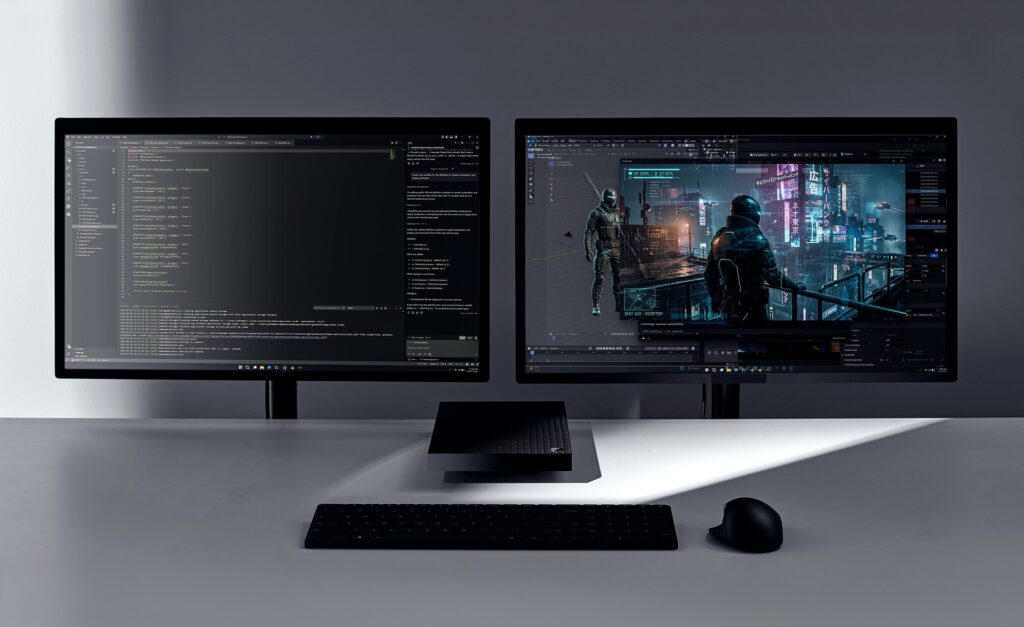
Microsoft Surface RTX Spark Dev Box Debuts at Build 2026 - WinCentral
Microsoft unveils the Surface RTX Spark Dev Box, a compact AI-powered developer PC built for local AI models, agents, and Windows development. - Read in Latest News on WinCentral thewincentral.com
- Independent coverage: thurrott.com
Published: Tue, 02 Jun 2026 17:11:26 GMT

Build 2026: Nvidia-Powered Surface RTX Spark Dev Box is Coming Later this Year
Microsoft announced at Build the Surface RTX Spark Dev Box, a new workstation powered by Nvidia's ARM-based superchip offering one petaflop of AI compute and 128 GB of unified memory. www.thurrott.com
- Independent coverage: Firstpost
Published: Tue, 02 Jun 2026 16:53:34 GMT
- Related coverage: tomshardware.com

Microsoft Surface Laptop Ultra weilds Nvidia's RTX Spark superchip with 128GB of RAM, 20 Arm CPU cores, and a Blackwell GPU — 15-inch mini-LED PixelSense Ultra display rounds out the powerful package
Microsoft + Nvidia = Mivida?www.tomshardware.com
- Related coverage: pcgamer.com
- Official source: blogs.windows.com
Build 2026: Furthering Windows as the trusted platform for development
Build is one of our favorite moments each year - a chance to connect with the global developer community and share what we’ve been building. Over the past year, we have connected with many developers pushing the boundaries of what’s possible on blogs.windows.com
- Related coverage: nvidianews.nvidia.com

NVIDIA and Microsoft Reinvent Windows PCs for the Age of Personal AI
NVIDIA today unveiled NVIDIA RTX Spark™, a new superchip that reinvents Windows PCs for the era of personal AI agents — offering a new class of computer that moves from tool to teammate.nvidianews.nvidia.com
- Official source: developer.microsoft.com

Microsoft Developer
Any platform. Any language. Our tools. Develop solutions, on your terms, using Microsoft products and services.developer.microsoft.com - Related coverage: banklesstimes.com

Nvidia, Microsoft Unveil RTX Spark: 1-Petaflop AI PC Chip | BanklessTimes
NVIDIA has unveiled RTX Spark, a new superchip for a new generation of Windows PCs built around personal AI agents. www.banklesstimes.com
- Related coverage: nvidia.com

- Related coverage: arstechnica.com

Nvidia RTX Spark comes to Windows PCs with Arm CPU, RTX GPU, and unified memory
Nvidia's new chips will power laptop workstations and mini desktop PCs at first. arstechnica.com
- Related coverage: axios.com

Microsoft debuts Nvidia-powered Microsoft Surface Ultra laptop
Microsoft is trying again to redefine the PC for the AI era.www.axios.com
- Related coverage: engadget.com

Microsoft's Surface RTX Spark Dev Box will handle tougher AI workloads - Engadget
Microsoft is making a Surface AI dev desktop for people who don't want a laptop. www.engadget.com
- Related coverage: winbuzzer.com
- Related coverage: docs.nvidia.com
- Related coverage: signal65.com
- Official source: microsoft.com