

Microsoft used Build 2026 on June 2 in San Francisco to pitch Windows developers a new Surface RTX Spark Dev Box, fresh Linux-friendly tooling, and a one-command developer configuration system for Windows 11. The headline is not merely that Microsoft has another small developer PC. It is that Redmond is trying to make Windows feel less like the place where developers tolerate their tools and more like the default cockpit for local AI, Linux workflows, and agent-era software. The gamble is that a tighter Windows developer stack can pull attention back from macOS, cloud workstations, and Linux-native environments at exactly the moment AI development is making hardware matter again.
For years, Microsoft’s Windows developer story has been defensive. Windows had Visual Studio, Win32, .NET, games, enterprise management, and enormous installed-base gravity, but the developer zeitgeist kept drifting toward Unix-like tooling, web stacks, containers, and cloud-hosted environments. Microsoft’s answer was not to fight that drift head-on, but to absorb it: Windows Subsystem for Linux, Windows Terminal, PowerShell’s cross-platform reinvention, winget, Dev Home, and deeper GitHub integration all served the same strategic purpose.
Build 2026 sharpens that strategy. Microsoft is no longer just saying that Windows can run Linux tools if you need them. It is saying Windows should be the host operating system where Linux containers, AI agents, shell automation, local models, and enterprise policy all meet. That is a more ambitious claim, and a more vulnerable one.
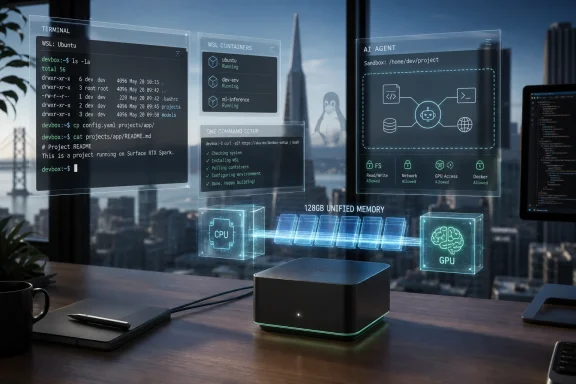
The new Surface RTX Spark Dev Box is the physical symbol of that shift. Microsoft describes it as a compact developer PC powered by Nvidia’s RTX Spark silicon, with up to 128GB of unified memory and a Windows 11 Pro image tuned for development. Its job is not to compete with a mass-market Surface Laptop or a gaming desktop. Its job is to convince developers that Windows deserves a serious place on the desk again.
That matters because the developer machine has become a statement of workflow identity. A Mac Studio says you want Unix tooling, strong local compute, and a relatively controlled hardware/software stack. A Linux workstation says you want transparency, containers, kernels, and fewer platform compromises. Microsoft’s new box says Windows can now claim part of that territory too — provided developers believe the integration story.
The key specification is not just “RTX.” It is 128GB of unified memory shared across CPU and GPU resources. For local AI work, memory capacity is often the hard wall. A fast GPU with too little VRAM is impressive until the model does not fit. Unified memory does not magically erase all performance trade-offs, but it changes what developers can attempt without renting time in the cloud.
Nvidia’s RTX Spark platform pairs Arm CPU cores with Blackwell-generation graphics and AI acceleration, positioning it as a Windows-on-Arm platform for developers, creators, and local AI workloads. Microsoft’s Surface version appears to be a curated implementation of that idea: small, managed, and pointed explicitly at developers rather than gamers or general productivity buyers. In other words, this is not a new Xbox-shaped curiosity. It is Microsoft’s answer to the question of where developers should prototype agentic software when the cloud bill starts looking like a second salary.
The comparison to Apple is unavoidable. Apple’s unified-memory Macs have become popular among developers experimenting with local models because they combine high memory ceilings, quiet desktops, and a mature Unix-adjacent environment. Microsoft and Nvidia are trying to build a Windows-flavored counterargument: CUDA gravity, enterprise manageability, Windows app compatibility, and a developer image that includes the tools many teams already use.
But the Surface RTX Spark Dev Box also inherits the burden of Windows on Arm. Microsoft has improved x86-to-Arm translation with Prism, and the Windows on Arm ecosystem is more credible than it was during the awkward Snapdragon 8cx years. Still, developers have long memories. If drivers, command-line tools, native dependencies, virtualization paths, or obscure build chains break, the spec sheet will not save the product.
Volterra’s core problem was timing. The hardware was not powerful enough to make developers fall in love with the platform, and Windows on Arm had not yet reached a point where mainstream developer friction disappeared. It was a bridge device, but the far side of the bridge was still under construction.
The RTX Spark Dev Box is a more serious attempt because the market conditions are different. Local AI has made desktop-class compute fashionable again. Developers are suddenly willing to think about memory bandwidth, model size, inference latency, and whether a workstation can run meaningful workloads without a data-center detour. Microsoft can now pitch an Arm dev box not just as preparation for future Windows devices, but as an immediately useful AI machine.
That does not eliminate the old risks. The box still needs native toolchain support, stable container workflows, predictable thermals, good documentation, and pricing that does not make cloud GPUs look merciful by comparison. Microsoft has not always excelled at turning developer hardware into durable ecosystems. The Zune did not define music devices, HoloLens did not define mixed reality, and even Surface had to survive several awkward generations before becoming a serious PC brand.
The difference this time is that the developer box is not the product in isolation. It is part of a broader Windows developer platform push. If the box is merely expensive hardware, it will become a niche curiosity. If it becomes the easiest way to build and test Windows-native AI agents, local inference features, and cross-platform developer workflows, it could matter well beyond its sales volume.
For decades, Windows treated Unix-like tooling as either foreign territory or third-party garnish. Cygwin, MinGW, Git Bash, and later WSL filled real gaps because developers wanted a command-line world that behaved predictably across systems. Microsoft eventually stopped resisting and started integrating. Build 2026 suggests that integration is moving from “nice to have” to strategic infrastructure.
A Windows-native coreutils package is especially telling. Commands like
WSL inside container workflows is the other half of the equation. Containers made Linux the lingua franca of modern deployment, even for developers who spend all day on Windows laptops. If Microsoft can make Linux containers feel first-class on Windows without forcing developers into awkward context switches, it strengthens Windows as a host platform. If it cannot, developers will continue to dual-boot emotionally, even when they do not dual-boot literally.
This is Microsoft’s recurring paradox: Windows wins when it becomes less parochially Windows. The more it accommodates Linux conventions, open-source defaults, and cloud-native assumptions, the more credible it becomes as the operating system for people who do not want to think about operating systems all day.
Microsoft’s pitch is that a single winget-powered command can create a developer-focused Windows 11 environment with Visual Studio Code, GitHub Copilot, WSL, PowerShell 7, Windows Terminal integration, and development-optimized settings. That sounds ordinary until you consider who benefits most. Individual enthusiasts like convenience. Enterprises need repeatability.
For IT departments, standardized developer setup is not just about speed. It is about auditability, compliance, and support. A developer workstation that can be rebuilt from a known configuration is easier to secure than one assembled through tribal knowledge and half-remembered wiki pages. A sanctioned path for WSL and Linux tooling is easier to manage than a shadow ecosystem of personal scripts and unofficial installers.
This is where Microsoft’s enterprise instincts may help rather than hurt. The company understands Entra ID, Intune, Defender, BitLocker, policy baselines, and the bureaucratic reality of managed fleets. A developer box that plays nicely with those systems has an advantage over a hobbyist workstation, especially in regulated environments where local AI experimentation raises immediate questions about data handling.
The risk is that “developer-optimized” becomes another Microsoft-controlled opinion layer that serious developers immediately undo. Developers do not want a corporate theme park. They want fast setup, transparent configuration, and the ability to modify everything. The closer Microsoft’s new configuration system stays to open manifests, predictable package management, and reversible choices, the better its odds.
Developers can actually use local AI compute today. They can run models, test retrieval-augmented applications, prototype agent workflows, evaluate latency, and build privacy-sensitive features without sending every experiment to a cloud endpoint. They can also discover all the ugly practical problems that marketing demos hide: model quantization trade-offs, tool-calling reliability, memory limits, sandboxing, prompt injection, data leakage, and the difference between a clever demo and a maintainable product.
That makes local developer hardware more important than consumer AI branding. If Microsoft wants Windows to be a serious platform for agentic applications, it needs developers to build, test, debug, and distrust those agents locally. You cannot do that entirely through glossy Copilot demos. You need machines with enough memory, GPU support, container support, and system integration to make experimentation routine.
The phrase “local-first AI development” is doing a lot of work here. It suggests lower latency, better privacy, reduced cloud dependency, and more predictable costs. It also suggests a shift in power. Cloud AI platforms rent capability by the token, the minute, or the accelerator. Local hardware turns some of that spending into capital expense and gives developers more room to iterate without asking permission from the billing dashboard.
Of course, not every team will want this. Frontier-scale training remains a data-center sport. Many production workloads will still live in Azure, AWS, Google Cloud, or specialized AI infrastructure. But the development loop is different from production. If Microsoft can own more of that loop on Windows, Azure still benefits later.
A developer platform for agents needs isolation, observability, permissions, rollback, and clear boundaries between user data, enterprise data, model output, and executable action. That is why Microsoft’s Windows developer announcements around sandboxing, WSL, containers, and managed configuration should be read together. The company is trying to build a place where agents can run near real workflows without being handed the keys to the building.
The hard part is that Windows is not a clean-room operating system. It carries decades of compatibility, legacy APIs, shell integration, registry assumptions, driver complexity, and enterprise customization. That history is the reason Windows remains so valuable, but it is also why agentic automation on Windows is more dangerous than agentic automation inside a neatly scoped web app.
Microsoft knows this. The company’s security messaging around secured-core PCs, Defender, BitLocker, Entra ID, and Intune is not decorative. It is meant to reassure businesses that local AI workloads do not require abandoning the management model they already understand. The Surface RTX Spark Dev Box is being positioned not merely as fast hardware, but as hardware that can live under familiar controls.
Still, the agent era will test Microsoft’s ability to say no. Developers will want power. Enterprises will want restrictions. Users will want convenience. Attackers will want the seams between all three. The winning platform will not be the one with the most enthusiastic agent demo; it will be the one whose failure modes are boring enough for IT to tolerate.
By pairing Arm CPU cores with Blackwell GPU technology and large unified memory configurations, Nvidia is reaching toward the full system experience rather than the add-in-card slot. That matters strategically. If developers build local AI workflows around RTX Spark-class machines, Nvidia gains influence over software assumptions, optimization targets, and deployment patterns.
Microsoft benefits because Nvidia gives Windows a credible answer to high-memory local AI Macs and Linux GPU workstations. Nvidia benefits because Microsoft gives RTX Spark immediate legitimacy inside Windows, Surface, Build, and the enterprise developer conversation. Each company is lending the other something it lacks.
The unanswered question is how much this platform depends on Nvidia-specific paths. CUDA is a major asset, but it is also a lock-in mechanism. Developers building cross-platform AI applications already juggle CUDA, DirectML, ONNX Runtime, Apple’s Metal ecosystem, Vulkan-adjacent approaches, and cloud-specific accelerators. Microsoft has an incentive to make Windows AI development feel broad and portable. Nvidia has an incentive to make RTX Spark feel uniquely capable.
That tension is not necessarily bad. Platform competition often produces better tools. But Windows developers should pay attention to where the abstractions are clean and where they quietly hard-code a vendor future.
Developers are a tougher audience than casual users. They run unusual binaries, old SDKs, custom drivers, local databases, virtualization tools, emulators, compilers, debuggers, and private build systems that may not have been tested on Windows on Arm. A browser, Office, Slack, and Teams working well is not enough.
That is why the Dev Box is such a high-stakes signal. Microsoft is effectively saying that Windows on Arm is ready not just for premium laptops, but for serious developer workstations. If true, that is a milestone. If premature, it will reinforce every old suspicion about Arm Windows arriving almost ready and staying there.
The AI angle gives Windows on Arm a stronger rationale than battery life alone. Developers may accept some compatibility rough edges if the reward is local model capability, large unified memory, and a compact machine tuned for modern AI workloads. They are less likely to accept those rough edges if pricing is high, performance is inconsistent, or native tooling lags.
The platform therefore needs ruthless honesty from Microsoft. Which tools are native? Which run translated? Which workflows are unsupported? Which containers, hypervisors, drivers, debuggers, and SDKs are ready on day one? Developers can forgive limitations. They are less forgiving when marketing turns limitations into scavenger hunts.
That means Microsoft has to justify the box as more than a neat object. The strongest argument is convenience: a compact Windows machine with large unified memory, Nvidia AI acceleration, preconfigured developer tools, WSL support, enterprise security, and local AI capacity. The weakest argument is branding. Developers do not buy developer hardware because the casing looks official.
Price will be decisive. Microsoft and Nvidia have not trained the market to expect bargains in this category. If the Dev Box lands near workstation pricing, buyers will compare it against high-end Macs, GPU towers, and cloud alternatives. If it is priced aggressively enough to become a standard issue for AI application teams, it could seed the ecosystem Microsoft wants.
Thermals and noise will matter too. Small AI workstations live or die by whether they can sustain performance without sounding like a rack server trying to escape. Microsoft’s design language has long valued compactness and quiet surfaces. Nvidia-class local AI workloads do not care about design language. They care about heat.
Then there is repairability and lifecycle. Enterprises may like Surface branding, but they also like predictable support windows, replacement parts, deployment images, and fleet management. Enthusiasts may like compact power, but they also ask whether memory, storage, networking, and cooling choices will age gracefully. A developer box is not a fashion accessory. It is infrastructure with a desk footprint.
That is a strong stack, but it is also a complicated one. Microsoft’s greatest platform successes often come from making complexity feel inevitable and manageable. Windows itself won because it absorbed hardware diversity, software compatibility, business workflows, and consumer demand into one messy but durable platform. The new developer push is trying to do something similar for AI-era development.
The danger is that the stack becomes too Microsoft-shaped. Developers like integration until it becomes enclosure. GitHub Copilot in the terminal may be useful, but developers will resist if every workflow feels like an upsell path into Microsoft’s AI services. WSL is loved partly because it gives developers access to a broader Linux world, not because it turns Linux into a Windows feature demo.
The best version of this strategy is generous. Windows becomes a superb host for whatever developers need: Linux tools, open models, Nvidia acceleration, Microsoft services, non-Microsoft services, local containers, cloud deployment, and enterprise controls. The worst version is performative openness wrapped around a funnel.
Microsoft has done both in its history. Build 2026 gives developers reason to hope for the former, and enough history to watch for the latter.
 Microsoft’s Developer Pitch Has Moved From “Run Windows” to “Stay on Windows”
For years, Microsoft’s Windows developer story has been defensive. Windows had Visual Studio, Win32, .NET, games, enterprise management, and enormous installed-base gravity, but the developer zeitgeist kept drifting toward Unix-like tooling, web stacks, containers, and cloud-hosted environments. Microsoft’s answer was not to fight that drift head-on, but to absorb it: Windows Subsystem for Linux, Windows Terminal, PowerShell’s cross-platform reinvention, winget, Dev Home, and deeper GitHub integration all served the same strategic purpose.Build 2026 sharpens that strategy. Microsoft is no longer just saying that Windows can run Linux tools if you need them. It is saying Windows should be the host operating system where Linux containers, AI agents, shell automation, local models, and enterprise policy all meet. That is a more ambitious claim, and a more vulnerable one.
The new Surface RTX Spark Dev Box is the physical symbol of that shift. Microsoft describes it as a compact developer PC powered by Nvidia’s RTX Spark silicon, with up to 128GB of unified memory and a Windows 11 Pro image tuned for development. Its job is not to compete with a mass-market Surface Laptop or a gaming desktop. Its job is to convince developers that Windows deserves a serious place on the desk again.
That matters because the developer machine has become a statement of workflow identity. A Mac Studio says you want Unix tooling, strong local compute, and a relatively controlled hardware/software stack. A Linux workstation says you want transparency, containers, kernels, and fewer platform compromises. Microsoft’s new box says Windows can now claim part of that territory too — provided developers believe the integration story.
The RTX Spark Box Is Really a Local AI Workstation in Surface Clothing
The Surface RTX Spark Dev Box arrives at a moment when “AI PC” has become one of the most abused phrases in the industry. Most consumer AI PC pitches still revolve around NPUs, camera effects, assistant features, and the hope that software will eventually justify the silicon. Microsoft’s developer box is more concrete. It is aimed at people who need local inference, model testing, agent tooling, and GPU memory capacity.The key specification is not just “RTX.” It is 128GB of unified memory shared across CPU and GPU resources. For local AI work, memory capacity is often the hard wall. A fast GPU with too little VRAM is impressive until the model does not fit. Unified memory does not magically erase all performance trade-offs, but it changes what developers can attempt without renting time in the cloud.
Nvidia’s RTX Spark platform pairs Arm CPU cores with Blackwell-generation graphics and AI acceleration, positioning it as a Windows-on-Arm platform for developers, creators, and local AI workloads. Microsoft’s Surface version appears to be a curated implementation of that idea: small, managed, and pointed explicitly at developers rather than gamers or general productivity buyers. In other words, this is not a new Xbox-shaped curiosity. It is Microsoft’s answer to the question of where developers should prototype agentic software when the cloud bill starts looking like a second salary.
The comparison to Apple is unavoidable. Apple’s unified-memory Macs have become popular among developers experimenting with local models because they combine high memory ceilings, quiet desktops, and a mature Unix-adjacent environment. Microsoft and Nvidia are trying to build a Windows-flavored counterargument: CUDA gravity, enterprise manageability, Windows app compatibility, and a developer image that includes the tools many teams already use.
But the Surface RTX Spark Dev Box also inherits the burden of Windows on Arm. Microsoft has improved x86-to-Arm translation with Prism, and the Windows on Arm ecosystem is more credible than it was during the awkward Snapdragon 8cx years. Still, developers have long memories. If drivers, command-line tools, native dependencies, virtualization paths, or obscure build chains break, the spec sheet will not save the product.
Project Volterra’s Ghost Is Still in the Room
Microsoft has been here before, though in a smaller and less glamorous way. The Windows Dev Kit 2023, better known by its “Project Volterra” codename, was a Qualcomm-powered Arm developer box designed to help software makers prepare for Windows on Arm. It was interesting, useful for a narrow audience, and never quite became the catalyst Microsoft wanted it to be.Volterra’s core problem was timing. The hardware was not powerful enough to make developers fall in love with the platform, and Windows on Arm had not yet reached a point where mainstream developer friction disappeared. It was a bridge device, but the far side of the bridge was still under construction.
The RTX Spark Dev Box is a more serious attempt because the market conditions are different. Local AI has made desktop-class compute fashionable again. Developers are suddenly willing to think about memory bandwidth, model size, inference latency, and whether a workstation can run meaningful workloads without a data-center detour. Microsoft can now pitch an Arm dev box not just as preparation for future Windows devices, but as an immediately useful AI machine.
That does not eliminate the old risks. The box still needs native toolchain support, stable container workflows, predictable thermals, good documentation, and pricing that does not make cloud GPUs look merciful by comparison. Microsoft has not always excelled at turning developer hardware into durable ecosystems. The Zune did not define music devices, HoloLens did not define mixed reality, and even Surface had to survive several awkward generations before becoming a serious PC brand.
The difference this time is that the developer box is not the product in isolation. It is part of a broader Windows developer platform push. If the box is merely expensive hardware, it will become a niche curiosity. If it becomes the easiest way to build and test Windows-native AI agents, local inference features, and cross-platform developer workflows, it could matter well beyond its sales volume.
Linux Is No Longer the Guest Microsoft Pretends Not to Notice
The more revealing Build announcement may not be the hardware at all. Microsoft is introducing Windows-native versions of core Unix-style command-line utilities, expanding Windows Subsystem for Linux capabilities, and preparing a WSL containers CLI intended to build, run, and deploy Linux containers directly on Windows. That is a strikingly different posture from the Windows of old.For decades, Windows treated Unix-like tooling as either foreign territory or third-party garnish. Cygwin, MinGW, Git Bash, and later WSL filled real gaps because developers wanted a command-line world that behaved predictably across systems. Microsoft eventually stopped resisting and started integrating. Build 2026 suggests that integration is moving from “nice to have” to strategic infrastructure.
A Windows-native coreutils package is especially telling. Commands like
ls, cp, mv, cat, and related utilities are not glamorous, but they are muscle memory for generations of developers. Making them available natively is less about novelty than reducing the tiny cuts that make Windows feel alien in mixed-platform workflows. Scripts, automation, documentation, and habits all become easier to carry across environments.WSL inside container workflows is the other half of the equation. Containers made Linux the lingua franca of modern deployment, even for developers who spend all day on Windows laptops. If Microsoft can make Linux containers feel first-class on Windows without forcing developers into awkward context switches, it strengthens Windows as a host platform. If it cannot, developers will continue to dual-boot emotionally, even when they do not dual-boot literally.
This is Microsoft’s recurring paradox: Windows wins when it becomes less parochially Windows. The more it accommodates Linux conventions, open-source defaults, and cloud-native assumptions, the more credible it becomes as the operating system for people who do not want to think about operating systems all day.
One Command to Configure a Developer PC Is a Small Feature With Big Institutional Meaning
Windows Developer Configurations may sound like another setup wizard wearing a Build badge, but it points at a genuine pain. Developers spend too much time turning new machines into usable machines. They install editors, shells, package managers, SDKs, terminals, fonts, extensions, WSL distributions, Git tooling, runtime versions, and policy exceptions. Then they do it again for the next laptop, the next contractor, the next clean image, or the next corporate refresh.Microsoft’s pitch is that a single winget-powered command can create a developer-focused Windows 11 environment with Visual Studio Code, GitHub Copilot, WSL, PowerShell 7, Windows Terminal integration, and development-optimized settings. That sounds ordinary until you consider who benefits most. Individual enthusiasts like convenience. Enterprises need repeatability.
For IT departments, standardized developer setup is not just about speed. It is about auditability, compliance, and support. A developer workstation that can be rebuilt from a known configuration is easier to secure than one assembled through tribal knowledge and half-remembered wiki pages. A sanctioned path for WSL and Linux tooling is easier to manage than a shadow ecosystem of personal scripts and unofficial installers.
This is where Microsoft’s enterprise instincts may help rather than hurt. The company understands Entra ID, Intune, Defender, BitLocker, policy baselines, and the bureaucratic reality of managed fleets. A developer box that plays nicely with those systems has an advantage over a hobbyist workstation, especially in regulated environments where local AI experimentation raises immediate questions about data handling.
The risk is that “developer-optimized” becomes another Microsoft-controlled opinion layer that serious developers immediately undo. Developers do not want a corporate theme park. They want fast setup, transparent configuration, and the ability to modify everything. The closer Microsoft’s new configuration system stays to open manifests, predictable package management, and reversible choices, the better its odds.
Local AI Is the Real Reason Windows Suddenly Needs Workstation Credibility Again
Microsoft’s recent Windows story has been dominated by Copilot, Recall, NPU requirements, and arguments over whether AI features are useful, invasive, or simply premature. The Surface RTX Spark Dev Box reframes the AI PC conversation around developers rather than consumers. That is a wiser starting point.Developers can actually use local AI compute today. They can run models, test retrieval-augmented applications, prototype agent workflows, evaluate latency, and build privacy-sensitive features without sending every experiment to a cloud endpoint. They can also discover all the ugly practical problems that marketing demos hide: model quantization trade-offs, tool-calling reliability, memory limits, sandboxing, prompt injection, data leakage, and the difference between a clever demo and a maintainable product.
That makes local developer hardware more important than consumer AI branding. If Microsoft wants Windows to be a serious platform for agentic applications, it needs developers to build, test, debug, and distrust those agents locally. You cannot do that entirely through glossy Copilot demos. You need machines with enough memory, GPU support, container support, and system integration to make experimentation routine.
The phrase “local-first AI development” is doing a lot of work here. It suggests lower latency, better privacy, reduced cloud dependency, and more predictable costs. It also suggests a shift in power. Cloud AI platforms rent capability by the token, the minute, or the accelerator. Local hardware turns some of that spending into capital expense and gives developers more room to iterate without asking permission from the billing dashboard.
Of course, not every team will want this. Frontier-scale training remains a data-center sport. Many production workloads will still live in Azure, AWS, Google Cloud, or specialized AI infrastructure. But the development loop is different from production. If Microsoft can own more of that loop on Windows, Azure still benefits later.
The Agent Story Needs Sandboxes More Than Slogans
Microsoft’s Build keynote, like much of the industry, leaned into agents: tools that can perform tasks, scan code, interact with data, and take actions on behalf of users. The problem is that agents are both the most exciting and least settled part of the AI software wave. They promise automation, but they also introduce new failure modes that traditional desktop security models were not designed around.A developer platform for agents needs isolation, observability, permissions, rollback, and clear boundaries between user data, enterprise data, model output, and executable action. That is why Microsoft’s Windows developer announcements around sandboxing, WSL, containers, and managed configuration should be read together. The company is trying to build a place where agents can run near real workflows without being handed the keys to the building.
The hard part is that Windows is not a clean-room operating system. It carries decades of compatibility, legacy APIs, shell integration, registry assumptions, driver complexity, and enterprise customization. That history is the reason Windows remains so valuable, but it is also why agentic automation on Windows is more dangerous than agentic automation inside a neatly scoped web app.
Microsoft knows this. The company’s security messaging around secured-core PCs, Defender, BitLocker, Entra ID, and Intune is not decorative. It is meant to reassure businesses that local AI workloads do not require abandoning the management model they already understand. The Surface RTX Spark Dev Box is being positioned not merely as fast hardware, but as hardware that can live under familiar controls.
Still, the agent era will test Microsoft’s ability to say no. Developers will want power. Enterprises will want restrictions. Users will want convenience. Attackers will want the seams between all three. The winning platform will not be the one with the most enthusiastic agent demo; it will be the one whose failure modes are boring enough for IT to tolerate.
Nvidia Gets a New Front Door Into Windows Development
Nvidia’s role in this story is larger than supplying a chip. RTX Spark is an attempt to bring Nvidia’s AI stack, GPU architecture, and CUDA-centered developer gravity into a new class of Windows PCs. For years, Nvidia dominated discrete GPUs while CPU platform control belonged to Intel and AMD in the Windows world. RTX Spark blurs that line.By pairing Arm CPU cores with Blackwell GPU technology and large unified memory configurations, Nvidia is reaching toward the full system experience rather than the add-in-card slot. That matters strategically. If developers build local AI workflows around RTX Spark-class machines, Nvidia gains influence over software assumptions, optimization targets, and deployment patterns.
Microsoft benefits because Nvidia gives Windows a credible answer to high-memory local AI Macs and Linux GPU workstations. Nvidia benefits because Microsoft gives RTX Spark immediate legitimacy inside Windows, Surface, Build, and the enterprise developer conversation. Each company is lending the other something it lacks.
The unanswered question is how much this platform depends on Nvidia-specific paths. CUDA is a major asset, but it is also a lock-in mechanism. Developers building cross-platform AI applications already juggle CUDA, DirectML, ONNX Runtime, Apple’s Metal ecosystem, Vulkan-adjacent approaches, and cloud-specific accelerators. Microsoft has an incentive to make Windows AI development feel broad and portable. Nvidia has an incentive to make RTX Spark feel uniquely capable.
That tension is not necessarily bad. Platform competition often produces better tools. But Windows developers should pay attention to where the abstractions are clean and where they quietly hard-code a vendor future.
Windows on Arm Is Getting Another Chance, This Time With a Better Excuse
The most important architectural detail of RTX Spark is not the GPU brand but the Arm CPU foundation. Windows on Arm has spent years trying to escape the perception that it is a compatibility science project. Qualcomm’s recent Snapdragon X systems helped, Microsoft’s Prism translation layer helped, and more native applications helped. But “helped” is not the same as “settled.”Developers are a tougher audience than casual users. They run unusual binaries, old SDKs, custom drivers, local databases, virtualization tools, emulators, compilers, debuggers, and private build systems that may not have been tested on Windows on Arm. A browser, Office, Slack, and Teams working well is not enough.
That is why the Dev Box is such a high-stakes signal. Microsoft is effectively saying that Windows on Arm is ready not just for premium laptops, but for serious developer workstations. If true, that is a milestone. If premature, it will reinforce every old suspicion about Arm Windows arriving almost ready and staying there.
The AI angle gives Windows on Arm a stronger rationale than battery life alone. Developers may accept some compatibility rough edges if the reward is local model capability, large unified memory, and a compact machine tuned for modern AI workloads. They are less likely to accept those rough edges if pricing is high, performance is inconsistent, or native tooling lags.
The platform therefore needs ruthless honesty from Microsoft. Which tools are native? Which run translated? Which workflows are unsupported? Which containers, hypervisors, drivers, debuggers, and SDKs are ready on day one? Developers can forgive limitations. They are less forgiving when marketing turns limitations into scavenger hunts.
The Real Competition Is the Developer’s Existing Desk
Microsoft is not launching the Surface RTX Spark Dev Box into an empty market. It is competing with Macs already loved by AI tinkerers, Linux workstations already trusted by infrastructure teams, gaming PCs already packed with Nvidia GPUs, cloud workstations already integrated with enterprise billing, and ordinary Windows laptops already good enough for many coders.That means Microsoft has to justify the box as more than a neat object. The strongest argument is convenience: a compact Windows machine with large unified memory, Nvidia AI acceleration, preconfigured developer tools, WSL support, enterprise security, and local AI capacity. The weakest argument is branding. Developers do not buy developer hardware because the casing looks official.
Price will be decisive. Microsoft and Nvidia have not trained the market to expect bargains in this category. If the Dev Box lands near workstation pricing, buyers will compare it against high-end Macs, GPU towers, and cloud alternatives. If it is priced aggressively enough to become a standard issue for AI application teams, it could seed the ecosystem Microsoft wants.
Thermals and noise will matter too. Small AI workstations live or die by whether they can sustain performance without sounding like a rack server trying to escape. Microsoft’s design language has long valued compactness and quiet surfaces. Nvidia-class local AI workloads do not care about design language. They care about heat.
Then there is repairability and lifecycle. Enterprises may like Surface branding, but they also like predictable support windows, replacement parts, deployment images, and fleet management. Enthusiasts may like compact power, but they also ask whether memory, storage, networking, and cooling choices will age gracefully. A developer box is not a fashion accessory. It is infrastructure with a desk footprint.
Microsoft Is Selling a Stack, Not a Gadget
The most coherent reading of Build 2026 is that Microsoft is assembling a vertical developer stack for the AI era. At the bottom is Nvidia-powered local hardware. Above that is Windows 11 Pro with developer defaults. Beside it are WSL, containers, coreutils, PowerShell, Terminal, winget, VS Code, GitHub Copilot, and enterprise management. Above all of it sit Microsoft’s agent and cloud ambitions.That is a strong stack, but it is also a complicated one. Microsoft’s greatest platform successes often come from making complexity feel inevitable and manageable. Windows itself won because it absorbed hardware diversity, software compatibility, business workflows, and consumer demand into one messy but durable platform. The new developer push is trying to do something similar for AI-era development.
The danger is that the stack becomes too Microsoft-shaped. Developers like integration until it becomes enclosure. GitHub Copilot in the terminal may be useful, but developers will resist if every workflow feels like an upsell path into Microsoft’s AI services. WSL is loved partly because it gives developers access to a broader Linux world, not because it turns Linux into a Windows feature demo.
The best version of this strategy is generous. Windows becomes a superb host for whatever developers need: Linux tools, open models, Nvidia acceleration, Microsoft services, non-Microsoft services, local containers, cloud deployment, and enterprise controls. The worst version is performative openness wrapped around a funnel.
Microsoft has done both in its history. Build 2026 gives developers reason to hope for the former, and enough history to watch for the latter.
The New Windows Dev Pitch Lives or Dies in the Setup Log
The practical significance of Microsoft’s announcements will show up less in keynote demos than in first-week developer experiences. If setup is clean, native support is clear, and local AI workloads run reliably, Microsoft will have earned attention. If the experience devolves into driver hunts, Arm compatibility caveats, container weirdness, and Copilot branding, developers will quietly return to the machines they already trust.- Microsoft is positioning the Surface RTX Spark Dev Box as a compact Windows 11 Pro workstation for local-first AI development, not as a general-purpose mini PC.
- The 128GB unified-memory pitch is central because local AI development is constrained as much by memory capacity as by raw accelerator performance.
- Windows-native coreutils and expanded WSL container support show Microsoft continuing to absorb Linux conventions rather than pretending Windows developers live in a Windows-only world.
- One-command developer configurations could matter most inside enterprises, where repeatable setup and manageable policy are often more valuable than another flashy tool.
- The platform’s credibility depends on Windows on Arm compatibility, native developer tooling, thermals, pricing, and honest documentation.
- Microsoft’s broader goal is to make Windows the managed, local, AI-capable developer cockpit before macOS, Linux, and cloud workstations define that role without it.
References
- Primary source: Ars Technica
Published: Tue, 02 Jun 2026 22:51:10 GMT
Loading…
arstechnica.com - Related coverage: tomshardware.com

Nvidia unveils RTX Spark Superchip for laptops and desktop PCs at Computex 2026 – new platform promises to turn Windows into an agentic AI OS with Arm CPU, Blackwell GPU, and 128GB unified memory
Over 30 laptops and 10 desktops coming this fall with "the most efficent platform ever built"www.tomshardware.com
- Related coverage: axios.com

Microsoft debuts Nvidia-powered Microsoft Surface Ultra laptop
Microsoft is trying again to redefine the PC for the AI era.www.axios.com
- Related coverage: windowscentral.com
NVIDIA promises its upcoming RTX Spark chips will be compatible with every Windows app ever made
In an attempt to quell people's concerns around app compatibility with Windows on Arm, NVIDIA's CEO says that its new RTX Spark chips won't have any app compatibility problems. www.windowscentral.com
- Related coverage: pcgamer.com
Loading…
www.pcgamer.com - Official source: microsoft.com
- Official source: blogs.windows.com
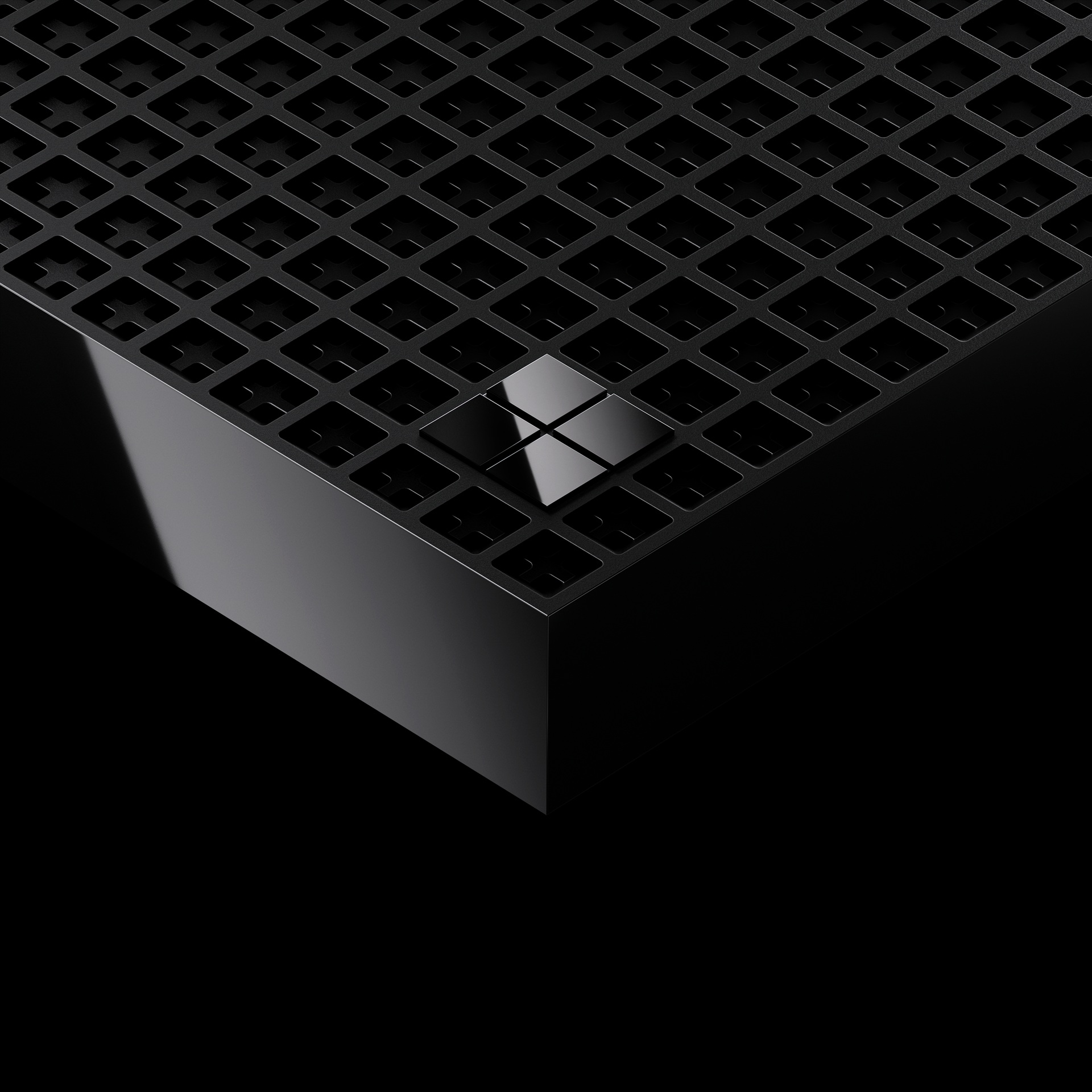
Building the next generation of devices for developers: Surface RTX Spark Dev Box
Software developers are some of the most ambitious makers we serve. They push devices harder, ask more of their tools and expect their environment to help define the pace of modern software creation. Development today means longer runnin blogs.windows.com
- Official source: blogs.microsoft.com

Microsoft Build 2026: Be yourself at work - The Official Microsoft Blog
Platforms shift when developers build. We explore, choose tools, dream, create. This platform shift comes with more information than ever, ready at your fingertips. This shift, it’s about building fast AND THEN: it’s about building, operating, optimizing and observing. Securing your... blogs.microsoft.com
- Official source: developer.microsoft.com

Microsoft Developer
Any platform. Any language. Our tools. Develop solutions, on your terms, using Microsoft products and services.developer.microsoft.com - Related coverage: nvidianews.nvidia.com

NVIDIA and Microsoft Reinvent Windows PCs for the Age of Personal AI
NVIDIA today unveiled NVIDIA RTX Spark™, a new superchip that reinvents Windows PCs for the era of personal AI agents — offering a new class of computer that moves from tool to teammate.nvidianews.nvidia.com
- Related coverage: techcrunch.com

Nvidia chases $200B CPU market with AI agent PCs from Microsoft, Dell, and HP | TechCrunch
If Nvidia has cracked a way to bring AI agents easily, safely, and usefully to the masses, it could — and should — be big. techcrunch.com
- Official source: news.microsoft.com
Loading…
news.microsoft.com - Official source: cdn.techcommunity.microsoft.com
Loading…
cdn.techcommunity.microsoft.com