

Jeff Kaplan’s return to frontline game design is less a sequel and more a sharp left turn: The Legend of California is an ambitious multiplayer action‑survival first‑person shooter set in a mythic Gold Rush–era California, built by Kaplan’s new studio Kintsugiyama and published by Dreamhaven, and it aims to marry precise, skill‑based FPS combat with open‑world survival, crafting, and persistent multiplayer servers. The game’s Steam presence and studio pages promise a sprawling, ever‑changing frontier where solo pioneers or four‑player companies can stake claims, build homesteads, hunt, raid, and — if they wish — fight other players. For anyone who followed Kaplan through Overwatch and its long tail, this announcement reads like the first chapter of an experiment: can a designer famed for hero shooters translate a pedigree for fast, responsive gameplay into a living, emergent survival world?
Jeff Kaplan is a high‑profile designer whose career rose to mainstream visibility as one of the public faces behind Overwatch. After two decades at Blizzard, Kaplan left the company in 2021 and in recent months has stepped back into the spotlight with a new studio, Kintsugiyama, and a new title. The Legend of California was revealed through the developer’s channels and a Steam store listing that lists Dreamhaven — the studio founded by former Blizzard co‑founder Mike Morhaime — as publisher. Kintsugiyama’s official materials describe the game as an open‑world, Gold Rush‑inspired island experience with distinct biomes, dynamic PvE challenges, persistent multiplayer servers, crafting, and both cooperative and optional PvP mechanics.
The announcement lands at a particular moment for the mid‑sized independent publisher: Dreamhaven has been visible in the market for a few years with multiple projects in various stages, and it has publicly shifted priorities in recent months. That relationship matters because The Legend of California will launch into Early Access; for games of this kind, publisher resources, live‑service support, and community management are as critical as the founding creative vision.
The game positions its survival systems and crafting loop at the center of progression: players harvest, craft, and build to carve a homestead out of the wilderness. Unlike many survival titles that emphasize passive base building or static grind, the promotional framing stresses combat‑forward mechanics — the combat is presented as a core gameplay pillar, not merely a utility for PvE threats.
The developers also state that PvP is optional — a major selling point in a crowded genre: companies and players can opt into territory defense and raids, or they can focus on PvE, exploration, and emergent stories. Optional PvP reduces friction for solo players and role‑players while preserving high‑stakes conflict for groups who want it.
However, the path ahead is narrow. The game needs:
The announcement is a good reminder that experienced designers can and do swing for new ideas, and that established strengths (in this case, shooter design) can be decisive when applied to new problem spaces. For players and observers, the next months — closed playtests, community reactions, and the Early Access roadmap — will tell whether The Legend of California is a well‑forged frontier or a hopeful campfire in need of more fuel.
Source: Wccftech The Legend of California Is a Multiplayer Action Survival FPS Set in the Gold Rush Era and Designed by the Creator of Overwatch
 Background / Overview
Jeff Kaplan is a high‑profile designer whose career rose to mainstream visibility as one of the public faces behind Overwatch. After two decades at Blizzard, Kaplan left the company in 2021 and in recent months has stepped back into the spotlight with a new studio, Kintsugiyama, and a new title. The Legend of California was revealed through the developer’s channels and a Steam store listing that lists Dreamhaven — the studio founded by former Blizzard co‑founder Mike Morhaime — as publisher. Kintsugiyama’s official materials describe the game as an open‑world, Gold Rush‑inspired island experience with distinct biomes, dynamic PvE challenges, persistent multiplayer servers, crafting, and both cooperative and optional PvP mechanics.The announcement lands at a particular moment for the mid‑sized independent publisher: Dreamhaven has been visible in the market for a few years with multiple projects in various stages, and it has publicly shifted priorities in recent months. That relationship matters because The Legend of California will launch into Early Access; for games of this kind, publisher resources, live‑service support, and community management are as critical as the founding creative vision.
What The Legend of California Claims to Be
A frontier built for players, not set pieces
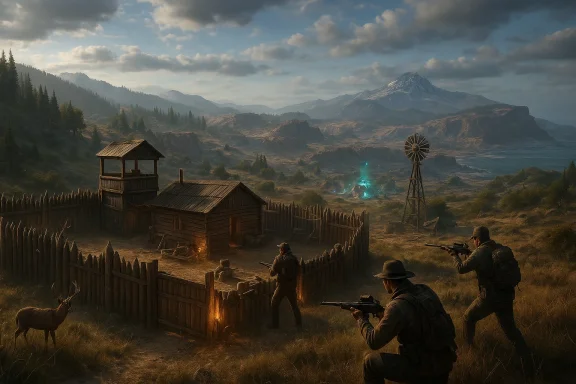
Kintsugiyama describes The Legend of California as an “ever‑changing open world” inspired by the Gold Rush era. The setup is deliberately evocative rather than historically literal: an island called California, populated by distinct biomes and dotted with “iconic” landmarks and discovery points, where players gather resources, craft tools and structures, hunt wildlife, and take on PvE challenges that scale in difficulty.The game positions its survival systems and crafting loop at the center of progression: players harvest, craft, and build to carve a homestead out of the wilderness. Unlike many survival titles that emphasize passive base building or static grind, the promotional framing stresses combat‑forward mechanics — the combat is presented as a core gameplay pillar, not merely a utility for PvE threats.
Multiplayer persistence and company play
A notable technical and design claim is persistent multiplayer servers that let players forge their legacy either solo or in cooperative companies of up to four people. According to the studio: sharing resources, buildings, progress, and even identity as a “company” will be baked into those persistent worlds. That structure shifts the game away from one‑round survival to an ongoing, evolving environment — meaning design problems are not just about balancing a single run but about how progression compounds across a server’s lifetime.The developers also state that PvP is optional — a major selling point in a crowded genre: companies and players can opt into territory defense and raids, or they can focus on PvE, exploration, and emergent stories. Optional PvP reduces friction for solo players and role‑players while preserving high‑stakes conflict for groups who want it.
Combat: precision first
Kaplan’s design pedigree makes a deliberate emphasis on FPS mechanics stand out. The Legend of California promises gunplay that “rewards precision and skill,” whether players are hunting wildlife, raiding NPC encampments, or defending territory from human opponents. This is a different tone from survival games that prioritize attrition, RNG, or sheer inventory management; here, the claim is that a skilled shooter can outplay threats even in a resource‑scarce frontier.Technical baseline and what it means for players
Kintsugiyama and the game’s store listing already include minimum and recommended PC specifications, placing the title firmly in the modern PC performance bracket:- Minimum: Windows 10/11 (64‑bit), Intel Core i7‑10700K or AMD Ryzen 7 3700X, 16 GB RAM, NVIDIA GeForce RTX 2060 SUPER / AMD Radeon RX 6600 (8 GB), DirectX 12, 50 GB storage with an SSD required.
- Recommended: Windows 10/11 (64‑bit), Intel Core i7‑12700K or AMD Ryzen 7 5700X, 32 GB RAM, NVIDIA GeForce RTX 3080 (10 GB) / AMD Radeon RX 6800 (10 GB), DirectX 12, 50 GB SSD.
- The game is targeting mid‑to‑high performance hardware for a smooth experience. The GPU and RAM recommendations suggest the developers aim for high fidelity visuals and possibly large, simulation‑heavy worlds that benefit from more system memory.
- An SSD requirement is explicit. For open worlds with streaming environments and persistent assets, SSDs are now standard to avoid long load times and streaming stutters.
Why this project matters: strengths and opportunities
1. Design credibility and experience
Jeff Kaplan’s experience leading a major, globally successful FPS gives the project instant credibility among players and studios alike. Kaplan’s teams at Blizzard delivered responsive, character‑driven shooting and a very public developer‑player communication style. Translating that knack for tight, feel‑driven combat into an emergent, survival‑oriented world could yield a best‑of‑both‑worlds result: survival systems that don’t feel clumsy and shooter mechanics that maintain depth under variable environmental conditions.2. A hybrid that fills a gap
The Legend of California sits at the intersection of precise first‑person shooting and survival‑crafting. Many survival titles lean toward either emergent, sandbox experiences (emphasizing base building and persistence) or arcade‑like shooters with smaller scopes. Combining durable FPS reflex mechanics with meaningful crafting and territoriality could carve out a distinctive niche if the team delivers on both fronts rather than half‑baking one.3. Optional PvP and cooperative persistence
By making PvP optional and allowing small company systems, the game opens itself up to both social players and more solitary audiences. That inclusivity can widen the addressable audience: cooperative players who want shared progression, solo role‑players who want to build a homestead, and competitive groups who opt into territory conflict.4. Publishing partnership with pedigree
Dreamhaven’s involvement brings a recognizable name — a studio founded by a well‑known industry figure — and an existing infrastructure for Early Access launches. That could mean better community outreach and a firmer plan for live operations compared with a brand‑new, untested publisher.Risks, red flags, and hard development realities
The announcement is compelling, but the path from a promising reveal to a sustainable live game is littered with traps. Several risk factors are worth highlighting:1. Early Access pitfalls
Early Access gives developers breathing room to iterate, but it’s also a market where first impressions linger. Feature gaps, server instability, balance problems, or predatory monetization introduced early on can create community backlash that’s difficult to reverse. The studio will need a clear roadmap, transparent patch cadence, and a robust QA plan for persistent servers.2. Publisher financial health and resource constraints
Dreamhaven has been vocal about the financial pressures of running multiple mid‑tier projects and has previously announced restructuring and cost management measures. For a game that requires steady live‑ops support and server rent for persistent worlds, publisher stability matters. A shrinking budget or shifting priorities mid‑development could force feature cuts or rushed launches that undermine the player experience.3. Community expectations and the Overwatch shadow
Kaplan’s name is an asset and a potential liability. Some players retain strong feelings about Overwatch 2’s rollout and post‑launch direction, and prominent designers often face elevated scrutiny. The new game will be measured not just on its own merits but against past reputations. Managing expectations — especially around monetization, content cadence, and community communication — will be crucial.4. Genre saturation and differentiation
Survival and open‑world multiplayer games are crowded and often rely on novelty loops or technical polish to stand out. The Legend of California’s western frontier aesthetic is appealing, but thematic novelty alone won’t be enough. The game must distinctively blend shooter feel, progression, and emergent world systems to sustain long‑term player investment.5. Technical complexity: persistence, scaling, and anti‑cheat
Persistent worlds with potentially large, long‑running worlds and player‑owned structures require complex server architecture to prevent griefing, duplication exploits, and long‑term desync issues. Optional PvP adds another technical vector: anti‑cheat, rollback mechanics, and robust matchmaking for territorial clashes. These are expensive problems to solve and require continual investment.6. Historical sensitivity
The Gold Rush era is not simply a backdrop; it was an era of dispossession, exploitation, and cultural conflict. The “mythic Island of California” framing appears to be an attempt to fictionalize and distance the setting from a literal historical retelling, but there’s still a reputational risk if the game trivializes or misrepresents the lived realities of indigenous peoples, migrants, or marginalized groups. Thoughtful narrative design and sensitivity reads should be part of development, not an afterthought.Monetization and live‑service considerations
The marketing materials so far have not detailed monetization. Given Dreamhaven’s role and the Early Access model, several paths are possible:- Traditional paid purchase followed by free seasonal content updates.
- Upfront price plus an optional cosmetic store (the Overwatch playbook).
- A hybrid model with battle passes or run‑based content loops.
What to watch between announcement and Early Access
- Roadmap transparency: The studio should publish an Early Access roadmap with feature milestones, server capacity plans, and a schedule for bug‑fixes and balance updates.
- Technical previews and closed tests: Playtests and data‑driven closed alpha phases will reveal whether the server architecture scales and whether combat feels responsive with network variance.
- Community channels and moderation: Persistent worlds need active moderation policies, clear griefing rules, and in‑game tools to mitigate abusive behavior.
- Monetization outline: A clear statement on monetization early will reduce speculation and allow players to opt in or out on an informed basis.
- Narrative and cultural consultations: Any depiction of historical or culturally sensitive material should include consultants or sensitivity reviewers; evidence of this will reassure thoughtful audiences.
For players: practical advice before Early Access
- If you’re curious but cautious, wait for an Early Access roadmap and initial playtests before pre‑ordering or investing heavy time. Early Access is for those who want to help shape a game; don’t expect feature completeness at day one.
- Prepare a modern PC: the recommended specs suggest mid‑to‑high tier hardware for a comfortable experience; an SSD is required and will deliver the best experience.
- Keep expectations grounded around persistence: not all persistent systems survive the Early Access gauntlet. Read patch notes closely and track developer communication before committing to long‑term progression in a live server.
- Consider company play: the game’s cooperative company structure favors small groups. If your social circle is sparse, look for communities early — small companies can change the way progression feels for solo players.
Design questions that will determine success
Several fundamental design tensions will shape whether The Legend of California becomes a refreshingly original hybrid or another ambitious but fractured Early Access attempt:- Will combat remain the central feel, or will survival mechanics (hunger, decay, RNG) dominate gameplay loops?
- How will the developers balance persistent progression to prevent runaway leaders from crushing new entrants on a server?
- What systems will mitigate griefing without infantilizing PvP? Optional PvP is promising, but the implementation details matter: opt‑in zones, soft penalties, and meaningful rewards will define whether raids feel rewarding instead of punitive.
- How will emergent storytelling be supported? Tools for player expression, construction, and narrative events can turn mechanical play into memorable moments; tools matter more than the initial story beats.
Final analysis: cautious optimism
The Legend of California is one of the more interesting post‑Blizzard projects announced in recent years because it attempts to combine Jeff Kaplan’s proven design strengths — tight, satisfying shooter mechanics and clarity of player feedback — with the messy, socially driven systems of survival persistence. That combination, when executed well, can produce emergent, high‑intensity moments that scale from intimate duels to sweeping server‑wide stories.However, the path ahead is narrow. The game needs:
- Technical maturity in server architecture and anti‑cheat systems.
- A publisher and live‑ops plan that can sustain persistent worlds long‑term.
- A transparent, player‑friendly monetization model.
- Sensible community tools and moderation to protect emergent play from grief and exploitation.
The announcement is a good reminder that experienced designers can and do swing for new ideas, and that established strengths (in this case, shooter design) can be decisive when applied to new problem spaces. For players and observers, the next months — closed playtests, community reactions, and the Early Access roadmap — will tell whether The Legend of California is a well‑forged frontier or a hopeful campfire in need of more fuel.
Source: Wccftech The Legend of California Is a Multiplayer Action Survival FPS Set in the Gold Rush Era and Designed by the Creator of Overwatch
