

Certifications remain one of the fastest, most visible ways for developers to signal skill and land higher-paying roles in 2026 — but the landscape has shifted. Analytics Insight’s recent roundup of the “Most In‑Demand Programming Certifications 2026” mapped the headline winners (cloud, AI/ML, Kubernetes, Java, front‑end, and security), and recruiters are still privileging candidates who pair credentials with demonstrable, production‑grade work.
This feature expands that roundup into a practical, verified guide: what each credential actually tests, which employers prize them, up‑to‑date exam details (format, cost, duration), realistic salary context, preparation timelines, and the strategic trade‑offs you must weigh before committing time and money.
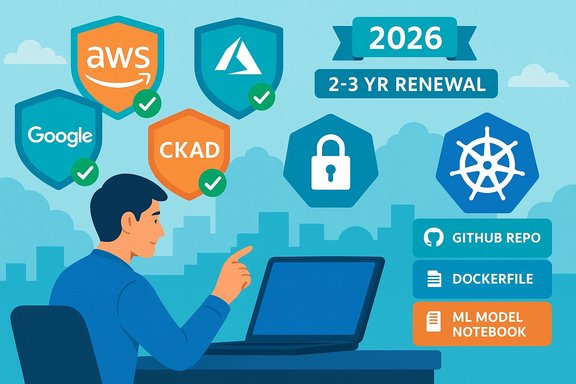
The certification market in 2026 centers on three dynamics: (1) platform‑specific cloud and AI tracks that accelerate day‑one productivity for employers, (2) hands‑on performance exams (Kubernetes, penetration testing) that test real skills rather than rote memorization, and (3) rapid vendor churn — some long‑standing certificates are paused or redesigned. Hiring managers use certifications as a short‑hand filter, but they overwhelmingly prefer candidates who can back badges with portfolio artifacts: GitHub repos, deployed microservices, or reproducible ML pipelines.
Independent industry reports confirm the financial impact: cloud and security certifications consistently rank among the highest payers in recent salary surveys and reports. These include the industry IT Skills & Salary studies and journalist rankings that analyze compensation uplift tied to certification attainment.
Certifications are a tool — powerful when aligned to your target job, verified before purchase, and amplified by real projects. Choose one role, confirm demand in concrete job ads, build two production‑grade artifacts that mirror those job tasks, and then pick the certification pathway that reduces hiring friction for that role. The combination of a recognized badge + reproducible portfolio is the most reliable route to the high‑paying developer and engineering roles in 2026.
Source: Analytics Insight Most In-Demand Programming Certifications 2026: Top 10 for High-Paying Jobs
This feature expands that roundup into a practical, verified guide: what each credential actually tests, which employers prize them, up‑to‑date exam details (format, cost, duration), realistic salary context, preparation timelines, and the strategic trade‑offs you must weigh before committing time and money.
 Background / Overview
The certification market in 2026 centers on three dynamics: (1) platform‑specific cloud and AI tracks that accelerate day‑one productivity for employers, (2) hands‑on performance exams (Kubernetes, penetration testing) that test real skills rather than rote memorization, and (3) rapid vendor churn — some long‑standing certificates are paused or redesigned. Hiring managers use certifications as a short‑hand filter, but they overwhelmingly prefer candidates who can back badges with portfolio artifacts: GitHub repos, deployed microservices, or reproducible ML pipelines.Independent industry reports confirm the financial impact: cloud and security certifications consistently rank among the highest payers in recent salary surveys and reports. These include the industry IT Skills & Salary studies and journalist rankings that analyze compensation uplift tied to certification attainment.
What to expect from programming certifications in 2026
Certifications are now less about checking boxes and more about reducing hiring friction for specific stacks and roles. Expect to see:- Shorter role‑based exams that incorporate AI/MLOps topics (cloud provider tracks).
- More hands‑on, timed, performance problems (Kubernetes, PenTest+, cloud labs).
- Frequent updates and renewal requirements (2–3 year validity windows).
- Micro‑credentials and sandboxes to practice without large cloud bills.
Top programming certifications for high‑paying jobs in 2026 — deep dive
AWS Certified Developer — Associate
- What it validates: Building, deploying, debugging, and optimizing cloud applications on AWS; CI/CD and SDK usage.
- Exam facts (official): duration ~130 minutes; ~65 questions; cost US$150; online or Pearson VUE proctoring. Recommended: 1+ year hands‑on AWS development experience.
- Why it matters: AWS skills remain vendor‑critical for many enterprise and startup stacks; developer‑level certs accelerate developer onboarding.
- Preparation: 6–12 weeks of focused labs and one or two small deployed microservices; use AWS Skill Builder and official practice exams.
- Caveat: Many employers expect additional IaC (Terraform/CloudFormation) and monitoring skills beyond the exam scope.
Google Professional Cloud Developer
- What it validates: Cloud‑native application design, containerized apps, APIs, observability, and integration with Google Cloud services (GKE, Cloud Run, Vertex/Ai).
- Exam facts (official): 2‑hour proctored exam; registration fee US$200; 50–60 multiple choice/multi‑select questions. Recommended experience: 3+ years industry, including 1+ year with GCP.
- Why it matters: GCP is favored for data/ML platforms and Vertex AI adoption; the certification maps closely to platform‑specific production expectations.
- Preparation: Build a sample microservice on GKE or Cloud Run, instrument it (logs/metrics/traces), and integrate with a managed service (e.g., Pub/Sub, Firestore).
Microsoft Certified: Azure Developer Associate (AZ‑204 / AZ‑204 → role exams)
- What it validates: Building Azure compute solutions, functions, APIs, storage, and app deployment with Azure services; includes MLOps content in recent role updates.
- Exam facts (official): 100 minutes for the exam; proctored; interactive components possible. Microsoft Learn provides sandboxes and step‑by‑step modules.
- Why it matters: Enterprises with Microsoft stacks prize Azure role certificates; AZ‑204 maps to day‑to‑day Azure developer tasks.
- Preparation: Microsoft Learn plus hands‑on projects (function + serverless integration + Azure DevOps/GitHub Actions pipelines).
Certified Kubernetes Application Developer (CKAD)
- What it validates: Building, configuring, and troubleshooting cloud‑native applications on Kubernetes — practical, command‑line performance tasks.
- Exam facts (official): 2‑hour online, performance‑based exam; cost US$445 (includes a free retake); exam updated quarterly to match Kubernetes releases.
- Why it matters: Kubernetes skills remain scarce; employers pay a premium for engineers who can deploy and operate containerized apps in production.
- Preparation: Daily timed labs in k8s playgrounds and building 2–3 real microservices with manifests, probes, and RBAC.
Oracle Java SE 21 Developer (OCP Java SE 21)
- What it validates: Modern Java proficiency on the Java SE 21 LTS platform, including language features, concurrency, Streams, modules, and common APIs.
- Exam facts (official): Oracle announced the OCP Java SE 21 Developer exam (1Z0‑830) aligned to Java 21 LTS; training and exam details are documented via Oracle University.
- Why it matters: Large enterprises and finance/legacy systems still standardize on Java LTS releases — Java SE 21 is the current LTS trajectory employers expect.
- Preparation: Code heavy practice, API familiarity, and reading up on new Java 21 features (pattern matching, record patterns).
Meta Front‑End Developer Professional Certificate (Coursera)
- What it validates: Front‑end fundamentals: HTML, CSS, JavaScript, React and portfolio projects built through a nine‑course career track.
- Facts: Offered via Coursera as a professional certificate (no formal “proctored exam” but project‑based credential); typical completion ~7 months at 6 hours/week per course listing. Good for beginners targeting front‑end roles.
- Why it matters: Employer‑facing portfolio and project outcomes are the real signal; Meta’s certificate is widely recognized by hiring teams that list front‑end tech stacks.
Python Institute — PCPP (Professional Certified Python Programmer)
- What it validates: Advanced Python programming, design patterns, networking, concurrency, database integration, and testing for experienced developers (PCPP‑2 specifics).
- Exam facts (official): PCPP tracks are maintained by the OpenEDG Python Institute; PCPP‑2 targets senior/advanced Python practitioners.
- Why it matters: Python remains foundational for backend, automation, data engineering, and AI scripting — an advanced Python cert signals deep language mastery.
AWS Certified Machine Learning — Specialty (status update)
- What it validates: Building, training, tuning, and deploying ML models on AWS (SageMaker, feature stores, model optimization).
- Important program change: AWS publicly announced that the Machine Learning — Specialty certification will be retired on March 31, 2026. The certification remains valid for holders for three years after issuance, and AWS points candidates toward the new AWS ML Engineer — Associate pathway as the modern alternative. If targeting AWS ML work, check dates and availability before booking.
- Why it matters: Historically one of the higher‑paying certs, but retirement signals vendors’ shifting certification strategies — validate the current path (associate/professional/role‑based) before studying.
CompTIA PenTest+ (v3)
- What it validates: Hands‑on penetration testing skills — planning, vulnerability scanning, exploitation, post‑exploitation, and reporting; exam updated to include cloud and AI attack scenarios.
- Exam facts (official): PT0‑003 launched Dec 17, 2024; up to 90 questions, 165 minutes, recommended 3–4 years’ experience; languages include English, French, Japanese, Portuguese. Legacy PT0‑002 is in retirement cycle.
- Why it matters: Performance‑based security certs are increasingly important for firms that require hands‑on validation for red‑team/blue‑team roles.
Google Professional Data Engineer
- What it validates: Design, building, and operationalizing data processing systems on Google Cloud, with focus on ingestion, storage, transformation, and ML‑ready pipelines.
- Exam facts (official): Standard exam ~2 hours; registration US$200; renewal and shorter renewal exam options exist; recommended experience 3+ years including 1+ year with GCP.
- Why it matters: Data engineering remains one of the highest paying disciplines in tech as organizations productionize AI and analytics.
Salary context: what the data shows (verified)
Multiple independent salary reports and editorial analyses show the strongest salary premiums for cloud, security, and AI/data production certifications:- The Global Knowledge (Skillsoft) IT Skills & Salary Report (2024‑25) highlights that certified professionals frequently report salary and role improvements; the report remains a primary industry benchmark for cert‑related compensation trends.
- Journalistic analyses that synthesize market survey data rank AWS and cloud security certs among the highest payers; Forbes’ 2025 feature singled out AWS specialty tracks — Machine Learning and SysOps — as among the top certifications for salary boosts, citing average uplifts in the thousands of dollars one year after certification in many cases.
Strengths, risks, and practical trade‑offs
Strengths
- Faster screening success: For juniors and career‑changers, a right‑matched cert gets resumes past ATS filters and recruiter screens.
- Day‑one productivity signal: Platform certs (Azure/AWS/GCP) tell employers you know their stack conventions, reducing onboarding friction.
- Structured learning path: Vendor sandboxes and labs help you practice without needing to assemble your own environments.
Risks and caveats
- Vendor lock‑in: Heavy platform training narrows portability — balance with transferable fundamentals (CI/CD, observability, security patterns).
- Obsolescence & pausing: Vendors sometimes pause or redesign exams (TensorFlow Certificate closure; AWS ML‑Specialty retirement window). Always verify the examination status on the vendor page before paying.
- False signaling: Multiple low‑effort badges without projects often underperform a smaller portfolio of demonstrable work in interviews.
- Hidden costs: Proctored exam fees, cloud credits for labs, and optional paid practice tests can add up — budget accordingly.
A practical 8–12 week study plan that works
- Week 1: Role audit — pick three job postings for the role you want and map required skills/tools.
- Weeks 2–5: Core learning — follow vendor official content (AWS Skill Builder, Google Cloud Skills Boost, Microsoft Learn); complete 1–2 hands‑on labs per exam domain.
- Weeks 6–8: Build a project — mirror exam objectives in an end‑to‑end project (microservice, data pipeline, or ML deployable model). Add README and demo video.
- Weeks 9–10: Practice tests and proctor simulation — use vendor practice questions; rehearse timed exams in a quiet environment.
- Week 11–12: Final polish and exam booking — re‑verify exam availability and renewal policy on vendor pages; schedule exam and prepare exam day checklist.
How to choose the right certification for your career stage
- Entry level / career changers: Meta Front‑End Professional Certificate, Google Data Analytics, IBM Data Science Professional Certificate (project capstone is crucial).
- Cloud / backend dev: AWS Developer Associate, Azure Developer Associate, Google Professional Cloud Developer (match the cloud used in your target job postings).
- Data engineering / ML production: Google Professional Data Engineer, platform ML engineer paths (GCP, Azure); note AWS ML‑Specialty retirement timeline and choose active role‑based alternatives.
- Security: CompTIA PenTest+ (v3), CISSP (leadership track) for blue/red team roles; PenTest+ v3 includes cloud and AI attack scenarios.
- Kubernetes / DevOps: CKAD/CKA — performance‑based certification that directly demonstrates production readiness.
Practical checklist before you enroll
- Confirm the exam is actively offered and check renewal rules on the vendor’s official page. Vendors periodically retire or redesign exams (example: TensorFlow certificate paused; AWS ML‑Specialty retirement).
- Ensure the cert matches at least three real job ads you’d apply for.
- Build a portfolio project that mirrors exam objectives (README, reproducible notebook, demo video).
- Budget for exam fees + modest cloud credits (estimate US$50–$300 depending on labs).
- Plan for renewal cycles (many cloud certs require revalidation within 1–3 years).
Final analysis and recommendations
Certifications in 2026 remain powerful career accelerants when chosen and used strategically. The highest‑paying credentials cluster around cloud architecture, cloud security, and data/ML production roles — precisely the disciplines driving product impact inside modern companies. Independent salary studies corroborate that certified professionals are often rewarded with measurable compensation uplifts, but those uplifts are contingent on role alignment, geography, and demonstrable outcomes. Prioritize one primary certification that maps to your target role and one complementary badge (security, infra, or methodology). Crucially, pair certifications with two polished, reproducible projects you can show in interviews — certifications will get your resume reviewed, but projects win offers.Quick FAQs (concise, verified)
- Are programming certifications mandatory in 2026? No — they’re not compulsory, but they strengthen early‑career resumes and help experienced engineers demonstrate up‑to‑date platform skills.
- Which certification is best for beginners? Project‑based certificates like the Meta Front‑End Professional Certificate or Google Data Analytics help beginners build interview‑ready portfolios.
- Do certifications guarantee a job? No guarantee — they raise interview odds but hiring decisions favor demonstrable impact (projects, production experience).
- How long to prepare? Most role‑based certs realistically require 2–6 months, depending on prior experience and the amount of hands‑on lab work you complete. Plan around an 8–12 week focused roadmap for many associate/professional tracks.
- Which certs tend to pay the most? Cloud architect, cloud security, and data/AI production certificates generally correlate with the strongest pay premiums in recent surveys; specific uplift varies by report and role.
Certifications are a tool — powerful when aligned to your target job, verified before purchase, and amplified by real projects. Choose one role, confirm demand in concrete job ads, build two production‑grade artifacts that mirror those job tasks, and then pick the certification pathway that reduces hiring friction for that role. The combination of a recognized badge + reproducible portfolio is the most reliable route to the high‑paying developer and engineering roles in 2026.
Source: Analytics Insight Most In-Demand Programming Certifications 2026: Top 10 for High-Paying Jobs
