

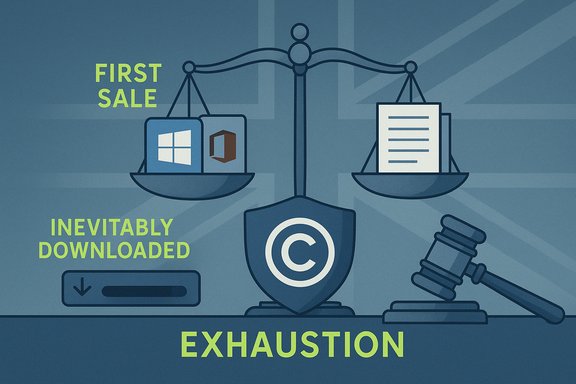
Microsoft will appeal the Competition Appeal Tribunal’s preliminary ruling that perpetual Microsoft licences — including Windows and Office — can be subdivided and resold, setting the stage for a protracted fight over the legal boundaries of software resale, exhaustion and vendor control in the UK market. The Tribunal’s November 12, 2025 judgment (Neutral Citation [2025] CAT 75) rejected Microsoft’s late-stage copyright-based defence and held that exhaustion under the Software Directive applies to the constituent materials “supplied and inevitably downloaded” with Windows and Office, meaning contractual clauses in enterprise agreements cannot unilaterally block lawful resale under the facts tested.
The dispute began in 2021 when JJH Enterprises Limited (trading as ValueLicensing), a UK reseller that specialises in trading perpetual licences, sued Microsoft. ValueLicensing alleges that Microsoft used commercial incentives and contractual devices in volume and Enterprise Agreements to suppress the supply of surplus perpetual licences to the secondary market — a practice the reseller says cost it roughly £270 million in lost business. The claim brought competition-law allegations under UK and EU rules, and the parties have litigated procedural and jurisdictional lines for several years.
Microsoft’s defence shifted during the case. Having denied the competition allegations on the facts, the company advanced a novel legal theory: portions of its products (icons, fonts, helpfiles, GUI elements and embedded clipart) are independently protectable non‑program works subject to a different copyright regime and therefore not swept by the Software Directive’s exhaustion rule. If accepted, that argument would have undermined the fundamental legal justification used by UsedSoft and others to trade in downloaded perpetual licences across Europe. The Tribunal, however, rejected that approach in the October–November preliminary issues hearing and set out a fact‑sensitive legal answer favourable to ValueLicensing.
That said, this is not the end of the story. Microsoft’s appeal is expected and the issues are doctrinally nuanced and fact‑sensitive. Businesses, public procurers and resellers should treat this ruling as important but provisional — a legal milestone that preserves resale as a lawful option in the UK for now, but also one that invites appeals and further litigation on liability and damages. Stakeholders should use the breathing space the judgment creates to tighten documentation, reassess procurement strategies and prepare for further judicial and regulatory development.
Source: Tom's Hardware Microsoft to appeal ruling in favor of reselling perpetual Windows licenses — UK Competition Court says fineprint holds no ground as judges throw out company's 'creative work' argument
 Background: how we arrived at this junction
The dispute began in 2021 when JJH Enterprises Limited (trading as ValueLicensing), a UK reseller that specialises in trading perpetual licences, sued Microsoft. ValueLicensing alleges that Microsoft used commercial incentives and contractual devices in volume and Enterprise Agreements to suppress the supply of surplus perpetual licences to the secondary market — a practice the reseller says cost it roughly £270 million in lost business. The claim brought competition-law allegations under UK and EU rules, and the parties have litigated procedural and jurisdictional lines for several years.Microsoft’s defence shifted during the case. Having denied the competition allegations on the facts, the company advanced a novel legal theory: portions of its products (icons, fonts, helpfiles, GUI elements and embedded clipart) are independently protectable non‑program works subject to a different copyright regime and therefore not swept by the Software Directive’s exhaustion rule. If accepted, that argument would have undermined the fundamental legal justification used by UsedSoft and others to trade in downloaded perpetual licences across Europe. The Tribunal, however, rejected that approach in the October–November preliminary issues hearing and set out a fact‑sensitive legal answer favourable to ValueLicensing.
Overview of the Tribunal’s ruling and its legal reasoning
What the Tribunal decided (short version)
- The Tribunal held that exhaustion under Article 4(2) of Directive 2009/24/EC (the Software Directive) operates as a matter of law and is not defeated by standard contract terms in Microsoft Enterprise Agreements.
- The Tribunal concluded that the first online sale of Windows and Office exhausts Microsoft’s distribution/reproduction rights in the works that are “supplied and inevitably downloaded” as part of those products, to the extent those constituent works are copied and used in accordance with the intended purpose of the original sale.
- Subdivision and resale of multi‑seat or volume licence pools (the “splitting” argument Microsoft stressed) are not precluded by Microsoft’s distribution or reproduction rights on the facts shown in the sample transactions the Tribunal tested.
Legal foundations the Tribunal relied on
The judgment draws heavily on the EU jurisprudence established in UsedSoft (C‑128/11), in which the Court of Justice of the European Union held that the right of distribution is exhausted on a first sale of a computer program and that exhaustion can apply to downloaded software where the first acquirer had an unlimited, perpetual right of use in return for payment. The Tribunal followed that doctrinal path and rejected Microsoft’s attempt to carve out non‑program works from exhaustion, preferring a contextual, substance‑over‑labels approach when the works are “supplied and inevitably downloaded” as part of the same package.Why the Tribunal rejected Microsoft’s “creative works” escape hatch
Microsoft’s tactic was to treat embedded visual or textual assets as independent creative works falling outside the Software Directive; in doing so, the company hoped to sidestep UsedSoft. The Tribunal pushed back. It reasoned that when those assets are inherently part of the program distribution — downloaded and copied in the course of permitted use — exhaustion should operate to the extent necessary to avoid leaving a vendor with perpetual control after the first sale. In simple terms: you cannot defeat legal exhaustion by wrapping program‑adjacent files in a copyright label and then insisting resale is forbidden.What this judgment does — and what it does not — decide
Clear, immediate effects
- Legal green light (for now) to much secondary‑market activity in the UK: Resellers and corporate sellers that structure transfers to fit the factual scenario tested by the Tribunal can rely on the ruling to justify onward resale of perpetual licences. The decision removes, at least at the preliminary-issues stage, Microsoft’s copyright wedge defence that threatened to strangle the used‑software market.
- Limitation of vendor contract power: The Tribunal stated that contractual clauses in volume agreements cannot simply recreate a legal monopoly where exhaustion has already occurred. That curtails one route vendors use to try to control aftermarket sales.
What the Tribunal explicitly left open
- Liability and damages remain undecided. The ruling addressed preliminary issues and did not determine whether Microsoft actually breached competition law or the quantum of any loss. ValueLicensing’s broader damages claim — the headline figure of roughly £270 million — is still live and will be litigated at trial if the case proceeds.
- The decision is fact‑sensitive. The Tribunal anchored its findings to the parties’ sample transactions. That means different factual matrices — licences tethered to online services, licences with technical transfer restraints, or products where the “inevitably downloaded” test fails — may produce different outcomes in future disputes. The ruling is not an across‑the‑board endorsement for any conceivable resale scenario.
- Jurisdictional fragmentation risk remains. The CAT’s reasoning is focused on UK law operating with EU‑rooted precedent; other jurisdictions may read the same principles differently, and the ruling could be limited if appellate courts narrow the legal scope on appeal.
Cross‑checking the record: multiple independent confirmations
This account is grounded in the Tribunal’s own published judgment and reporting by independent outlets in the tech and legal press. The Competition Appeal Tribunal registry published the judgment (Neutral Citation [2025] CAT 75), which summarises both issues and holdings. News outlets covering the decision reported Microsoft’s statement that it disagrees with the decision and intends to appeal, and quoted ValueLicensing’s management expressing vindication and an intent to press the underlying competition claim. These independent accounts corroborate the key legal findings and the parties’ immediate responses.Practical implications — who wins, who loses, and what the market may look like
For resellers and the secondary market
This is a meaningful legal vindication: the Tribunal’s reasoning preserves a lawful pathway to trade in large classes of perpetual licences in the UK, provided the resale is structured to mirror the facts the court used. Resellers should nonetheless proceed with care:- Preserve provenance: keep invoices, assignment documents and screenshots proving a licence was perpetual and that the original user ceased use.
- Verify uninstall and deletion protocols: the resale model remains conditioned on the original user making their copy unusable or documented surrender.
- Segregate contested inventory: if provenance is uncertain, isolate those licences until legal clarity is achieved.
For enterprises and public procurers
Organisations that historically generated value by monetising surplus perpetual licences may now have stronger legal footing to do so; but procurement teams must balance the commercial upside against audit and compliance risks:- Catalogue licence provenance and types (perpetual vs subscription vs OEM).
- Avoid relying on secondary‑market purchases without clear documentation.
- Revisit past trade‑in or “surrender in exchange for discount” arrangements to assess whether those contractual concessions imposed hidden long‑term costs.
For Microsoft and large ISVs
- The ruling constrains one route vendors have used to police aftermarkets by contract. That raises commercial friction: Microsoft’s long push from perpetual licences toward subscriptions (Microsoft 365, Azure, cloud services) is partly designed to reduce dependencies on illiquid secondary channels. A ruling that preserves UsedSoft-style resale reduces vendor control over the afterlife value of perpetual licences.
- Microsoft’s appeal is virtually certain. The company’s public statement — “We disagree with the decision and intend to appeal” — signals an aggressive appellate strategy that could take years and inject legal uncertainty in the interim.
For the broader market and regulators
Competition authorities and policymakers will watch closely. If appellate courts adopt Microsoft’s narrower reading — or if other tribunals construe exhaustion more narrowly — the result could accelerate vendor capture of downstream markets. Conversely, appellate rebukes of Microsoft would likely bolster secondary markets, create downward pressure on procurement costs, and embolden class actions alleging price‑inflation or anti‑competitive tying.Strengths, weaknesses, and likely appellate flashpoints
Strengths of the Tribunal’s ruling
- Firm doctrinal anchor: The judgment leans on UsedSoft and the Software Directive, which have been central to EU law on software resale for years.
- Functional analysis: The Tribunal’s “substance over form” approach reduces the ability of rightsholders to win by labelling integrated software elements as independent creative works.
- Market predictability: By resisting a doctrinal overhaul, the Tribunal favours commercial stability and avoids a sudden recalibration of public procurement and reselling markets.
Weaknesses and vulnerabilities that Microsoft will exploit on appeal
- Fact sensitivity: The Tribunal’s reliance on sample transactions is both a strength and an attack surface: Microsoft will argue the decision is too tied to narrow facts and must not be treated as a sweeping legal pronouncement.
- Doctrinal nuance on “inevitably downloaded” works: Microsoft will press distinctions about when a non‑program element is truly separable and whether exhaustion properly extends to those elements. Appellate courts may accept narrower readings.
- Potential policy arguments: Microsoft is likely to frame the appeal in terms of preserving creative‑works protections and preventing piracy, while emphasising the commercial realities of modern bundled software. Those policy frames may find receptive ears on appeal.
Recommended actions for stakeholders (concise, operational)
For resellers
- Audit all inventory and document provenance meticulously.
- Obtain written assignments and deletion confirmations from the original licence holders.
- Avoid selling licence types that are tethered to online services, subscriptions, OEM hardware or clear technical transfer restraints.
- Consider legal insurance or indemnities for high‑value lots.
For enterprise IT & procurement
- Catalogue and label licences by type and evidence of perpetual status.
- When offered trade‑in discounts, document the terms and financial calculus; preserve any communication showing inducement to surrender licences.
- Budget contingency for future litigation-driven procurement shifts if the appellate outcome alters resale options.
For vendors and licensing teams
- Re-evaluate price and channel strategies in light of continued secondary‑market viability.
- Tighten clarity in licence drafting without relying solely on after‑sale contractual traps that may be legally ineffective under exhaustion principles.
- Track regulatory and appellate developments closely and prepare policy positions that anticipate competition authority interest.
Risks, long game and what to expect next
- Microsoft’s appeal will extend legal uncertainty. An appellate victory for Microsoft could narrow the resale market dramatically; an appellate rejection would strengthen resale further and increase exposure to damages claims across the UK and EU.
- Related class actions — for example the collective proceedings application led by Alexander Wolfson — amplify the stakes, potentially raising damages exposure from the low‑hundreds of millions to multi‑billion‑pound figures in aggregate claims. Regulators such as the UK’s Competition and Markets Authority may also use the litigation as a springboard for broader inquiries into vendor behaviour and market design.
- Expect tactical moves: Microsoft will likely press narrower appellate grounds (procedural or doctrinal refinements) rather than arguing that UsedSoft is entirely wrong. Likewise, resellers and plaintiffs will press the case facts and documentary disclosures to maintain momentum on competition claims and damages quantification.
Caveats and unverifiable claims flagged
- Headlines suggesting that the ruling will immediately make Windows 11 “free” or that all perpetual Windows licences can be purchased cheaply on a whim are overstatements. The Tribunal’s decision addresses legal principles for resale under a specific set of facts and does not grant carte blanche to buy any licence from any source without the usual checks on provenance and the possibility of product‑type exceptions. Any suggestion that the ruling instantly collapses Microsoft’s pricing or distribution regime is speculative and should be treated with caution.
- The Monetary figure (£270 million) is a headline claim by ValueLicensing in its damages pleadings; it is not an adjudicated award. Whether ValueLicensing will recover that sum depends on later proof of causation and quantification at trial, and on appellate developments.
Conclusion: a high‑stakes detour, not the final destination
The Competition Appeal Tribunal’s preliminary judgment is a substantive victory for the secondary‑licensing market and a legal setback for Microsoft’s attempt to use copyright labels as a shield against resale. The decision reaffirms the practical reach of UsedSoft‑style exhaustion for software distributed electronically and pushes vendors to rely less on contractual fine print to achieve downstream control.That said, this is not the end of the story. Microsoft’s appeal is expected and the issues are doctrinally nuanced and fact‑sensitive. Businesses, public procurers and resellers should treat this ruling as important but provisional — a legal milestone that preserves resale as a lawful option in the UK for now, but also one that invites appeals and further litigation on liability and damages. Stakeholders should use the breathing space the judgment creates to tighten documentation, reassess procurement strategies and prepare for further judicial and regulatory development.
Source: Tom's Hardware Microsoft to appeal ruling in favor of reselling perpetual Windows licenses — UK Competition Court says fineprint holds no ground as judges throw out company's 'creative work' argument
