

The UK Competition Appeal Tribunal has delivered a unanimous preliminary ruling that Microsoft cannot use its contract terms and copyright arguments to stop customers reselling perpetual Windows and Office licences — a major win for reseller ValueLicensing and a decision that reinforces the long‑standing European exhaustion doctrine for software.
The dispute began in 2021 when Derbyshire‑based reseller ValueLicensing launched a damages claim against Microsoft, seeking roughly £270 million for alleged anti‑competitive conduct that it says reduced the supply of pre‑owned perpetual software licences in the UK and EEA. ValueLicensing argues that Microsoft, by incentivising customers to surrender perpetual licences in exchange for discounts on subscription services and by inserting contractual provisions, effectively drained the second‑hand market and made resale commercially impractical.
At the heart of the litigation are two interlocking legal questions:
UsedSoft did, however, place limits on resale: in some factual settings the court suggested resale should not allow the original purchaser to continue using the same licence while selling part of the rights away (the classic “carving up” problem). That tension — between the principle of exhaustion and the practicalities of multi‑seat/volume licences — is central to the ValueLicensing v Microsoft dispute.
The decision therefore represents a legal headwind to any strategy that relies on making second‑hand perpetual licences commercially unavailable by contract alone. That could have long‑term ramifications for pricing dynamics, particularly for organisations that still require—or prefer—on‑premises perpetual licences.
Caveat: the potential value of class claims (not only the £270m figure) is subject to litigation risk and depends on causation, allocation, limitation periods and class certification — all of which require further factual and legal proof.
Strengths of the outcome include preventing a doctrinal redefinition of exhaustion that would have allowed a dominant platform to extinguish the second‑hand market by clever drafting. On the other hand, the decision does not answer the most consequential remaining questions — whether Microsoft’s commercial conduct amounted to anticompetitive abuse and whether ValueLicensing’s alleged losses were caused by that conduct. Those questions require full evidentiary trials and careful economic analysis.
The real stakes extend beyond this single case. The outcome will influence how software vendors design licence terms, how public bodies negotiate migration incentives, and how the secondary market for digital goods evolves. It also poses a test of whether policymakers and courts will allow a vibrant resale market to coexist with subscription economies or whether commercial realities will push more customers into ongoing, vendor‑managed cloud services.
For resellers and buyers, the decision restores a degree of legal predictability and commercial opportunity. For Microsoft, the ruling narrows one path by which it might control downstream commerce in perpetual licences, even as the company continues to push customers toward subscription services. The litigation is not over: Microsoft intends to appeal, and follow‑on damages and class claims will test the economic and factual heart of these disputes.
In practical terms, the judgment should encourage better documentation of licence transfers, prudent due diligence by buyers of pre‑owned licences, and careful commercial planning by organisations weighing perpetual versus subscription licensing. The secondary market has won a reprieve; the final shape of the law and the market will depend on appeals, further trials on damages and the strategic responses of vendors and purchasers alike.
Source: TechRadar Microsoft loses bid to ban license reselling as UK court gives it the thumbs up
 Background
The dispute began in 2021 when Derbyshire‑based reseller ValueLicensing launched a damages claim against Microsoft, seeking roughly £270 million for alleged anti‑competitive conduct that it says reduced the supply of pre‑owned perpetual software licences in the UK and EEA. ValueLicensing argues that Microsoft, by incentivising customers to surrender perpetual licences in exchange for discounts on subscription services and by inserting contractual provisions, effectively drained the second‑hand market and made resale commercially impractical.At the heart of the litigation are two interlocking legal questions:
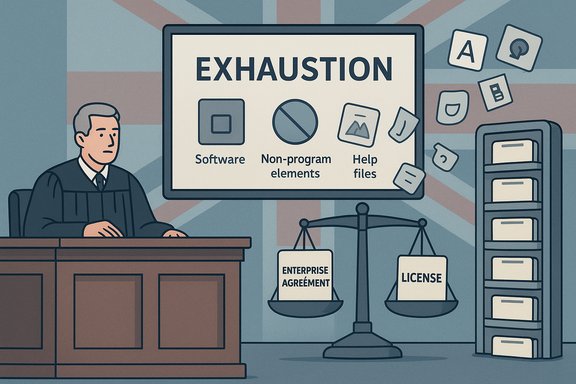
- Does the EU/UK legal doctrine of exhaustion permit the subdivision and resale of individual licences originally acquired in bulk under Microsoft’s Enterprise Agreements?
- Do non‑program elements bundled with Office and Windows (icons, fonts, clip art, help files, user manuals) change the copyright analysis so as to prevent licence resale?
Overview of the legal framework
The exhaustion doctrine and UsedSoft
European law recognises a principle commonly called the exhaustion doctrine: once a copyright holder has authorised the distribution of a copy of a copyrighted work in the EU/EEA by selling it (or authorising its download in return for adequate remuneration), the right to control further distribution of that particular copy is exhausted. For software this rule is embodied in the Software Directive (Directive 2009/24/EC). The European Court of Justice confirmed in the landmark UsedSoft decision (C‑128/11, 3 July 2012) that exhaustion applies to downloaded software licences: a purchaser who acquires a perpetual licence can resell it, provided the seller makes their own copy unusable.UsedSoft did, however, place limits on resale: in some factual settings the court suggested resale should not allow the original purchaser to continue using the same licence while selling part of the rights away (the classic “carving up” problem). That tension — between the principle of exhaustion and the practicalities of multi‑seat/volume licences — is central to the ValueLicensing v Microsoft dispute.
Enterprise Agreements and volume licences
Large organisations commonly licence Microsoft software under Enterprise Agreements or other volume licensing arrangements. These contracts often allocate seats or device rights in blocks and include a complex matrix of entitlements, updates and support. Microsoft has argued that those agreements create a single, unitary multi‑user licence that cannot lawfully be subdivided and resold in parts; ValueLicensing and the Tribunal concluded otherwise in the preliminary ruling.What the Tribunal decided
The Tribunal reached two decisive conclusions on the preliminary issues it was asked to decide:- Subdivision and resale allowed: The Tribunal held that licences acquired under Microsoft Enterprise Agreements create multiple individual licences rather than a single indivisible multi‑user licence. In practical terms, that means a first acquirer who purchased a bulk allocation may subdivide those allocations and resell individual licences without infringing Microsoft’s distribution or reproduction rights.
- Non‑program elements do not block exhaustion: Microsoft had argued that Office and Windows contain copyrighted non‑program elements (icons, fonts, clip art, help/resource files) such that the Software Directive’s exhaustion rule would not apply. The Tribunal rejected that contention, concluding buyers purchase Microsoft products primarily as computer programs, and that the presence of ancillary creative elements does not remove the products from the exhaustion regime.
Why this matters: practical and market implications
For resellers and the secondary market
This judgment fortifies the legal underpinning of the second‑hand software market in the UK and — to the extent EU law and earlier ECJ precedent are mirrored in legal analysis — across Europe. For resellers that have built businesses buying redundant perpetual licences and reselling them at discounts, the ruling:- Restores legal certainty that perpetual licences can be traded under exhaustion principles.
- Weakens the efficacy of contractual clauses designed to discourage resale (for example, offers to trade in licences for cloud credit), at least where the resale involves perpetual licences first placed on the market.
- Increases the likelihood that pre‑owned licences will remain a price‑competitive option for organisations wanting to avoid subscription cost inflation.
For enterprise customers and procurement
Public sector bodies and private organisations that historically relied on pre‑owned licences as a cost control measure should take this ruling seriously. Procurement and IT asset managers now have clearer legal footing to resist pressure to surrender perpetual licences in exchange for subscription discounts — but practical obstacles remain:- Provenance and documentation are vital. Organisations buying or selling second‑hand licences must ensure rigorous audit trails and seller confirmations that previous copies have been removed from use.
- Licence audits remain a compliance risk if documentation is weak. Reselling customers must be able to demonstrate that transferred licences were fully decommissioned.
For Microsoft and the subscription model
Microsoft’s business has shifted aggressively toward cloud and subscription offerings (Microsoft 365, Azure). The judgment does not overturn Microsoft’s right to sell subscriptions or design products for cloud deployment, but it curtails one route by which the company might use contractual pricing incentives to suppress the second‑hand market.The decision therefore represents a legal headwind to any strategy that relies on making second‑hand perpetual licences commercially unavailable by contract alone. That could have long‑term ramifications for pricing dynamics, particularly for organisations that still require—or prefer—on‑premises perpetual licences.
Legal analysis: strengths and weaknesses of the Tribunal’s reasoning
Strengths
- Consistent application of exhaustion law: The Tribunal’s reasoning follows the established logical arc of the UsedSoft decision and Article 4(2) of the Software Directive. By treating the first sale/downloading scenario as triggering exhaustion, it avoids a doctrinal rift that would have allowed rightsholders to contract around EU exhaustion rules.
- Practical approach to licence structure: The Tribunal focused on the substance of how licences are used and deployed rather than elevating Microsoft’s contractual drafting into dispositive legal effect. This prevents technical drafting from displacing the real economic rights that buyers obtain.
- Clear limit on the copyright gambit: Microsoft’s attempt to recast Office and Windows as collections of artistic works (thereby invoking a different EU directive) was rejected on the ground that buyers acquire the products as software programs. That preserves the coherence of the Software Directive’s exhaustion scheme.
Risks, gaps and potential vulnerabilities
- Preliminary nature of the ruling: The Tribunal decided preliminary issues only. The larger damages case — including factual questions about whether Microsoft’s commercial practices actually caused the claimed £270 million loss to ValueLicensing — remains to be litigated. The ruling answers threshold legal questions but does not determine damages or liability under competition law.
- Potential for narrow factual distinctions on appeal: Microsoft can and will appeal. Appellate courts may differ on fine factual or legal distinctions: for example, whether particular Enterprise Agreement terms create an indivisible licence in specific contexts, or whether the exhaustion rule should apply more narrowly when multiple kinds of copyrighted works are bundled.
- Market‑specific limits: The ruling’s practical effect may vary by jurisdiction. The exhaustion doctrine and UsedSoft are EU‑rooted; countries outside the EU/EEA apply different rules. The UK decision interprets those EU precedents in the UK context, but global implications depend on local law and contractual enforceability.
The Microsoft position and grounds for appeal
Microsoft has publicly stated it disagrees with the Tribunal’s decision and intends to appeal. The company’s arguments on appeal will likely include:- Doctrinal scope of exhaustion: Microsoft may press for a narrower interpretation of exhaustion when licences are embodied in multi‑user volume agreements or when the software includes diverse copyright materials.
- Contractual autonomy and commercial design: Microsoft will argue that sophisticated commercial contracts reflect legitimate business choices meant to preserve product integrity, manage support obligations, and govern transferability — and that courts should respect those commercial arrangements within reason.
- Policy and consumer protection arguments: Microsoft may warn of the fraud and consumer‑protection risks posed by a broad second‑hand market for licences (cheap, possibly invalid keys, scams), arguing for sensible restrictions or safeguards even if resale is permitted in principle.
Wider litigation context: class actions and follow‑on claims
This judgment does not occur in isolation. Separate litigation and follow‑on claims have been advancing in the UK:- ValueLicensing’s claim for £270 million seeks damages flowing from alleged anti‑competitive conduct that reduced the supply of perpetual licences.
- An opt‑out class action has been filed by a proposed class representative (Alexander Wolfson) seeking potential multi‑billion pound damages on behalf of UK purchasers of specified Microsoft licences. That claim asserts similar theories about market foreclosure and restrictive licensing behaviour.
Caveat: the potential value of class claims (not only the £270m figure) is subject to litigation risk and depends on causation, allocation, limitation periods and class certification — all of which require further factual and legal proof.
Practical guidance for IT teams, procurement and resellers
For organisations that buy, sell or manage Microsoft licences, the Tribunal’s ruling underlines a few pragmatic steps to reduce compliance risk and preserve options:- Document transfers meticulously. When reselling perpetual licences, ensure signed transfer deeds, seller warranties, and explicit confirmation that the seller has removed or deactivated their copy from all machines.
- Maintain audit trails. Keep invoices, contracts, and evidence of decommissioning in case of vendor audits. A strong paper trail materially reduces audit exposure.
- Assess the value of perpetual licences strategically. Some enterprise customers may now be able to monetise redundant perpetual licences; assessment should include support and update entitlements, and any ongoing maintenance obligations.
- Be cautious with extremely cheap keys. Secondary market discounts can be attractive, but steeply discounted offers with weak provenance carry fraud, activation and compliance risks.
- Consult legal counsel for large transactions. High‑value transfers or bulk acquisitions should be reviewed by counsel experienced in software licensing and IP law, and should include checks on jurisdictional nuances.
Market consequences and industry reaction
The Tribunal’s ruling preserves an existing secondary market structure that offers value to budget‑constrained organisations, public bodies and educational institutions. Expect the following short‑ to medium‑term market reactions:- Resellers will likely feel emboldened to continue acquiring and selling pre‑owned perpetual licences, and some may scale up procurement activities where licence provenance is secure.
- Buyers may rediscover perpetual licences as a cost alternative to subscription services for specific use cases (locked‑down systems, compliance requirements, offline environments).
- Microsoft will likely double down on subscriptions and cloud functionality, emphasising the security, management and feature advantages of Microsoft 365 and Azure while continuing to defend its contractual positions through appeal.
- Regulators and auditors will pay attention. Public sector procurement rules, transparency demands, and audit practices may shift to ensure that second‑hand trades are compliant and well‑documented.
Editorial assessment: what’s truly at stake
This ruling is a legal and commercial inflection point more than a decisive end to litigation. It reaffirms the exhaustion doctrine in the UK context and protects a long‑standing commercial practice: trading perpetual software licences.Strengths of the outcome include preventing a doctrinal redefinition of exhaustion that would have allowed a dominant platform to extinguish the second‑hand market by clever drafting. On the other hand, the decision does not answer the most consequential remaining questions — whether Microsoft’s commercial conduct amounted to anticompetitive abuse and whether ValueLicensing’s alleged losses were caused by that conduct. Those questions require full evidentiary trials and careful economic analysis.
The real stakes extend beyond this single case. The outcome will influence how software vendors design licence terms, how public bodies negotiate migration incentives, and how the secondary market for digital goods evolves. It also poses a test of whether policymakers and courts will allow a vibrant resale market to coexist with subscription economies or whether commercial realities will push more customers into ongoing, vendor‑managed cloud services.
Conclusion
The Competition Appeal Tribunal’s ruling that perpetual Microsoft licences can be subdivided and resold — and that bundled non‑program elements in Office/Windows do not defeat exhaustion — is a significant procedural and doctrinal win for ValueLicensing and for the legal architecture that supports second‑hand software markets.For resellers and buyers, the decision restores a degree of legal predictability and commercial opportunity. For Microsoft, the ruling narrows one path by which it might control downstream commerce in perpetual licences, even as the company continues to push customers toward subscription services. The litigation is not over: Microsoft intends to appeal, and follow‑on damages and class claims will test the economic and factual heart of these disputes.
In practical terms, the judgment should encourage better documentation of licence transfers, prudent due diligence by buyers of pre‑owned licences, and careful commercial planning by organisations weighing perpetual versus subscription licensing. The secondary market has won a reprieve; the final shape of the law and the market will depend on appeals, further trials on damages and the strategic responses of vendors and purchasers alike.
Source: TechRadar Microsoft loses bid to ban license reselling as UK court gives it the thumbs up
