
Five years after it helped define a household formula for cozy-but-ambitious survival games, Valheim has received a surprise birthday update that mixes playful cosmetic content with a meaningful technical overhaul. Patch 0.221.10 — released by Iron Gate Studios to mark the game's fifth anniversary — adds new emotes, hairstyles, decorative garlands, a cheekily named new weapon type, and, crucially, an engine upgrade and performance optimizations that promise tangible improvements for players on lower-powered hardware such as the Steam Deck. Alongside the celebratory goodies, the studio reiterated that the long-awaited Deep North biome and the game's 1.0 milestone remain the primary focus for 2026, and also reminded players that Valheim is headed to PlayStation 5 this year with full crossplay support. This update is small in raw content but significant in implication: it signals both continued developer attention and a technical pivot that will affect players, modders, and the roadmap to the game's full release.
Valheim arrived in Early Access in February 2021 and quickly became one of the generation's breakout indie hits. With a modest development team and a distinctive take on progression—boss-driven gating, handcrafted biomes, and a community-friendly multiplayer model—the game reached enormous early traction, selling in the millions within weeks and peaking with half-a-million-plus concurrent Steam users during its initial surge. Over the next several years Iron Gate expanded Valheim through a steady cadence of biomes, weapons, armor, building systems, and gameplay refinements while keeping the game in Early Access until the final biome, Deep North, is ready to push it to 1.0.
The five-year anniversary update arrives at a moment when the player base remains active and the public-facing roadmap has narrowed: Deep North is known to be the last major piece preventing the game's full launch. Iron Gate's latest notes make it clear that 2026 is intended to be a busy year for Valheim, with console expansion (PlayStation 5) and the final content push on the horizon. For many players, then, this birthday patch is both a celebration and a technical bridge toward the game's next phase.
Key highlights:
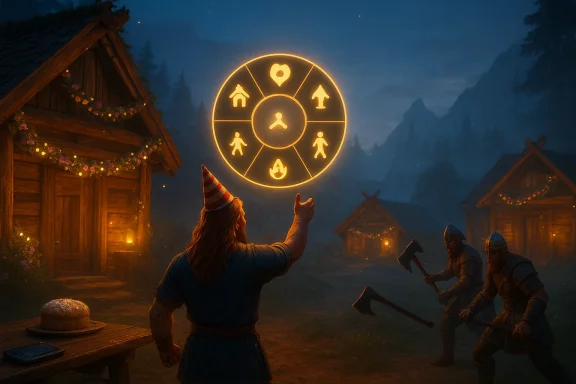
The garlands, emotes, and hairstyles are straightforward quality-of-life and community-first features. Players who enjoy base decorating or creative roleplay now have more tools to personalize settlements, and the radial emote wheel reduces input friction for expressive play in co-op sessions and streams.
Practically, the engine update enables:
Why this is significant:
Practical implications:
Meanwhile, Valheim is confirmed to be coming to PlayStation 5 in 2026, with the studio promising full crossplay across PlayStation, Xbox, and Windows PC platforms. That port is being handled with external support, freeing Iron Gate to focus on Deep North and 1.0.
What this means for players:
For the player base and modding community, the immediate weeks after this patch will be a test of resilience. Mod authors will be busy, servers may run older builds for a time, and some regression reports will inevitably surface. But if the engine upgrade delivers on its promises, the short-term friction may be worth the long-term payoff: a more stable, performant Valheim capable of supporting Deep North, full 1.0 launch expectations, and multi-platform parity — including PlayStation 5 crossplay — later in 2026.
Source: Windows Central https://www.windowscentral.com/gami...pdate-with-the-devs-teasing-more-coming-soon/
 Background
Valheim arrived in Early Access in February 2021 and quickly became one of the generation's breakout indie hits. With a modest development team and a distinctive take on progression—boss-driven gating, handcrafted biomes, and a community-friendly multiplayer model—the game reached enormous early traction, selling in the millions within weeks and peaking with half-a-million-plus concurrent Steam users during its initial surge. Over the next several years Iron Gate expanded Valheim through a steady cadence of biomes, weapons, armor, building systems, and gameplay refinements while keeping the game in Early Access until the final biome, Deep North, is ready to push it to 1.0.The five-year anniversary update arrives at a moment when the player base remains active and the public-facing roadmap has narrowed: Deep North is known to be the last major piece preventing the game's full launch. Iron Gate's latest notes make it clear that 2026 is intended to be a busy year for Valheim, with console expansion (PlayStation 5) and the final content push on the horizon. For many players, then, this birthday patch is both a celebration and a technical bridge toward the game's next phase.
What’s in Patch 0.221.10: A concise inventory of changes
The update mixes cosmetic flourishes with practical engineering work. The most visible additions are lighter, social features meant for players to enjoy immediately; underneath, however, are reworked graphics presets and a Unity engine upgrade that affect performance and compatibility.Key highlights:
- New cosmetic items and emotes: A celebratory hat, three new hairstyles (Champion, Chronicler, Sunbringer), and a pair of new emotes — Vibe and LoveYou — plus a radial emote menu to use them quickly.
- Decorative buildpieces: Two new garlands — a Flower Garland and Fey Lights — which expand options for base decoration and roleplay.
- Consumable: Frosted Sweetbread, a new food item that adds a small fun touch to adventuring and server celebrations.
- New weapon class: Early Axes, a dual-wielded axe set built around new axe-head materials. The name is a playful nod to the game's Early Access origins.
- Quality-of-life: Radial emote menu integration, tweaks to multiple hairstyles and armor balance adjustments.
- Technical: Engine upgrade to Unity 6000.0.61f1, reworked graphics presets and upscaling options, more precise frame rate limiter behavior, and a suite of optimizations targeted at CPU, memory use, and busy instancing scenarios.
Early Axes and the “fun” features
The Early Axes are the patch's most playful mechanical addition. They appear intended for aggressive, berserker-style play thanks to their dual-wield orientation and the way they’re crafted from the two new axe-head materials (Mysterious Axe Head and Curious Axe Head). While not a content-shaking combat overhaul, the axes add another weapon archetype and encourage new build/craft experimentation.The garlands, emotes, and hairstyles are straightforward quality-of-life and community-first features. Players who enjoy base decorating or creative roleplay now have more tools to personalize settlements, and the radial emote wheel reduces input friction for expressive play in co-op sessions and streams.
The technical heart of the update: Unity upgrade and graphics rework
The most consequential portion of the patch is the engine and graphics-system work. Iron Gate upgraded Valheim's runtime to Unity 6000.0.61f1, and the patch reorganized and tightened graphics presets with these headline changes:- Replaced the old "render scale" slider with a 3D resolution limit dropdown of fixed resolution targets to make performance targeting more predictable.
- Added a new Upscaling method including a "Pixelated" option for stylistic or low-impact scaling.
- Created a "Low" SSAO quality option that resembles the previous SSAO look at much reduced cost.
- Made the frame rate limiter usable alongside V-Sync and applied it even during splash/loading screens to prevent runaway GPU use at menus.
- Optimized engine behavior in instance-heavy scenes, reduced CPU load from armor stands, and stopped certain texture copies when they are unused to save GPU work.
- Reduced memory usage of the in-game minimap and ensured platform presets load only what’s necessary.
Why the engine upgrade matters
Upgrading a live-game engine is always a technical gamble: it can fix long-standing issues, unlock performance and feature gains, and simplify future development, but it can also break third-party integrations and reveal previously hidden regressions. In this case the upgrade appears to be targeted: the devs focused on audio latency, instance-heavy areas, and rendering-path inefficiencies — all known pain points for Valheim servers and modded setups.Practically, the engine update enables:
- Better performance on constrained devices (see Steam Deck section below).
- A more predictable graphical scaling model for PCs and consoles.
- A cleaner base for future features that may rely on newer engine subsystems.
Steam Deck and low-power improvements: the 60 FPS step
One of the most talked-about outcomes of this patch is improved Steam Deck behavior. The update reworked graphics presets for the Deck so that Performance Mode can now reach 60 FPS, and preset defaults have been optimized to better balance battery life. The game also now uses the Steam Deck’s native resolution on first start rather than defaulting to the older 1366×768 fallback.Why this is significant:
- Valheim was already Steam Deck Verified, but reaching a stable 60 FPS mode improves the handheld experience dramatically, especially in scenes where frame drops discouraged play.
- Optimized battery presets mean longer sessions between recharges, a practical win for players using handheld mode.
- The native-resolution start reduces initial blurriness and ensures the first-run experience feels better on Valve's hardware.
Modding and compatibility: risk, disruption, and how to prepare
The elephant in the room with any engine update is mod compatibility. Valheim has a robust modding scene—large-scale mods add inventory row expansions, QoL menus, server utilities, and visual enhancements that many communities rely on. Historical precedent in Valheim and comparable Unity-updated titles shows mod breakage is common and sometimes immediate.Practical implications:
- Expect some mods to stop working until their authors update them for the new Unity runtime.
- Some modders will release hotfixes quickly; others may take longer due to the complexity of re-targeting or rebuilding dependencies.
- Server operators running modded worlds should be cautious: opening a modded save in vanilla can result in desynced or lost inventory elements if mods changed the save structure.
- Pause automatic updates on any modded server. Use the Steam library "Betas" or similar mechanisms to stick to a known-good build until mods are updated.
- Backup saves and server files before launching the patched game or applying engine changes to a server.
- Monitor mod repositories and developer communications for "compatible" builds. Many major mod authors post immediate guidance and temporary workarounds.
- If you rely on a mod that changes core save data (inventory rows, storage expansions), consider holding off on the update until confirmed compatibility is available.
Deep North, version 1.0, and the PlayStation release: what to expect this year
Iron Gate used the anniversary message to reiterate that Deep North remains the final biome required to push Valheim out of Early Access and into version 1.0. The studio's language was deliberately cautious: there are no firm release dates attached yet, but the message conveyed confidence that 2026 will be a big year for the title.Meanwhile, Valheim is confirmed to be coming to PlayStation 5 in 2026, with the studio promising full crossplay across PlayStation, Xbox, and Windows PC platforms. That port is being handled with external support, freeing Iron Gate to focus on Deep North and 1.0.
What this means for players:
- A PS5 release will expand the player base and should be crossplay-enabled at launch, letting friends on different ecosystems share worlds.
- Because Sony does not allow Early Access on PlayStation platforms, the PS5 release suggests that Iron Gate expects to reach 1.0 in a window compatible with both the console launch and the final biome rollout. However, no specific ship date has been announced for either Deep North or 1.0.
- The PlayStation port will likely introduce new QA demands (certification, platform-specific QA), and Iron Gate's decision to outsource the port suggests the studio is trying to manage scope without derailing core development.
Critical analysis: strengths, trade-offs, and what to watch
Strengths- Tangible engineering wins. Upgrading Unity and tightening graphics presets is a durable investment that should smooth future development, enable better platform parity, and reduce some of the classic performance headaches Valheim has struggled with.
- Better handheld support. The Steam Deck improvements are a real quality-of-life win and show that Iron Gate is taking platform-specific performance seriously.
- Community-first content. The emotes, garlands, and cosmetic additions reinforce the social and creative strengths of Valheim, keeping player engagement high without forcing anyone to grind for new progression systems.
- Mod breakage is likely and immediate. Many servers and long-running communities depend on mods; the Unity upgrade risks fragmenting playgroups and causing short-term pain.
- Potential regression. Large engine jumps can introduce regressions that were previously masked; keep an eye on areas with lots of instances or heavy audio mixes.
- Expectation management for 1.0. The studio's note that "2026 will be a great year" is encouraging, but it is not a firm launch date. Community expectations will need managing to avoid disappointment if Deep North slips.
- Modder response timeline. How quickly major community mods (inventory/QoL, server tools, UI mods) return will shape the early reception of the patch.
- Bug reports and hotfix cadence. The first few weeks after an engine upgrade often reveal the unexpected; the frequency and thoroughness of follow-up patches are strong signals of how well the devs can manage complexity.
- Deep North updates. Iron Gate's roadmap communications about Deep North's milestones will determine whether the company is on track for a 1.0 release this year.
Practical advice for players today
If you play Valheim casually or on a vanilla server:- Install the patch and enjoy the new cosmetic options and Steam Deck improvements immediately.
- Try the radial emote wheel and new garlands as low-friction ways to refresh your bases and social sessions.
- Pause automatic updates for servers and clients until mods you rely on are confirmed compatible.
- Backup your world and server files before applying the patch or testing the updated client.
- Follow the developers of the mods you use for compatibility notices; many will publish updates or migration guides within days.
- Now is a smart time to revisit Valheim: the game is more optimized than it was for earlier patches, and the content added over the past years has deepened progression and base-building options significantly.
- If you want PS5 crossplay at launch, watch for further announcements about that build’s feature parity and control changes.
Looking forward: the road to 1.0
This fifth-anniversary patch is less about adding a new biome and more about clearing technical ground for what comes next. The Unity upgrade and improved presets are foundational; they should make it easier for Iron Gate to deliver more ambitious, content-heavy updates without repeating past performance pitfalls. At the same time, the studio's continued emphasis on community features—emotes, cosmetics, and small QoL touches—shows a dual-pronged approach: keep the community engaged in the short term, and strengthen the technical base for the long term.For the player base and modding community, the immediate weeks after this patch will be a test of resilience. Mod authors will be busy, servers may run older builds for a time, and some regression reports will inevitably surface. But if the engine upgrade delivers on its promises, the short-term friction may be worth the long-term payoff: a more stable, performant Valheim capable of supporting Deep North, full 1.0 launch expectations, and multi-platform parity — including PlayStation 5 crossplay — later in 2026.
Conclusion
Patch 0.221.10 is a succinct, smartly balanced celebration: it gifts the community new emotes, hairstyles, and decorative trinkets while quietly executing an important technical upgrade that should pay dividends as Valheim moves toward its final biome and full launch. The Steam Deck-specific improvements make the game more accessible to handheld players today, while the Unity update and preset rework set a firmer foundation for the ambitious content still to come. The trade-off, as always, will be short-term inconvenience for modded communities. If you rely on mods, back up your saves and wait for compatibility updates; if you play vanilla or via official servers, this patch is mostly a win — and a reason to revisit the tenth realm before the Deep North redefines what 1.0 will mean for this still-beloved Viking sandbox.Source: Windows Central https://www.windowscentral.com/gami...pdate-with-the-devs-teasing-more-coming-soon/
