

The VPS hosting market in 2026 is no longer just a cheap upgrade path from shared hosting; it has become the practical middle ground for sites that need more control, more isolation, and more predictable performance without jumping straight to dedicated infrastructure. That is the core message behind PCMag Australia’s latest VPS roundup, which frames VPS hosting as a stability play as much as a speed play. It also reflects a broader shift in buyer expectations: people now want hosting that is not only fast, but also auditable, scalable, and easier to manage under real-world pressure.
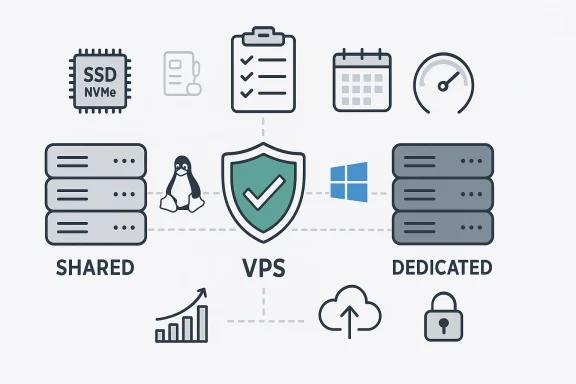
VPS, or virtual private server hosting, sits between shared hosting and dedicated servers. Instead of sharing one operating system and resource pool with dozens or hundreds of unrelated sites, your site gets its own partitioned environment with allocated storage, RAM, CPU, and transfer limits. That structure gives you a much more stable baseline than shared hosting, where a noisy neighbor can slow down or destabilize the whole box.
The appeal is simple: VPS is often the first hosting tier where a growing site feels like it has room to breathe. For businesses that have outgrown bargain shared plans, it offers more predictable response times, better isolation, and a clearer path to scale. For developers, it also opens the door to more server-level customization than standard consumer-grade hosting typically allows.
What makes the 2026 conversation different is that hosting is being evaluated less like a utility and more like an operating decision. Buyers are not just asking whether a site can stay online; they are asking whether their provider can support compliance expectations, remote work, backup discipline, and business continuity. That is especially visible in the way modern VPS and adjacent managed hosting categories are being marketed around documentation, service guarantees, and support quality.
PCMag’s guidance also reinforces a point many buyers overlook: the cheapest plan is rarely the best plan if it cannot scale when traffic, storage, or support needs increase. That is why the article emphasizes practical selection criteria such as RAM, SSD storage, email limits, SSL availability, and refund windows, rather than treating VPS as a simple commodity. The hidden message is that hosting quality is no longer just about raw specs. It is about how well those specs hold up under strain.
The practical significance is that VPS can give you better uptime behavior, greater configuration freedom, and more consistent site performance than shared hosting. If your site is sensitive to page-load delays, database activity, or bursts of concurrent visitors, those isolated resources can make a noticeable difference. For businesses, that often translates directly into fewer abandoned carts, fewer support complaints, and fewer headaches during peak traffic periods.
That does not mean every VPS plan is automatically fast or secure. The actual experience depends on the host’s architecture, storage type, resource allocation, and support model. The best providers make those boundaries clear; weaker ones hide behind generic promises and vague “unlimited” language that can be more marketing than engineering.
A good way to think about VPS is that it buys you control with guardrails. You get more room to tune the server, but you still lean on the provider for the physical layer, core infrastructure, and in many cases backup or maintenance support. That balance is why VPS is so attractive to small businesses, agencies, and power users who want more than shared hosting but less operational burden than a full dedicated box.
The cost spread is driven by resource size and management level. More RAM, more CPU, more storage, and more generous transfer allowances all push the price upward. Managed support also adds cost, because you are paying for provider labor, patching, monitoring, and operational convenience rather than just raw compute.
This matters even more for business sites where downtime has direct financial consequences. A plan that saves a few dollars today can become expensive if it forces a migration later or cannot handle demand spikes cleanly. The most rational buyers are increasingly comparing total cost of ownership, not just monthly billing.
That split is more than a pricing issue; it is a workload issue. Linux tends to be the better fit for websites, apps, and services that prioritize efficiency and broad compatibility. Windows becomes the right answer when the application stack itself is rooted in Microsoft tools or when teams need a familiar Windows server environment for operational reasons.
The tradeoff is that Windows hosting is usually costlier and narrower in the provider market. PCMag’s guidance points readers toward vendors such as Ionos and Liquid Web for business-oriented Windows plans, which underscores how much the market still associates Windows VPS with professional or specialized use cases.
Managed hosting is not just a convenience feature; it is a risk-management decision. If your team lacks server administration skills, unmanaged hosting can quickly become a source of avoidable outages, security gaps, and time loss. Conversely, if you have strong internal expertise and want full control, unmanaged can save money and offer more flexibility.
The uploaded PCMag material points to Hostinger and Liquid Web as examples of providers that offer high-quality managed VPS plans. That aligns with the broader trend in hosting: more buyers are willing to pay a premium for a host that behaves like an operations partner instead of a bare-metal landlord.
Support and transparency matter as much as raw horsepower. A host can advertise impressive infrastructure and still deliver a frustrating experience if support is slow, poorly trained, or unwilling to explain limitations. The strongest hosts make their service boundaries clear before a customer signs up. That is why refund windows, resource caps, and email policies deserve close attention.
For many sites, SSD is the better default in 2026. Faster disk access can improve database response, page rendering, and file operations in a way users immediately notice. HDD still has a place for lower-cost or archival-heavy use cases, but it is harder to argue for when site responsiveness is a priority.
Email also deserves more attention than it usually gets. PCMag notes that some hosts offer unlimited accounts but cap storage per mailbox, which can create confusion for growing teams. That is why buyers should ask not only how many accounts they can create, but also how much storage each account actually gets and whether mailbox limits are documented clearly.
PCMag’s framing suggests that buyers should not treat a “99.9% uptime” claim as a guarantee without context. The real question is whether the host has a recent track record that supports the promise, and whether it has the engineering discipline to recover quickly from faults. A slightly more expensive host with better reliability can be the lower-risk purchase in the long run.
This is where VPS often beats cheap shared hosting even when the advertised uptime looks similar. The more isolated environment can reduce cross-customer interference and make it easier for the provider to diagnose problems quickly. For businesses, that difference can be the gap between an inconvenience and a missed sale.
Hostwinds is highlighted as PCMag’s Editors’ Choice in the VPS category, which suggests a strong blend of value, flexibility, and feature coverage. Meanwhile, providers like Hostinger and Liquid Web are framed as attractive managed options, while vendors such as Ionos are singled out for Windows-oriented use cases. That diversity is a sign of a mature market, not a messy one.
That specialization also changes how buyers should compare services. Instead of asking which brand is universally “best,” they should ask which provider is best for their OS, support appetite, and growth trajectory. In other words, the market is maturing from a race of generic feature checklists into a matching exercise.
Small businesses gain even more from VPS because performance and reliability become part of the brand experience. A slow site can erode trust quickly, and a site outage can damage revenue as well as reputation. VPS helps reduce those risks by giving the business more control over the environment it depends on every day.
That is why the best small-business strategy is to choose the simplest plan that still leaves growth room. Buyers should favor clarity over cleverness, especially when the provider uses vague “unlimited” promises or hides add-ons in the checkout flow. Predictability is often more valuable than the cheapest possible monthly bill.
Enterprise buyers usually care more about support quality, documentation, and service-level clarity than about the bottom-line sticker price. They also tend to scrutinize backup, disaster recovery, and security practices more aggressively because they have compliance obligations, internal audits, or external reporting requirements. VPS can fit well here, but only when the host behaves like a serious infrastructure partner.
The strongest enterprise takeaway is that managed services are often worth the premium. When a provider handles patching, monitoring, and operational support, internal teams can spend less time on routine maintenance and more time on business outcomes. That is a much better use of engineering and IT effort than constantly babysitting commodity infrastructure.
The broader trend is that hosting is becoming more outcome-driven. Buyers want faster sites, fewer incidents, easier administration, and fewer surprises when the bill arrives. VPS is well positioned to serve that demand because it sits in the sweet spot between affordability and control, provided the buyer knows what to ask for and the host knows how to deliver it.
Source: au.pcmag.com The Best VPS Web Hosting Services for 2026
 Overview
VPS, or virtual private server hosting, sits between shared hosting and dedicated servers. Instead of sharing one operating system and resource pool with dozens or hundreds of unrelated sites, your site gets its own partitioned environment with allocated storage, RAM, CPU, and transfer limits. That structure gives you a much more stable baseline than shared hosting, where a noisy neighbor can slow down or destabilize the whole box.The appeal is simple: VPS is often the first hosting tier where a growing site feels like it has room to breathe. For businesses that have outgrown bargain shared plans, it offers more predictable response times, better isolation, and a clearer path to scale. For developers, it also opens the door to more server-level customization than standard consumer-grade hosting typically allows.
What makes the 2026 conversation different is that hosting is being evaluated less like a utility and more like an operating decision. Buyers are not just asking whether a site can stay online; they are asking whether their provider can support compliance expectations, remote work, backup discipline, and business continuity. That is especially visible in the way modern VPS and adjacent managed hosting categories are being marketed around documentation, service guarantees, and support quality.
PCMag’s guidance also reinforces a point many buyers overlook: the cheapest plan is rarely the best plan if it cannot scale when traffic, storage, or support needs increase. That is why the article emphasizes practical selection criteria such as RAM, SSD storage, email limits, SSL availability, and refund windows, rather than treating VPS as a simple commodity. The hidden message is that hosting quality is no longer just about raw specs. It is about how well those specs hold up under strain.
What VPS Hosting Actually Is
At its core, VPS hosting uses virtualization to carve one physical server into multiple isolated environments. Each tenant gets a slice of resources and a separate operating context, so problems on one VPS are much less likely to spill over into another. That is a major reason VPS has become a common stepping stone for sites that need more control but are not ready for the cost and complexity of dedicated hardware.The practical significance is that VPS can give you better uptime behavior, greater configuration freedom, and more consistent site performance than shared hosting. If your site is sensitive to page-load delays, database activity, or bursts of concurrent visitors, those isolated resources can make a noticeable difference. For businesses, that often translates directly into fewer abandoned carts, fewer support complaints, and fewer headaches during peak traffic periods.
Why isolation matters
Isolation is what distinguishes VPS from lower-cost shared plans. With shared hosting, your site is part of a communal environment where resource contention can be hard to predict and impossible to control. With VPS, the hosting provider still manages the underlying hardware, but your environment behaves much more like a small private server.That does not mean every VPS plan is automatically fast or secure. The actual experience depends on the host’s architecture, storage type, resource allocation, and support model. The best providers make those boundaries clear; weaker ones hide behind generic promises and vague “unlimited” language that can be more marketing than engineering.
A good way to think about VPS is that it buys you control with guardrails. You get more room to tune the server, but you still lean on the provider for the physical layer, core infrastructure, and in many cases backup or maintenance support. That balance is why VPS is so attractive to small businesses, agencies, and power users who want more than shared hosting but less operational burden than a full dedicated box.
How VPS Pricing Works
PCMag’s pricing guidance places typical VPS plans in the $20 to $100 per month range, which remains a useful benchmark for 2026 buyers. That pricing is higher than shared hosting, but still far below the cost of a dedicated server. The gap makes sense because VPS offers more resources, better isolation, and more control than shared hosting, while remaining far easier to budget for than dedicated infrastructure.The cost spread is driven by resource size and management level. More RAM, more CPU, more storage, and more generous transfer allowances all push the price upward. Managed support also adds cost, because you are paying for provider labor, patching, monitoring, and operational convenience rather than just raw compute.
Why “cheap” is rarely the real price
A low monthly sticker price can be misleading if the plan excludes backups, migration help, email hosting, or scaling headroom. That is why the article warns buyers to read the fine print around features labeled “unlimited,” since those claims often carry usage caveats. In practice, the better question is not “What is the cheapest plan?” but “What will this actually cost once the site grows?”This matters even more for business sites where downtime has direct financial consequences. A plan that saves a few dollars today can become expensive if it forces a migration later or cannot handle demand spikes cleanly. The most rational buyers are increasingly comparing total cost of ownership, not just monthly billing.
Linux vs Windows VPS
One of the biggest decisions in VPS hosting is the operating system. Linux VPS remains the default choice for most buyers because it is typically cheaper, flexible, and broadly supported across the web hosting industry. Windows VPS costs more, but it is the better fit for workloads that depend on Microsoft-specific technologies like ASP.NET or SQL Server.That split is more than a pricing issue; it is a workload issue. Linux tends to be the better fit for websites, apps, and services that prioritize efficiency and broad compatibility. Windows becomes the right answer when the application stack itself is rooted in Microsoft tools or when teams need a familiar Windows server environment for operational reasons.
When Windows is worth the premium
Windows VPS becomes especially compelling when the software environment is already Microsoft-centric. That may include legacy business applications, .NET-based web apps, or internal tools that are easier to run in a Windows Server context. For those buyers, paying a little more for the right OS can be cheaper than forcing the wrong stack into service.The tradeoff is that Windows hosting is usually costlier and narrower in the provider market. PCMag’s guidance points readers toward vendors such as Ionos and Liquid Web for business-oriented Windows plans, which underscores how much the market still associates Windows VPS with professional or specialized use cases.
Managed vs Unmanaged VPS
The managed versus unmanaged distinction is one of the most important buying decisions in hosting, yet many customers still underestimate it. With unmanaged VPS, the customer is responsible for maintenance, patching, security hardening, and most troubleshooting. With managed VPS, the provider takes on much of that burden, which can dramatically reduce the technical overhead on the customer side.Managed hosting is not just a convenience feature; it is a risk-management decision. If your team lacks server administration skills, unmanaged hosting can quickly become a source of avoidable outages, security gaps, and time loss. Conversely, if you have strong internal expertise and want full control, unmanaged can save money and offer more flexibility.
The operational tradeoff
Managed VPS generally costs more because the provider is doing more work. That extra spend buys support, maintenance, and a more polished experience, but it also reduces freedom to tweak every detail. For some users, that tradeoff is ideal; for others, it feels restrictive. The right answer depends on whether your priority is control or convenience.The uploaded PCMag material points to Hostinger and Liquid Web as examples of providers that offer high-quality managed VPS plans. That aligns with the broader trend in hosting: more buyers are willing to pay a premium for a host that behaves like an operations partner instead of a bare-metal landlord.
How to Evaluate a VPS Host
The best VPS host is not necessarily the one with the biggest headline specs. It is the one whose resources, support model, and policy details best match your workload. PCMag’s guidance emphasizes practical minimums like 4GB of RAM, 100GB of storage, and a meaningful transfer allowance for a reliable base configuration. Those numbers are useful because they help buyers avoid underpowered plans that look cheap but fail under real load.Support and transparency matter as much as raw horsepower. A host can advertise impressive infrastructure and still deliver a frustrating experience if support is slow, poorly trained, or unwilling to explain limitations. The strongest hosts make their service boundaries clear before a customer signs up. That is why refund windows, resource caps, and email policies deserve close attention.
A practical buying checklist
Before choosing a VPS host, buyers should compare the following in sequence:- Operating system compatibility with your software stack.
- Resource allocation for RAM, CPU, and storage.
- Managed or unmanaged support expectations.
- Email, backup, and SSL inclusions.
- Refund terms and contract flexibility.
Storage, SSL, and Email Still Matter
It is easy to focus on CPU and RAM and forget the quieter details that make or break a hosting environment. Storage type, email capacity, and SSL availability all have real-world consequences. PCMag’s overview reminds readers that traditional HDDs may offer more capacity for less money, while SSD storage delivers better speed and reliability at a higher cost.For many sites, SSD is the better default in 2026. Faster disk access can improve database response, page rendering, and file operations in a way users immediately notice. HDD still has a place for lower-cost or archival-heavy use cases, but it is harder to argue for when site responsiveness is a priority.
SSL and trust signals
If your website sells products or services, SSL is no longer optional. It protects data in transit and reassures customers that the connection is encrypted. Some hosts bundle SSL at no extra charge, while others still treat it as an add-on, which can add surprising cost to an otherwise attractive plan.Email also deserves more attention than it usually gets. PCMag notes that some hosts offer unlimited accounts but cap storage per mailbox, which can create confusion for growing teams. That is why buyers should ask not only how many accounts they can create, but also how much storage each account actually gets and whether mailbox limits are documented clearly.
Reliability and Uptime Expectations
VPS buyers often pay for isolation because they want more predictable uptime. That does not mean every host delivers the same quality of service, however. The most credible providers explain their uptime claims, maintenance practices, and support processes instead of relying only on vague marketing language.PCMag’s framing suggests that buyers should not treat a “99.9% uptime” claim as a guarantee without context. The real question is whether the host has a recent track record that supports the promise, and whether it has the engineering discipline to recover quickly from faults. A slightly more expensive host with better reliability can be the lower-risk purchase in the long run.
What uptime really means
Uptime is not just a number; it is a reflection of architecture, operations, and support. Redundancy, monitoring, patching discipline, and incident response all shape the actual outcome. If a provider cannot explain how it handles outages, its uptime promise is only as strong as the brochure it is printed on.This is where VPS often beats cheap shared hosting even when the advertised uptime looks similar. The more isolated environment can reduce cross-customer interference and make it easier for the provider to diagnose problems quickly. For businesses, that difference can be the gap between an inconvenience and a missed sale.
The Competitive Landscape in 2026
The VPS market is increasingly fragmented into three camps: budget hosts, managed specialists, and providers with broader cloud or IT service bundles. That matters because it means “best VPS host” is not a universal label anymore; it depends on whether the buyer wants simplicity, control, compliance, or all three. PCMag’s shortlist reflects exactly that split.Hostwinds is highlighted as PCMag’s Editors’ Choice in the VPS category, which suggests a strong blend of value, flexibility, and feature coverage. Meanwhile, providers like Hostinger and Liquid Web are framed as attractive managed options, while vendors such as Ionos are singled out for Windows-oriented use cases. That diversity is a sign of a mature market, not a messy one.
Why specialization now wins
Specialization is becoming more valuable because customer needs are diverging. A startup with a WordPress site, a developer hosting test environments, and a business running Microsoft-based workloads all need different things from the same broad category of service. The best vendors now compete by matching those niches more precisely rather than trying to be everything to everyone.That specialization also changes how buyers should compare services. Instead of asking which brand is universally “best,” they should ask which provider is best for their OS, support appetite, and growth trajectory. In other words, the market is maturing from a race of generic feature checklists into a matching exercise.
Consumer and Small Business Impact
For consumers and smaller sites, VPS often represents the point where hosting becomes serious without becoming cumbersome. A personal project, boutique store, or growing blog can benefit from the extra headroom and stability without needing a dedicated server budget. The appeal is especially strong for users who want to avoid the uncertainty of overcrowded shared hosting.Small businesses gain even more from VPS because performance and reliability become part of the brand experience. A slow site can erode trust quickly, and a site outage can damage revenue as well as reputation. VPS helps reduce those risks by giving the business more control over the environment it depends on every day.
Where small buyers should be careful
The danger for smaller buyers is overbuying complexity or underbuying resources. A bargain VPS plan with too little RAM or too little storage may look fine on paper but become frustrating after traffic grows. Likewise, an unmanaged plan can be a false economy if nobody on the team knows how to maintain it properly.That is why the best small-business strategy is to choose the simplest plan that still leaves growth room. Buyers should favor clarity over cleverness, especially when the provider uses vague “unlimited” promises or hides add-ons in the checkout flow. Predictability is often more valuable than the cheapest possible monthly bill.
Enterprise and Advanced User Impact
For enterprises and advanced users, VPS is less about convenience and more about control, segmentation, and policy alignment. Teams that need predictable infrastructure for web apps, staging environments, or specialized workloads often appreciate the ability to tune server behavior without the cost of dedicated hardware. The model also offers a stronger bridge between cloud flexibility and traditional server ownership.Enterprise buyers usually care more about support quality, documentation, and service-level clarity than about the bottom-line sticker price. They also tend to scrutinize backup, disaster recovery, and security practices more aggressively because they have compliance obligations, internal audits, or external reporting requirements. VPS can fit well here, but only when the host behaves like a serious infrastructure partner.
The hidden enterprise question
The real enterprise question is whether VPS is a temporary stopgap or a durable platform strategy. For some organizations, VPS is an excellent middle layer that supports growth and experimentation without forcing a move to dedicated or public cloud too early. For others, it becomes the stable long-term home for workloads that need more control than shared hosting can provide.The strongest enterprise takeaway is that managed services are often worth the premium. When a provider handles patching, monitoring, and operational support, internal teams can spend less time on routine maintenance and more time on business outcomes. That is a much better use of engineering and IT effort than constantly babysitting commodity infrastructure.
Strengths and Opportunities
The VPS category remains attractive because it offers a rare combination of affordability, control, and scalability. In a market where sites and apps increasingly need resilience without enterprise-level overhead, that balance is very hard to beat. The strongest providers are also improving their managed offerings, security posture, and transparency, which makes VPS easier to justify for both technical and nontechnical buyers.- Better isolation than shared hosting.
- Lower cost than dedicated servers.
- Useful scaling headroom for growing sites.
- More OS flexibility, especially for Linux and Windows choices.
- Managed options that reduce administration burden.
- Improved performance consistency for traffic-sensitive workloads.
- Strong fit for hybrid teams that need remote access and stability.
Risks and Concerns
VPS is not a magic fix, and it can create new problems when buyers overestimate the value of a cheap plan or underestimate the work involved. The biggest pitfalls are resource underprovisioning, unclear support boundaries, hidden fees, and choosing the wrong operating system for the workload. In other words, VPS can fail when it is selected like a commodity instead of an architecture decision.- Overhyped “unlimited” claims that have hidden limits.
- Underpowered plans that struggle under real traffic.
- Poor support quality when something breaks.
- Unmanaged setups that require more expertise than expected.
- Weak backup and recovery policies that leave gaps in continuity.
- OS mismatches, especially when Windows-specific software is needed.
- Add-on pricing for SSL, backups, or migration that inflates the final bill.
Looking Ahead
The VPS category is likely to keep evolving toward more managed, more transparent, and more workload-specific offerings. As buyers become more sophisticated, providers will need to compete not just on specs but on how well they explain limits, support, recovery, and compliance posture. That should be good news for customers, because the hosts that cannot answer difficult questions are the ones most likely to lose ground.The broader trend is that hosting is becoming more outcome-driven. Buyers want faster sites, fewer incidents, easier administration, and fewer surprises when the bill arrives. VPS is well positioned to serve that demand because it sits in the sweet spot between affordability and control, provided the buyer knows what to ask for and the host knows how to deliver it.
- Watch for more Windows VPS specialization for Microsoft-heavy workloads.
- Expect managed plans to keep gaining share over bare unmanaged offers.
- Look for security and compliance details to become standard buying criteria.
- Anticipate SSD/NVMe storage to become the practical baseline.
- Expect clearer differentiation between small-business VPS and enterprise VPS.
Source: au.pcmag.com The Best VPS Web Hosting Services for 2026


