

Microsoft's short, carefully worded reply to the surge of anger over Windows 11's AI roadmap does little to calm a wider, deeper distrust that's been building among developers, power users, and a growing contingent of everyday customers — and it noticeably sidesteps the single biggest complaint: Windows 11 increasingly feels like a vehicle for Microsoft services and promotions rather than a neutral, user-first operating system.
Over the last week a single phrase from Pavan Davuluri, Microsoft’s head of Windows and Devices, set off a wildfire of criticism online: “Windows is evolving into an agentic OS,” a comment meant to frame the company’s AI-first strategy but which instead crystallized user anxieties about automation, autonomy, and control. The post — tied to Microsoft’s Ignite messaging — attracted high volumes of negative replies, and Davuluri subsequently disabled replies on the original post before posting a follow-up reply addressing key categories of feedback such as reliability, performance, and the developer experience. That second post acknowledged concrete pain points — inconsistent dialogs, gaps in power-user workflows, and other “everyday usability” issues — with a promise that the Windows team is paying attention. But the tone, and the content of the response, left many unsatisfied. The reaction has been loud and sustained across major outlets and forums, making this less of a momentary social-media storm and more of a symptom of accumulated frustration with how Windows 11 is evolving.
Microsoft’s public response, while acknowledging important technical fixes, did not address the most pointed user complaint — that the OS has become a platform for Microsoft’s ecosystem rather than a platform for users. To rebuild confidence, Microsoft must match visionary AI messaging with humility in execution: make AI features opt-in and controllable, prioritize stability over novelty, and stop using marketing examples that highlight the technology’s current limits.
The next correct move is clear: restore trust by fixing the basics visibly and promptly, then reintroduce agentic features from a position of demonstrated reliability rather than aspiration. Only then will users be willing to let Windows act on their behalf.
Source: TechRadar https://www.techradar.com/computing...t-glosses-over-a-key-reason-for-all-the-hate/
 Background
Over the last week a single phrase from Pavan Davuluri, Microsoft’s head of Windows and Devices, set off a wildfire of criticism online: “Windows is evolving into an agentic OS,” a comment meant to frame the company’s AI-first strategy but which instead crystallized user anxieties about automation, autonomy, and control. The post — tied to Microsoft’s Ignite messaging — attracted high volumes of negative replies, and Davuluri subsequently disabled replies on the original post before posting a follow-up reply addressing key categories of feedback such as reliability, performance, and the developer experience. That second post acknowledged concrete pain points — inconsistent dialogs, gaps in power-user workflows, and other “everyday usability” issues — with a promise that the Windows team is paying attention. But the tone, and the content of the response, left many unsatisfied. The reaction has been loud and sustained across major outlets and forums, making this less of a momentary social-media storm and more of a symptom of accumulated frustration with how Windows 11 is evolving. Overview: what happened and why it matters
- Pavan Davuluri’s “agentic OS” phrasing became a lightning rod for users who already feel the platform is straying from its historic strengths: power, configurability, and an emphasis on the user’s control of their machine.
- Davuluri’s follow-up acknowledged basic OS complaints and promised fixes for usability and developer experience, but it omitted any explicit engagement with user outrage over upselling and in-OS promotions — the “ads problem” — which many identify as the core insult.
- The controversy also gave new oxygen to concerns about the frequency of Windows feature changes — a development cadence Microsoft calls “continuous innovation” — and how that model has correlated with more, not fewer, reliability regressions since the 24H2 platform switch.
The response: what Davuluri said — and didn’t say
The wording and the tone
Davuluri’s initial post used aspirational language about AI, cloud, and devices converging to enable “intelligent productivity.” That sort of executive framing is common in conference promotion, but the term agentic — implying software that can act on the user’s behalf — triggered alarm. Many users interpreted it as a step toward an OS that acts more like a vendor-controlled assistant than a neutral tool. Multiple outlets captured the exact quote and the ensuing backlash, which ranged from measured technical critiques to outright calls to abandon Windows for other platforms. In his follow-up, Davuluri acknowledged that “we know we have work to do on the experience,” and he pointed to specific, fixable items like inconsistent dialogs and power-user flows. That admission is significant because it recognizes long-standing UX and reliability complaints — but it stops short of committing to timelines, concrete engineering changes, or a public roadmap for reversing the perception that Windows is prioritizing ecosystem lock-in over user control.What he acknowledged
- Microsoft has heard feedback across telemetry channels and direct user reports, and the company is balancing those inputs.
- The Windows team sees the need to improve everyday usability and developer ergonomics.
What he did not acknowledge (and why that matters)
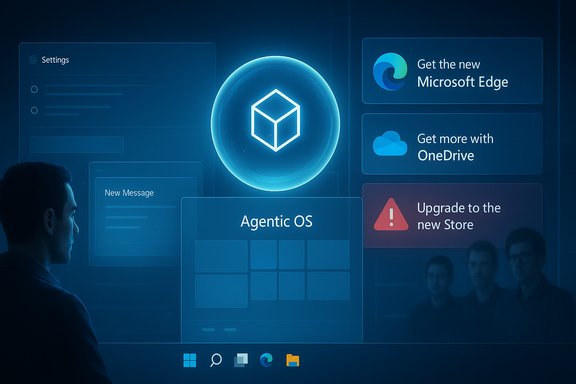
- No direct concession about the proliferation of in-OS promotions (Edge, OneDrive, Microsoft accounts, in-store upsells) or a pledge to reduce them. That omission is critical because the advertising/upsell problem is the single cultural irritant binding together many of the outraged voices.
- No concrete commitment to slow or restructure the “continuous innovation” cadence that many blame for recurring regressions. Addressing process and release rhythm is a structural fix; without it, promises about UX will feel like lipstick on a leaky pipeline.
Stability and the Germanium platform: the technical context
What changed under the hood
Windows 11’s recent major updates — notably 24H2, built on the so-called Germanium platform — represented a foundational platform shift intended to modernize how Windows manages hardware and new AI features. Microsoft has been explicit that 24H2 and subsequent releases in 2025 share Germanium as a base and that numerous AI features (including early Copilot agents) were unlocked on specific hardware profiles like Snapdragon-powered Copilot+ PCs. This platform rework was meant to support on-device AI features and tighter integration with cloud services. The trade-off inherent in such a massive internal change is familiar: foundational platform gains can improve performance and enable new features, but they also risk introducing regressions in legacy scenarios and require extensive testing across a massive hardware matrix. Multiple outlets and forum threads have documented that 24H2 shipped with notable early bugs that affected everyday users and gamers, which undermined Microsoft’s messaging about being more reliable.Why users blame “continuous innovation”
Microsoft’s shift to a model of more frequent feature drop-ins — what the company terms “continuous innovation” — is intended to make Windows feel fresh and to enable rapid improvement of AI features. The downside is obvious: faster cadence can mean less time for cross-device compatibility testing, and the visible effect has been a stream of small regressions and UX inconsistency complaints. Critics argue that this cadence has made Windows feel unstable and fragmented rather than polished. Windows’ leadership has recognized the problem but has not, in public, announced a full structural rollback or a rebalanced release cadence.A note on claims of “most reliable Windows yet”
Microsoft has touted measurement improvements for 24H2 — for example, telemetry-based reductions in certain crash metrics. Those claims are verifiable only up to the telemetry slices Microsoft chooses to show, and they don’t always match broad user experiences reported in forums and gaming communities. When a company cites internal telemetry, journalists and users will accept the claims but also expect independent confirmation or at least transparency about what metrics were measured and over what time windows. Treat performance claims with cautious interest until they are corroborated by third-party benchmarks or prolonged, visible stability in the wild.The marketing misstep: a Copilot ad that reinforced the problem
A separate flashpoint that fed the backlash was a short promotional video — widely shared on social platforms — that showed Copilot guiding a user to change text size in settings. The demo was clumsy: the assistant directed the user to a scaling control that changes full UI scale rather than the dedicated text-size control, then suggested an already-selected value, and ultimately failed to show a smooth correction path. The ad was intended to showcase AI productivity help; instead, it became an example of the AI getting basic, user-facing tasks wrong in ways that users can easily reproduce and ridicule. This kind of marketing blunder matters because it turns what should be a proof point into proof of the opposite. If you’re pitching a future of AI agents that “do things for you,” the public needs to see flawless examples of those capabilities. If a demo shows the assistant making elementary mistakes about where to click and what control to use, skepticism converts to distrust, and the term agentic begins to sound like a euphemism for buggy automation.The ads-in-Windows problem: why users feel disrespected
The nature of the complaint
One recurring theme across the many reaction threads is the presence of promotional elements in core OS flows. Users point to persistent nudges to use:- Microsoft Edge (browser prompts, “recommended” placements),
- OneDrive (backup prompts and default cloud redirection),
- Microsoft accounts (encouraging sign-ins during setup),
- Microsoft Store upsells (promotions and featured paid content).
The perception problem vs. the economics
From Microsoft’s perspective, integrating services into the OS is commercially logical: subscriptions and services are where much of modern software revenue resides, and easier access to those services drives adoption. But the problem is a mismatch of expectations. An OS that nudges, upsells, or prioritizes vendor services in places users depend on for productivity will create resentment unless those integrations are either clearly optional, unobtrusive, or demonstrably valuable to the user without pressure. That subtle distinction is where trust is built — or eroded.Developer reaction and the power-user exodus risk
Gergely Orosz, a high-profile engineer and commentator, vocalized a fear shared by many developers: Windows, as currently signaled, is not aligning with the needs of builders who prize control, debugging clarity, and scriptable, minimalistic environments. His line of critique — that developers might pick Mac or Linux instead — resonated because it framed a longer-term risk: if Windows can no longer be reliably chosen as the developer-first OS, it loses the ecosystem advantage that historically made it indispensable for many shops. Developers have practical reasons for their mood: inconsistent UI behavior, problems with command-line tooling and terminal customizations, and occasional regressions in system-level controls make Windows less predictable for complex builds and container workflows. If Microsoft really wants “developers to choose Windows,” the company needs to couple AI aspirations with a concrete plan to harden and prioritize the developer experience — not just promise that it “cares deeply.”Risks and opportunities for Microsoft
Risks
- Trust erosion: Repeated perceived intrusions and visible AI mistakes damage the brand’s trust currency with power users and enterprise admins alike.
- Platform flight: If developers and power users migrate their workflows to macOS or Linux, Microsoft will face downstream ecosystem effects on tooling, support, and enterprise lock-in.
- Regulatory and privacy scrutiny: More AI agents operating with access to telemetry and system state raise privacy concerns that could attract regulatory attention or enterprise policy pushback.
- Marketing contradictions: Product advertising that publicly demonstrates AI failures undermines the core promise of an AI-centric OS and accelerates negative narratives.
Opportunities
- Fix basics publicly and visibly: Shipping a clear, prioritized list of UX fixes — with measurable targets and timelines — would be a high-return move for Microsoft. Transparency here can rebuild credibility.
- Opt-in agentic features: Make “agentic” capabilities explicitly opt-in, with granular controls and clear explanations of what data is used and where automation will act. This respects user autonomy while enabling advanced users to adopt the tech.
- Separate marketing and product demos: Invest in engineering-grade demos for public-facing AI claims. Prove reliability before deploying marketing campaigns that showcase those capabilities at scale.
Practical recommendations Microsoft should consider now
- Publicly commit to a short, concrete stability roadmap that addresses top-tier UX complaints (dialogs, settings inconsistency, and power-user workflows), with monthly progress updates.
- Reclassify “agentic” features as optional and controlled by a single clear settings hub: a “Windows AI Manager” where each agent is described, toggled, and permissioned.
- Reduce promotional friction: create a “no-promotions” mode for users (and enterprise GPOs) that removes all in-OS service nudges and default service substitutions.
- Tighten demo and marketing reviews: require that public demonstrations of Copilot and system agents pass a real-user QA checklist to avoid public failures that amplify distrust.
- Rebalance release cadence: pilot a “stability-first” schedule for a subset of users and enterprise customers to validate a lower-velocity, higher-confidence update model.
Where the conversation goes from here
Microsoft’s leadership has a short window to translate apology and acknowledgement into action. The company is already reorganizing its Windows engineering teams and rolling product ownership back under consolidated leadership to better unify strategy and execution — a structural move that could help if followed by tangible changes in product cadence and UX investment. But organizational realignment alone will not cure a perception problem if users continue to see bloat, promotions, and public AI failures. If Microsoft pairs its “agentic” vision with a demonstrable commitment to user control and platform reliability, it can still make AI in Windows both useful and acceptable. If it doubles down on ever more aggressive integration and in-OS promotions without clear, measurable improvement in the basics, the company risks a slow drift away from the developer and power-user communities that have long buoyed Windows’ relevance.Conclusion
This controversy is not only about terminology. The backlash against the “agentic OS” label is a symptom of a larger mistrust: many users no longer see Windows as a neutral tool tuned to their needs, but as an environment increasingly shaped to promote vendor services and push automated experiences that are not yet ready for prime time.Microsoft’s public response, while acknowledging important technical fixes, did not address the most pointed user complaint — that the OS has become a platform for Microsoft’s ecosystem rather than a platform for users. To rebuild confidence, Microsoft must match visionary AI messaging with humility in execution: make AI features opt-in and controllable, prioritize stability over novelty, and stop using marketing examples that highlight the technology’s current limits.
The next correct move is clear: restore trust by fixing the basics visibly and promptly, then reintroduce agentic features from a position of demonstrated reliability rather than aspiration. Only then will users be willing to let Windows act on their behalf.
Source: TechRadar https://www.techradar.com/computing...t-glosses-over-a-key-reason-for-all-the-hate/
